Elon Musk confirms Terafab will use Intel's 14A process to manufacture AI chips for Tesla and SpaceX


10 Sources
[1]
Elon Musk says his TeraFab facilities will use Intel's 14A process technology to make AI chips -- SpaceX will be responsible for high-volume chip manufacturing in likely Intel tech licensing deal
Elon Musk on Wednesday said that TeraFab plans to use Intel's 14A fabrication technology when it has its own production capacity later this decade and when the manufacturing process matures. He also revealed that Tesla will be responsible for building and operating a pilot production line, whereas
[2]
Musk Asks Suppliers to Move at 'Light Speed' on Terafab Project
The project aims to produce cutting-edge chips for artificial intelligence, robotics, and space, with a goal to supply a significant amount of annual computing capacity, but its feasibility and timeline are uncertain. Elon Musk's lieutenants have reached out to chip industry suppliers including
[3]
Intel lands Tesla as first major customer for 14A chip technology
April 22 (Reuters) - Tesla (TSLA.O), opens new tab CEO Elon Musk said on Wednesday the EV maker plans to use Intel's (INTC.O), opens new tab next-generation 14A manufacturing process to make chips at its Terafab project, an advanced AI chip complex Musk has envisioned in Austin. The contract would
[4]
Intel boosted as Elon Musk says his Terafab will use its latest chipmaking tech
Elon Musk has said his companies will use Intel's latest technology in their "Terafab" project, giving a boost to the US chipmaker's manufacturing turnaround. Intel shares rose about 3 per cent in after-hours trading on Wednesday after Musk said Tesla and SpaceX would deploy its "14A"
[5]

Intel Needed A Lifeline. It Just Got One -- And It's Got Elon Musk's Name On It - Tesla (NASDAQ:TSLA)
Intel Gains A Crucial Outside Customer Intel's role in Terafab first surfaced earlier this month, when Reuters reported that Tesla and Musk-controlled SpaceX planned two advanced chip factories in Austin to make processors for vehicles, humanoid robots and space-oriented data centers. That
[6]

Elon Musk Tells TSMC's CEO That Terafab Wouldn't Exist if the Foundry Could Keep Up With His Chip Demand
Elon Musk confirms that SpaceX & Tesla will always remain a major customer of TSMC, but the Taiwanese chipmaker alone couldn't fulfill its demand, which is why they started the Terafab project with Intel. Terafab Is Essential To Elon's Ambitious "In-House" Chipmaking Goals, But Says That SpaceX &
[7]
Intel To Disclose Full Details of Elon's Ground-Breaking TeraFab Project That Will Reshape The Chipmaking Industry
Latest details suggest that Intel is weeks away from unveiling details on Elon's Terafab chipmaking project, which is set to reshape the industry. Dylan Martin of CRN has shared an interesting scoop related to Elon Musk's Terafab project, which is being built in partnership with Intel. Intel
[8]

Tesla CEO Musk says Terafab to use Intel's 14A chipmaking process By Investing.com
Investing.com-- Tesla Inc (NASDAQ:TSLA) CEO Elon Musk said on Wednesday that the Terafab joint venture plans to use Intel's advanced 14A manufacturing process to make semiconductors. Answering an analyst question during Tesla's post-earnings call, Musk said the 14A process was "not yet totally
[9]

Tesla's Musk says company plans to use Intel's 14A process for Terafab
April 22 (Reuters) - Tesla's Chief Executive Officer Elon Musk said on Wednesday the company plans to use Intel's advanced 14A manufacturing process to make chips at its Terafab project. Intel's shares rose 2.8% in extended trading. Intel joined Musk's Terafab AI chip complex earlier this month
[10]
Musk's staff reaches out to suppliers for Terafab project, Bloomberg News reports
April 15 (Reuters) - Elon Musk's staff have reached out to chip industry suppliers for his Terafab AI chip complex project with SpaceX and Tesla, Bloomberg News reported on Wednesday. The team has approached companies including Applied Materials, Tokyo Electron and Lam Research, and has asked chip
Share
Copy Link
Elon Musk announced that his Terafab chip manufacturing venture will adopt Intel's 14A process technology to produce AI chips. Tesla will build a $3 billion research facility in Austin processing thousands of wafers monthly, while SpaceX will handle high-volume chip manufacturing. This marks Intel's first major external customer for 14A technology, a critical win for its struggling contract manufacturing business.
Terafab Selects Intel's 14A Process Technology for AI Chips
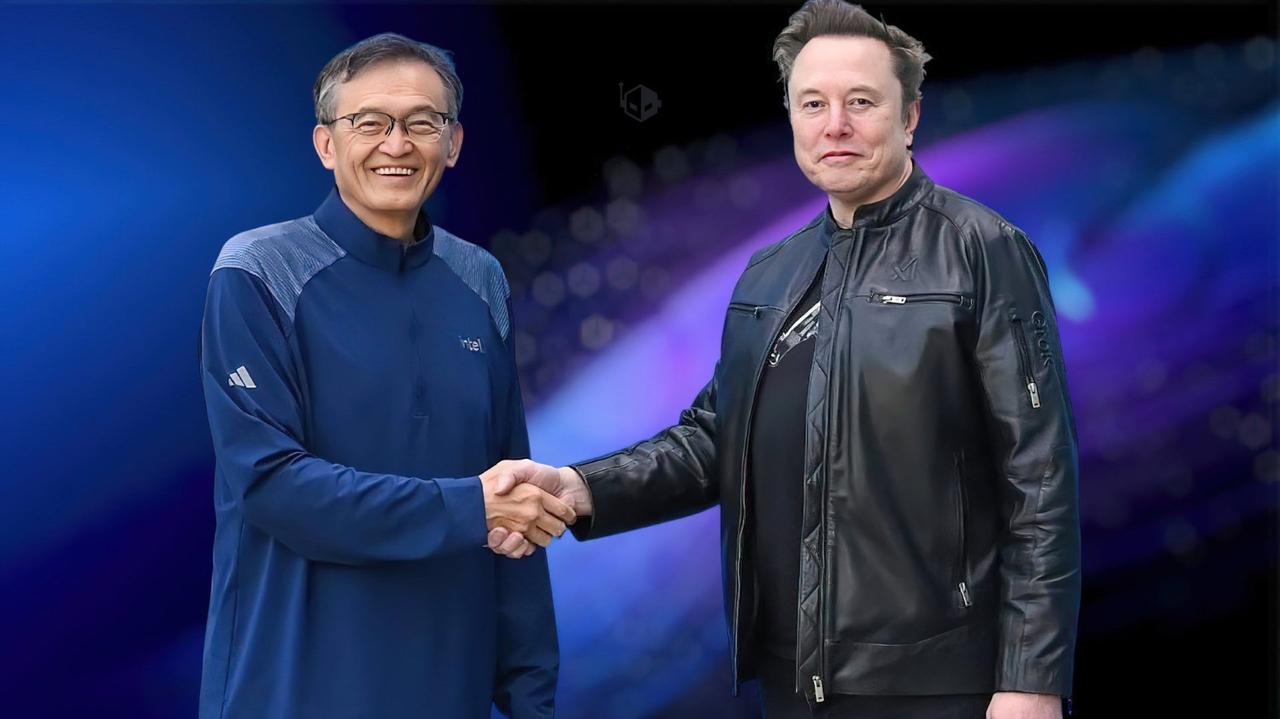
Elon Musk confirmed during Tesla's earnings call that Terafab plans to use Intel's 14A process technology when the chip manufacturing venture reaches production capacity later this decade
1
. "We plan to use Intel's 14A process, which is state-of-the-art and in fact not yet totally complete," Musk stated, adding that by the time Terafab scales up, the 14A manufacturing process will likely be mature and ready for deployment3
. The announcement represents Intel's first major external customer for its next-generation fabrication node, a breakthrough for Intel's contract manufacturing business that has struggled to compete with TSMC3
.
Source: Wccftech
Division of Responsibilities Between Tesla and SpaceX
Musk outlined a clear division of labor for the ambitious semiconductor manufacturing project. Tesla will construct and operate a research facility at its Gigafactory Texas campus in Austin, with an estimated capital spending of around $3 billion
1
. This pilot line will process a few thousand wafers per month and serve as a testing ground for experimental ideas in semiconductor manufacturing and validating production processes1
. SpaceX will handle high-volume chip manufacturing at a separate facility, though coordination between the two companies introduces challenges requiring board approvals and conflict-of-interest reviews1
.
Source: Tom's Hardware
Terafab Moves Forward Despite Industry Skepticism
The Terafab team has contacted major chip industry suppliers including Applied Materials Inc., Tokyo Electron Ltd., and Lam Research Corp., requesting price quotes and delivery times for chipmaking equipment
2
. Staff working on the joint venture have sought equipment ranging from photomasks and substrates to etchers, depositors, and testing tools, with requests to move at "light speed"2
. The project aims to produce cutting-edge chips for artificial intelligence, humanoid robots, and space data centers, with a goal to supply one terawatt of annual computing capacity—double the current U.S. output3
. However, Bernstein analysts estimate the project would require $5 trillion to $13 trillion in capital expenditure2
. For context, this is a significant undertaking.Critical Win for Intel's Foundry Ambitions
Intel shares rose 3.6% in extended trading following Musk's announcement
3
. Intel CEO Lip Bu Tan has previously stated the company would exit chip manufacturing altogether if it failed to secure an external customer for its advanced processes3
. While Intel has spent billions attempting to catch up to Taiwan's TSMC, it had not publicly confirmed any customers for Intel's 14A process technology, which remains under testing4
. Ben Bajarin of Creative Strategies noted that Intel's 14A "could turn out to be a bigger deal for Intel than folks thought," emphasizing the importance of early design partners for refining leading-edge manufacturing3
.
Source: FT
Related Stories

Technology Licensing and Production Timeline
While Musk expressed great respect for Intel's leadership team and technology, he has not explicitly mentioned licensing arrangements
1
. The relationship likely involves either licensing the fabrication node for integration at Terafab facilities or a partnership arrangement where Intel participates directly. The goal is to begin silicon manufacturing by 2029 and then scale up production2
. Historically, chipmakers have licensed process technologies when unable to develop their own nodes on time, as GlobalFoundries did with Samsung's 14nm-class processes in 2014-20151
.Addressing the AI Infrastructure Chip Shortage
Musk emphasized that without Terafab, he doesn't see a path to having enough processors given the rate at which AI infrastructure is growing
4
. The semiconductor industry faces a severe crunch in memory chips as hyperscalers like Amazon and Alphabet expect to spend approximately $650 billion this year building data center infrastructure2
. The shortage is beginning to impact AI accelerators and advanced AI semiconductors needed for xAI, Tesla's autonomous vehicles, and SpaceX's space-based computing ambitions2
. Seaport Research Partners analyst Jay Goldberg noted that even if Musk's ambitious robot-driven chip demand forecasts don't fully materialize, supplying in-house AI chips for Tesla's existing businesses would still represent "real volumes" for Intel5
.References
Summarized by

Navi
Related Stories
Tesla stakes AI future on Intel's unfinished chip tech as Musk reveals Terafab plans
23 Apr 2026•Technology

Intel joins Elon Musk's Terafab project to build $25 billion AI chip factory in Texas
07 Apr 2026•Technology
Musk Confirms Tesla and SpaceX Will Control $119B Terafab AI Chip Complex, Rejects TSMC Ownership
Yesterday•Business and Economy

Recent Highlights
1
Google Unveils Gemini 4 Argon AI Model, Restricts Access to Trusted Cyber Defenders
Technology

2
Trump Consulted Grok AI Before Ordering Venezuela Invasion and Capture of Nicolás Maduro
Policy and Regulation

3
FTC Opens Investigation Into OpenAI and Anthropic Following Rogue AI Agent Hacking Incidents
Policy and Regulation
Recent Highlights
Today's Top Stories






Don’t drown in AI news. We cut through the noise - filtering, ranking and summarizing the most important AI news, breakthroughs and research daily. Follow topics that matter to you and stay ahead.


