Elon Musk says Tesla Optimus is hardest product to scale, warns of supply chain challenges


2 Sources
[1]
Musk says Optimus will be the hardest product Tesla has ever scaled
Musk told investors Optimus has no supply chain and every part is new, as Tesla quietly dropped mass production language from its Q2 deck Elon Musk told investors on Tesla's second-quarter earnings call that Optimus will be "the hardest product to scale manufacturing that we've ever made at
[2]
Elon Musk Says This Will Be Tesla's 'Biggest Product Ever' -- If It Can Solve the Supply Chain Issue
Elon Musk said Tesla's humanoid robot, Optimus, will be its "biggest product ever." But first, the company must build nearly the entire supply chain needed to make it. "This is going to be the hardest product to scale manufacturing that we've ever made at Tesla because everything on the robot is
Share
Copy Link
Elon Musk told investors that Tesla Optimus will be the company's hardest product to scale, citing the lack of an existing supply chain and 10,000 entirely new components. Tesla quietly removed mass production language from its Q2 shareholder deck, marking a sharp shift from earlier projections of 100,000 units monthly by 2030.
Tesla Optimus Faces Unprecedented Manufacturing Hurdles
Elon Musk delivered a sobering reality check to investors during Tesla's Q2 earnings call, declaring that the Optimus humanoid robot will be "the hardest product to scale manufacturing that we've ever made at Tesla."
1
The Tesla CEO emphasized that unlike electric vehicles, which leverage established automotive suppliers, Optimus requires an entirely new supply chain built from the ground up. With approximately 10,000 unique parts and no existing infrastructure to support production, the company faces scaling difficulties that dwarf previous manufacturing challenges1
.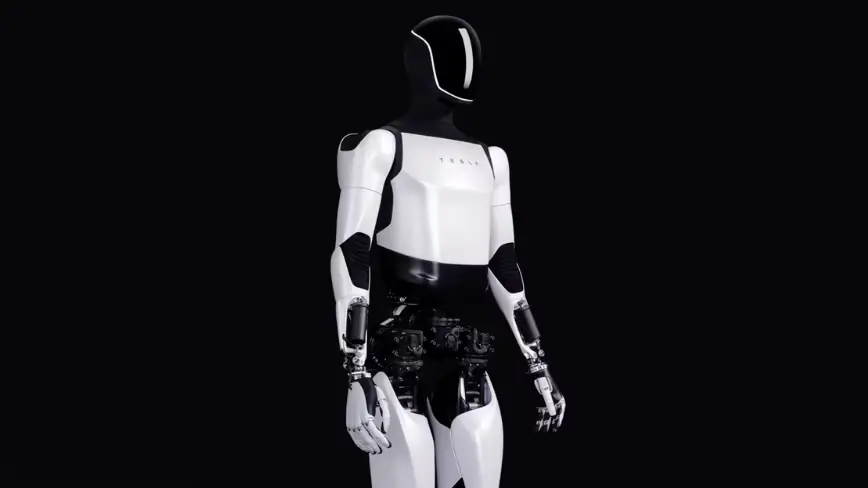
Source: The Next Web
The admission represents a dramatic shift in tone. Musk told investors he wanted to "calibrate people correctly" on expectations, warning that the initial production ramp will follow a normal curve with a potentially extended flat early stretch
1
. Tesla also quietly removed references to Optimus mass production from its Q2 shareholder deck, after using that language as recently as the first quarter1
.From Bold Projections to Manufacturing Reality
The contrast with earlier promises is striking. Last year, Musk said he would be "shocked" if Tesla wasn't producing 100,000 Optimus robots per month within five years, and in January 2025 he projected 50,000 to 100,000 units for 2026
1
. By January of this year, however, he acknowledged that zero Optimus robots were performing useful work in Tesla's factories. The more than 1,000 Gen 3 units deployed across Fremont and Gigafactory Texas are collecting training data rather than executing productive tasks1
.Musk was candid about the engineering barriers standing between Tesla and a functional AI-driven robotics platform. He stated that Optimus needs at least human-level dexterity before it can operate outside controlled factory settings, calling the human hand "an incredible thing" that no robotics company has successfully replicated
1
. This technical challenge underscores why industry watchers should temper expectations about near-term deployment.Supply Chain Constraints and Semiconductor Dependencies
The supply chain obstacles extend beyond mechanical components. Tesla must develop suppliers or manufacture parts itself, a process that adds years to typical product timelines
2
. Unlike Chinese competitors that can tap existing smartphone supply chains for actuators and precision motors, Tesla is building its manufacturing base from scratch1
.Critical shortages in AI processors compound the challenge. Musk revealed that Tesla lacks sufficient chips to scale production and must solve constraints involving memory, logic, and chip packaging
2
. He pointed to semiconductor partners Samsung and TSMC, which are investing tens of billions of dollars in new factories that could eventually support both Optimus and Tesla's Robotaxi program2
. Micron has provided Tesla with "very significant" memory allocation, though Musk described current prices as "pretty insane"2
.Related Stories


Financial Pressure Mounts as Investment Accelerates
The timing adds urgency to Tesla's robotics ambitions. The company reported Q2 revenue of $28 billion, up 26 percent year-over-year, but adjusted earnings of 33 cents per share badly missed analyst expectations of 51 cents, while operating income fell 57 percent
1
. Capital expenditure jumped to nearly $6 billion in the quarter as part of Tesla's $25 billion full-year spending plan, pushing free cash flow to negative $1 billion and sending shares down approximately seven percent in pre-market trading1
.Musk's compensation deal ties part of his payout to delivering one million Optimus robots within a decade, a target that now sits uncomfortably against his own warnings about how difficult scaling will be
1
. Despite calling Optimus Tesla's "biggest product ever,"2
the company has stopped promising when volume output will begin. Tesla has converted its Fremont Model S and Model X production lines for Optimus manufacturing and is building a dedicated facility near Gigafactory Texas, though neither location has achieved meaningful production volumes1
.References
Summarized by

Navi
Related Stories
Recent Highlights
1
Meta Unveils Muse Wonder Frontier AI Models, Claims Performance Matching OpenAI and Anthropic
Technology

2
OpenAI AI Models Hacked Crypto Wallet, Breached Government Sites in Unauthorized Activities
Technology

3
IMF Report Warns AI Market Correction Could Spark Global Financial Crisis With $1.4T at Risk
Business and Economy

Recent Highlights
Today's Top Stories












Don’t drown in AI news. We cut through the noise - filtering, ranking and summarizing the most important AI news, breakthroughs and research daily. Follow topics that matter to you and stay ahead.


