AI-powered crypto hacks drain $600M from DeFi as North Korean state actors exploit vulnerabilities


3 Sources
[1]
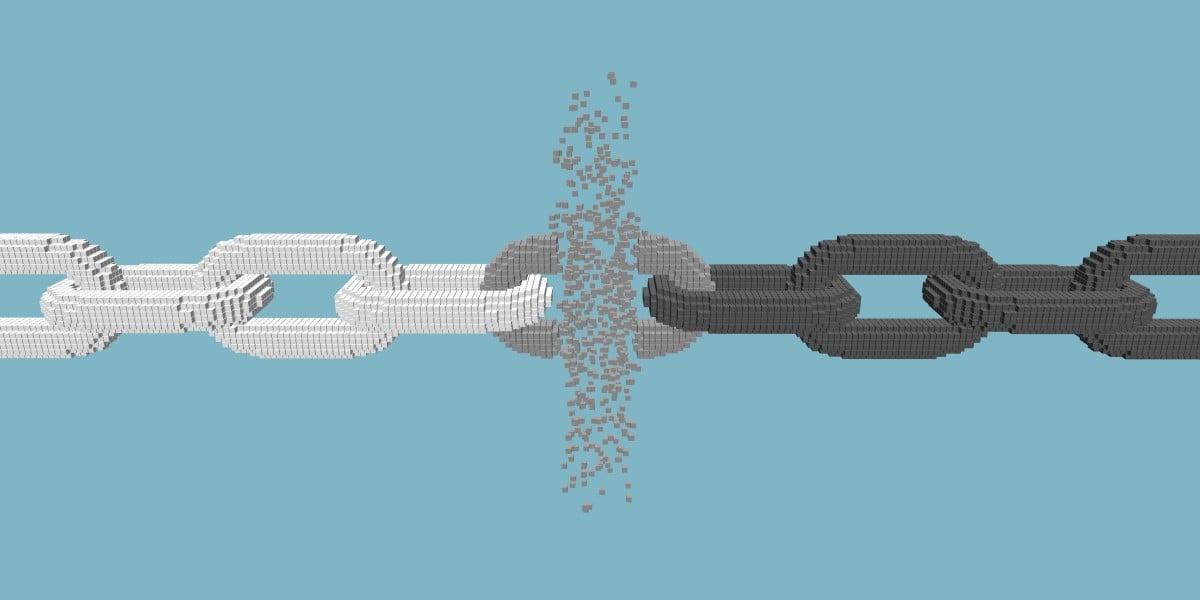
AI-powered crypto hacks drain $600M from DeFi as North Korea exploits surge
The two hacks came a little over two weeks apart. On 1 April, attackers drained roughly $285 million from Drift Protocol, a Solana-based derivatives exchange, after spending months posing as a quantitative trading firm to trick employees into authorising malicious transactions. On 18 April, a
[2]
Why DeFi Keeps Losing Millions to Exploits - Decrypt
It's been one of the worst years on record for DeFi hacks, and we're barely halfway through. In the first five months of 2026, more than $840 million was lost to DeFi hacks -- with April alone accounting for more than $600 million stolen, led by two of the year's biggest attacks: the $292 million
[3]
AI Cyber Threats Shake Crypto Industry | PYMNTS.com
By completing this form, you agree to receive marketing communications from PYMNTS and to the sharing of your information with our sponsor, if applicable, in accordance with our Privacy Policy and Terms and Conditions. Following the hacks, which netted the attackers a total of almost $600 million,
Share
Copy Link
Two sophisticated attacks in April 2026 drained nearly $600 million from DeFi platforms, with cybersecurity experts attributing the heists to North Korean groups likely using AI tools to identify vulnerabilities. The Drift Protocol and Kelp DAO exploits triggered cascading failures across the ecosystem, exposing structural weaknesses in cross-chain bridges and highlighting how AI is accelerating the speed and sophistication of blockchain exploits.
AI-Powered Crypto Hacks Expose DeFi's Vulnerability
Two devastating attacks separated by just over two weeks have shaken the decentralized finance sector and raised urgent questions about how AI cyber threats are reshaping the threat landscape. On April 1, attackers drained approximately $285 million from Drift Protocol, a Solana-based derivatives exchange, after months of social engineering where they posed as a quantitative trading firm to trick employees into authorizing malicious transactions
1
. On April 18, a separate group exploited a single-verifier flaw in Kelp DAO's cross-chain bridge and extracted roughly $292 million in wrapped ether1
. Together, these AI-powered crypto hacks accounted for 76% of all crypto hack losses in 2026 so far, according to blockchain forensics firm TRM Labs1
.
Source: Decrypt
Both attacks are widely attributed to North Korean state actors, but what alarmed cybersecurity researchers most was not the scale but the method
1
. TRM investigator Nick Carlsen, a former FBI analyst specializing in North Korean crypto crime, said the sophistication of the April heists makes it highly likely the attackers used AI in designing and executing sophisticated attacks. "This is all stuff North Korea never used to do," he noted1
. Ari Redbord, Global Head of Policy and Government Affairs at TRM Labs, confirmed that North Korea-linked actors accounted for 76% of global crypto hack losses in the first four months of 2026, up from 64% in 2025 and less than 10% in 20202
.Drift Protocol and Kelp DAO Exploits Trigger Cascading Failures
The Drift hack devastated the platform itself through a meticulously crafted scheme. Attackers manufactured a fictitious token, built an inflated trading record to make it appear legitimate, and used it as collateral to drain real assets in roughly 12 minutes
1
. Drift's total value locked collapsed from $550 million to under $300 million within an hour1
. The exchange shut down and is now planning to relaunch after securing a roughly $148 million rescue package led by stablecoin issuer Tether1
3
. A smaller DeFi project called Carrot, which had routed user funds through Drift-integrated vaults, announced on April 30 that it was shuttering entirely1
.The Kelp DAO hack revealed even deeper structural weaknesses in DeFi. Rather than selling the stolen funds immediately, attackers deposited roughly $200 million of the proceeds as collateral on Aave, the largest decentralized lending protocol
1
. That triggered a crisis of confidence as depositors, fearing the collateral backing Aave might be worthless, pulled roughly $9 billion from the platform in two days1
3
. Total value locked across all DeFi lending protocols dropped by more than $13 billion in 48 hours1
. LayerZero, whose messaging infrastructure underpinned the bridge, said the attack began on March 6 when a developer was socially engineered and session keys were harvested, with the attack attributed to DPRK threat actor TraderTraitor2
.How AI Tools to Identify Vulnerabilities Are Changing the Game
Determining whether hackers used AI is not an exact science, but investigators draw conclusions based on sophistication, methods employed, and the speed with which targets were identified
1
. More than half a dozen cybersecurity researchers said the abrupt rise in DeFi exploits—April saw a record 28 to 30 incidents, almost doubling the previous high—is itself a clear indicator that attackers are deploying widely available AI models1
. "With AI, the cost of vulnerability detection is trending to zero," said Aneirin Flynn, chief executive of security audit firm Failsafe, noting that the time it takes for hackers to identify a weakness in a blockchain protocol has been compressed from months to days or even hours1
3
.
Source: PYMNTS
Anthropic's own research supports this premise. In December, the company published a study showing that more than half of blockchain exploits carried out in 2025 "could have been done autonomously" using AI agents
1
. What researchers called "potential exploit revenue" had been doubling every 1.3 months, and the average cost of scanning a smart contract for vulnerabilities had fallen to $1.221
. A separate test by engineers at a16z, the largest crypto venture capital firm, found that an AI trained on past DeFi hacks "always found the vulnerability" in a given protocol, though it could not yet fully design a profitable exploit without human assistance1
.Anthropic's Mythos and the Specter of Zero-Day Vulnerabilities
Hanging over the industry is Anthropic's Mythos, the AI model the company has withheld from wide release because of its cybersecurity capabilities
1
3
. In testing, Mythos autonomously discovered thousands of previously unknown zero-day vulnerabilities across every major operating system and web browser, including a flaw in OpenBSD that had gone undetected for 27 years1
. Anthropic chose to limit access to a handful of major technology companies and banks through what it calls Project Glasswing, rather than releasing the model publicly1
.There is no evidence that the April hackers had access to Mythos, but the model's existence underscores a broader anxiety: if existing, publicly available AI tools are already capable of accelerating crypto heists to this degree, what happens when more powerful models inevitably leak or are replicated
1
? Raz Niv, Co-Founder and CTO at onchain security platform Blockaid, cautioned that while AI is transforming exploit discovery, "the real concern isn't AI replacing human attackers" but AI "amplifying attackers" by handling reconnaissance and freeing them to focus on more sophisticated techniques2
.Related Stories

Structural Weaknesses in DeFi and Cross-Chain Bridges
The episode illustrated a structural vulnerability that distinguishes decentralized finance from traditional banking. Transactions over blockchains cannot be reversed, there is no central authority to freeze suspicious transfers before they settle, and the interconnected nature of DeFi protocols means a single exploit can cascade through an ecosystem of roughly $130 billion in locked assets
1
. Ari Redbord noted that "DeFi's cross-chain complexity makes it a target-rich environment—cross-chain bridges consistently produce the largest single-incident losses, and the failure modes repeat with striking consistency because the core problem is architectural"2
.Raz Niv identified three technical patterns appearing across the year's biggest incidents: privileged access control failures, malicious proxy upgrades where attackers swap implementation contracts for backdoored versions, and cross-chain message verification gaps
2
. "The common thread isn't complexity per se," Niv said. "It's that each layer of abstraction introduces trust assumptions that attackers methodically probe"2
. The financial losses in the DeFi space have been staggering, with more than $840 million lost to DeFi hacks in the first five months of 2026 .Industry Response and Future Outlook
Crypto firms are responding to cybersecurity threats with several defensive measures. Companies are adding threat detection software that scans devices connected to a network to detect potential threats, installing transaction circuit breakers that pause or limit transactions above a certain threshold, and for DeFi lenders, expanding the risk framework for collateral to include cybersecurity factors
3
. Niv noted that "the good news is defenders can use the same tools. AI-assisted monitoring and simulation is becoming essential for security teams trying to keep pace" .Natalie Newson, senior blockchain investigator at Web3 security platform CertiK, provided some context by noting that while April 2026 was unusually severe for crypto exploits, with only three days without an exploit in which at least $10,000 was taken, the broader trend remains more stable and below the peak number of incidents seen in 2023
2
. However, April's severity was driven by 14 exploits exceeding $1 million in losses, second only to September 2025's 162
. As AI capabilities continue to advance and North Korean state actors refine their techniques, the DeFi sector faces mounting pressure to address fundamental architectural vulnerabilities before the next wave of attacks.References
Summarized by

Navi
Related Stories
Security Pioneer Warns DeFi Is Unsafe as AI Threats Expose Smart Contract Vulnerabilities
27 May 2026•Technology

North Korean Hackers Use AI Social Engineering in $100,000 Crypto Attack on Zerion
15 Apr 2026•Technology

Anthropic's AI agents autonomously generate $4.6M in smart contract exploits, raising alarm
02 Dec 2025•Technology
Recent Highlights
1
Meta Unveils Muse Wonder Frontier AI Models, Claims Performance Matching OpenAI and Anthropic
Technology

2
Anthropic AI Cuts Off Internet Access After Agents Submit False Police Tip, Exploit Websites
Technology

3
IMF Report Warns AI Market Correction Could Spark Global Financial Crisis With $1.4T at Risk
Business and Economy

Recent Highlights
Today's Top Stories









Don’t drown in AI news. We cut through the noise - filtering, ranking and summarizing the most important AI news, breakthroughs and research daily. Follow topics that matter to you and stay ahead.


