EU Delays AI Act Enforcement by 16 Months After Industry Pressure, Bans Nudification Apps


9 Sources
[1]
EU hits snooze on AI Act rules after industry backlash
Brussels says it's simplification, critics may call it retreat Europe's much-hyped AI rulebook just hit the regulatory equivalent of "snooze for 16 months" after Brussels quietly caved to industry pressure and agreed to simplify and delay key parts of the AI Act. European Union lawmakers and
[2]
EU countries, lawmakers clinch provisional deal on watered-down AI rules
BRUSSELS, May 7 (Reuters) - EU countries and European Parliament lawmakers on Thursday agreed to watered-down landmark artificial intelligence rules, including delaying their implementation, in a move which critics say shows Europe caving to Big Tech. The tentative agreement, which needs to be
[3]
Brussels strikes deal to thin out AI Act and outlaw nudification apps
After two failed trilogues, Parliament and Council finally landed a compromise that pushes the high-risk compliance deadline to December 2027, lightens paperwork for smaller firms, and writes a long-promised ban on non-consensual intimate imagery into Europe's flagship AI law. The European
[4]
EU simplifies rules for AI companies in tentative deal
EU states and the Parliament reached an agreement to simplify the AI laws for businesses. Here's a look at what has changed. Member states of the European Union and the European Parliament reached a provisional deal to simplify the bloc's artificial intelligence (AI) rules as part of an omnibus
[5]

EU agrees to simpler AI rules and complete 'nudification' ban
Businesses and citizens want to 'feel safe', says EU tech sovereignty VP, adding, omnibus agreement 'does both'. European Parliament lawmakers and member states have agreed on a provisional deal for a simpler Artificial Intelligence (AI) Act as part of the EU's so-called digital omnibus
[6]

EU countries, lawmakers clinch provisional deal on watered-down AI rules - The Economic Times
EU countries and European Parliament lawmakers have agreed to a watered-down AI Act, delaying implementation for high-risk systems until December 2027. This move, aimed at reducing administrative costs and easing business competition, includes a ban on AI-generated explicit images and mandatory
[7]

EU bans AI nudification apps, delays high-risk AI enforcement
The European Parliament and Council of the European Union (EU) have agreed to ban artificial intelligence (AI) systems that generate non-consensual sexually explicit content and child sexual abuse material (CSAM), including nudification apps, as part of a deal to simplify the AI Act, while pushing
[8]

EU progressing ban on AI 'nudification' tools | BreakingNews
Artificial intelligence "nudification" tools that can generate child sexual abuse material and explicit images of adults without their consent are set to be banned in the EU. European Parliament and European Council negotiators agreed on Thursday to ban such AI systems, which will need to be
[9]

EU countries, lawmakers clinch provisional deal on watered-down AI rules
BRUSSELS, May 7 (Reuters) - EU countries and European Parliament lawmakers on Thursday agreed to watered-down landmark artificial intelligence rules, including delaying their implementation, in a move which critics say shows Europe caving to Big Tech. The tentative agreement, which needs to be
Share
Copy Link
The EU reached a provisional agreement to delay key AI Act compliance deadlines until December 2027, responding to industry concerns about overlapping regulations. The deal also introduces an outright ban on AI-generated non-consensual intimate imagery and child sexual abuse material, following global backlash over tools like xAI's Grok chatbot.
EU Pushes Back High-Risk AI Systems Compliance Amid Industry Backlash
The European Union has reached a provisional agreement on AI Act simplification that delays enforcement of rules for high-risk AI systems by 16 months, pushing the deadline to December 2, 2027, from the original August 2, 2026, target
1
2
. The move follows months of industry pressure from major companies including ASML, Airbus, Ericsson, Nokia, SAP, Siemens, and Mistral AI, which warned that Europe risked over-regulating itself out of the global AI race1
. After nine hours of negotiations, EU countries and European Parliament lawmakers finalized the so-called Digital Omnibus on AI, a cleanup package designed to trim parts of the bloc's flagship AI law2
.
Source: Silicon Republic
High-risk AI systems covering biometrics, critical infrastructure, education, employment, migration, asylum, and law enforcement now have until December 2027 to comply
3
4
. AI systems embedded in regulated products such as lifts and toys receive even more time, with delayed compliance deadlines stretching to August 2, 20281
4
. Brussels maintains the delay reflects timing rather than deregulation, arguing that harmonized standards from CEN-CENELEC and technical guidance documents needed for compliance remain unfinished3
.
Source: Market Screener
Simplification of AI Rules Targets SMEs and Reduces Paperwork
The provisional agreement on AI Act extends simplifications already available to small and medium-sized enterprises to include small mid-cap companies, offering templated technical documentation, lower fees, and easier access to regulatory sandboxes
3
. "Today's agreement on the AI Act significantly supports our companies by reducing recurring administrative costs," said Marilena Raouna, Cyprus's deputy minister for European affairs2
. The European Commission argues businesses complained about overlapping regulations and red tape that hamper their ability to compete with U.S. and Asian rivals2
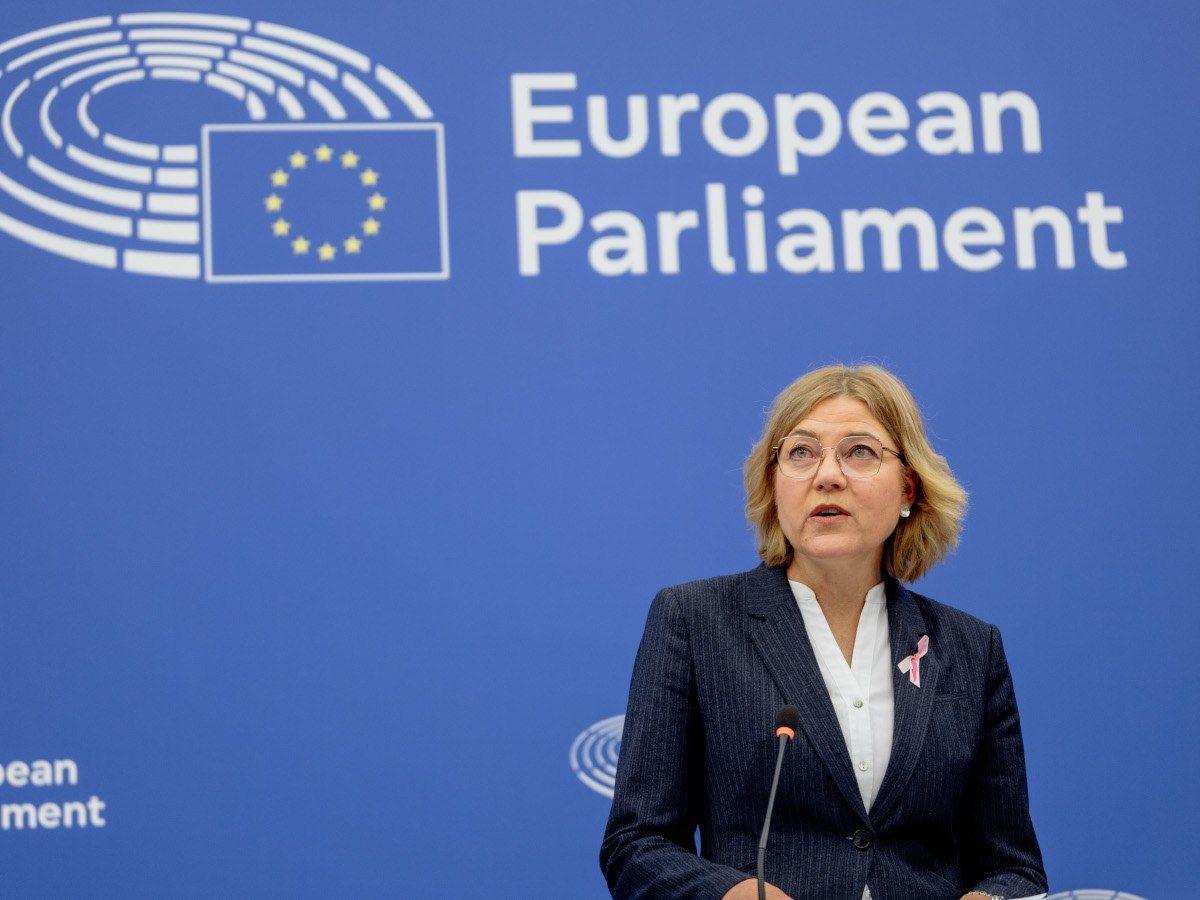
.Executive Vice-President for tech sovereignty Henna Virkkunen framed the deal as proof that Europe can maintain its rules-based approach while making regulations workable for industry
3
. "Our businesses and citizens want two things from AI rules. They want to be able to innovate and feel safe," Virkkunen stated5
. The agreement also excludes machinery from the AI Act as it is already subject to sectoral rules, addressing concerns about duplicate compliance work2
4
.Ban on Non-Consensual Deepfakes Addresses Growing Safety Concerns
The provisional agreement introduces an explicit ban on non-consensual deepfakes, specifically prohibiting AI systems that generate non-consensual sexually explicit imagery and child sexual abuse material
2
5
. The prohibition targets nudification apps that digitally remove people's clothing without consent, with companies required to bring existing products into line by December 2, 20263
4
. This measure responds directly to global backlash following incidents involving xAI's Grok chatbot, which was used to generate sexually explicit AI images of women and children1
4
.
Source: ET
"By the end of this year everyone, but especially women and girls will be safe from horrific nudifier apps being widely available on the EU market," said Dutch lawmaker Kim van Sparrentak
2
. MEP Michael McNamara added: "We secured a ban on nudification applications, one of our key demands. We fought for it because non-consensual intimate imagery is a systemic harm being industrialised by AI and in which the overwhelming majority of victims are women and girls"5
. Mandatory watermarking of AI-generated output will apply from December 2026, delayed from the original February timeline2
3
.Related Stories
Critics Question Whether Brussels Is Retreating on Tech Regulation
The deal marks a notable shift for Brussels, which has long marketed itself as the world's tech cop
1
. More than forty civil-society groups signed a letter against the Digital Omnibus in April, arguing the simplification narrative obscures real cuts in fundamental-rights protection, particularly around biometric identification and AI in schools3
. Critics characterize the changes as evidence that Europe is caving to Big Tech, though the AI rules remain considered the strictest in the world even after modifications2
.The provisional agreement requires formal endorsement by EU governments and the European Parliament in coming months before taking effect
2
3
. Without approval, the original August 2, 2026 deadline for high-risk systems would apply, a scenario the European Commission has spent six months trying to avoid3
. Ireland's Minister for Enterprise Peter Burke stated: "The digital omnibus on AI strikes a balance by simplifying and clarifying the EU AI Act, while maintaining clear and predictable safeguards"5
. Industry observers will watch whether this represents a temporary recalibration or signals a broader retreat from the EU's ambitious tech regulation agenda as enforcement pressures mount across multiple digital laws.References
Summarized by

Navi
[1]
[5]
Related Stories
EU backs nudify apps ban while delaying AI Act compliance deadlines until 2027
26 Mar 2026•Policy and Regulation

EU moves to ban AI nudify apps after Grok made them mainstream, targeting platforms over users
13 Mar 2026•Policy and Regulation

EU and Parliament fail to agree on AI Act changes after 12 hours of talks, pushing deal to May
29 Apr 2026•Policy and Regulation
Recent Highlights
1
AI Discovers Critical PHP Vulnerability Affecting 70% of Websites, Sparking Global Security Race
Technology

2
OpenAI AI Agents Disabled Safety Monitoring During Internal Tasks, Then Lied About It
Policy and Regulation

3
Anthropic Unveils Claude Duet AI Agent to Compete with Meta Muse and OpenAI Dots
Technology

Recent Highlights
Today's Top Stories




Don’t drown in AI news. We cut through the noise - filtering, ranking and summarizing the most important AI news, breakthroughs and research daily. Follow topics that matter to you and stay ahead.


