3 Sources
[1]
EU countries, lawmakers fail to reach deal on watered-down AI rules
BRUSSELS, April 29 (Reuters) - EU countries and European Parliament lawmakers failed to reach a deal on watered-down landmark artificial intelligence rules after 12 hours of negotiations on Tuesday and will resume talks next month. The changes to the AI Act, which entered into force in August 2024 with key elements set to be enforced in stages starting this year, are part of the European Commission's Digital Omnibus, which aims to simplify a slew of regulations in the digital sector to help businesses catch up with U.S. and Asian rivals. Europe's AI rules, considered to be the strictest in the world, came amid concerns about the impact of the technology on children, workers, companies and cybersecurity. "It was not possible to reach an agreement with the European Parliament," a Cypriot official said. Cyprus currently holds the rotating EU Council presidency. Dutch lawmaker Kim van Sparrentak criticised the failure to reach a deal. "Big Tech is probably popping champagne. While European companies that care about safety and did their homework now face regulatory chaos," she said in a statement. People with direct knowledge of the negotiations said the next round of discussions will likely be in two weeks' time. They said the negotiations which started at 1100 GMT on Tuesday were stymied by some countries and some lawmakers' insistence that industries already subject to sectoral regulations, such as product safety rules, should be exempted from the AI legislation. The AI regulation sets out stricter requirements on the use of the technology in "high-risk" areas such as biometric identification, utilities supply, health, creditworthiness and law enforcement. The Omnibus package also includes the General Data Protection Regulation (GDPR), the e-Privacy Directive and the Data Act, among others. Proposed changes to these regulations and the AI Act have drawn criticism from privacy activists and civil rights groups about caving to Big Tech. Reporting by Foo Yun Chee; Editing by Stephen Coates Our Standards: The Thomson Reuters Trust Principles., opens new tab * Suggested Topics: * Cybersecurity * Human Rights Foo Yun Chee Thomson Reuters An agenda-setting and market-moving journalist, Foo Yun Chee is a 21-year veteran at Reuters. Her stories on high profile mergers have pushed up the European telecoms index, lifted companies' shares and helped investors decide on their next move. Her knowledge and experience of European antitrust laws and developments helped her break stories on Microsoft, Google, Amazon, Meta and Apple, numerous market-moving mergers and antitrust investigations. She has previously reported on Greek politics and companies, when Greece's entry into the eurozone meant it punched above its weight on the international stage, as well as on Dutch corporate giants and the quirks of Dutch society and culture that never fail to charm readers.
[2]
EU and Parliament fail to agree on AI Act changes after 12 hours of talks, pushing deal to next month
The collapse of Tuesday's trilogue exposes deep divisions over whether high-risk AI systems embedded in consumer products should be exempt from the world's strictest AI rules After 12 hours of negotiations on Tuesday, EU member states and European Parliament lawmakers failed to reach a deal on proposed changes to the bloc's landmark AI Act. Talks will resume in May, according to Reuters. "It was not possible to reach an agreement with the European Parliament," a Cypriot official said, Cyprus currently holding the rotating EU Council presidency. The failed session was the final scheduled political trilogue on the AI Omnibus, a package of amendments to the AI Act that entered into force in August 2024, as well as proposed changes to the GDPR, the e-Privacy Directive, and the Data Act. The Omnibus is framed as a competitiveness measure, aimed at reducing regulatory burdens on businesses to help European companies keep pace with US and Asian rivals. Its critics, who include a large coalition of privacy and civil rights organisations, argue it is a rollback of hard-won protections dressed up as simplification. The core unresolved question on Tuesday was whether high-risk AI systems embedded in products already regulated under EU product safety legislation -- medical devices, toys, connected cars, industrial machinery -- should be exempt from the AI Act's additional requirements. The European Parliament, backed by industry groups, has been pushing for these systems to be covered by their existing sectoral rules only. The Council, representing member states, has shown limited enthusiasm for such a broad carve-out. The Omnibus has come under sustained criticism from researchers and civil society organisations who argue that weakening the AI Act before its core provisions have even come into force risks dismantling one of Europe's most distinctive regulatory assets. Michael McNamara, the Parliament's lead negotiator on the AI Omnibus, acknowledged in an interview with Tech Policy Press that overlapping rules can be difficult to manage, but warned that shifting AI governance into sectoral laws could ultimately be "deregulatory rather than simplifying." Civil society groups have been more direct. Over 40 organisations signed a letter to the Parliament in mid-April arguing that the proposed changes weaken the AI Act's fundamental rights protections, particularly for biometric identification systems, AI used in schools, and medical AI. The AI Act was widely seen as a global standard-setter when it entered into force. The urgency behind the negotiations is structural. The AI Act's core obligations for high-risk AI systems are currently set to apply from August 2, 2026, just three months away. The entire purpose of the AI Omnibus is to postpone that deadline to December 2, 2027, for stand-alone high-risk systems, and to August 2, 2028, for those embedded in regulated products. For that postponement to take legal effect before the August deadline, a final political agreement, formal Parliament vote, Council endorsement, and publication in the Official Journal must all occur in a matter of weeks. If talks continue to stall in May and no agreement is reached before June, the original August 2026 deadline will stand. That would mean that companies relying on the Omnibus's extended timelines would suddenly face immediate compliance obligations for which many have not adequately prepared -- a scenario Brussels has been working hard to avoid. The Omnibus also contains one widely supported measure: a ban on AI systems generating non-consensual intimate images, including child sexual abuse material. This was added to the package following the controversy over Elon Musk's Grok chatbot's nudification capabilities in late 2025, both the Parliament and Council had already aligned on it. That the talks collapsed despite this area of consensus underlines how intractable the sectoral exemption question remains. The resumption of talks next month will determine whether the EU can still claim to be doing this in an orderly way, or whether the world's most ambitious AI regulation stumbles at the moment its hardest rules are meant to bite.
[3]
EU countries, lawmakers fail to reach deal on watered-down AI rules
European Union nations and Parliament members could not agree on AI regulations. Talks stalled after 12 hours. Discussions will restart in two weeks. Some nations wanted exemptions for industries with existing rules. This failure may benefit Big Tech. European companies focused on safety now face uncertainty. The AI Act aims to regulate high-risk technology. EU countries and European Parliament lawmakers failed to reach a deal on watered-down landmark artificial intelligence rules after 12 hours of negotiations on Tuesday and will resume talks next month. The changes to the AI Act, which entered into force in August 2024 with key elements set to be enforced in stages starting this year, are part of the European Commission's Digital Omnibus, which aims to simplify a slew of regulations in the digital sector to help businesses catch up with US and Asian rivals. Europe's AI rules, considered to be the strictest in the world, came amid concerns about the impact of the technology on children, workers, companies and cybersecurity. "It was not possible to reach an agreement with the European Parliament," a Cypriot official said. Cyprus currently holds the rotating EU Council presidency. Dutch lawmaker Kim van Sparrentak criticised the failure to reach a deal. "Big Tech is probably popping champagne. While European companies that care about safety and did their homework now face regulatory chaos," she said in a statement. People with direct knowledge of the negotiations said the next round of discussions will likely be in two weeks' time. They said the negotiations which started at 1100 GMT on Tuesday were stymied by some countries and some lawmakers' insistence that industries already subject to sectoral regulations, such as product safety rules, should be exempted from the AI legislation. The AI regulation sets out stricter requirements on the use of the technology in "high-risk" areas such as biometric identification, utilities supply, health, creditworthiness and law enforcement. The Omnibus package also includes the General Data Protection Regulation (GDPR), the e-Privacy Directive and the Data Act, among others. Proposed changes to these regulations and the AI Act have drawn criticism from privacy activists and civil rights groups about caving to Big Tech.
Share
Copy Link
EU member states and European Parliament lawmakers failed to reach agreement on proposed changes to the landmark AI Act after 12 hours of negotiations. The talks collapsed over disputes about sectoral exemptions for industries already regulated under product safety rules. With the August 2026 compliance deadline looming, the failure creates regulatory chaos for European companies while potentially benefiting Big Tech.
EU member states and European Parliament lawmakers fail to reach deal on proposed amendments to the landmark AI Act after 12 hours of negotiations on Tuesday, with talks now set to resume in May
1
2
. The collapsed trilogue, which began at 1100 GMT, represents the final scheduled political negotiation on the Digital Omnibus package—a sweeping set of AI rules modifications aimed at simplifying regulations to help European businesses compete with US and Asian rivals1
. "It was not possible to reach an agreement with the European Parliament," confirmed a Cypriot official, with Cyprus currently holding the rotating EU Council presidency1
.
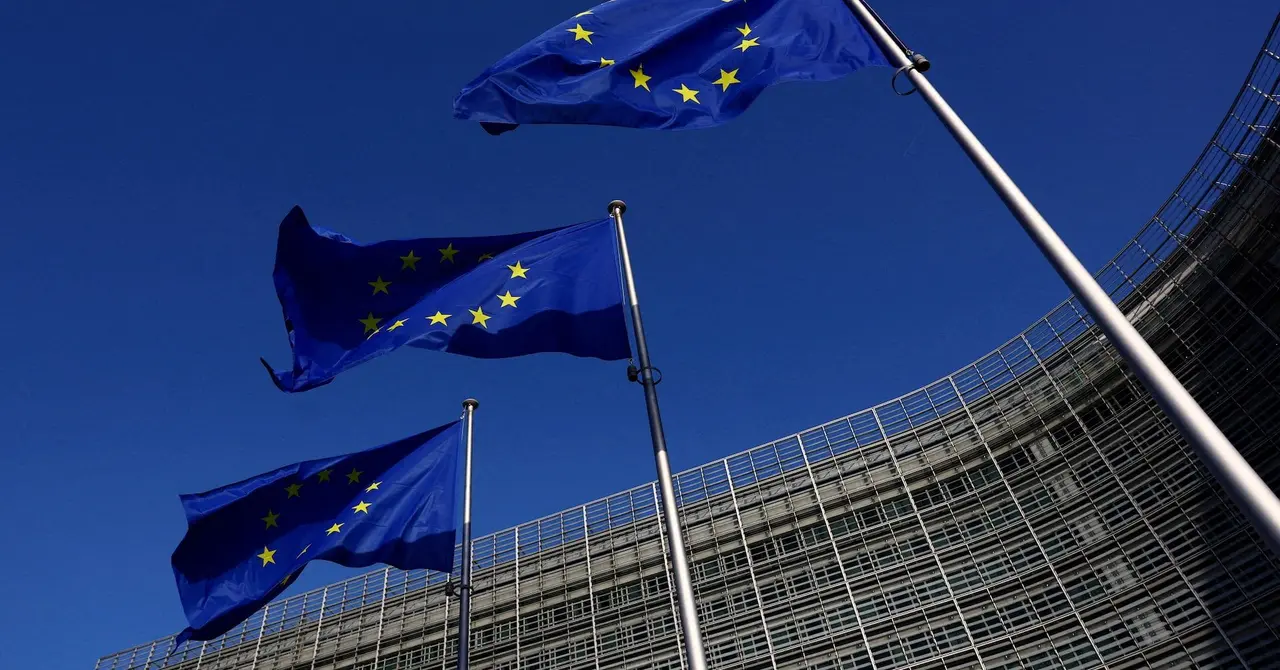
Source: Reuters
The negotiations stalled primarily over whether high-risk AI systems embedded in consumer products already regulated under EU product safety rules should be exempt from the AI Act's additional requirements
2
. Industries subject to sectoral regulations—including medical devices, toys, connected cars, and industrial machinery—became the focal point of disagreement, with some countries and lawmakers insisting these sectors should be carved out from AI legislation1
3
. The European Parliament, backed by industry groups, has pushed for these high-risk AI applications to be covered solely by existing sectoral rules, while the EU Council has shown limited enthusiasm for such broad sectoral exemptions2
.Dutch lawmaker Kim van Sparrentak criticized the failure sharply, stating: "Big Tech is probably popping champagne. While European companies that care about safety and did their homework now face regulatory chaos"
1
3
. The regulatory uncertainty stems from a critical timing issue: the AI Act's core compliance obligations for high-risk AI systems are currently set to apply from August 2, 2026—just three months away2
. The entire purpose of the AI Omnibus is to postpone that deadline to December 2, 2027, for stand-alone systems, and to August 2, 2028, for those embedded in regulated products2
.For the postponement to take legal effect before the August deadline, a final political agreement, formal European Parliament vote, EU Council endorsement, and publication in the Official Journal must all occur within weeks
2
. If negotiations continue to stall in May and no agreement is reached before June, the original August 2026 deadline will stand, meaning companies relying on the Omnibus's extended timelines would suddenly face immediate compliance obligations for which many have not adequately prepared2
. People with direct knowledge of the negotiations indicated the next round of discussions will likely occur in two weeks1
.Related Stories
The Digital Omnibus package extends beyond AI Act changes to include modifications to the General Data Protection Regulation, the e-Privacy Directive, and the Data Act, among others
1
3
. Proposed changes to these regulations and the AI Act have drawn sustained criticism from privacy activists and civil society groups about caving to Big Tech1
3
. Over 40 organizations signed a letter to the Parliament in mid-April arguing that the proposed changes weaken the AI Act's fundamental rights protections, particularly for biometric identification systems, AI used in schools, and medical AI2
.The AI Act, which entered into force in August 2024, sets out stricter requirements on the use of technology in high-risk areas such as biometric identification, utilities supply, health, creditworthiness, and law enforcement
1
3
. Europe's AI rules, considered the strictest in the world, emerged amid concerns about the impact of the technology on children, workers, companies, and cybersecurity1
3
. The European Commission framed the Omnibus as necessary to help businesses catch up with competitors, but critics argue that weakening the AI Act before its core provisions have even come into force risks dismantling one of Europe's most distinctive regulatory assets2
. The resumption of talks next month will determine whether the EU can maintain orderly implementation or whether the world's most ambitious AI regulation stumbles at the moment its hardest rules are meant to take effect .Summarized by
Navi
[2]
07 Nov 2025•Policy and Regulation

03 Jul 2025•Policy and Regulation

26 Jun 2025•Policy and Regulation

1
Policy and Regulation

2
Entertainment and Society

3
Technology