5 Sources
[1]
'You feel radicalized': A Meta AI exec watched agents beat her top workers. Now she's built a nonprofit to help Gen Z find jobs before they disappear
Clara Shih set up a non-profit to help Gen Z enter the AI workforce * AI is preventing Gen Z workers from getting entry level jobs * Many AI agents can perform the tasks typically done by new workers * Meta and Salesforce AI exec Clara Shih wants to help, using AI Gen Z workers who have spent the last two decades training for a world that no longer has use of their skills are finding it harder and harder to enter the workforce. Clara Shih, former AI executive at Meta and Salesforce, has seen this first hand. She watched her top talent beaten by AI agents time and time again. "In that moment I knew that nothing would ever be the same," she told Fortune. "You feel radicalized in that moment when you see it working." Now, she is helping equip Gen Z with the skills necessary to survive in an AI-dominated world. "I realized that the only way to help people keep up with the pace of AI was to give them AI tools," she explained. "Because if you use the traditional ways...it's just not fast enough to keep pace with how quickly AI is advancing" Entry level radicalization American citizens are facing one of the greatest disruptions to the job market in recent history, with thousands losing jobs to AI replacements, and new entrants to the job market finding the skills they have acquired through their education are no longer relevant. In order to make a living, many Gen Z graduates are turning to alternative forms of making money, including gig work, or going back into education to learn vocational skills less threatened by the rise of AI. To help Gen Z find their place in the modern world, Shih has set up a nonprofit organization, the New Work Foundation, alongside a consumer facing brand, Dear CC, that helps job seekers find work in their sectors of expertise using AI. The Dear CC site displays a message on the front page: "You did the work. You got the diploma. The economy moved. This is not your fault -- but it is your future, and you can own it." AI sentiment was once highly optimistic, with many expecting it to help solve problems - not cause them. Almost half of Gen Z polled in a recent NBC survey said they want to live in the past, with some referencing AI as a specific reason for their feelings. More widely, another NBC poll found that almost half (46%) of registered US voters have a negative view of AI. Other polls, including a Checkr survey, have found widespread fears of the effects of AI, with 79% of respondents worrying that if their company adopted AI it would result in pay cuts. There is also growing opposition to the building of data centers that AI relies on to handle its workload, and a growing number of people, including political leaders, who are calling for greater protections on AI development. Follow TechRadar on Google News and add us as a preferred source to get our expert news, reviews, and opinion in your feeds.
[2]
Ex-Meta, Salesforce exec aims to help Gen Z find jobs
Why it matters: College students and younger workers are increasingly stressed that AI is eroding entry-level jobs. Driving the news: The New Work Foundation is debuting with three tools: * JobClaw maps one's strengths and interests to a role in which they are well suited. It's starting out as an open-source prototype on GitHub, with plans for a consumer release. * dear [CC] is designed as a modern twist on Dear Abby, aiming to offer much-needed career advice, detailing how AI is affecting each profession. * Field Report is designed to help recent college graduates identify the best jobs for their major. Andrew Yang, whose 2020 presidential campaign focused on job risks from automation, is joining the nonprofit as a founding adviser. What they're saying: Shih told Axios the job market is a bit of a "Tale of Two Cities" with those who are deep users of AI having their choice of jobs and those who lack such skills facing the toughest job market in years. * Shih also had a message for those eschewing AI for moral reasons. * "While I admire their principle, I don't think they're doing themselves or society any favors," she said. "They're the exact young people that I want being part of building these AI solutions." Between the lines: Shih said she decided to launch the effort after being peppered with questions from younger relatives and friends worried about how to find a career.
[3]
'You feel radicalized': A Meta AI exec watched agents beat her top workers. Now she's built a nonprofit to help Gen Z find jobs before they disappear | Fortune
Every job is an AI job now. That's at least how Clara Shih sees it. The former AI exec at Meta and Salesforce, has seen the future of the job market, and it's a workforce fully enabled by AI. Shih has worked in AI for 20 years. But the turning point came for her last fall when she saw Meta's AI agents match and even surpass some of her top employees across multiple tasks. "In that moment I knew that nothing would ever be the same," she told Fortune. "You feel radicalized in that moment when you see it working." Around the same time, Shih was hearing from the kids of friends and family members -- some of whom are Ivy League graduates -- about the impossibility of landing a job. That's why she launched the New Work Foundation, a nonprofit organization, with consumer-facing brand Dear CC, aiming to train Gen Z for a future workplace dominated by AI agents. "I realized that the only way to help people keep up with the pace of AI was to give them AI tools," said Shih, who is no longer head of business AI at Meta but is currently an adviser there. "Because if you use the traditional ways...it's just not fast enough to keep pace with how quickly AI is advancing." AI has progressed at a breakneck pace, quickly transforming from a fun gadget used to draft emails and generate cat memes into a sophisticated tool that now threatens to displace a sizable chunk of white-collar workers. As a result of that swift development, Gen Zers today find themselves in a bind. The threat of AI-related layoffs, combined with a slowdown in entry-level job openings, has many rethinking their career choices. According to a recent ZipRecruiter report, many are exploring alternatives to the corporate ladder, including entrepreneurship, gig work, and trade school. Still, Shih believes there is a way forward for recent graduates. "If you want to find a job and if you want to keep your job, you need to learn how to get really good at using AI agents," she said. That sentiment echoes what's already playing out in the office. A recent survey from AI enterprise platform Writer found that employees actively using AI in their day-to-day tasks are more likely to earn a promotion or a raise than compared to employees refusing to adopt the tech. To help Gen Z develop and prepare for the workforce in the AI age, the New Work Foundation just launched several AI-enabled tools. One of them is called Field Report, which offers job seekers a glimpse into the state of their preferred career path. Looking into a career in law, for example, shows there are 31,500 open roles in the U.S., but while competition is low, the AI automation risk is very high. The foundation also has an AI agent called JobClaw to help job seekers find roles based on their strengths and interests, no résumé required. All you have to do is fill out a five-question intake form about who you are and what you actually want out of a career. As AI evolves, so too will the labor market. Some business leaders, like Anthropic CEO Dario Amodei believe the technology will disrupt half of the white-collar workforce. But others, like Nvidia CEO Jensen Huang foresee the technology working alongside human workers, even enabling more hiring. Whether or not Gen Z chooses to adopt AI, Shih said the future of work is moving ahead without them. But as adoption grows, many Gen Zers have soured on the technology. A recent Gallup poll found that Gen Z's sentiment toward AI has grown significantly more negative compared to a year ago. But Shih said those who are rejecting the technology are actually some of the people most critical to its evolution. "The people who have moral objections to AI, those are actually the people that I want involved, making sure that we steer these systems in the right direction," she said.
[4]
At TIME100 Summit, Executives Confront AI's Threat to Entry-Level Jobs
Clara Shih, senior advisor and founder of Business AI at Meta, agreed, emphasizing the rate at which AI models are improving. "We are living through the biggest reorganization of human labor ever," she said. "It's faster than the Industrial Revolution. It's faster than the internet. And there's no equivalent to the G.I. Bill or the union yet defined." Shih is particularly concerned about Gen Z, noting they are entering the worst entry-level job market in 37 years, and that the generation's experience was bifurcating, as those with AI skills find it easy to find work, while those without them are "in a much tougher spot." Shih announced that she was launching a new nonprofit, the New Work Foundation, which develops free AI tools to help young American workers participate in the changing economy.
[5]
This Former Meta Exec Builds a Nonprofit Platform to Help Gen Z Find Jobs Amid Layoffs
Former and Salesforce executive Clara Shih said AI has created the worst entry-level job market in 37 years. New graduates are entering a workforce where every job is an AI job. Shih has been in the industry for almost 20 years, but the turning point for her came last year, after seeing Meta's AI agents surpass some of her top employees across multiple tasks, as per a report by on 26 April. "In that moment I knew that nothing would ever be the same," she told Fortune. "You feel radicalised in that moment when you see it working." She also noticed that the children of friends and family, including Ivy League graduates, were finding it "practically impossible" to land jobs. "If you want to find a job and if you want to , you need to learn how to get really good at using AI agents," she told Fortune. Shih has launched a non-profit, the New Work Foundation, to help Gen Z for a future dominated by AI agents.
Share
Copy Link
Clara Shih, former AI executive at Meta and Salesforce, watched AI agents surpass her top employees and recognized a fundamental shift in the job market. Now she's launched the New Work Foundation to equip Gen Z with AI skills as they face the worst entry-level job market in 37 years, offering free tools to help young workers navigate an AI-dominated workforce.
Clara Shih spent 20 years working in AI at Meta and Salesforce, but nothing prepared her for the moment last fall when she watched AI agents match and even surpass some of her top employees across multiple tasks
3
. "In that moment I knew that nothing would ever be the same," she told Fortune. "You feel radicalized in that moment when you see it working"1
. That revelation, combined with hearing from Ivy League graduates struggling to land jobs, prompted Shih to take action. The former senior advisor and founder of Business AI at Meta recognized that Gen Z workers who spent two decades training for traditional careers now face a fundamentally different reality1
.

Source: Analytics Insight
Gen Z is entering what Shih describes as the worst entry-level job market in 37 years
4
5
. The challenging job market reflects a stark divide: those with AI skills find abundant opportunities, while those lacking such capabilities face unprecedented difficulties2
. "We are living through the biggest reorganization of human labor ever," Shih stated at the TIME100 Summit. "It's faster than the Industrial Revolution. It's faster than the internet. And there's no equivalent to the G.I. Bill or the union yet defined"4
. The AI-dominated workforce has created what Shih calls a "Tale of Two Cities" scenario, where deep users of AI have their choice of jobs while others face severe job security concerns2
. Many Gen Z graduates are turning to alternative income sources, including gig work or returning to education to learn vocational skills less threatened by automation1
.
Source: TIME
To address AI's threat to jobs, Shih launched the New Work Foundation, a nonprofit organization with a consumer-facing brand called Dear CC
3
. "I realized that the only way to help people keep up with the pace of AI was to give them AI tools," she explained. "Because if you use the traditional ways...it's just not fast enough to keep pace with how quickly AI is advancing"1
. The foundation debuted with three tools designed to help young workers navigate the evolving career path landscape2
. JobClaw maps individual strengths and interests to suitable roles without requiring a résumé, starting as an open-source prototype on GitHub with plans for consumer release2
. Dear CC offers career advice detailing how AI development is affecting each profession, designed as a modern twist on traditional guidance columns2
. Field Report helps recent college graduates identify the best jobs for their major, providing insights like the 31,500 open legal roles in the U.S. that face very high automation risk despite low competition3
. Andrew Yang, whose 2020 presidential campaign focused on job risks from automation, joined the nonprofit as a founding adviser2
.
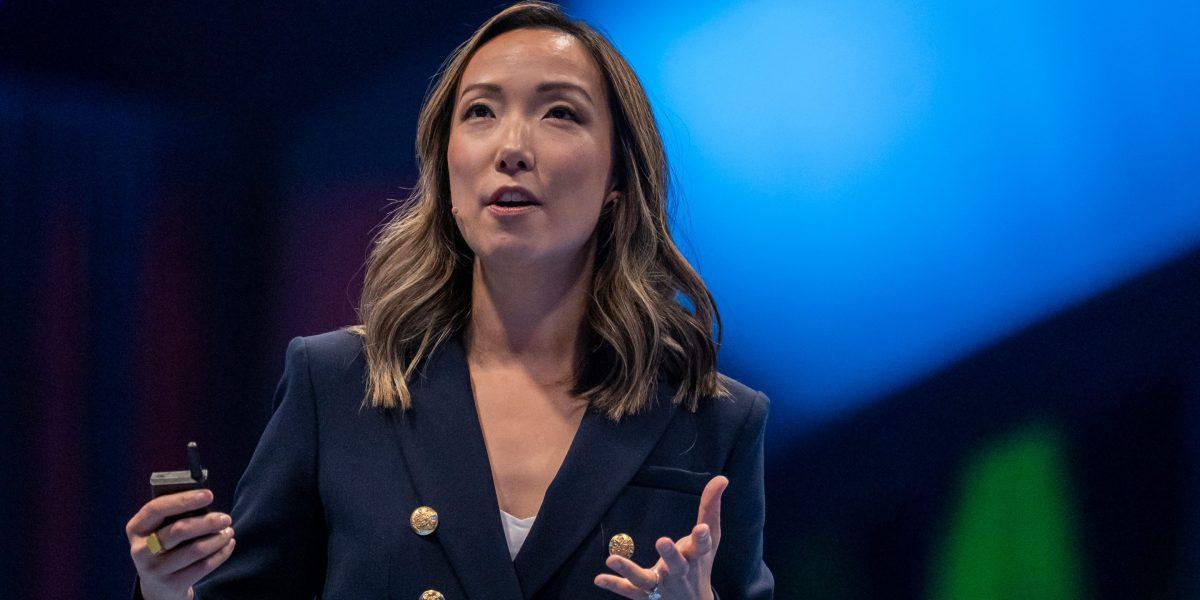
Source: Fortune
Related Stories

Public sentiment toward AI has shifted dramatically. Almost half of Gen Z polled in a recent NBC survey said they want to live in the past, with some citing AI as a specific reason
1
. A Gallup poll found that Gen Z's sentiment toward AI has grown significantly more negative compared to a year ago3
. Nearly half of registered U.S. voters hold negative views of AI, while 79% of workers in a Checkr survey worry that AI adoption could result in layoffs and pay cuts1
. Despite these concerns, evidence suggests that embracing AI tools is becoming essential. A recent survey from AI enterprise platform Writer found that employees actively using AI in their day-to-day tasks are more likely to earn promotions or raises compared to those refusing to adopt the technology3
. Shih has a direct message for those eschewing AI for moral reasons: "While I admire their principle, I don't think they're doing themselves or society any favors. They're the exact young people that I want being part of building these AI solutions"2
. She emphasized that "the people who have moral objections to AI, those are actually the people that I want involved, making sure that we steer these systems in the right direction"3
. The message on the Dear CC site captures the urgency: "You did the work. You got the diploma. The economy moved. This is not your fault -- but it is your future, and you can own it"1
.Summarized by
Navi
1
Science and Research

2
Technology

3
Policy and Regulation