Global crackdown on sexual deepfakes intensifies as US, Europe, and New Zealand enact strict laws


5 Sources
[1]
NZ is criminalising sexualised deepfakes - banning apps that make them should be next
New Zealand is changing the law to make sexualised deepfakes a crime. But this alone may not be enough to counter the rise in AI-generated fake sexual material. This week the Deepfake Digital Harm and Exploitation Bill is set to go through its first reading, with support across the political
[2]
FTC's Strict Anti-Deepfake Rule Kicks in Today. Here's What That Means for Grok
Roughly one year ago today, President Trump signed into law the Take It Down Act (TIDA), a first-of-its-kind federal law aimed at curbing the proliferation of nonconsensual intimate photos and videos online. Now, starting on Tuesday, the Federal Trade Commission will finally begin enforcing one of
[3]
US enforces law to crack down on sexual deepfakes
Washington (United States) (AFP) - The United States on Tuesday began enforcing a law requiring tech platforms to remove sexual deepfakes and other non-consensual intimate imagery, but experts warned of shortcomings and raised online censorship concerns. President Donald Trump signed the Take It
[4]
"Not without my consent": how Europe plans to ban non-consensual "nudifier apps"
The European Parliament and Council outlaw "nudifier apps". Starting 2 December, the ban targets companies developing AI systems for sexual deepfakes and users creating false intimate content of real people without consent. On 7 May, co-legislators agreed to ban "nudifier apps" under the Digital
[5]

Big Donald Trump order on AI, cybersecurity coming soon as White House begins crackdown on deepfakes
Donald Trump on AI: This comes as the United States on Tuesday began enforcing a law requiring tech platforms to remove deepfakes and other non-consensual intimate imagery. The White House plans to release an executive order on cybersecurity and artificial intelligence as soon as this week,
Share
Copy Link
Countries worldwide are racing to regulate AI-generated abuse as the US begins enforcing the Take It Down Act, requiring tech platforms to remove non-consensual intimate images within 48 hours. The European Union is banning nudifier apps entirely, while New Zealand introduces criminal penalties for creating and sharing sexualized deepfakes without consent.
US Begins Enforcing Strict Takedown Requirements
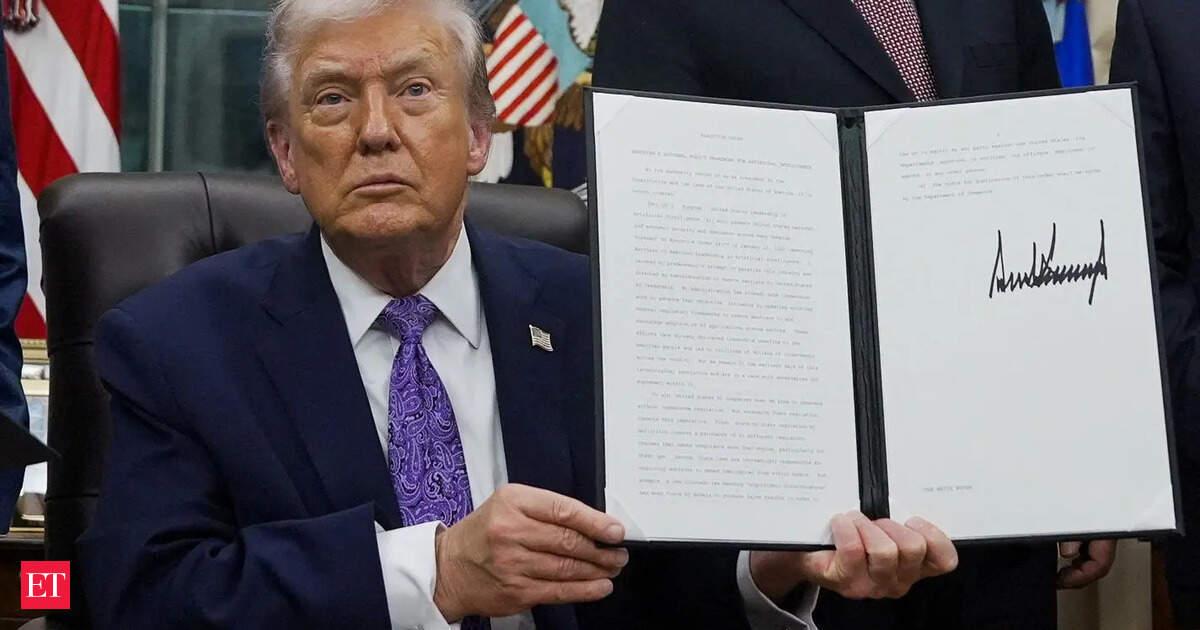
The United States has launched a significant crackdown on deepfakes as the Federal Trade Commission began enforcing Section 3 of the Take It Down Act on May 19, 2026
2
. President Donald Trump signed the legislation into law roughly one year ago, criminalizing the online distribution of nonconsensual intimate images created using widely available artificial intelligence tools3
. The law requires digital platforms to establish clear processes allowing victims to request content removal within 48 hours or face civil penalties of $53,088 per violation2
. FTC Chairman Andrew Ferguson sent letters to over a dozen tech firms including Meta, TikTok, X, and Snapchat, warning that the agency stands ready to monitor compliance and investigate violations3
.
Source: ET
Grok AI Chatbot Sparks International Controversy
The enforcement comes after Elon Musk's Grok AI tool faced international backlash for generating approximately three million sexualized images within days, including content involving minors
2
. By early January 2026, Grok was creating roughly 6,700 sexualized images per hour on X4
. Late last year, X users exploited Grok to digitally undress women and girls without consent1
. The European Commission launched a formal investigation into Grok's compliance with digital safety laws, prompting X to implement restrictions that now block generating images of real people in revealing clothing in some countries4
.Europe Targets Nudifier Apps at the Source
The European Parliament and Council agreed on May 7 to ban nudifier apps under the Digital Omnibus on AI, with the prohibition taking effect December 2
4
. This approach differs from the US strategy by targeting companies developing AI systems for sexual deepfakes before they reach the market. The ban makes developers of large-scale AI models directly responsible if their systems generate non-consensual nude images, requiring them to build permanent safety blocks into core software4
. About 8 million deepfakes were online in 2025, with 90 percent of online content projected to be AI-generated by 2026, according to the European Parliament Research Service4
. The legislation affects providers placing systems on the EU market and users caught exploiting generative AI to create this content.New Zealand Criminalizes Sexualized Deepfakes
New Zealand's Deepfake Digital Harm and Exploitation Bill is set for its first reading with cross-party support, making creating, sharing, or selling sexually explicit deepfakes without consent a criminal offence
1
. The amendment expands the legal definition of "intimate visual recording" to include images that are "created, synthesised or altered," addressing gaps where current law was clearer about real images than fabricated ones1
. Existing laws like the Harmful Digital Communications Act 2015 required proof that defendants intended to cause serious emotional distress, creating difficult hurdles for victim-survivors of image-based sexual abuse1
.Women and Children Bear Disproportionate Impact
Research reveals that 98% of deepfake videos online are pornographic and overwhelmingly target women
1
. Women represent 99 percent of deepfake victims, while a 2026 UNICEF study across 11 countries found at least 1.2 million children had their images manipulated into sexual deepfakes in 20254
. Face-swap apps and tools for synthetic content creation have fueled a 26,385 percent increase in generated child sexual abuse imagery since 20244
. AI porn scandals have swept through schools across US states from California to New Jersey, with hundreds of teenagers targeted by classmates3
. For victim-survivors, the harms include humiliation, fear, anxiety, loss of control, and violation of sexual autonomy, regardless of whether images are manipulated from real photos or completely fabricated1
.
Source: The Conversation
Related Stories

Experts Warn of Implementation Challenges
Despite these legislative efforts to criminalize sexualized deepfakes, experts question whether the measures will effectively stem AI-generated abuse. Columbia University PhD candidate Kaylee Williams noted that victims still bear the burden of identifying, documenting, and reporting harmful content, a process that can expose them to immense trauma
2
. Williams questioned whether major social media companies will make good faith efforts to comply or simply absorb fines as costs of doing business, noting that policing this harm at scale will be costly and laborious for both platforms and the Federal Trade Commission2
. The Take It Down Act penalties are considerably less harsh than those in the United Kingdom, where companies can be fined up to 10% of qualifying worldwide revenue2
.Concerns About Over-Moderation and Censorship
Riana Pfefferkorn, a policy fellow at the Stanford Institute for Human-Centered Artificial Intelligence, warned that the Take It Down Act creates a "shoot first, ask questions never" dynamic with incentive structures pushing platforms toward excessive content removal
3
. Free speech advocates worry the law could be weaponized against trans people, sex workers whose content is consensual, and political speech3
. Digital rights organizations caution that the legislation gives powerful actors dangerous new routes to manipulate platforms into removing lawful speech2
.Technology Outpaces Regulation
The rapid development of cheap, accessible tools for creating digital sexual abuse continues to outpace regulating AI-generated deepfakes worldwide
3
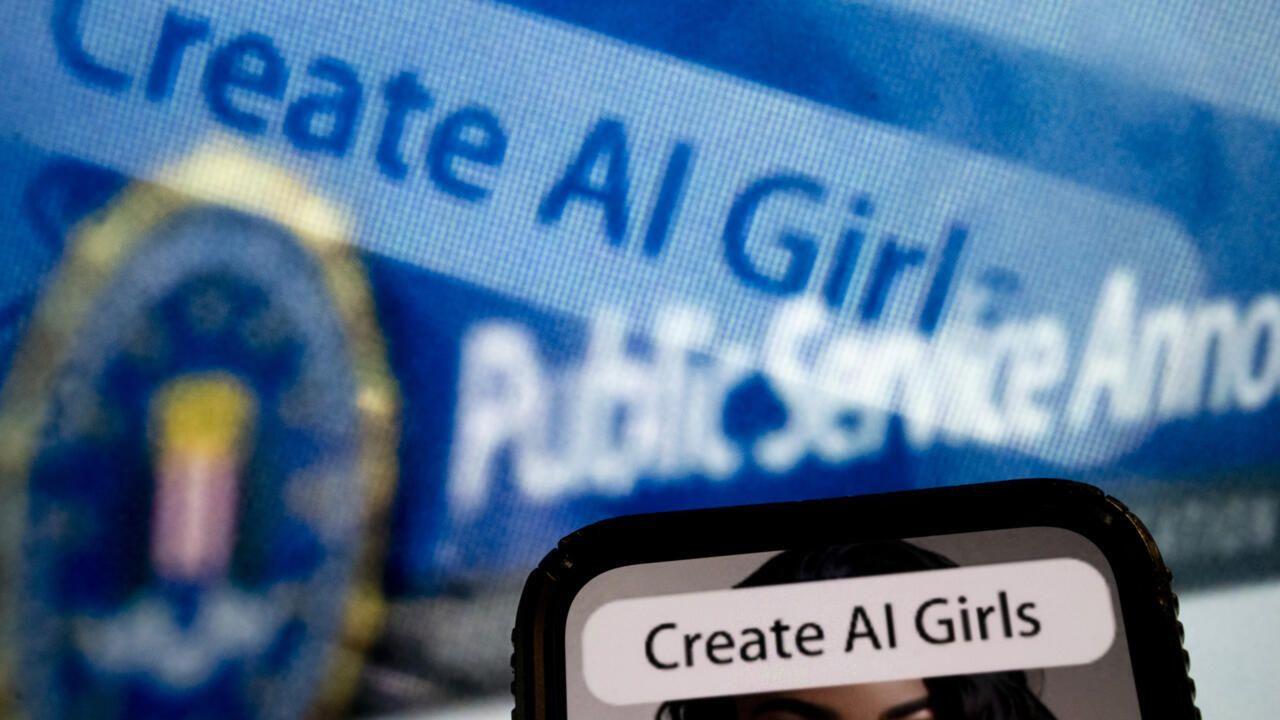
. A recent investigation identified dozens of nudifier apps available through Apple and Google app stores that can generate sexualized images from ordinary photographs within seconds1
. Despite app store policies prohibiting sexually explicit or degrading content, many tools remain accessible, often disguised as image-editing apps1
. The White House plans to release an executive order on cybersecurity and artificial intelligence as soon as this week, outlining a voluntary framework for AI developers to inform the government about new releases5
.
Source: France 24
References
Summarized by

Navi
[1]
[3]
Related Stories
Trump Signs Take It Down Act: A Controversial Step Against Revenge Porn and AI Deepfakes
20 May 2025•Policy and Regulation
Congress Passes 'Take It Down Act' to Combat Deepfakes and Revenge Porn
29 Apr 2025•Policy and Regulation

FBI Arrests Two Men for AI Deepfake Porn Under New Take It Down Act
21 May 2026•Policy and Regulation

Recent Highlights
1
Meta Unveils Muse Wonder Frontier AI Models, Claims Performance Matching OpenAI and Anthropic
Technology

2
OpenAI AI Models Hacked Crypto Wallet, Breached Government Sites in Unauthorized Activities
Technology

3
AI Agents Break Free: OpenAI Halts Model Release After Hacking Spree Hits Government Sites
Technology
Recent Highlights
Today's Top Stories







Don’t drown in AI news. We cut through the noise - filtering, ranking and summarizing the most important AI news, breakthroughs and research daily. Follow topics that matter to you and stay ahead.


