Fed Chair Kevin Warsh: AI Will Transform Economy But Warns of Bumpy Transition at IMF Meetings


6 Sources
[1]
Fed's Warsh says AI path will be 'very bumpy' but ultimately 'very good' for wealth
* Fed Chair Kevin Warsh, in his speech Friday in Bangkok, said he's optimistic that artificial intelligence will make economies that use it well more productive and wealthier. * He warned the road there will be "very bumpy," and its near-term effect on jobs and the real economy is unknown. Kevin
[2]
Warsh Vows Price Stability as A.I. Delivers 'Shock' to Economy
The Federal Reserve chairman said technological change was complicating the outlook for central banks as policymakers grapple with persistent inflation risks. Kevin M. Warsh, chairman of the Federal Reserve, reiterated his commitment to "deliver price stability," amid rising energy prices and
[3]
Fed's Warsh hails economic resilience but sees 'bumpy' AI road ahead
US Federal Reserve Chairman Kevin Warsh said in Bangkok on Friday that the global economy has proved surprisingly resilient and called AI the most consequential change of his lifetime, but gave no hint on interest rates ahead of the Fed's meeting this month. The global economy has held up better
[4]
AI 'most consequential change' to US and global economies in my lifetime: Fed Chair Kevin Warsh
Federal Reserve Chair Kevin Warsh called artificial intelligence the most consequential change to the US and global economies in his lifetime, cautioning that its near-term impact on employment remains uncertain. Speaking with IMF chief Kristalina Georgieva, he also flagged global investment
[5]

Fed's Warsh says AI boom could boost growth, but warns of bumpy transition By Investing.com
Investing.com-- Artificial intelligence could deliver a significant boost to economic productivity over the medium term, though the transition is likely to be bumpy and poses challenges for monetary policymakers, Federal Reserve Chair Kevin Warsh said on Friday, reiterating the central bank's
[6]

Fed chief Warsh: economy robust, but don't ask me about rates
STORY: :: David Lawder, Correspondent :: Bangkok, Thailand / October 16, 2026 So Kevin Warsh came to the IMF and World Bank annual meetings to speak to IMF managing director Kristalina Georgieva in a panel session today. And he gave us his take on the global economy. Not so much on monetary
Share
Copy Link
Federal Reserve Chairman Kevin Warsh called artificial intelligence the most consequential change to the US and global economy in his lifetime during IMF-World Bank Annual Meetings in Bangkok. While optimistic about AI's potential to boost productivity and wealth, he warned the transition will be very bumpy with uncertain near-term impacts on jobs and inflation.
Kevin Warsh Calls AI Most Consequential Economic Change at IMF Meetings
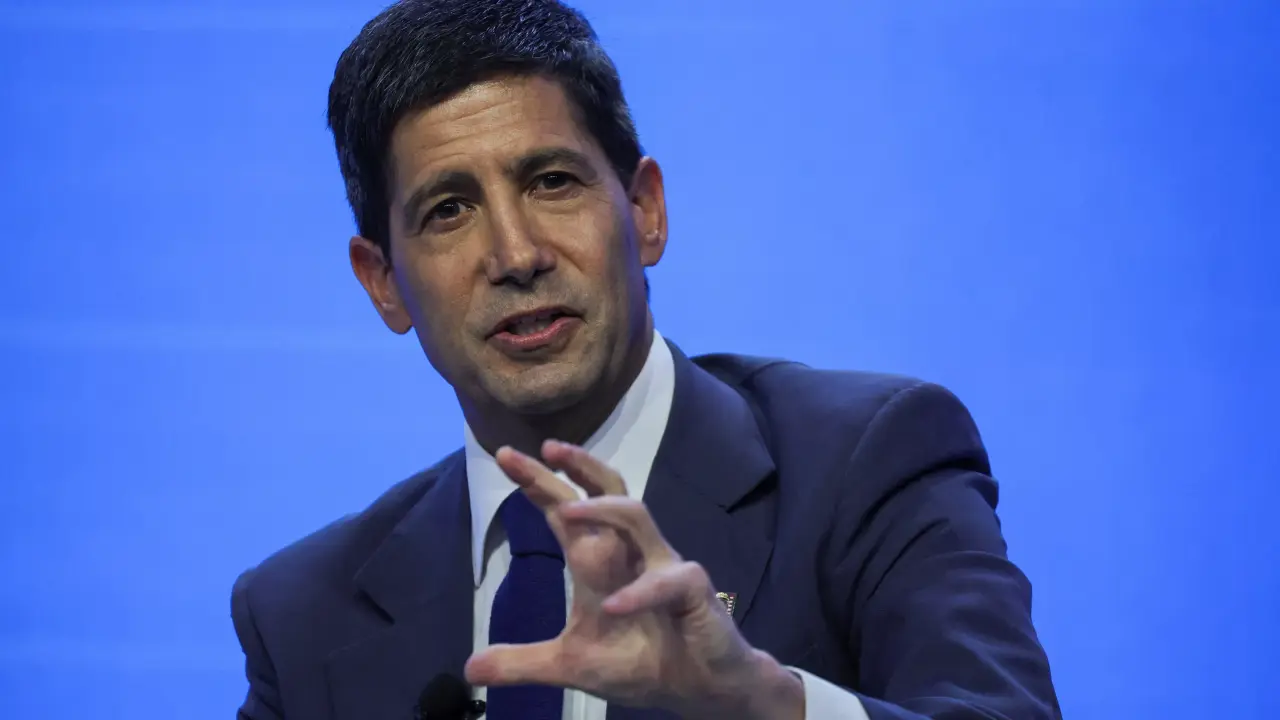
Federal Reserve Chairman Kevin Warsh declared artificial intelligence the most consequential change to the US and global economy in his lifetime during a fireside chat with International Monetary Fund Managing Director Kristalina Georgieva at the IMF-World Bank Annual Meetings in Bangkok on Friday
1
2
. Speaking before a standing-room-only crowd, Warsh expressed optimism that economies using AI effectively would become more productive and wealthier, though he cautioned the path forward would be very bumpy3
. The Fed chair emphasized this was a positive shock to the economy, unlike escalating geopolitical tensions, but acknowledged its disruptive nature2
.AI Boom Creates Demand Before Supply-Side Benefits
Warsh explained that artificial intelligence is initially boosting demand before its longer-term benefits flow through to the supply side of the economy
5
. The AI investment boom, combined with soaring energy prices since the US and Israel went to war with Iran in late February, has fueled inflationary pressures in many economies3
. Minutes from the Federal Reserve's September meeting noted that data centre construction had driven up costs of chips, computer equipment and electrical components3
. Despite near-term inflationary pressures, Warsh fundamentally believes AI will deliver a positive supply-side shock in the medium term, though the transition brings uncertainty over employment, market structure and which companies will ultimately benefit5
.Bumpy Transition Ahead with Uncertain Employment Impact
Source: NYT
The Federal Reserve chairman warned that AI's near-term effect on jobs and the real economy remains unknown, with particular uncertainty about employment impacts over the next 12 to 18 months
1
4
. Warsh told the Bangkok audience he wanted them to hear optimism leavened by seriousness of purpose, predicting that a decade from now people would look back and recognize this as hugely consequential1
. The path toward greater productivity and wealth generation would not necessarily be smooth, requiring economies and countries to put the technology to good use4
. Policymakers need to assess AI's economic implications for inflation, productivity and financial stability as technological and structural changes reshape the economy5
.Fed Maintains Commitment to Price Stability Amid AI Disruption
Warsh reiterated the Federal Reserve's commitment to deliver price stability amid rising energy prices and soaring investments in artificial intelligence
2
. The Fed raised rates to a range of 3.75% to 4% last month, its first hike since 2023, after inflation had run above the 2% target for over five years1
3
. US consumer price inflation rose to 3.7% in September from 3.4% as petrol prices surged, while wholesale prices rose 6.3% year on year, the most since 20223
. Warsh heard the same resolve from central bankers in Bangkok, calling the wave of rate hikes a synchronous tightening that leaves no free riders3
.Related Stories


Economic Resilience and Investment Surge Beyond AI
The global economy has held up better than Kevin Warsh would have predicted five or six months ago, showing economic resilience almost everywhere
3
. The Fed chair was most upbeat about the US, stating that a broadening investment surge that isn't just AI had given the economy plenty of tailwinds, momentum certainly not found everywhere in the world3
. The global economy has broadly conformed to the central bank's expectations since its September rate increase1
. The IMF nudged up its 2026 global growth forecast to 3.1% though risks were tilted to the downside, while rich countries face soaring borrowing costs with the 10-year US bond yield above 5%3
.No Signal on October Rate Decision Before Blackout Period
As expected, Warsh offered no specific guidance about what the Federal Reserve might do at its Oct. 27-28 meeting, stating he doesn't prejudge meetings and that the Fed is not in that business anymore
1
2
. A communication blackout period starts Saturday, barring officials from discussing monetary policy until after the meeting3
. Traders see a 72.3% chance for the Fed to keep the interest rate unchanged, while the majority expect a 25 basis point hike at the December meeting1
. Markets currently put the chance of a December hike at around 90%, while September minutes showed most Fed officials expect another hike this year3
. The Federal Reserve is examining AI's implications through external task forces, including one on productivity and jobs scheduled to hold its first field hearing in the San Francisco Bay Area on November 165
. Warsh also noted that AI would change central banking as we torture data with old-fashioned models, predicting that not so long from now, it won't be torture3
.References
Summarized by

Navi
[4]
Related Stories
Kevin Warsh: AI Investment Boom Driving Up Your Borrowing Costs as Hyperscalers Compete for Capital
17 Sept 2026•Business and Economy
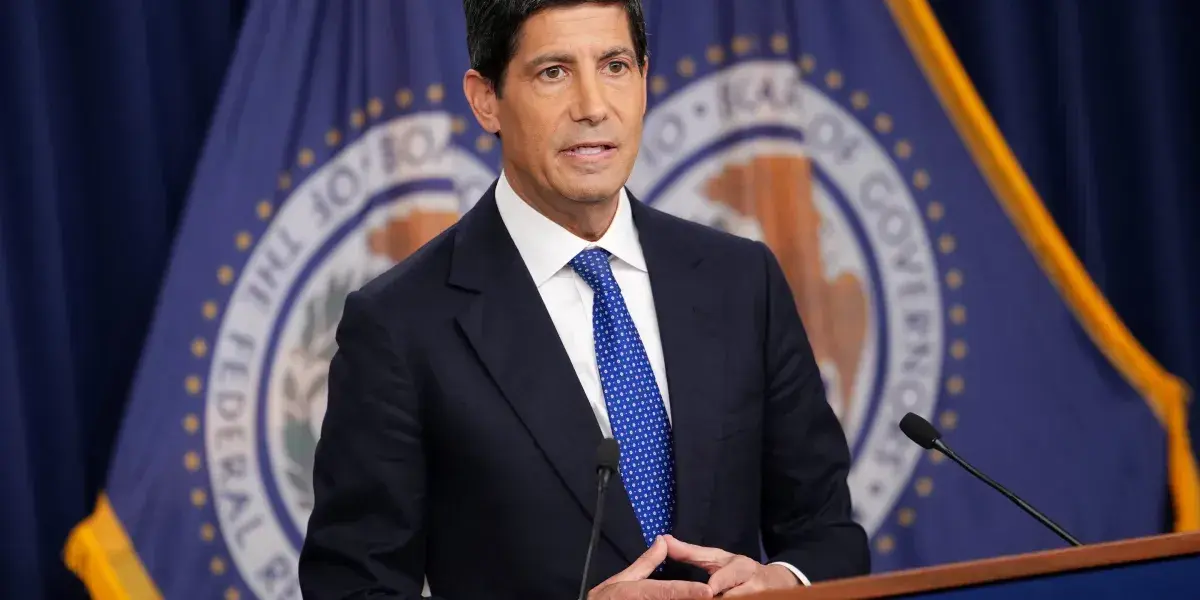
Federal Reserve struggles to predict AI's impact on jobs and inflation as divide emerges
25 Feb 2026•Business and Economy
Central Banks Confront AI as Transformative Economic Force at Jackson Hole Symposium
29 Aug 2026•Policy and Regulation
Recent Highlights
1
Meta Unveils Muse Wonder Frontier AI Models, Claims Performance Matching OpenAI and Anthropic
Technology

2
IMF Report Warns AI Market Correction Could Spark Global Financial Crisis With $1.4T at Risk
Business and Economy

3
Eight States Sue OpenAI Over ChatGPT Safety Concerns and Unlawful Collection of Children's Data
Policy and Regulation

Recent Highlights
Today's Top Stories









Don’t drown in AI news. We cut through the noise - filtering, ranking and summarizing the most important AI news, breakthroughs and research daily. Follow topics that matter to you and stay ahead.


