Kevin Warsh: AI Investment Boom Driving Up Your Borrowing Costs as Hyperscalers Compete for Capital


3 Sources
[1]
How Kevin Warsh's rate hike exposed a 2-speed U.S. economy, with AI and housing at the poles | Fortune
From mortgages to auto loans to credit cards, borrowing is set to get even pricier. But the Federal Reserve's decision on Sept. 16, 2026, to hike its baseline interest rate also highlighted an increasingly confounding dilemma: It can raise the price of money across the economy, but it can't
[2]
Warsh says AI's hyperscalers are part of why your borrowing costs are rising: 'The competition for capital is real' | Fortune
The Federal Reserve raised its benchmark rate by a quarter point on Wednesday, to 3.75-4%. But the rate that matters more for mortgages, corporate loans, and the federal government's interest bill is the 10-year Treasury yield, which the Fed doesn't set, has been rising for months, and just hit the
[3]
US Market: Fed's Warsh points to AI investment, geopolitical risks for higher yields
Federal Reserve Chair Kevin Warsh said rising bond yields reflect economic strength, heavy capital investment in AI and data centers, and geopolitical uncertainty rather than persistent inflation concerns or doubts about the Fed's credibility. He emphasized that financial markets inform
Share
Copy Link
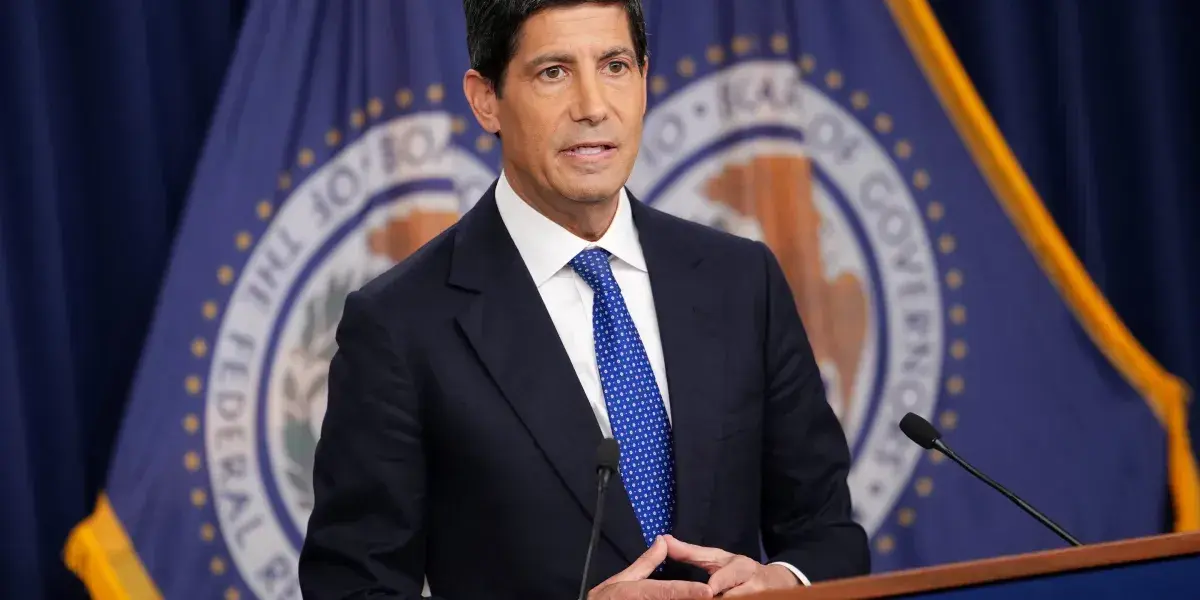
Federal Reserve Chair Kevin Warsh identified AI infrastructure spending as a key driver behind rising borrowing costs. Tech giants borrowed $121 billion in 2025 alone to fund data centers, creating intense competition for capital that's pushing 10-year Treasury yields above 5% and affecting mortgages, auto loans, and credit cards across America.
Kevin Warsh Identifies AI Investment as Key Driver of Rising Borrowing Costs
Federal Reserve Chair Kevin Warsh highlighted AI investment as a significant factor behind rising borrowing costs during a press conference following the Fed's decision to raise its benchmark rate by a quarter percentage point to 3.75-4% on September 16, 2026
1
. When asked about the surge in 10-year Treasury yields, which crossed 5% on September 14 for the first time since 2023, Warsh pointed to three primary causes: economic strength, geopolitical risks, and the unprecedented borrowing by AI's hyperscalers2
. "The so-called hyperscalers are out in the market raising funding," Warsh explained. "And so the competition for capital is real. And I think it partly explains the increase in yields."2
Hyperscalers Borrow Hundreds of Billions for Data Centers
The scale of AI infrastructure spending has reached extraordinary levels. The five major hyperscalers—Amazon, Microsoft, Alphabet, Meta, and Oracle—issued $121 billion in U.S. corporate bonds in 2025, a dramatic increase from an average of $28 billion annually between 2020 and 2024, according to BofA Securities
2
. Morgan Stanley estimates that AI-related global debt reached nearly $236 billion by the end of May 2026, four times the pace of a year earlier, and forecasts it will approach $570 billion for the full year2
. This massive borrowing spree reflects a fundamental shift: hyperscaler capital spending now runs close to 100% of operating cash flow, with some companies dipping negative, meaning they can no longer fund data centers and AI infrastructure buildout from profits alone and must turn to bond markets2
.Competition for Capital Pushes Up 10-Year Treasury Yields
Warsh described the 10-year Treasury as "the most important asset anywhere in the world" and "the risk-free asset upon which every price of virtually every asset in the world is related to"
2
. The argument is straightforward: there is only so much money to lend at any given time, and when tech giants borrow hundreds of billions for data centers, they compete with the U.S. Treasury and everyone else for that capital, driving up the price of borrowing across the economy2
. This competition for capital affects everything from mortgages to auto loans to credit cards, making borrowing more expensive for consumers and businesses alike1
.Federal Reserve Rate Hike Exposes Two-Speed U.S. Economy
The Federal Reserve's decision to raise rates also highlighted an increasingly confounding dilemma: it can raise the price of money across the economy, but it can't determine which sectors are most affected
1
. The rate increase may further slow weaker parts of the economy, such as the housing market, while barely affecting the strongest sector—the relentless AI investment boom1
. This two-speed U.S. economy sees investment in AI, whether through data centers, computing capacity, or related infrastructure, booming and crowding out other kinds of investment1
.Housing Market Crushed While AI Infrastructure Thrives
The housing market provides the clearest example of the uneven economic impact. Persistently high mortgage rates are reinforcing the "lock-in" effect for current homeowners who financed their houses when mortgage rates were 3% or 4%, so they're staying put with little incentive to sell and purchase another home at much higher rates
1
. Meanwhile, consumers are carrying ever more expensive credit card and auto debt, and many small and traditional businesses face substantially higher financing costs than they did several years ago1
. Those costs reflect rising US bond yields on longer-term U.S. government debt, driven by a mix of factors including longer-term inflation concerns due to soaring U.S. government debt, geopolitical risks pushing up energy costs, and ongoing financing demand for AI1
.Related Stories

Warsh Defends Inflation Target Amid Economic Strength
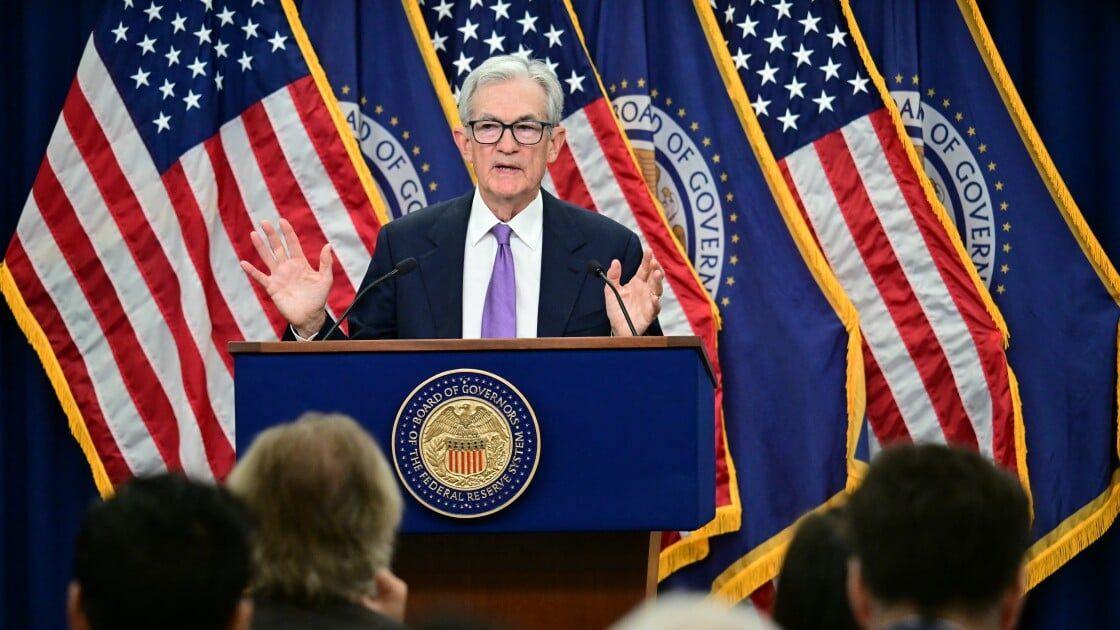
In its statement, the Fed's policymaking committee described inflation as still "elevated" and noted that other economic indicators remain strong, from productivity to investment to domestic spending
1
. The decision aligns with Kevin Warsh's recent comments that restoring price stability is central to the Fed's credibility. In a key speech in August at the Federal Reserve Bank of Kansas City's annual Jackson Hole conference, he underscored his commitment to bringing annualized inflation back down to 2%, an objective he called a "firm, fixed target"1
. Consumer prices rose 0.4% in August and 3.4% over the past year, showing the 2% annual inflation target remains elusive1
.Geopolitical Risks Add Pressure on Borrowing Costs
Warsh also pointed to geopolitical risks as another factor behind higher long-term yields. The war with Iran has pushed oil prices back above $100 a barrel, adding new inflation pressure through gasoline, diesel, transportation, and production costs
1
. According to Reuters, Warsh said markets were responding not only to movements in commodity prices but also to the broader costs of turning raw materials into products that reach consumers3
. Notably, Warsh did not identify concerns about the sustainability of U.S. government deficits as a major driver of higher yields, even as federal debt has surpassed $40 trillion3
.What to Watch: AI's Long-Term Impact on Monetary Policy
Warsh emphasized that financial markets inform policymakers but do not dictate decisions, stating that market pricing did not force the Fed into raising rates
3
. He also revealed that the Fed has set up an internal task force on AI, due to report by the end of the year, to study "the implications for our future policy conjuncture," though he didn't provide details2
. The AI angle cuts two ways for the Fed: while strong productivity growth and robust capital investment signal economic strength and reasons to hike rates, Warsh has been optimistic that AI will eventually expand the economy's capacity and be disinflationary2
. Investors should watch whether hyperscalers' insatiable appetite for capital continues at this pace, how the Fed's AI task force findings influence future policy, and whether the productivity gains from AI infrastructure materialize quickly enough to offset the near-term inflationary pressures from this unprecedented competition for capital.References
Summarized by

Navi
Related Stories
Fed Officials Clash Over AI Investment Risks as Spending Reaches $2.4 Trillion
05 Aug 2026•Policy and Regulation

Fed Chair Kevin Warsh: AI Will Transform Economy But Warns of Bumpy Transition at IMF Meetings
Today•Policy and Regulation
Central Banks Confront AI as Transformative Economic Force at Jackson Hole Symposium
29 Aug 2026•Policy and Regulation
Recent Highlights
1
Meta Unveils Muse Wonder Frontier AI Models, Claims Performance Matching OpenAI and Anthropic
Technology

2
IMF Report Warns AI Market Correction Could Spark Global Financial Crisis With $1.4T at Risk
Business and Economy

3
Eight States Sue OpenAI Over ChatGPT Safety Concerns and Unlawful Collection of Children's Data
Policy and Regulation

Recent Highlights
Today's Top Stories









Don’t drown in AI news. We cut through the noise - filtering, ranking and summarizing the most important AI news, breakthroughs and research daily. Follow topics that matter to you and stay ahead.


