Figma launches AI assistant that designs directly on its collaborative canvas


3 Sources
[1]
Figma adds an AI assistant to its collaborative canvas | TechCrunch
Over the last few months, Figma has struck partnerships with OpenAI and Anthropic to bake in support for AI CLI tools like Claude Code and Codex to allow users to use these coding environments alongside its design software. The company is now baking in its own take on AI smarts via a new AI agent
[2]
Figma launches AI agent that designs on the canvas
Summary: Figma is launching its own AI agent that operates directly on the collaborative design canvas, letting users generate, edit, and iterate on designs through natural language prompts. The move follows partnerships with Anthropic and OpenAI and the $200 million Weavy acquisition. For months,
[3]
Figma partners with OpenAI and Anthropic to launch in-house AI agent
Figma has established partnerships with Anthropic and OpenAI to integrate AI command-line interface tools, such as Claude Code and Codex, into its design software. The introduction of an in-house AI agent will enable users to employ natural language prompts to create new designs, modify existing
Share
Copy Link
Figma unveiled an AI assistant that operates within its collaborative canvas, allowing teams to generate, edit, and iterate on designs using natural language prompts. Following partnerships with OpenAI and Anthropic, the company now deploys its own fine-tuned AI agent that understands design contexts and can work alongside human designers in real time.
Figma AI Agent Transforms Design Workflow on Collaborative Canvas
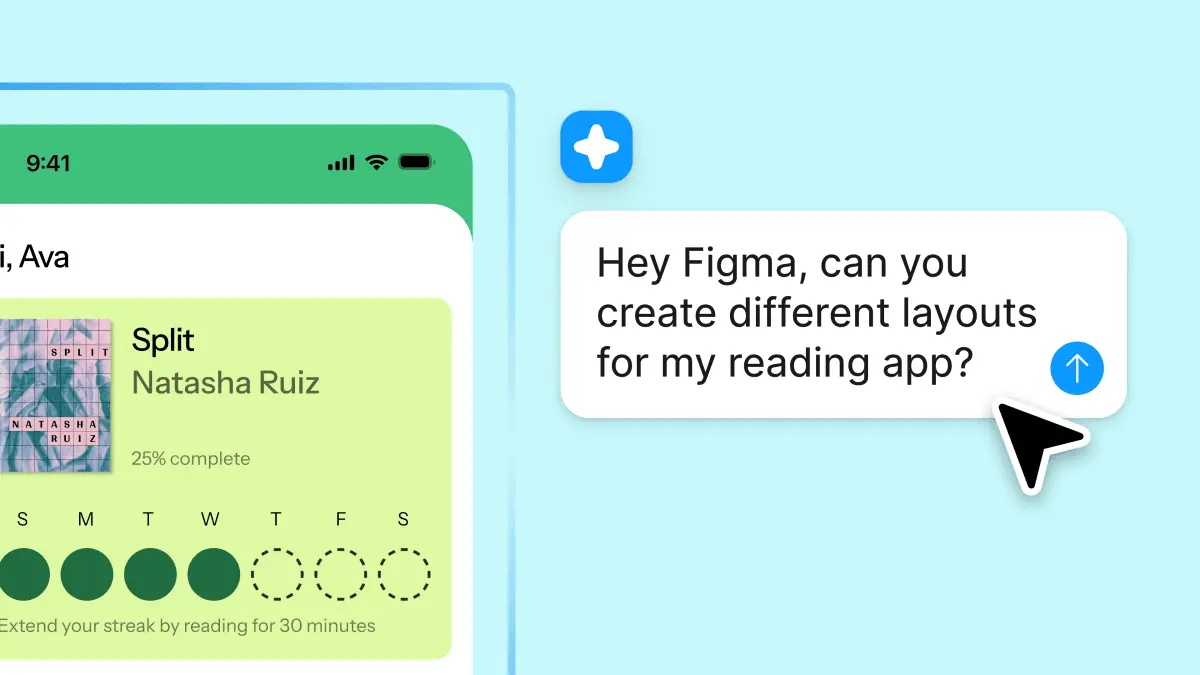
Figma has launched its own AI assistant that operates directly within its collaborative canvas, marking a significant shift in how design teams interact with artificial intelligence
1
. The AI agent that designs on the canvas allows users to generate new designs, edit existing ones, and automate tasks using natural language prompts, fundamentally changing the creative process2
. Users can describe what they want in plain language and watch the agent produce it on the canvas in real time, with the capability to run multiple agents simultaneously, each handling different tasks2
.
Source: TechCrunch
Fine-Tuned AI Models Built Specifically for Design Software
Unlike generic large language models, Figma AI runs on fine-tuned AI models specifically optimized for design applications
3
. The company claims these models understand design contexts, layout, components, and visual hierarchy that standard AI systems lack2
. This specialized training enables the AI assistant to comprehend design elements and principles in ways that make it a more effective collaborator for professional designers working in Figma Design3
.Strategic Partnerships Expand AI Command-Line Interface Tools Integration
Over recent months, Figma established partnerships with OpenAI and Anthropic to integrate AI command-line interface tools like Claude Code and Codex into its design software
1
3
. These February integrations let developers convert running interfaces into editable Figma frames or hand designs to coding agents for production-ready implementation2
. The new built-in assistant adds a different dimension by making AI a native participant in the design process itself, rather than simply bridging design and code2
.Revenue Growth Signals Market Strength Despite AI Disruption Concerns
Figma reported revenue growth of $333.4 million in the first quarter of 2026, representing a 46% increase year over year
1
3
. The company's net dollar retention rate climbed to 139%, the highest in over two years, with AI credit monetization from Figma Weave contributing to these strong results2
. These numbers demonstrate that Figma has performed well despite concerns about AI potentially diminishing design jobs and demand for design software3
.Related Stories

Competitive Pressure Drives Figma to Integrate AI Into Collaborative Canvas
The company faces intense competition from Canva, which now claims 220 million users globally and launched its AI 2.0 platform in March with a proprietary foundation model built for design. Adobe's Firefly holds 41% business adoption, while AI-native startups including Flora, Krea, and Dessn chase the same designer audience
1
2
. Google unveiled Pics at I/O 2026, an AI design tool built directly into Workspace that generates graphics from text prompts2
.Future Vision Brings Design and Code Closer Together
"As building software gets easier, what matters most is setting direction: deciding what to work on, how it should function, what the experience should feel like. Teams can now collaborate with agents on the multiplayer canvas to test out ideas, visualize edge cases, and refine concepts together without over-indexing on the more tedious parts," said Loredana Crisan, Figma's chief design officer
1
. The AI assistant is launching first in Figma Design, with plans to extend it to other products over time1
. Figma's advantage lies in its canvas itself—more than 690,000 paying teams already use it as their collaborative workspace, and the multiplayer architecture now serves as the natural environment for AI agents to operate alongside human teammates2
. Last year's $200 million acquisition of node-based design tool Weavy, which became Figma Weave, underscores the company's commitment to bringing design and code even closer together within its applications2
.References
Summarized by

Navi
[2]
Related Stories
Figma partners with Anthropic on Code to Canvas as stock plunges 85% amid AI disruption fears
17 Feb 2026•Technology

Figma brings code layers and AI motion graphics to design canvas at Config 2026
24 Jun 2026•Technology

Figma Launches Specs to Guide AI Agents With Design Rules and Expands Code Layers at Config India
Yesterday•Technology

Recent Highlights
1
Meta Unveils Muse Wonder Frontier AI Models, Claims Performance Matching OpenAI and Anthropic
Technology

2
IMF Report Warns AI Market Correction Could Spark Global Financial Crisis With $1.4T at Risk
Business and Economy

3
Eight States Sue OpenAI Over ChatGPT Safety Concerns and Unlawful Collection of Children's Data
Policy and Regulation

Recent Highlights
Today's Top Stories









Don’t drown in AI news. We cut through the noise - filtering, ranking and summarizing the most important AI news, breakthroughs and research daily. Follow topics that matter to you and stay ahead.


