Florida Researchers Deploy AI-Powered Mosquito Trap with 98% Accuracy to Combat Dengue Outbreaks


2 Sources
[1]
New AI-powered mosquito trap could help curb dengue outbreaks
As Florida continues to face one of its worst dengue outbreaks in nearly a century, a mosquito trap created by USF startup Digitomy is helping curb the spread of the virus and other mosquito-borne diseases. The smart trap contains patented AI technology and has achieved more than 98% accuracy in
[2]
Florida researchers develop AI-powered trap to catch dengue-carrying mosquitoes with over 98% accuracy
Florida dengue outbreak: Researchers at the University of Florida developed an AI-powered trap aimed at identifying dengue-carrying mosquitoes. This technology achieves over 98% accuracy in lab settings, significantly improving disease surveillance. The traps utilize a combination of light and a
Share
Copy Link
A University of South Florida startup has created an AI-powered mosquito trap achieving over 98% accuracy in identifying disease-carrying species during lab testing. As Florida battles one of its worst dengue outbreaks in nearly a century with over 700 cases, Digitomy's smart trap uses artificial intelligence and cloud computing to help public health officials track and respond to mosquito-borne diseases in real time.
AI-Powered Mosquito Trap Addresses Florida's Dengue Crisis
As Florida confronts one of its most severe dengue outbreaks in nearly a century, with over 700 cases reported as of October 22, researchers at the University of South Florida have developed an AI-powered mosquito trap that could transform how public health officials combat mosquito-borne diseases
2
. The technology, created by Associate Professor Ryan Carney and Professor Sriram Chellappan and commercialized through USF startup Digitomy, has demonstrated over 98% accuracy in identifying mosquito species during laboratory testing1
. This development matters because traditional mosquito surveillance requires specialists to spend two to three days examining specimens under microscopes, delaying critical interventions during active outbreaks1
.How the Smart Trap Identifies Dengue-Carrying Mosquitoes

Source: Tech Xplore
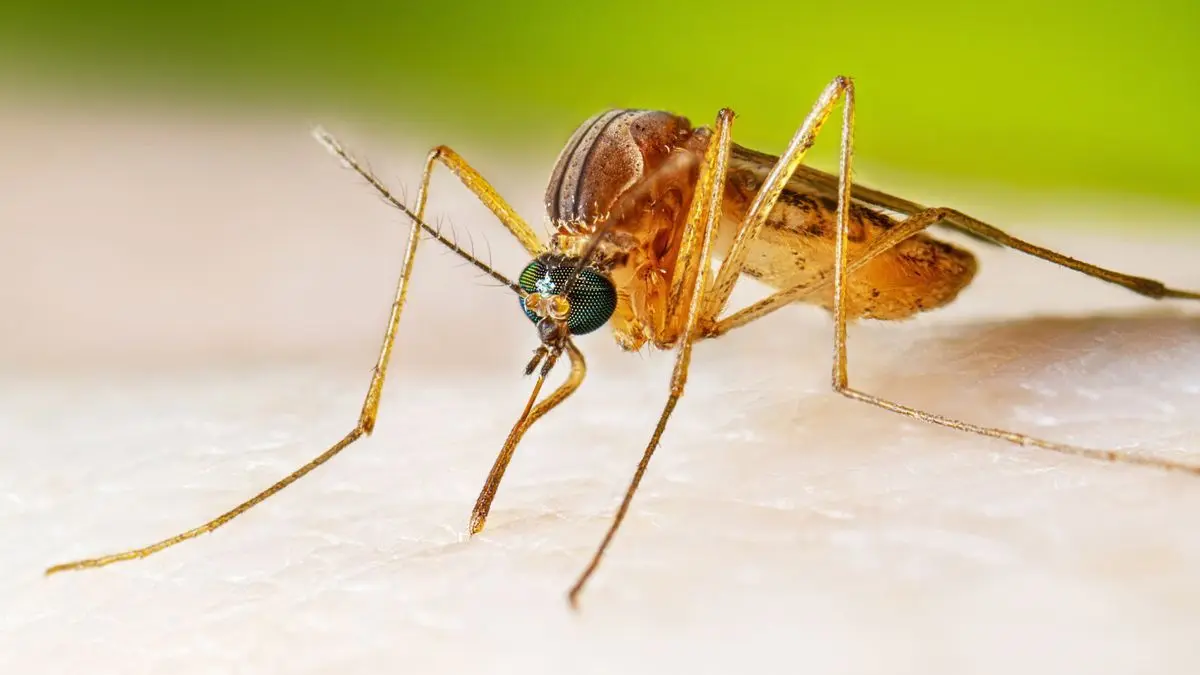
The AI-powered mosquito trap operates by hanging from low tree branches or sitting on the ground, using either light or bait to attract insects while a fan draws them inside onto a sticky pad
1
. Two built-in cameras photograph the captured mosquitoes, allowing the artificial intelligence to identify species, gender, and whether they have fed on blood by matching images against a vast database1
. The system proves remarkably energy-efficient, requiring less power to analyze an entire sticky pad of mosquitoes than sharing a single Instagram post2
. Carney emphasized the trap's strategic importance: "While there are 3,500 mosquito species, it's primarily only one, Aedes aegypti, that is spreading dengue in Florida. We can use the data from our smart traps to construct a habitat model, as well as to monitor the species' presence and abundance in real time, to strategically mitigate its spread"1
.Real-Time Data Transforms Disease Surveillance
Digitomy's technology integrates cloud computing and a mapping dashboard to provide public health officials with same-day results, a stark contrast to the multi-day delays of conventional methods
1
. The trap data feeds into a private layer of Digitomy's Global Mosquito Observations Dashboard, which combines information from smart traps with more than half a million citizen science reports1
. This real-time data enables mosquito control districts to pinpoint where disease-carrying species concentrate and direct targeted interventions more effectively2
. The system could eventually complement Carney's earlier DYCAST early warning system for dengue outbreaks and West Nile virus1
. Rui-De Xue, executive director of Anastasia Mosquito Control District, noted that "collaborating with Digitomy and USF will benefit our programs by helping us explore and adopt new artificial intelligence technology"1
.Related Stories

Public Education Platform Enhances Mosquito Species Identification
Beyond surveillance, Digitomy is developing a cloud-based education platform for both mosquito control professionals and the general public
1
. Users can examine mosquito images, identify species, and receive AI-generated feedback to improve their mosquito species identification skills without attending in-person training sessions2
. Carney stressed the importance of community engagement: "Education is our secondary line of defense. While our smart traps provide the macro-level data, the public should practice the three D's: Drain standing water, Dress to cover skin and wear DEET"1
. The researchers plan to integrate this platform into professional training programs with mosquito control districts, including Anastasia and Hillsborough1
.Strategic Mitigation of Dengue Through Technology Licensing
As Digitomy prepares for field validation with Hillsborough County and consumer sales, the team is working with USF's Technology Transfer office to license the technology to established mosquito trap manufacturers
1
. This approach would combine existing equipment with USF's AI identification system, potentially accelerating deployment across regions facing mosquito-borne diseases. Diana Shapiro, chief operations officer of Digitomy, explained the urgency: "Mosquito-control programs wait days to learn what is in their traps. Our technology is built to tell them the same day, and to reach the places with the least to spend and the most at stake"1
. Research behind Digitomy has been underway at the University of South Florida since 2018, with testing at USF and partnerships with St. Johns County's Anastasia Mosquito Control District helping advance the technology1
. The short-term impact centers on Florida's immediate outbreak response, while long-term implications suggest this AI-driven approach could establish new standards for global disease surveillance, particularly in resource-limited regions where mosquito-borne diseases pose the greatest threat.References
Summarized by

Navi
Related Stories
Google seeks EPA approval to release 64 million bacteria-infected mosquitoes in California and Florida
02 Jun 2026•Health
AI Outperforms Humans in Detecting Intestinal Parasites, Revolutionizing Diagnostic Processes
23 Oct 2025•Technology

AI System Achieves 99.6% Accuracy in Rabies Virus Detection, Transforming Global Testing
12 Oct 2026•Health

Recent Highlights
1
OpenAI's AI Models Disprove 27-Year Exponential Time Hypothesis, Rendering Decades of Research Obsolete
Science and Research

2
Google DeepMind unveils Genie 4 world model with audio and 2-minute interactive simulations
Technology

3
Microsoft AI Diagnostic Tool Beats Doctors With 83% Accuracy on Complex Medical Cases
Health

Recent Highlights
Today's Top Stories







Don’t drown in AI news. We cut through the noise - filtering, ranking and summarizing the most important AI news, breakthroughs and research daily. Follow topics that matter to you and stay ahead.


