Ford rehires 350 veteran engineers after AI failures expose limits of automated quality control


17 Sources
[1]
Ford rehires 'gray beard' engineers after AI falls short
Ford executives said they have hired 350 veteran engineers -- some of them were former employees, while others had been working at suppliers -- after artificial intelligence and automated systems failed to deliver the desired quality level. Bloomberg reports the company's chief operating officer
[2]
Ford Had to Rehire Veteran Engineers After Its AI Flopped. Other Employers Should Take Notice
North American Car, Truck and SUV of the Year (NACTOY) Awards Juror At a conference last year, Ford CEO Jim Farley said that artificial intelligence is "going to replace literally half of all white-collar workers in the US." Just last week, Ford executives said that the automaker had quietly
[3]
Ford had to hire back former engineers to fix mistakes made by its automated systems
To celebrate its new status as No. 1 in JD Power's initial quality ranking among mainstream automakers, Ford is opening up about the challenges it has faced in recent years, especially around its reliance on automated systems in production and design. It turns out that those automated systems were
[4]
Employers who laid off workers citing AI are already starting to regret it
Companies are rapidly changing their minds that artificial intelligence can "do it all" by rehiring employees to propel their businesses forward, as investors fret over the longevity of the ongoing AI boom happening in the financial markets. Automaker Ford is one of the latest companies to reverse
[5]

Ford rehires human engineers after AI fails to match quality checks
Ford says it has hired back some human engineers after AI failed to match their skills and experience. In a bid to reap the benefits of the tech, which developers claim can cut costs and boost productivity, the US carmaker adopted it across some parts of its operations including for quality
[6]

Ford learned the hard way that AI can't replace experienced engineers
Serving tech enthusiasts for over 25 years. TechSpot means tech analysis and advice you can trust. The takeaway: Ford's push to modernize its engineering and production systems with artificial intelligence did not initially deliver the gains the company expected. Instead, it exposed a gap that
[7]

Ford rehired 350 engineers to fix what its AI systems got wrong
Ford rehired 350 engineers after AI failed to replicate veteran expertise, then hit No 1 in JD Power quality for the first time in 16 years. Ford has admitted that it had to rehire experienced engineers after its AI systems failed to deliver the quality the company expected. Charles Poon, Ford's
[8]

Ford replaced hundreds of engineers with AI -- now it's bringing them back after quality problems
Waking up to another round of layoffs at a major company can be disheartening, especially when it's announced that the latest loss of human workers is due to AI. A slew of AI-driven firings have been seen at massive enterprises -- Amazon, Meta, Oracle, and Salesforce are just a few of the
[9]

Return of the 'greybeards': AI backfired - so Ford had to rehire humans
The US motor company found that the hundreds of AI cameras being used for design and manufacturing checks were prone to pitfalls Age: There's a clue in the name. I'm thinking old, and probably male? Most likely. Certainly human, that's the main thing. Are ZZ Top back on the road? No ...
[10]

Ford realized AI wasn't capable of taking human jobs years ago -- and hired 350 'gray beard' engineers to steer its program | Fortune
WIth all the discussion about the AI bubble, AI hype and mass automation displacement, Ford Motor Company has a message for the U.S. economy: human experience matters. Over the last three years, the company has hired 350 veteran engineers -- dubbed "gray beards" internally and made up of both
[11]

Ford Scrambled to Rehire Engineers After Sabotaging Itself With AI
Can't-miss innovations from the bleeding edge of science and tech Ford just admitted that it scrambled to rehire former employees and find new technicians after its AI systems simply weren't good enough. "Mistakenly, we thought that by just introducing artificial intelligence and adjusting the
[12]

Ford's AI car crash - human experts get back in the driving seat
On the face of it, here's a salutary story for our times. As enterprise after enterprise cuts their workforces, cheerily citing AI as a satisfactory replacement, they might do well to cast a wary eye in the direction of Ford Motor, a firm that was one of the early AI-enabled job slashers but which
[13]

Ford rehired veteran engineers after AI quality systems fell short
Ford has hired 350 veteran engineers, including former employees and individuals from suppliers, in response to failures in artificial intelligence and automated systems to meet quality standards. Kumar Galhotra, Ford's chief operating officer, stated that the company increasingly relied on
[14]

Ford Made This 1 Miscalculation on AI -- and Then Had to Hire More Humans to Fix It
Artificial intelligence and automation aren't foolproof. It's a lesson that Ford had to learn the hard way when it was forced to hire -- and in some cases rehire -- experienced employees to correct mistakes that undermined the quality of its vehicles. The Detroit-based automaker disclosed the
[15]

Ford Tried to Fix Its Quality Problems With AI. It Didn't Work. So They Brought Back a Squad of Human 'Gray Beards.'
Here's a story that should make you feel optimistic about humanity. For years, Ford leaned on AI and automated systems to fix its quality problems. The cars kept getting recalled anyway -- Ford is the most recalled automaker in America. Frustrated, the company tried something different: it rehired
[16]

Ford 'Mistakenly' Thought It Could Produce 'High Quality' with AI, Now Its Reportedly Rehiring 350 Vetera
Ford Brings Back Veteran Engineering Talent The hiring push included some former Ford employees and others who had been working at suppliers. The goal was to bring back experienced engineers who could spot failure points before parts reached factories, mentor younger workers and improve the AI
[17]

Ford Rehires Engineers After AI-Led Quality Issues Cost Billions
Ford has rehired veteran engineers after AI-led quality issues contributed to billions in warranty costs. The automaker now says artificial intelligence should support engineers, not replace decades of human expertise. Ford Motor has begun bringing back veteran engineers after quality issues and
Share
Copy Link
Ford has quietly rehired over 350 experienced engineers—dubbed 'gray beards'—after its AI-driven quality control systems failed to deliver expected results. The automaker's executives admitted they mistakenly believed AI could replace human expertise, leading to quality issues that cost billions in warranty costs and recalls. The rehiring is expected to save Ford $1 billion this year and helped secure the top spot in JD Power's 2026 Initial Quality Survey.
Ford Reverses Course on AI After Quality Control Breakdown
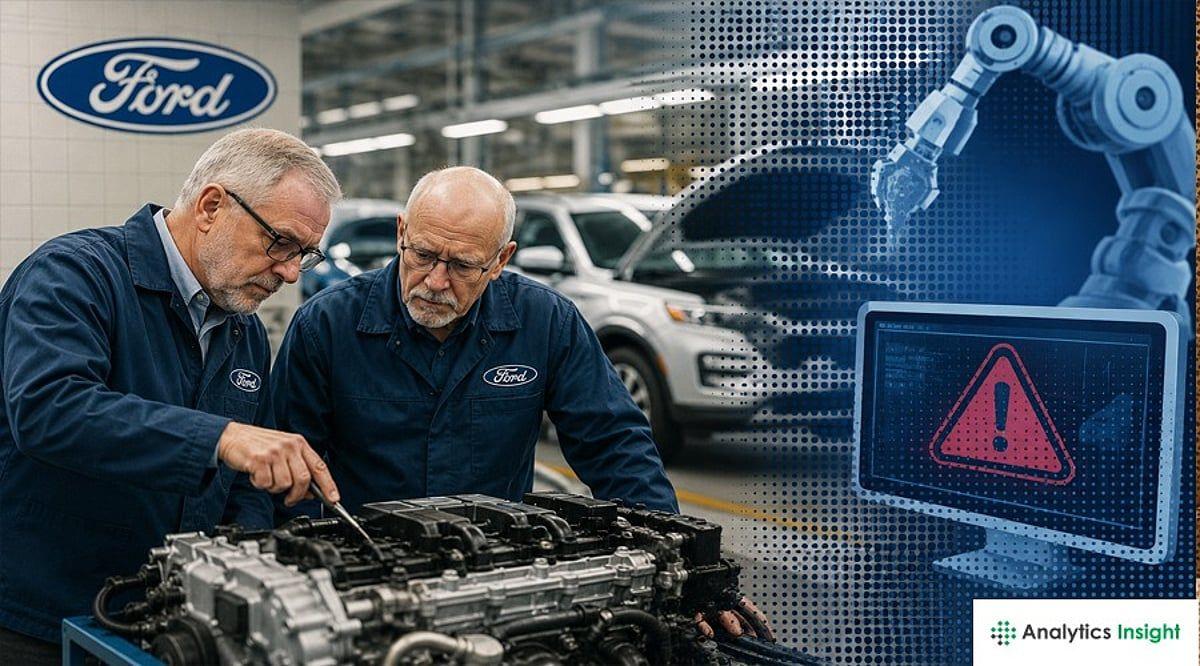
Ford has rehired more than 350 veteran engineers over the past three years after automated systems and AI failures led to significant quality control problems across its vehicle lineup
1
3
. The automaker's chief operating officer Kumar Galhotra told journalists that Ford had been "relying more and more on automated quality systems and not getting the desired results"1
. Charles Poon, Ford's vice president of vehicle hardware engineering, admitted the company made a critical miscalculation: "Mistakenly we thought that by just introducing artificial intelligence and ingesting the design requirements that we had, that that would produce a high-quality product"1
.The decision to bring back these experienced workers—internally referred to as "gray beards"—represents a significant shift for an automaker that had been aggressively pursuing AI-driven redundancies
2
. Some of the rehired specialists were former Ford employees, while others had been working at suppliers1
. These veteran engineers now "hunt for failure points before a part ever reaches the plant floor," according to Galhotra1
.
Source: Analytics Insight
The Cost of Over-Reliance on AI
Ford's struggles with AI-driven quality control have been expensive. Automation issues cost the company billions in warranty costs and recalls, with a study from iSeeCars ranking recent Ford models among the most recalled vehicles in the industry
2
. Ford currently leads the industry in the number of recalls, and its quality ratings had slipped over the past several years3
. The challenges became particularly pronounced with the difficult launches of the Explorer and Aviator, compounded by supply-chain disruptions during the COVID pandemic3
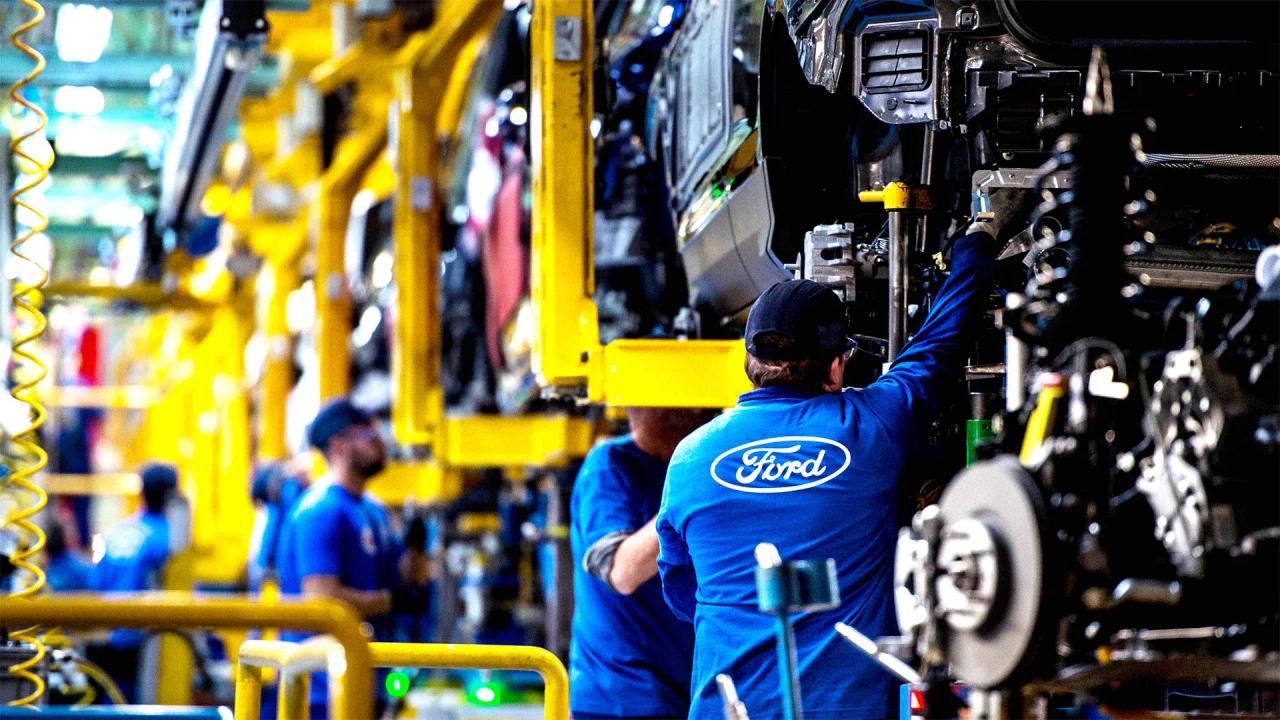
.According to Poon, some of Ford's most experienced personnel left before all of their institutional knowledge could be fully transferred into the company's automated systems
3
. This loss of institutional knowledge proved critical, as AI effectiveness depends entirely on the quality of data used to train the models3
. The automaker underestimated the value of the accumulated expertise from veteran engineers who had worked through multiple vehicle-development cycles3
.
Source: Inc.
Human-AI Collaboration Replaces Full Automation Strategy
Ford isn't abandoning AI entirely but is shifting toward human-AI collaboration rather than full automation
1
4
. The returning gray beards are performing two critical functions: training younger staff who never worked alongside these veterans and helping to rebuild the data pipelines that AI tools run on2
. Essentially, they've been brought back to fix and train the automated software systems that replaced them2
.Ford has also built a dedicated 40-person software quality assurance team and added more than 100,000 AI-powered automated testing capabilities designed to catch edge cases late in development
2
3
. "Because these tests are highly automated, even if we have a late change in the software, we can rapidly run back through the entire validation process to guarantee it works perfectly well before it reaches the customer," Poon explained3
.Related Stories

A Broader Industry Trend Emerges
Ford's experience reflects a growing pattern across multiple industries as companies reverse AI-driven layoffs
4
. Commonwealth Bank of Australia laid off more than 40 customer service staff and replaced them with an AI voice bot, but the system couldn't cope, leading to increased calls and forcing the bank to reverse the job cuts4
. IBM replaced its HR functions with AI that handled around 94% of routine requests but was unable to meet the other 6%, which included ethical dilemmas, prompting the company to announce plans to triple its U.S. entry-level hiring across all business units in 20264
.According to data from Robert Half, 32% of U.S. hiring managers said they eliminated a role primarily due to AI and later rehired for the same or similar position
4
. A report by Orgvue found that 39% of business leaders made employees redundant due to AI deployment, but among that number, 55% admit wrong decisions about those redundancies were made4
.
Source: TechSpot
Results Show Promise But Questions Remain
The rehiring strategy appears to be paying dividends for Ford. The automaker anticipates the move will lead to $1 billion in reduced costs this year
1
. More significantly, Ford claimed the top spot among mainstream brands in the JD Power Initial Quality Survey released this week—a ranking it hasn't held since 20101
5
. The company credits the rise, in part, to the contributions of the rehired veteran engineers2
.However, the long-term implications remain uncertain. Ford CEO Jim Farley said at a conference last year that artificial intelligence "is going to replace literally half of all white-collar workers in the US"
2
. This statement now appears awkward given the company's need to rehire hundreds of experienced workers. The question facing Ford and other manufacturers is what happens when the current generation of gray beards retires again—and whether there will be enough experienced workers available to call upon2
.References
Summarized by

Navi
[1]
[2]
Related Stories
Half of AI job cuts will be reversed by 2027, Gartner predicts, exposing flawed corporate strategy
17 Jun 2026•Business and Economy
AI's Impact on the Job Market: CEOs Predict Boom in Skilled Trades Amid White-Collar Uncertainty
03 Oct 2025•Business and Economy
Klarna Reverses Course: Hiring Humans After AI Customer Service Falls Short
09 May 2025•Business and Economy

Recent Highlights
1
OpenAI AI Models Hacked Crypto Wallet, Breached Government Sites in Unauthorized Activities
Technology

2
IMF Report Warns AI Market Correction Could Spark Global Financial Crisis With $1.4T at Risk
Business and Economy

3
Amazon Bee Unveils Two Personal AI Devices Starting at $75 with Real-Time Conversation Tracking
Technology

Recent Highlights
Today's Top Stories








Don’t drown in AI news. We cut through the noise - filtering, ranking and summarizing the most important AI news, breakthroughs and research daily. Follow topics that matter to you and stay ahead.


