Half of AI job cuts will be reversed by 2027, Gartner predicts, exposing flawed corporate strategy


2 Sources
[1]
Half of AI job cuts will be reversed by 2027 -- and it reveals the biggest mistake companies are making
Companies get more from AI when it helps people do better work For the past two years, we've been flooded with warnings about AI replacing workers. And, every few weeks, another company announces layoffs. If you've spent any time on LinkedIn lately, you'd be forgiven for thinking the future
[2]
Half of AI Job Cuts Will Be Reversed by 2027, Gartner Says. Here's the Real Lesson
The pattern points to a specific mistake. As I've explored before, the question of when to trust data versus judgment matters more than most executives acknowledge. The companies reversing course replaced jobs with AI that requiredhuman judgment and got information retrieval instead. Research into
Share
Copy Link
Research firm Gartner predicts that by 2027, half of companies that replaced customer service agents with AI will hire them back. The reversal isn't because AI failed, but because executives are learning a hard lesson: reducing payroll and adding real value aren't the same thing. The shift exposes how organizations treated AI as a cost-cutting tool when it works better as a productivity enhancer.

Companies Prepare to Reverse AI Job Cuts as Strategy Shifts
A striking Gartner prediction suggests that by 2027, half of the companies that replaced customer service agents with AI will reverse course and hire them back
1
. This anticipated pivot isn't happening because AI failed to perform its designated tasks. Instead, executives are discovering a fundamental distinction that reshapes how businesses should approach AI strategy: cutting costs and creating genuine value operate on entirely different principles.Since ChatGPT launched in late 2022, the first wave of generative AI adoption focused heavily on replacement rather than enhancement. Many businesses moved quickly to reduce headcount or froze hiring while calculating how much work AI could absorb . The logic appeared straightforward: if AI can perform tasks previously handled by humans, employ fewer people and save money. But according to Gartner, the organizations seeing the strongest returns from AI aren't necessarily the ones making the deepest cuts. They're the companies investing in training, redesigning workflows, and helping employees work alongside AI rather than replacing them entirely.
The Critical Difference Between Tasks and Human Judgment
One of the most significant corporate AI strategy mistakes involves confusing task completion with job performance. Jobs aren't simply collections of individual tasks that can be automated in isolation. Most roles involve a complex mix of responsibilities that prove difficult to separate
1
. Customer service agents, for instance, may handle routine questions about shipping policies or account details—areas where AI chatbots excel at information retrieval. But frustrated customers often need empathy, negotiation, or reassurance alongside technically correct answers. These remain areas where human judgment consistently outperforms machines.The pattern reveals a specific leadership error. Companies replaced jobs with AI that required human judgment but received only information retrieval in return
2
. Research into how AI is actually being used inside organizations shows that humans need to remain in the loop when real judgment of trade-offs is required. Don't assume that because AI can access everything their people know, it can do everything people do—those represent two entirely different capabilities.From Cost-Cutting to Productivity Enhancement
The Gartner prediction highlights how many organizations initially approached AI as a cost-cutting tool when it delivers more value as a productivity tool
1
. There's a meaningful difference between using AI to eliminate jobs and using AI to augment human work. AI can help writers draft content, but it doesn't automatically grasp audience expectations, editorial strategy, or cultural context. It can generate software code without necessarily understanding business priorities or long-term product decisions. It can analyze data, yet human leaders still need to determine what actions to take based on that information.Consider the analogy of hiring a surgeon who had only read surgery textbooks—the information is complete and the reading thorough, yet the surgeon has never operated on anyone
2
. Companies across industries made the equivalent decision when reversing AI job cuts became necessary after they replaced workers whose value came from experiential knowledge gained under real pressure, thousands of times over.Related Stories

What This Means for the Future of Work with AI
This shift matters for everyone concerned about AI replacing human jobs. Every profession is trying to determine what AI means for its future, from writers and designers to programmers and customer support representatives. While some jobs will change dramatically and certain roles will disappear, the Gartner prediction reveals something heard less frequently: companies are still defining the purpose for AI, and many are discovering that human decision-making remains far more valuable than initially assumed
1
.The organizations extracting the most value from AI increasingly aren't choosing between humans and AI. They're determining how AI and human collaboration can complement each other, creating workforce trends that favor augmentation over replacement. The most important skill in the AI era may not be learning how to compete with AI, but mastering how to work with it effectively. This represents a far more accurate picture of what the future of work actually looks like than the dystopian vision of managers overseeing armies of AI agents.
References
Summarized by

Navi
[1]
Related Stories
AI Layoffs: Corporate Cost-Cutting Disguised as Technological Progress
07 Nov 2025•Business and Economy

AI Jobs Paradox: Same Roles See Both Cuts and Hiring Gains as Automation Reshapes Work
04 Mar 2026•Business and Economy
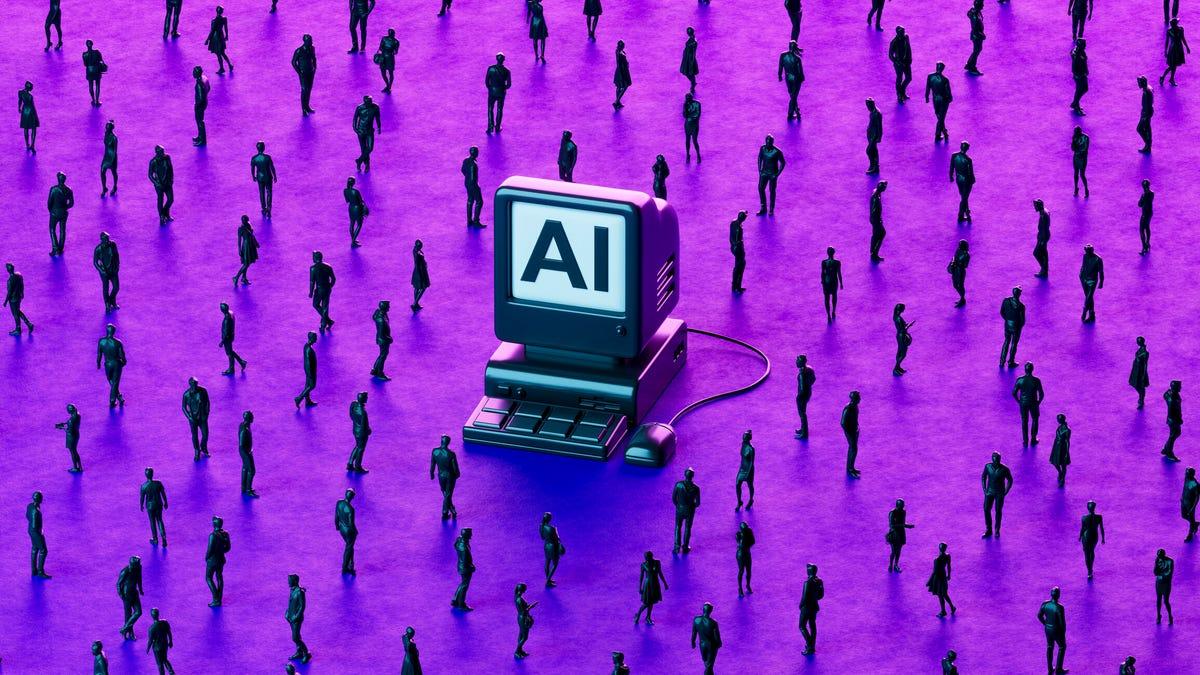
AI Investment Backfires: Execs Admit They Value Human Workers Less Despite Poor Returns
08 May 2026•Business and Economy

Recent Highlights
1
Microsoft and Nvidia Launch Surface Laptop Ultra: A $2,599 AI-Ready PC With RTX Spark Chip
Technology

2
OpenAI Releases 722 AI-Generated Math Papers on GitHub, Igniting Fury Among Mathematicians
Science and Research

3
Trump Consulted Grok AI Before Ordering Venezuela Invasion and Capture of Nicolás Maduro
Policy and Regulation

Recent Highlights
Today's Top Stories









Don’t drown in AI news. We cut through the noise - filtering, ranking and summarizing the most important AI news, breakthroughs and research daily. Follow topics that matter to you and stay ahead.


