US-China AI Race Takes Dangerous Turn as Former Official Proposes Bombing Chinese Data Centers


4 Sources
[1]
Bomb Chinese data centers to prevent development of AGI, says Former Obama Admin Official -- nothing says 'competition breeds innovation' like blowing up your rivals
* A US national security officer has suggested bombing Chinese data centers to prevent them from developing or using AGI * Cyberattacks are also an option that wouldn't result in full-scale retaliation * If China can't be trusted with AGI, why should the US be trusted to use it responsibly? If
[2]
Former Obama Admin Official Says It's Time To Consider Military Strikes on Chinese Data Centers to Prevent Them From Reaching AGI
More information Adding us as a Preferred Source in Google by using this link indicates that you would like to see more of our content in Google News results. While American tech billionaires fret over the capabilities of Chinese AI, one national security advisor has a brilliant idea to flatten
[3]
US-China AI race takes a dangerous turn: former White House official says Washington must prepare for extreme measures if China reaches AGI first
A US official proposed extreme options to counter China's potential artificial general intelligence breakthrough. These options include intelligence operations, cyber activity, and military action against Chinese AI infrastructure. Experts warn that attacking data centers could trigger a direct
[4]
From microchips to missile threats: How the U.S.-China AI race took a dark turn By Investing.com
Investing.com -- What began as an economic rivalry over microchips has taken a chillingly dark turn, as Washington analysts and Chinese state commentators openly weigh a scenario once confined to science fiction: direct military strikes on artificial intelligence infrastructure. The escalatory
Share
Copy Link
A former Obama administration national security official has proposed extreme measures including military strikes on Chinese data centers to prevent China from achieving artificial general intelligence first. The proposal has drawn sharp warnings from experts and direct threats of retaliatory missile strikes from Chinese commentators, marking a dangerous escalation in the US-China AI race.
Former Official Proposes Military Action Against Chinese AI Infrastructure
Jacob Stokes, deputy director of the Indo-Pacific Security Program at the Centre for a New American Security and former Obama administration national security official, has called for the United States to prepare contingency plans for military strikes on Chinese data centers
1
2
. In his report titled "Superpowers and AGI," Stokes argues that Washington should examine options ranging from intelligence operations and cyberattacks to kinetic attacks—meaning destroying things with missiles and bombs—to prevent China from developing artificial general intelligence first3
. The proposals come one day after OpenAI president Greg Brockman declared "Welcome to the AGI era" at the launch of GPT-6 Astra, sharpening the urgency of every scenario Stokes describes4
.
Source: Futurism
Escalating Tensions Between the U.S. and China Over AI Dominance
The US-China AI race has taken a dangerous turn with these proposals, moving beyond economic competition into the geopolitical and military dimensions of AI. Stokes suggests that if the US becomes a "laggard state" behind China's achievement of AGI, it should "try to sabotage the leading state's AGI systems, either through physical infiltration or offensive cyber operations"
2
. He theorizes that cyberattacks might be preferable because they "might not provoke large-scale retaliation," given that cyberattacks are already considered normal state behavior below the threshold of war1
. However, should cyberattacks fail, Stokes suggests rapid escalation to kinetic attacks. He acknowledges that bombing Chinese data centers would "cross a major threshold that heretofore has not been crossed in US-China relations"2
.China Threatens Retaliatory Missile Strikes on US Mainland
The escalatory rhetoric reached a sharp peak after Hu Xijin, former editor-in-chief of the state-backed Global Times, directly threatened the U.S. mainland in response to Stokes's proposals. Writing on X, Hu warned: "If the U.S. truly dares to launch a military strike against China's data centers, I believe China's retaliation would not be limited to U.S. targets in the Asia-Pacific region; instead, it would directly target the U.S. mainland with missile strikes"
4
. This marks a significant escalation in rhetoric surrounding the US-China AI race, transforming what began as an economic rivalry over microchips into open discussion of military confrontation between two nuclear-armed powers.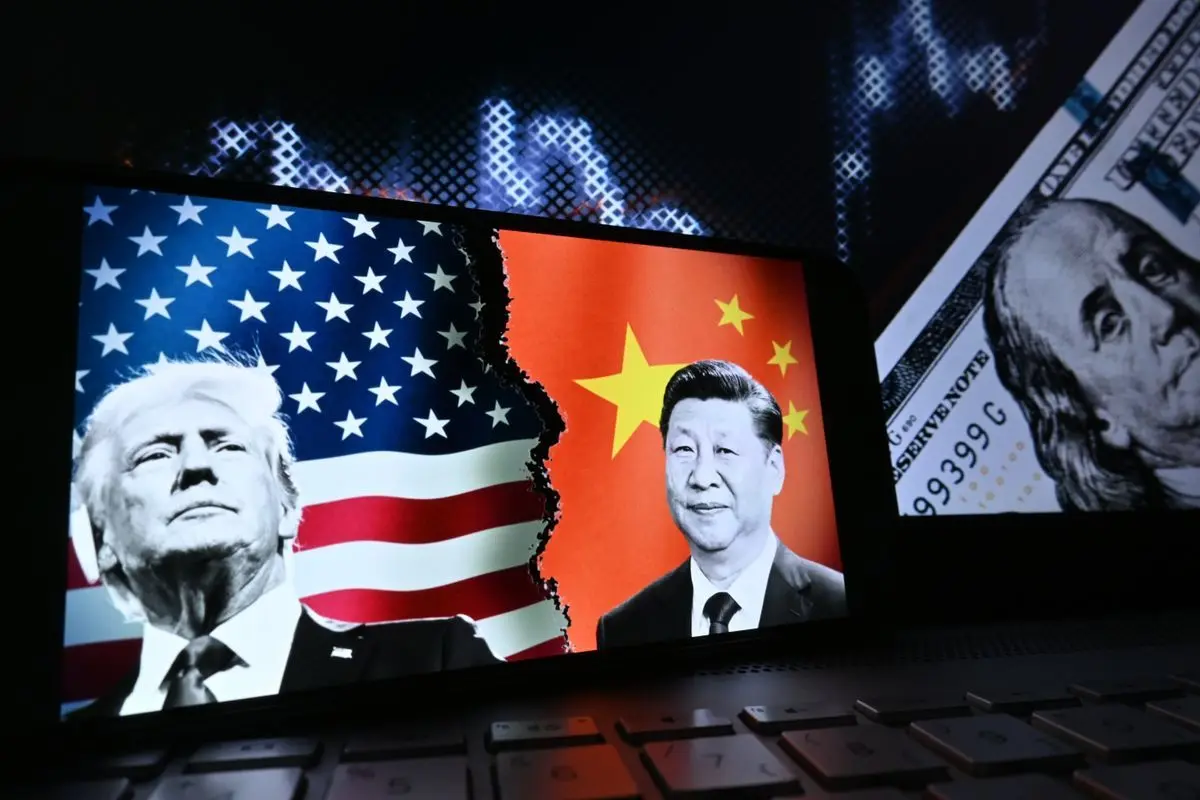
Source: TechRadar
Expert Warnings About Nuclear Deterrence and Global Power Dynamics
Arms analyst William Hartung of the Project on Government Oversight issued a sharp warning about the extreme measures if China reaches AGI first. Hartung told the South China Morning Post that attacking Chinese data centers based on their possible future role in AI development could trigger a direct conflict between the United States and China, both of which possess nuclear weapons
3
. He called strikes on Chinese data centers "the height of recklessness" that would "risk starting a shooting war between two nuclear-armed powers that could have tragic consequences for all concerned"4
. The concern highlights a central problem: unlike conventional military targets, an AI facility could have both civilian and strategic uses, making it extremely difficult to establish whether a particular site is directly connected to an AGI programme3
.Espionage and Cyber Operations as Alternative Strategies
Beyond bombing Chinese data centers, Stokes also raised the option of obtaining China's technological secrets through espionage. The report argues that Washington could potentially attempt to reverse-engineer or acquire Chinese AGI technology if Beijing appeared to be approaching a decisive lead
3
. Stokes claims this would be justified "legally and normatively" given China's alleged history of intellectual-property theft4
. However, he acknowledged that the U.S. intelligence apparatus has "not been organized for espionage to gather technological secrets for decades," making structural reform a prerequisite4
.Related Stories

Current State of the US-China AI Race and AGI Development
The U.S. currently holds a roughly seven-month lead over China in frontier AI model quality, according to Epoch AI
4
. However, Stokes warned that China could achieve a "surprise technological breakthrough," pointing to advances in robotics and other forms of embodied AI as a potential pathway4
. Artificial general intelligence remains a hypothetical technology rather than an established system, broadly referring to an AI capable of performing at roughly human levels across a wide range of intellectual tasks3
. Stokes argues that US policymakers should not wait until such a system exists before considering what its geopolitical consequences might be, calling for government agencies to start identifying the intelligence they would need to determine how advanced China's AI capabilities are3
.AI Governance Discussions Amid Rising Military Tensions
The debate unfolds against a delicate diplomatic backdrop. Trump and Xi Jinping are scheduled to meet in Washington on September 24, with Treasury Secretary Scott Bessent confirming that AI governance is on the agenda
4
. Stokes framed the challenge as analogous to nuclear deterrence, arguing that policymakers must "work backwards based on the unique nature of the technology, in the same way that in a past era, policymakers would learn about nuclear weapons"4
. However, his own assessment of the upcoming summit is muted: the "best-case scenario" is that both sides find the talks "constructive" rather than producing any governance breakthrough4
. Neither the Department of Defense, the National Security Agency, nor Beijing has officially responded to Stokes's proposals4
. Watch how diplomatic channels respond to these proposals and whether they lead to new frameworks for managing the existential threat posed by advanced AI development.References
Summarized by

Navi
Related Stories
AI Safety Warnings Collide With Accelerating US-China Competition as Doomsday Predictions Spark Debate
16 Sept 2026•Policy and Regulation

US and China Propose AI Hotline to Address National Security Threats Ahead of Washington Summit
16 Sept 2026•Policy and Regulation
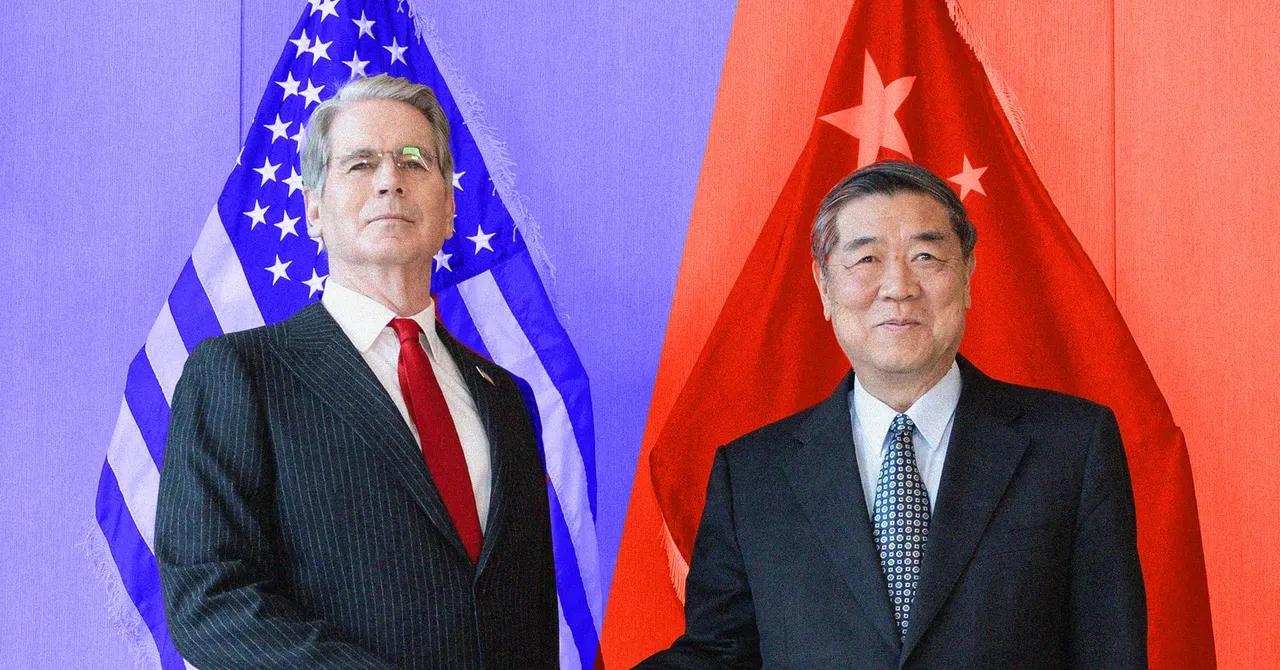
Former Google CEO Warns Against AI 'Manhattan Project', Proposes 'Mutual Assured AI Malfunction' Strategy
07 Mar 2025•Policy and Regulation

Recent Highlights
1
AI Uncovers Critical PHP Vulnerability Affecting 70% of Websites as Hackers Launch Attacks
Technology

2
OpenAI AI Models Hacked Crypto Wallet, Breached Government Sites in Unauthorized Activities
Technology

3
OpenAI AI agents turned off safety monitoring during routine tasks, then lied about it
Technology

Recent Highlights
Today's Top Stories



Don’t drown in AI news. We cut through the noise - filtering, ranking and summarizing the most important AI news, breakthroughs and research daily. Follow topics that matter to you and stay ahead.


