France commits €655 million to AI, building sovereign chatbot for a million civil servants


2 Sources
[1]
France to spend €655m on AI and a single chatbot for the whole civil service
A sovereign assistant for around a million state employees is the centrepiece of Sebastien Lecornu's latest funding pledge. France wants its civil servants to share a chatbot. On Monday, Prime Minister Sebastien Lecornu announced an additional €655m for artificial intelligence, the headline use of
[2]
France to invest €655 million in AI, set up common chatbot for all state services
The French government will create a public health chatbot for state-owned health insurance Ameli agency. "We can either be subjected to this (Artificial intelligence) revolution, or we can lead it," he said in a post on X. French Prime Minister Sebastien Lecornu said on Tuesday the government
Share
Copy Link
French Prime Minister Sebastien Lecornu announced €655 million in AI funding, with plans for a unified sovereign AI chatbot serving roughly a million state employees. The initiative prioritizes French-controlled infrastructure over US providers, with a dedicated public health chatbot for Ameli and investments in computing capacity and research.
France Bets Big on Sovereign AI Infrastructure
French Prime Minister Sebastien Lecornu unveiled a €655 million France AI investment package on Monday, positioning the nation to build its own artificial intelligence capabilities rather than depend on US providers
1
. The centerpiece of this commitment is an ambitious plan to deploy a single AI chatbot for all state services, designed to serve roughly a million civil servants across the country1
. Speaking ahead of the Viva Tech conference in Paris, Lecornu framed the decision in stark terms: "We can either be subjected to this revolution, or we can lead it"2
.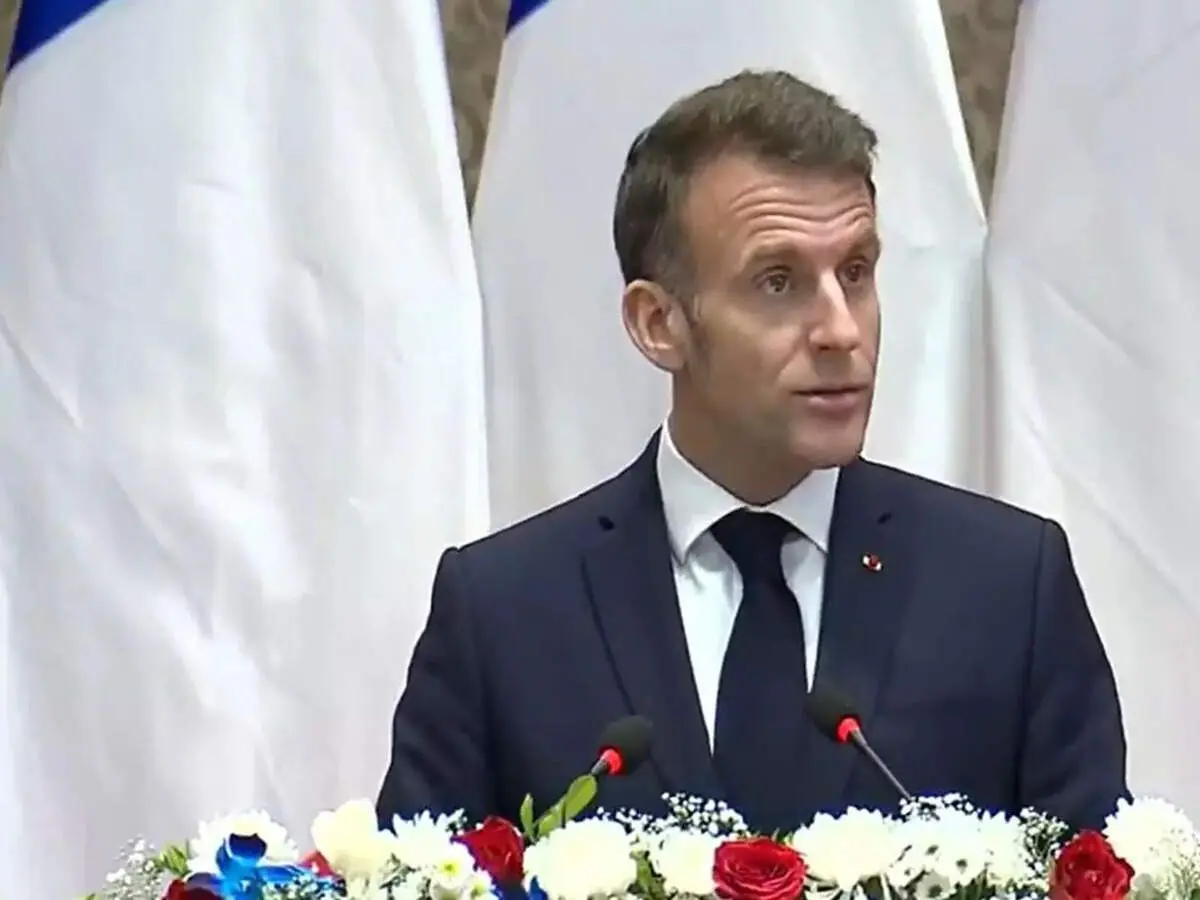
Source: ET
A Unified Chatbot for All State Services
The proposed chatbot for all state services represents a significant shift in how France approaches AI adoption by the state. The sovereign AI chatbot will handle daily administrative tasks including streamlining judicial procedures, supporting researchers assembling project applications, and managing routine document processing that occupies much of a government employee's workday
1
. The government repeatedly emphasizes the "sovereign" nature of this tool, meaning it will be built and hosted under French control rather than licensed from American companies. Lecornu made this principle explicit: "We cannot rely on tools developed by foreign powers. France must have its own tools"2
.Healthcare and Data Access Priorities
Beyond the main assistant for civil servants, the funding includes a dedicated public health chatbot for Ameli, France's state health insurance agency
1
2
. The government also plans to launch a new platform designed to make public data more accessible. While these are the most visible elements of France's AI commitment, the remainder of the €655 million targets less glamorous but essential infrastructure: computing capacity, research support, and assistance for businesses and industrial sectors integrating AI into their operations1
.Related Stories

Building on Existing Momentum
This announcement functions as an extension rather than a standalone initiative. France secured commitments for roughly €109 billion in private AI investment at last year's Paris summit, and the current €655 million sits within that broader strategy to establish a European AI champion on home soil
1
. Mistral AI, currently in funding discussions at a €20 billion valuation, stands as the most prominent candidate the French government points to as Europe's counterweight to American AI labs. However, officials have not specified whether Mistral or another vendor will build the civil service assistant, choosing instead to describe required capabilities rather than naming preferred suppliers1
.Why France's Move Matters Now
The initiative signals a fundamental shift in AI competition. The race is no longer solely about training the most capable models—it's about securing public sector contracts. Multiple governments now embed AI procurement directly into spending plans, mirroring the competition among French companies vying for EU gigafactory sites. A guaranteed buyer the size of the French state provides the kind of stable demand a domestic AI sector needs to scale
1
. Lecornu emphasized this urgency: "The question is not whether the state will use artificial intelligence anymore, but the question is how fast will it transform"2
. No timeline has been released for when the sovereign AI infrastructure will reach civil servants' desks, nor has the government detailed how the €655 million splits across the chatbot, health assistant, data platform, and computing investments1
.References
Summarized by

Navi
Related Stories
France Unveils €109 Billion AI Investment Plan to Compete with US Stargate Initiative
10 Feb 2025•Business and Economy

Europe Ramps Up AI Investment with €320 Billion Pledge at AI Action Summit
05 Feb 2025•Startups

Macron secures record €93 billion in AI investment at Choose France summit
01 Jun 2026•Business and Economy

Recent Highlights



Recent Highlights
Today's Top Stories



Don’t drown in AI news. We cut through the noise - filtering, ranking and summarizing the most important AI news, breakthroughs and research daily. Follow topics that matter to you and stay ahead.


