General Intuition raising $300M at $2B valuation to train AI agents on gaming footage


3 Sources
[1]
General Intuition in talks to raise $300M at around $2B valuation
General Intuition, the New York-based startup building a foundation model that trains AI agents how to move through space and time, is in talks to raise around $300 million, sources familiar with the matter told TechCrunch. The raise comes eight months after General Intuition spun out of Medal, a
[2]
General Intuition raising $300M for AI trained on gaming data
General Intuition, the AI lab that spun out of gaming clip platform Medal after rejecting a reported $500 million offer from OpenAI, is raising approximately $300 million at a valuation of just over $2 billion. Backers reportedly include Jeff Bezos and Eric Schmidt. General Intuition, a New
[3]
Game-clip AI startup General Intuition in talks to raise $300M at $2B valuation
Game-clip AI startup General Intuition in talks to raise $300M at $2B valuation General Intuition PBC is in talks to raise about $300 million at a valuation of just over $2 billion, TechCrunch reported today, citing people familiar with the talks. The New York-based startup uses video game footage
Share
Copy Link
General Intuition, the New York AI startup that rejected OpenAI's $500 million acquisition offer, is now raising $300 million at a $2 billion valuation. Backed by Jeff Bezos and Eric Schmidt, the company trains AI agents using Medal's dataset of 2 billion first-person gaming clips annually, offering a unique approach to teaching machines spatial-temporal reasoning.
General Intuition Raising $300M Just Eight Months After Launch
General Intuition, a New York-based AI startup building foundation models that teach AI agents to navigate space and time, is in talks to raise approximately $300 million at a valuation just over $2 billion, according to sources familiar with the matter
1
. The AI fundraising round comes merely eight months after the company spun out of Medal, a gaming clip platform, with a $134 million seed round—one of the largest on record2
. This fresh capital would bring total funding to over $400 million in less than a year, marking a steep four-fold increase in the AI startup valuation3
.
Source: TechCrunch
The round has secured backing from high-profile investors including Jeff Bezos, whose own physical AI venture Prometheus recently raised $12 billion, and Eric Schmidt, alongside existing investors Khosla Ventures and General Catalyst
1
2
.The Medal Dataset: Why OpenAI Offered $500 Million
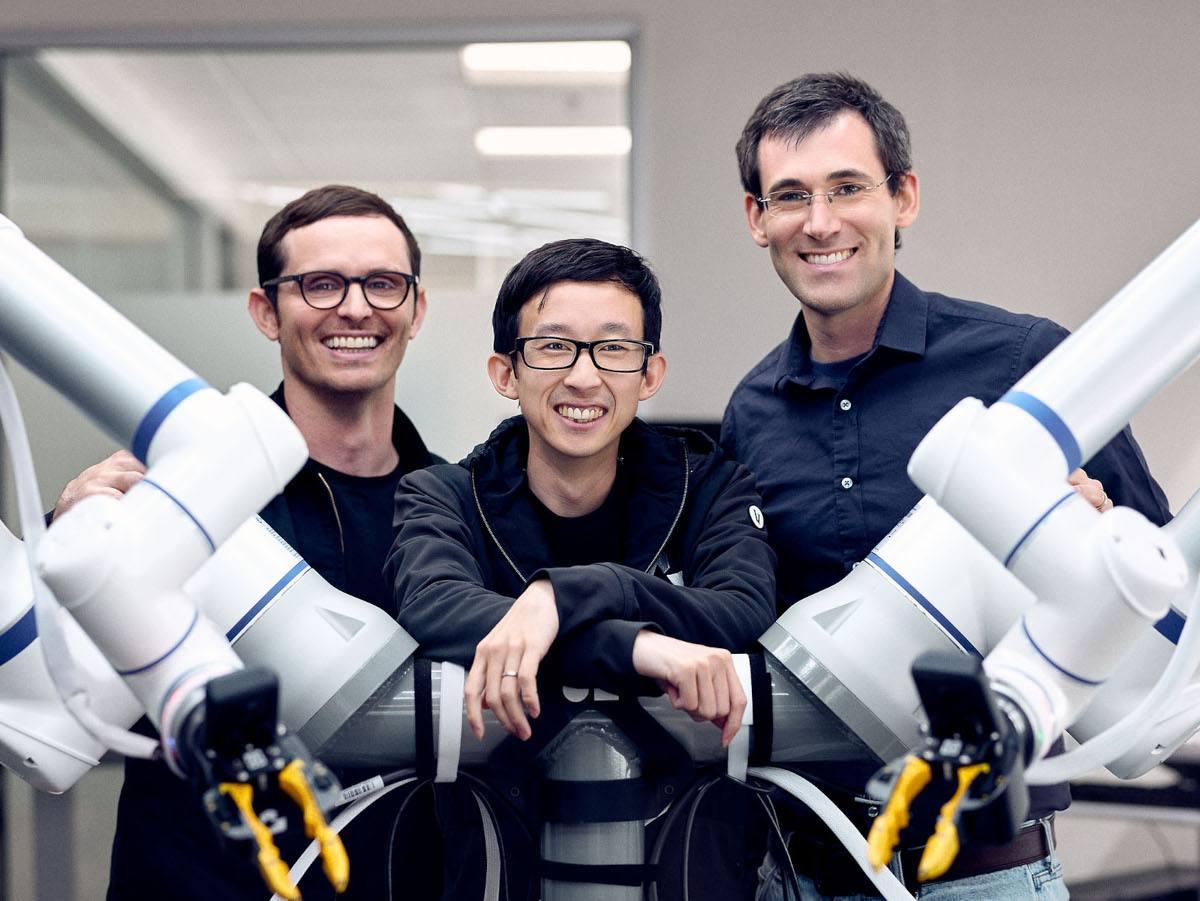
General Intuition exists because founder Pim de Witte made a bold decision. Late in 2024, OpenAI reportedly offered $500 million to acquire Medal, seeking access to its unique dataset for training models
2
. De Witte turned it down. Instead, he spun out General Intuition in October 2025 with co-founders Eloi Alonso, Adam Jelley, and Vincent Micheli—researchers known for influential work on world modeling and diffusion-based simulation1
.The company's core asset is Medal's extraordinary dataset: roughly 2 billion video clips per year generated by more than 10 million monthly active users across thousands of games
1
. What makes this AI trained on gaming data particularly valuable is that Medal captures first-person gaming clips showing interactive gameplay from the player's perspective, unlike YouTube or Twitch footage that displays spectator views2
. These clips capture spatial reasoning, timing, and split-second decision-making that games demand, providing the perfect foundation for training embodied AI agents3
.Sources indicate that OpenAI hasn't been the only major AI lab to approach the company seeking access to this data
1
.Agents Over Models: A Different Commercial Strategy
General Intuition's approach to world models diverges sharply from competitors. While companies like Decart, which raised $300 million earlier this month, and Google's Project Genie, which connected its model to Street View's 280 billion images, build world models as products themselves—selling simulation environments to developers and enterprises—General Intuition builds world models to train agents
2
. The agents are the product, and the world model serves as the training ground1
.This distinction matters commercially because it ties revenue to what the AI can actually do rather than how convincingly it renders virtual scenes
3
. The startup's unique dataset provides a clear path to viability in training AI agents with deep spatial-temporal reasoning capabilities, allowing them to perceive, anticipate, and interact in real time within simulations1
.Co-founders Alonso and Micheli developed the DIAMOND model, a diffusion-based world model that predicts future video frames directly rather than compressing them into tokens, giving General Intuition a technical edge
2
3
.Related Stories
Competing in a Crowded, Well-Funded Field
The world model space has attracted enormous capital in 2026. Runway, valued at $5.3 billion, launched its first world model in December and has been adding $40 million in annual recurring revenue per quarter
2
. World Labs, founded by Stanford's Fei-Fei Li, raised $1 billion at a $5.4 billion valuation in February, while Odyssey AI raised $310 million with backing from AWS and AMD2
3
. Yann LeCun's AMI Labs raised over $1 billion at a $3.5 billion valuation2
.Google's Genie 3 recently began integrating Google Maps data for more real-world simulation capabilities, signaling that tech giants view this space as strategically important
1
. The common thesis across these investments is that AI needs to understand physics and spatial relationships, not just language, and that video data serves as the critical bridge2
.What to Watch: Product Launch and Compute Scaling
General Intuition plans to use the new capital to scale compute capacity and release a product by late summer or early fall, according to sources familiar with the matter
1
3
. The broader question facing the industry is whether the agent market that OpenAI and others are pursuing will materialize quickly enough to justify the valuations being attached to companies building the underlying reasoning capabilities2
.The fact that OpenAI valued Medal's data at $500 million, and General Intuition is now worth four times that amount, underscores how the market prices control of training data in an era when every major AI lab is actively seeking it
2
. For AI developers and enterprises watching this space, General Intuition's upcoming product release will offer critical insight into whether gaming-derived spatial reasoning translates into commercially viable AI agents capable of operating in real-world scenarios.References
Summarized by

Navi
[2]
Related Stories
General Intuition Targets $6B Valuation as AI Startup Pushes Into Robotics With Gameplay-Trained Models
25 Aug 2026•Startups

General Intuition Secures $134M Seed Funding for Spatial-Temporal AI Training
16 Oct 2025•Technology

General Intuition raises $320 million to build AI models that act in the physical world
26 Jun 2026•Startups

Recent Highlights



Recent Highlights
Today's Top Stories






Don’t drown in AI news. We cut through the noise - filtering, ranking and summarizing the most important AI news, breakthroughs and research daily. Follow topics that matter to you and stay ahead.


