Generalist AI raises $400M at $2B valuation to scale general intelligence for robotics


3 Sources
[1]
Nvidia, Fei Fei Li back Generalist's $400m round to scale AI robotics
Generalist hopes to make 'general-purpose' robotics a reality. US AI robotics company Generalist has raised $400m at a reported $2bn valuation to accelerate its plans towards artificial general intelligence (AGI). The round was led by Radical Ventures, with participation from Nvidia's venture arm
[2]
Generalist AI raises $400M at $2B valuation to build general intelligence for robotics
Generalist AI raises $400M at $2B valuation to build general intelligence for robotics Artificial intelligence startup Generalist AI Inc., a startup building embodied robotics intelligence, said today it has raised $400 million in new funding, bringing the company's valuation to $2
[3]
Generalist AI valuation hits $2 billion on $400M funding - Bloomberg By Investing.com
Investing.com - Generalist AI, a robotics startup backed by Nvidia Corp. (NASDAQ:NVDA), raised $400 million in a funding round set to be announced on Thursday that values the company at $2 billion including the new capital, according to reporting from Bloomberg. Radical Ventures led the financing
Share
Copy Link
Generalist AI has secured $400 million in robotics funding at a $2 billion valuation to advance its vision of general-purpose robotics. The round was led by Radical Ventures with participation from Nvidia, Bezos Expeditions, and AI pioneer Fei-Fei Li. Founded by former DeepMind scientists, the company's GEN-1 model demonstrates how AI foundation models for robot learning can handle complex physical tasks with adaptive intelligence.
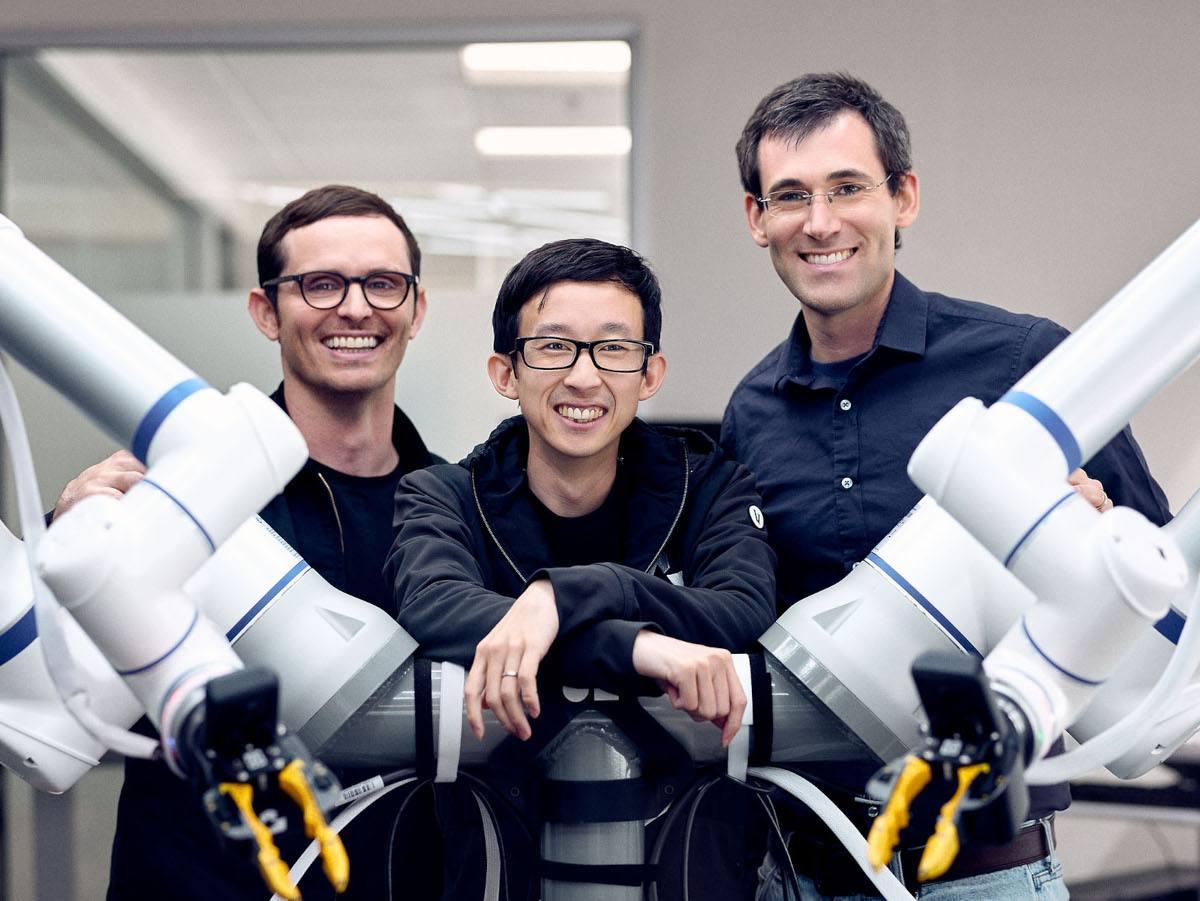
Generalist AI Secures Major Robotics Funding Round
Generalist AI has closed a $400 million funding round at a $2 billion valuation, marking a significant milestone in the race to build general intelligence for robotics
1
2
. Radical Ventures led the financing, with participation from Nvidia's venture arm NVentures, Bezos Expeditions, 8VC, Union Square Ventures, and Hanabi Capital3
. The round also attracted notable tech leaders including Fei-Fei Li, founder of World Labs and a leading AI expert, Zoom CEO Eric Yuan, Xiaomi co-founder Lin Bin, and serial entrepreneur Naval Ravikant1
.Building Embodied Robotics Intelligence from DeepMind Roots
Founded in 2024 by former DeepMind senior scientist Pete Florence, along with Chief Scientist Andy Zeng and Chief Technology Officer Andrew Barry, formerly a roboticist from Boston Dynamics, Generalist AI aims to make general-purpose robotics a reality
1
2
. Florence previously helped create RT-2, a robotic control system for vision-language-action models, and PaLM-E, an early AI model for robotics that provides a framework for AI-powered vision and language-based instruction2
. The company's trajectory reflects broader industry momentum toward artificial general intelligence through physical AI systems that operate and interact with the physical world.GEN-1 Model Demonstrates Commercial Viability
The startup launched its Gen-0 class of AI models in November, trained on what it described as an unprecedented scale of real-world data training
1
. This proved that physical experience and larger models could predictably produce more capable systems. In April, Generalist AI released GEN-1, an AI foundation model for robot learning that showcased significant advances in handling physical tasks2
. The model demonstrated three-times faster performance than similar state-of-the-art models, with 99 percent reliability on diverse tasks and the ability to learn new and complex physical skills1
. "It starts to cross in a general way into commercial viability for very simple tasks," said Pete Florence, Generalist's co-founder and CEO3
.Adaptive Intelligence Sets New Standards for Robot Learning
What distinguishes GEN-1 from competing robotics models is its additional layer of adaptivity
2
. When robotic arms work with objects that don't always grip the same way—whether a part deforms because it's soft, springs away from a gripper, or lighting changes abruptly—traditional robots with rigid rule sets would malfunction. GEN-1's adaptive intelligence enables systems to learn and retry, much like humans naturally adjust when physical tasks don't go as expected. The model exceeded capabilities shown by Physical Intelligence's pi-0 by completing tasks even faster2
. This approach addresses real-world scenarios in warehouse, factory, and domestic settings where variables constantly shift.Related Stories
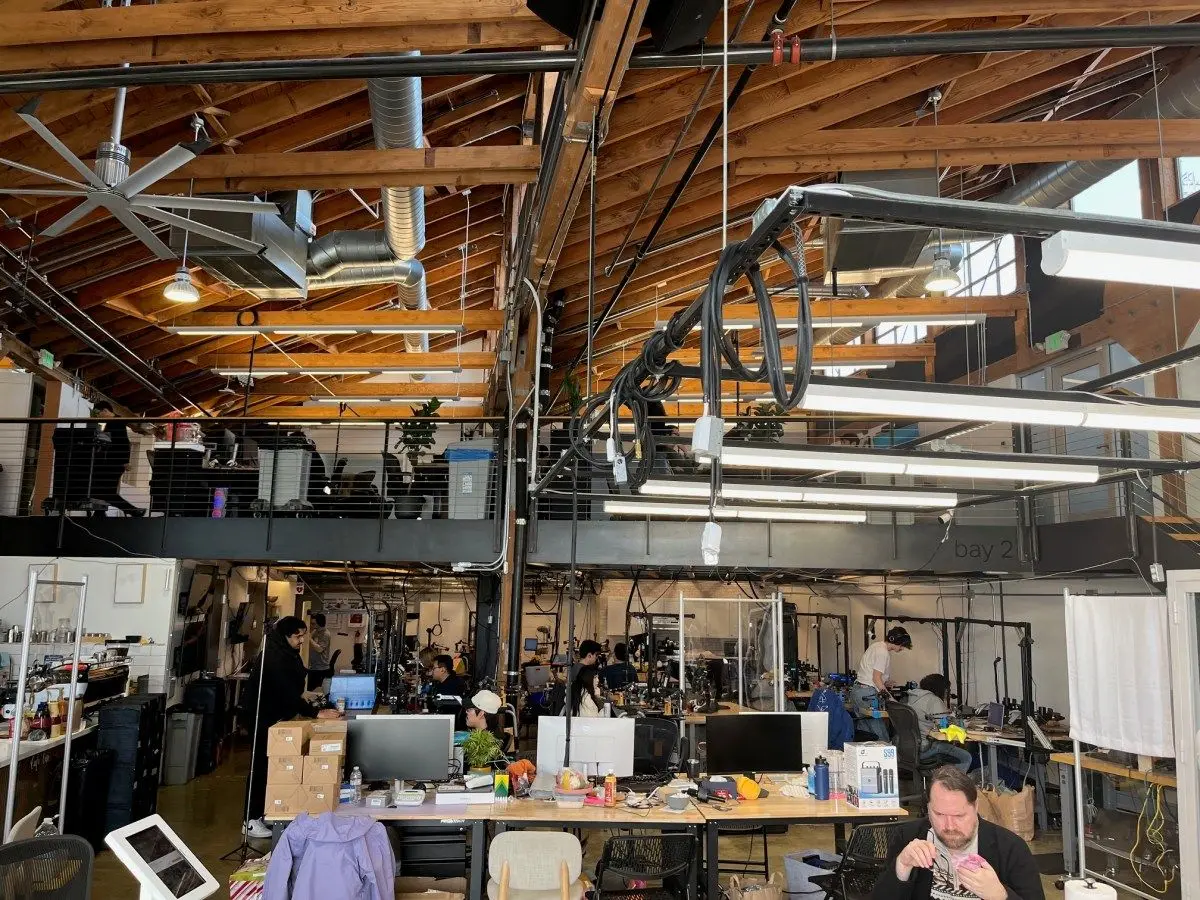
Scaling Infrastructure and Data for Next-Generation Models
The new capital will enable Generalist AI to scale robot learning across multiple dimensions, including building new models, expanding its physical data engine, and developing compute and training infrastructure
1
. The company will also focus on working with industries for commercialization. "Scaling robot learning creates better models, better models can do more useful physical work, and data from real businesses drives the next generation of more capable models," the company stated1
. This virtuous cycle of data and training infrastructure improvements positions the startup to develop increasingly sophisticated AI models designed to help robots handle complex tasks across industrial, retail, and domestic applications3
.Growing Venture Capital Interest in AI Robotics
The robotics industry has gained renewed momentum in recent years, fueled by AI advances
1
. For Nvidia, robotics represents the biggest market for potential growth after AI, with the company claiming it will be the next trillion-dollar industry2
. The funding comes as venture capital firms increase investments in companies combining artificial intelligence with robotics applications3
. Recent months have seen Meta acquire Assured Robot Intelligence to pursue humanoid robotic hardware for household chores, Amazon acquire Fauna Robotics in March, and Alphabet's Intrinsic join Google to work closely with DeepMind while tapping into Gemini AI models and cloud services1
. This wave of activity signals industry-wide conviction that embodied robotics intelligence will transform how machines work alongside humans in coming years.References
Summarized by

Navi
[1]
[2]
Related Stories
Generalist Secures $200M Funding Round, Reaches $3B Valuation in AI Robotics Race
25 Aug 2026•Business and Economy

General Intuition Targets $6B Valuation as AI Startup Pushes Into Robotics With Gameplay-Trained Models
25 Aug 2026•Startups

General Intuition raises $320 million to build AI models that act in the physical world
26 Jun 2026•Startups

Recent Highlights



Recent Highlights
Today's Top Stories






Don’t drown in AI news. We cut through the noise - filtering, ranking and summarizing the most important AI news, breakthroughs and research daily. Follow topics that matter to you and stay ahead.


