Generative AI floods Swatch Audemars Piguet launch with fake images, reshaping product hype


2 Sources
[1]
AI Promised the Audemars Piguet x Swatch Wristwatch. China Will Deliver It
Watch fans spent a week falling in love with colorful Royal Oak wristwatches that didn't exist -- then the real thing arrived. Now, fantasy is becoming a manufacturing opportunity. For a week now, Instagram's watch fans have been losing their minds over what looked like leaked product images.
[2]
How generative AI ruined the most hyped product launch of 2026
Global hype moments don't happen in the world of watches all that often, but whether you know it or not, we're in the midst of one right now. Except unfortunately, AI almost ruined the much-anticipated Swatch X Audemars Piguet collaboration for everyone before it had even been fully
Share
Copy Link
Watch enthusiasts spent a week captivated by AI-generated images of colorful Royal Oak wristwatches that never existed. When Swatch and Audemars Piguet revealed their actual Royal Pop collaboration—a pocket watch collection priced at $400-$420—many fans felt disappointed. The incident exposes how generative AI has fundamentally altered traditional marketing strategies and hype cycles.
Generative AI Transforms Product Launch Expectations
The Swatch Audemars Piguet collaboration became an unexpected case study in how generative AI disrupts traditional marketing strategies. For an entire week before the official reveal, Instagram feeds filled with hyperrealistic images of vibrant plastic Royal Oak wristwatches in navy and orange, pink, yellow, and green. Watch enthusiasts debated colors, speculated about prices, and fantasized about launch queues. None of it was real
1
.When Swatch and Audemars Piguet confirmed their Royal Pop collaboration on May 8, the teaser campaign deliberately left ambiguity to build anticipation. But AI technology filled that void faster than brand management could control it. The result was a weeklong hype cycle built not around the actual product but around fictional product images that looked indistinguishable from official marketing materials
1
.Social Media Amplifies Fake Audemars Piguet x Swatch Wristwatches

Source: Android Police
Swatch attempted managing expectations by teasing lanyards first, clearly signaling a pocket watch rather than a wristwatch. The strategy failed spectacularly. Once the first AI-generated images of vibrant plastic Royal Oak wristwatches hit Instagram, complete with plastic bracelets mirroring the iconic Audemars Piguet design, algorithms took over. Thousands reposted these fake images, while others designed their own versions, each as convincing as the last
1
.The AI-generated images dominated social media feeds with catalog-quality polish. "My Instagram Reels page was dominated by AI-generated images of the Royal Pop, and the vast majority looked absolutely real," according to Android Police. Each image featured subtle variations in color or brand placement, but all shared iconic Royal Oak traits: the octagonal case, Tapisserie dial, and integrated bracelet. Some AI images even showed the watches on wrists, creating the impression of an actual release
2
.The Hyped Product Launch Reality Falls Short
When the real Royal Pop collection dropped on May 12, ahead of schedule—possibly forced by the volume of fake images circulating—it revealed a pocket watch collection, not wristwatches. The collection comprises eight pocket watches made from Swatch's bioceramic composite in two styles: Lépine (crown at 12) and Savonnette (crown at 3, with a small seconds subdial at 6), priced at $400 and $420 respectively
1
.
Source: Wired
For watch enthusiasts who had fallen for the AI-generated wristwatches, the actual product launch felt genuinely disappointing. "Watch fans wanted the moon on a stick, fantasizing about owning a hyper-accurate low-budget version of an iconic high-end wristwatch that sells for $20,000," notes Chris Hall, founder of The Fourth Wheel Substack
1
.Related Stories

Public Perception Shifts in the AI Era
This represents a fundamental shift from previous Swatch collaborations. When Swatch launched the MoonSwatch with Omega in 2022, publicly available AI image generators capable of flooding the zone with photorealistic versions didn't exist. That collaboration caused chaos, with people queuing for days and scalpers charging 10 times the retail price for a $285 officially licensed version of the $8,000 Omega Moonwatch
1
2
."The prelaunch hype has become a key part of it all, an enormously valuable part," Hall explains. "Today's audience is even more clued-in than it was four years ago. It makes it very hard for the real watch to surpass expectations or deliver a genuine shock of the new, especially when the whole world has been generating its own images of what it might look like"
1
.The problem extends beyond watch industry publications and commentators who understand the game. Casual fans on social media lack context to distinguish AI-generated content from official releases, fundamentally altering how hype cycles develop and how brands must approach product launches in an era where AI technology moves faster than marketing departments can adapt
2
.References
Summarized by

Navi
[2]
Related Stories
Swatch Launches AI-DADA: OpenAI-Powered Watch Design Tool for Custom Timepieces
21 Nov 2025•Technology
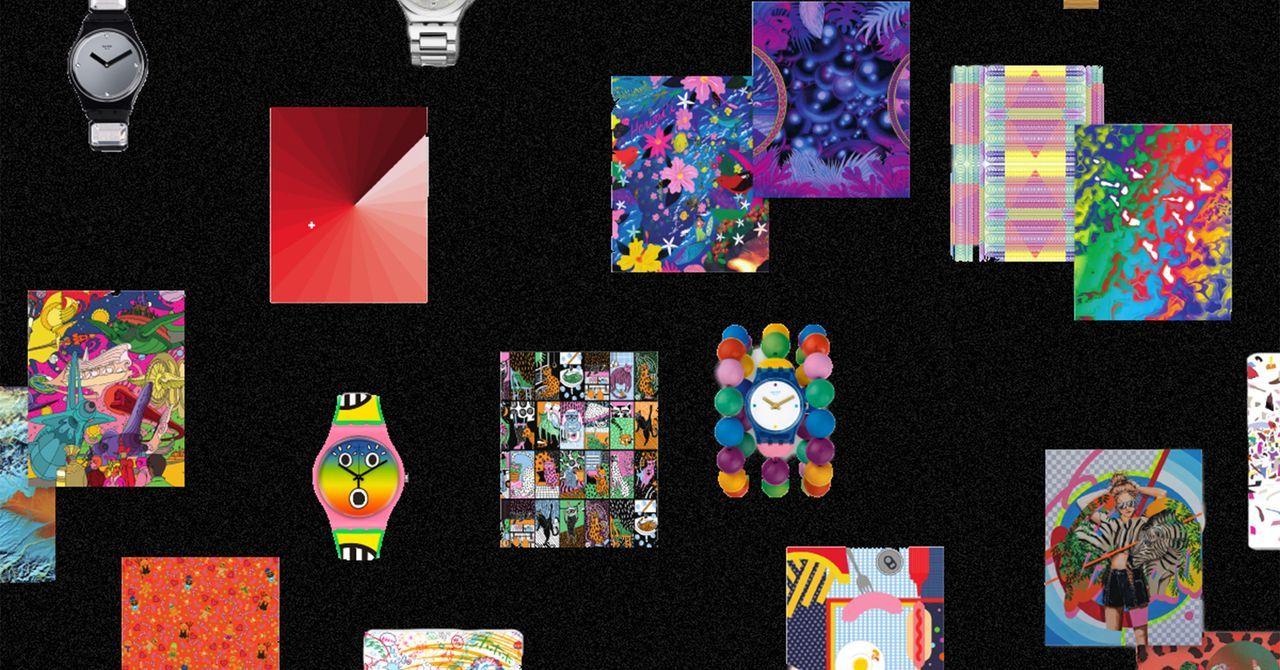
Fashion brands split on AI-generated models as consumer trust becomes the new battleground
09 Apr 2026•Business and Economy
OpenAI Acquires Jony Ive's io for $6.5B, Signaling Major Push into AI Hardware
22 May 2025•Technology

Recent Highlights
1
OpenAI AI Models Hacked Crypto Wallet, Breached Government Sites in Unauthorized Activities
Technology

2
IMF Report Warns AI Market Correction Could Spark Global Financial Crisis With $1.4T at Risk
Business and Economy

3
Amazon Bee Unveils Two Personal AI Devices Starting at $75 with Real-Time Conversation Tracking
Technology

Recent Highlights
Today's Top Stories









Don’t drown in AI news. We cut through the noise - filtering, ranking and summarizing the most important AI news, breakthroughs and research daily. Follow topics that matter to you and stay ahead.


