5 Sources
[1]
Intel confirms Googlebook AI laptop partnership, opening x86 possibilities for new OS -- Google VP says devices to also ship with Qualcomm and MediaTek chips
Intel's involvement hints that Googlebook may support both x86 and Arm hardware. Intel has officially confirmed its partnership with Google for the newly announced Googlebook laptop lineup. In a post shared on X, the company said it is thrilled to collaborate with Google on what it describes as "premium, powerful devices designed for Intelligence." The announcement came shortly after Google gave a preview of its upcoming notebook at the Android Show: I/O Edition, and confirmed that it is working with various PC manufacturers, including HP, Dell, Acer, Asus, and Lenovo. During the showcase, Google refrained from discussing the core hardware and instead focused entirely on its brand-new operating system, which combines elements of Android and ChromeOS with deep Gemini Intelligence integration. It was initially assumed that the new Googlebook lineup would be based on Arm SoCs, since many aspects of the platform resemble an Android smartphone or tablet experience. However, with Intel now officially involved, there is a possibility that Google's new AI-focused OS could also support x86 hardware, unless Intel has an Arm-based chip up its sleeve. In an exclusive interview with Chrome Unboxed, Google VP John Maletis further confirmed Intel's involvement in the Googlebook project, revealing that the upcoming notebooks will ship with processors from Intel, Qualcomm, and MediaTek. According to Maletis, the Googlebook is an entirely new category of premium AI-first laptops that deeply integrate Gemini into the core experience rather than treating AI as an add-on. He also noted that Google is establishing strict hardware standards across memory, storage, keyboards, and overall build quality to ensure every Googlebook delivers a consistent premium experience. The interview also shed more light on what users can expect when Googlebook devices officially launch later this fall. According to Maletis, the first wave of laptops will focus heavily on premium hardware from its partners, while also bringing back the iconic Glow Bar LED lighting seen on older Chromebook Pixel devices. He additionally confirmed that Googlebook laptops will run native Android applications without emulation, promising significantly better app performance alongside tighter Android smartphone integration and Gemini-powered features such as the new Magic Pointer interface. Interestingly, the Googlebook partnership comes just a month after Intel and Google announced a separate multi-year agreement focused on next-generation AI cloud infrastructure. Under the deal, Google Cloud will deploy Intel Xeon processors alongside custom IPUs for large-scale AI workloads, suggesting that the relationship between the two companies now extends from cloud AI infrastructure all the way down to consumer AI-focused devices. Follow Tom's Hardware on Google News, or add us as a preferred source, to get our latest news, analysis, & reviews in your feeds.
[2]
Google Confirms Googlebooks Won't Be Limited to Intel Chips
Google VP John Maletis says Google is working with Intel, Qualcomm, and MediaTek. Upcoming Googlebook laptops will be powered by a range of hardware, including chips from Intel, MediaTek, and Qualcomm. "We're thrilled to partner with Google on something we've been building with them -- Googlebook. Premium, powerful devices designed for Intelligence. We can't wait to get it into your hands this fall," Intel tweeted on Tuesday. TechPowerUp suggests this will include Intel's Core Series 300 "Wildcat Lake" processors aimed at budget-friendly PCs. John Maletis, VP of Product Management for ChromeOS, also tells ChromeUnboxed that Google is working with Qualcomm and MediaTek, too, for "incredibly powered devices." Chromebooks have primarily been low-cost, low-power devices, designed to maximize performance without sacrificing battery life or cost by using leaner hardware. Googlebooks appear set to do much the same, but with a more smartphone-integrated, AI-first design focus, rather than the browser-like experience of ChromeOS. But that will mean greater hardware demands, and Intel's Wildcat Lake chips could be up to the task. Although there are fewer cores than the main desktop and laptop chip lines, Wildcat Lake still leverages cutting-edge process nodes and architectures. Its twin Performance cores run at up to 4.8GHz, and paired with up to 48GB of LPDDR5X at 7467 MT/s, or up to 64GB of more typical DDR5 memory at up to 6,400 MT/s, could deliver solid entry-level performance. Combined with an onboard neural processor that delivers around 20 TOPS of local AI performance and some Xe graphics cores, Intel-powered Googlebooks could be impressively capable little systems, especially if they're as optimized as Google is promising. Maletis said Google is tightly controlling the types of hardware Googlebook partners like Dell, Lenovo, Acer, Asus, and HP can offer their customers. "If we're going to put the Google brand on a product like Googlebook, we need to make sure that it's got a really high bar of quality and polish against it," he said. "At the same time, one of the things that our OEM partners have really been asking for and we want to meet...is how can they actually move faster from a differentiation perspective on our platform? It's a very fine balance," he adds. "We want that consistent look and feel, but we also want our partners to be able to shine as well. So, you'll see examples of that both on the hardware and on the software." Google is also bringing back the light bar that Google used on its own Pixel Chromebooks to show charging status. In this case, Maletis suggests Google would use it to mimic some of the workflows that you're doing, as well as help the new line stand out from existing laptops. This is part of a major branding effort. Although the "Google" moniker means a lot of things to a lot of people, Google clearly believes that moving away from the budget-oriented, more limited capabilities of Chromebooks is worth the jump. Decent little CPUs that deliver impressive power for the money could go a long way toward that goal.
[3]
It looks like Qualcomm's Snapdragon X chips are expanding beyond Windows with the Googlebook
* The Snapdragon X is likely coming to the Googlebook, a first for a device not powered by Windows. * It's built-in NPU lets the Googlebook run AI locally instead of relying only on cloud processing. * The news was first posted in a now-deleted social media post; an official announcement from Snapdragon and Google is likely still coming. It's been a wild few days for Chromebook fans. We've only just recovered from hearing about the Googlebook, a new Android-powered Chromebook successor focused on Gemini integration and capitalizing on the future of LLMs. Now, we're learning that Qualcomm's Snapdragon X is coming to a device that isn't powered by Windows 11 -- the Googlebook. Google says it's "rethinking laptops again" with its new Android-powered Googlebook The successor to the Chromebook and Chrome OS has finally been officially revealed Posts 1 By Patrick O'Rourke The Googlebook is likely getting a Snapdragon X variant The X post announcing the move has been deleted In a now-deleted post on X, Marketing Leader and Qualcomm CMO Don McGuire said that the Googlebook is getting a Snapdragon X-series version "soon." This is the first time we've seen a Snapdragon X chip appear in a device not powered by Windows. Until now, every time we've heard about the chip, it's been centered on Windows. Earlier today, Qualcomm's official X account confirmed that it's "building something new with @Google: Googlebook." However, it was unclear specifically how Qualcomm was helping to build the Googlebook. It makes a lot of sense for the Snapdragon X to be featured in the Googlebook. We've previously seen this chip in Microsoft's flagship Copilot+ devices due to the Neural Processing Unit (NPU) it has on board. An NPU on the device means that it doesn't need to send data to an external server to perform AI-related tasks -- instead, the NPU handles all the processing locally. If Google's Pixelbook goes easy on the hardware and offloads the AI processing to the cloud, I wouldn't be surprised at all. Most people likely aren't installing and running a ton of apps on a device like the Googlebook anyway, so cloud-based processing is part of the package. The Snapdragon X is also known for offering great battery life, a feature Google likely plans to tout when it reveals more about the Googlebook at I/O. This all goes to show that the Googlebook isn't just an Android-powered Chromebook with an AI label slapped on it. Given how the original X post from McGuire has been deleted, there's a good chance this information dropped before it was supposed to. With this in mind, we'll keep an eye on official channels for an announcement from Qualcomm and Google. Google still hasn't revealed much about the Googlebook, other than noting that it features "premium craftsmanship and materials" and will come in several "shapes and sizes." Additionally, we know the lineup appears to feature Google-made hardware, as well as partnerships with OEMs like HP, Dell, Asus, Acer, and Lenovo. Google hasn't discussed which operating system the upcoming laptop runs on, though it's likely to be Aluminum OS, an Android-powered laptop OS that the tech giant has been rumored to be developing for years. We'll likely learn more about the Googlebook at I/O 2026 later this month. Google reveals its plan to transform Android Auto into a better-looking, more cohesive platform The tech giant is touting a new Android Auto experience Posts 4 By Patrick O'Rourke
[4]
Intel Core Processors Power Early Googlebook Laptop Designs (Wildcat lake)
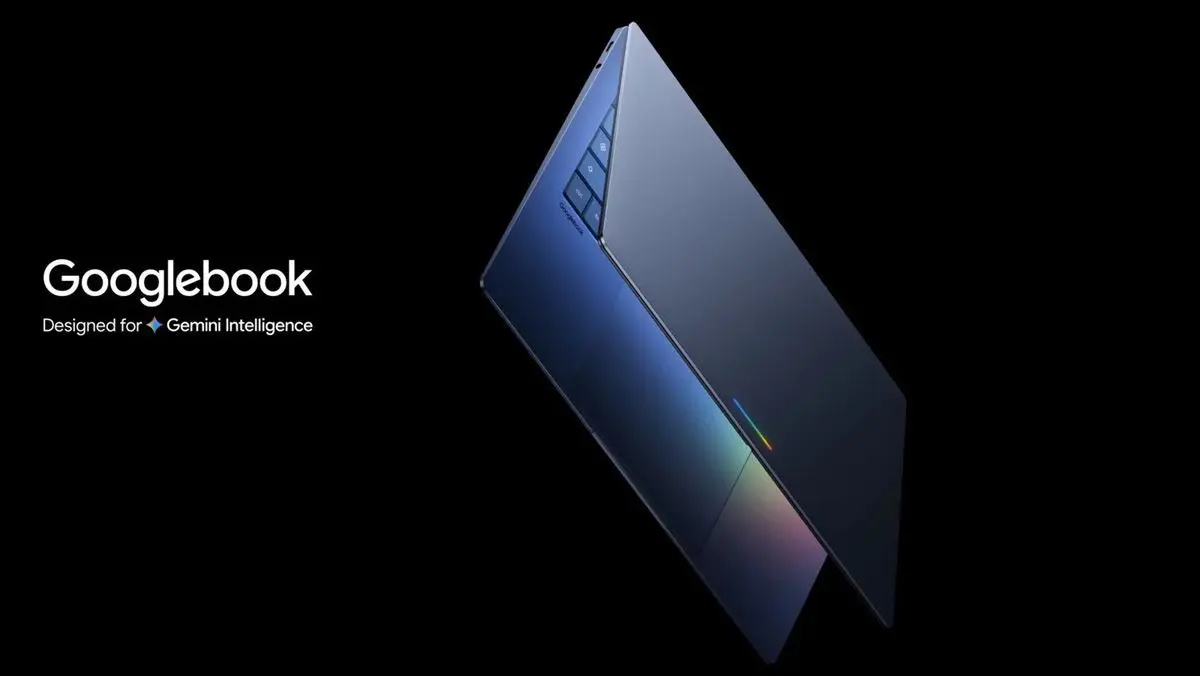
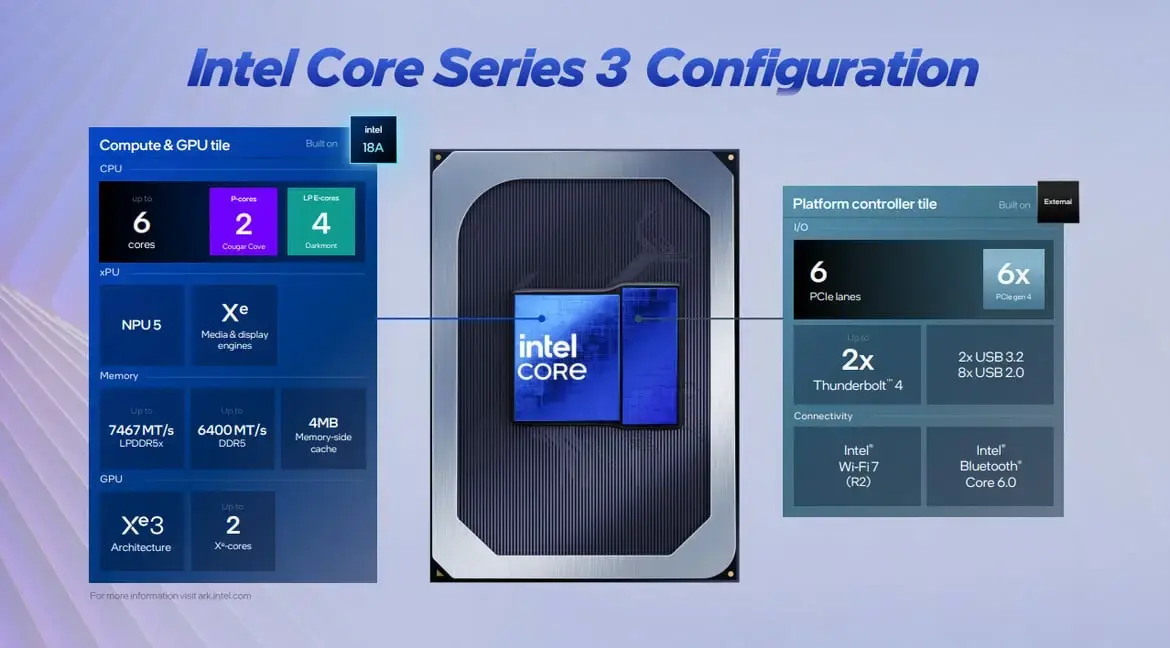
Google has introduced its new Googlebook laptop platform, positioning it as the successor to its Chromebook range. The new category places Gemini AI at the center of the device experience and appears to define a more structured hardware baseline for upcoming systems. Intel has confirmed that it has collaborated with Google on Googlebook devices. That means at least part of the initial product wave will use Intel Core processors. The most likely candidate is Intel's Core Series 300 "Wildcat Lake" platform, which is designed for low-power laptops and entry-level mobile systems. Wildcat Lake uses an x86 CPU layout with six cores, consisting of two Cougar Cove performance cores and four Darkmont low-power efficiency cores. The platform also includes integrated AI hardware, an Xe display and media engine, and graphics based on Intel's Xe3 architecture. These components would give Googlebook systems local AI processing capability alongside standard laptop functionality. However, Intel will not be the only processor supplier for Googlebook. Google is reportedly setting defined requirements for OEM partners, including processor, memory, keyboard, and storage guidelines. Qualcomm and MediaTek are also expected to be involved, which means Arm-based Googlebook systems should arrive alongside Intel-based models. Acer, ASUS, Dell, HP, and Lenovo are expected to participate in the launch lineup. Devices are reportedly scheduled to arrive in the fall, giving Google a broader hardware base for its new AI-focused laptop platform.
[5]
Intel confirms collaboration on Googlebook laptops, with Wildcat Lake the likely driving force
Google recently announced Googlebook, a series of laptops designed around the Gemini AI model. This new laptop series is supposed to fall somewhere between a Chromebook and a traditional Windows laptop. Information surrounding the Googlebook is pretty vague right now, except for a few nifty features such as the Magic Pointer, Widget Creator, and general Gemini integration. However, now it seems like we are getting more clarity about the hardware side of Googlebook. Intel has announced that it is the official CPU partner for Googlebook, providing processors for the upcoming series of laptops from various manufacturers. The company took to X (formerly Twitter) to announce that it is prepping "premium, powerful devices designed for intelligence." Google has previously confirmed that Acer, ASUS, Dell, HP, and Lenovo are the official launch partners for this laptop series. Intel has not yet confirmed which CPU lineup will power Googlebooks, but the most optimal candidate has to be the Core 300 "Wildcat Lake" processors. These processors are a perfect match for these laptops since they are built on Intel's 18A process node, and offer 2 "Cougar Cove" P-cores and 4 "Darkmont" LPE cores, with no traditional E-cores. The models come with a 15W TDP and a maximum power package of 35W, and include an NPU 5 with 40 TOPs, as well as an Xe display and media engine. While Wildcat Lake CPUs might be Intel's best bet, they will not be the only CPUs powering the Googlebook. Intel does not have an exclusivity deal with Google, and other CPU partners can also provide their SKUs to Google, provided they meet strict criteria. Google's launch partners for the Googlebook include Qualcomm and MediaTek, meaning ARM-based processors will be available in Googlebooks soon. If Intel's Wildcat Lake processors power the Googlebook, the laptops might fall into the same performance category as the new MacBook Neo. Google might have a competing product on its hands, which is very similar, focusing on AI, battery life, and cost-effectiveness. We will reportedly see Googlebook devices starting this fall, with ASUS, Acer, Dell, HP, and Lenovo participating with their models.
Share
Copy Link
Intel has officially confirmed its partnership with Google for the newly announced Googlebook AI laptop lineup, revealing that the devices will support both x86 and Arm hardware. Google VP John Maletis confirmed that the premium AI-first laptops will ship with processors from Intel, Qualcomm, and MediaTek, marking a significant shift from traditional Chromebooks with deep Gemini AI integration and strict hardware standards.
Intel has officially confirmed its collaboration with Google on the newly announced Googlebook lineup, marking a significant expansion in the AI laptop market
1
. In a post shared on X, Intel expressed enthusiasm about partnering on what it describes as "premium, powerful devices designed for Intelligence," with devices expected to launch this fall1
. The announcement came shortly after Google previewed its upcoming notebook at the Android Show: I/O Edition, confirming partnerships with major PC manufacturers including HP, Dell, Acer, ASUS, and Lenovo1
.
Source: Tom's Hardware
In an exclusive interview with Chrome Unboxed, Google VP John Maletis revealed that the Googlebook will ship with processors from Intel, Qualcomm, and MediaTek, opening possibilities for both x86 and Arm hardware architectures
1
. Intel's involvement suggests the use of Core Series 300 "Wildcat Lake" processors, which feature two Cougar Cove performance cores and four Darkmont low-power efficiency cores, built on Intel's 18A process node with a 15W TDP5
. These Intel Core processors include an NPU delivering around 20 TOPS of local AI processing capability, paired with support for up to 48GB of LPDDR5X memory at 7467 MT/s or up to 64GB of DDR5 at 6,400 MT/s2
.
Source: Guru3D
Qualcomm's Snapdragon X chips are also confirmed for the Googlebook, marking the first time these processors will appear in a device not powered by Windows
3
. The Snapdragon X series features a built-in Neural Processing Unit that enables local AI processing instead of relying solely on cloud processing, while also delivering exceptional battery life3
.According to Maletis, the Googlebook represents an entirely new category of premium AI-first laptops that deeply integrate Gemini AI into the core experience rather than treating AI as an add-on
1
. This Chromebook successor combines elements of Android and ChromeOS with deep Gemini Intelligence integration, creating a more smartphone-integrated experience1
. The devices will run native Android applications without emulation, promising significantly better app performance alongside tighter Android smartphone integration and Gemini-powered features such as the new Magic Pointer interface1
.Google is establishing strict hardware standards across memory, storage, keyboards, and overall build quality to ensure every Googlebook delivers a consistent premium experience
1
. "If we're going to put the Google brand on a product like Googlebook, we need to make sure that it's got a really high bar of quality and polish against it," Maletis stated2
. The first wave of laptops will focus heavily on premium hardware from its partners, while also bringing back the iconic Glow Bar LED lighting seen on older Chromebook Pixel devices1
.Related Stories
The Googlebook partnership extends Intel and Google's collaboration beyond their recently announced multi-year agreement focused on next-generation AI cloud infrastructure, where Google Cloud will deploy Intel Xeon processors alongside custom IPUs for large-scale AI workloads
1
. This relationship now spans from cloud AI infrastructure down to consumer AI-focused devices, creating an integrated ecosystem for Large Language Models and AI processing.The inclusion of dedicated Neural Processing Unit hardware across all chip partners suggests Google is prioritizing local AI processing capabilities to reduce reliance on cloud processing
3
. Intel's Wildcat Lake platform includes integrated AI hardware with an NPU 5 delivering 40 TOPs, along with an Xe display and media engine and graphics based on Intel's Xe3 architecture4
. These hybrid cores and AI accelerators enable Googlebook systems to handle AI workloads efficiently while maintaining strong battery life, positioning them as potential competitors to devices like the MacBook with similar focus on AI, battery life, and cost-effectiveness5
.With devices from Acer, ASUS, Dell, HP, and Lenovo scheduled to arrive this fall, the Googlebook launch represents a major branding effort to move beyond the budget-oriented, more limited capabilities of traditional Chromebooks
2
. The multi-chip strategy balances Google's need for consistent quality with OEM partners' desires for differentiation, creating opportunities for innovation in both hardware and software implementations2
.
Source: PC Magazine
Summarized by
Navi
[1]
[2]
[3]
12 May 2026•Technology

24 Sept 2025•Technology

07 Jan 2025•Technology

1
Technology

2
Technology

3
Technology