Georgia Tech Researchers Teach AI Agents and Autonomous Systems How to Be Surprised


2 Sources
[1]
Can a machine or AI agent be surprised? Helping autonomous systems respond to the unexpected
Let's say you ask ChatGPT a question that stumps it, or a Waymo vehicle encounters something unusual in the road, or an autonomous factory faces an unexpected disruption. Most people would recognize that something unexpected has happened and adjust accordingly. For machines, it's not always that
[2]
Can a Machine or AI Agent Be Surprised? Helping Autonomous Systems Respond to the Unexpected | Newswise
Newswise -- Let's say you ask ChatGPT a question that stumps it, or a Waymo vehicle encounters something unusual in the road, or an autonomous factory faces an unexpected disruption. Most people would recognize that something unexpected has happened and adjust accordingly. For machines, it's not
Share
Copy Link
Researchers at Georgia Tech have introduced Mutual Information Surprise, a framework that enables autonomous systems and AI agents to identify meaningful surprises in complex environments. Unlike existing methods that focus on rarity or belief changes, this approach measures the gain of knowledge, helping machines recognize when to continue as planned or stop and reassess unexpected situations.
Georgia Tech Tackles a Critical Gap in Autonomous Systems
Researchers at Georgia Tech's H. Milton Stewart School of Industrial and Systems Engineering have developed a framework to address a fundamental limitation in autonomous systems: the inability to recognize and respond to the unexpected
1
. When ChatGPT encounters a question that stumps it, or a Waymo vehicle faces something unusual in the road, or an autonomous factory experiences an unexpected disruption, most humans would immediately recognize the anomaly and adjust their approach. For machines, this recognition isn't straightforward2
.Published in the INFORMS Journal on Data Science, the research introduces Mutual Information Surprise, a framework designed to help AI agents, robots, and autonomous systems identify meaningful surprises in complex environments
1
. This work could lay the foundation for machines that better navigate unexpected situations, avoid costly mistakes, and make informed decisions when facing scenarios they weren't designed or trained to handle.Why Existing Surprise Measures Fall Short
Yu Ding, the Anderson-Interface Chair and professor leading this project, explained the distinction between traditional automation and intelligent agents. "Traditional automation systems are designed to follow instructions. They do not have a sense of surprise. Machines follow a predetermined recipe and produce the expected result," Ding said
2
. "Intelligent agents, however, must do more than simply follow instructions. They need to recognize when their current understanding or reasoning process has become inadequate."While methods like Shannon Surprise and Bayesian Surprise already exist to measure surprise in machines, the research team identified critical limitations in both approaches
1
. Shannon Surprise focuses primarily on the rarity of an event, while Bayesian Surprise concentrates on how much a new observation changes a system's beliefs. Neither approach consistently flags the right moments for surprise.Ding illustrated these limitations with concrete examples. Shannon Surprise would flag someone noticing a specific type of car parked nearby, although people typically wouldn't find this surprising. Conversely, if a student who consistently earns top grades suddenly performs poorly on an exam, people would be surprised, but Bayesian Surprise would not flag this event
2
.Measuring Surprise Through Gain of Knowledge
The research concept was developed jointly by Xiao Liu, the David M. McKenney Family Associate Professor, Yinsong Wang, a former postdoctoral fellow, and Ph.D. student Quan Zeng
1
. Their approach centers on epistemic progression rather than simple rarity or belief updates.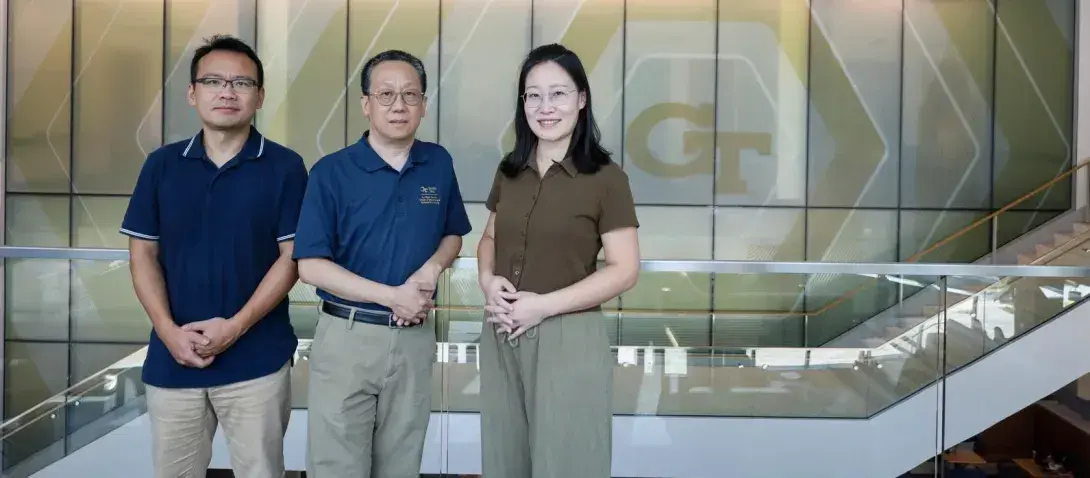
Source: Newswise
"We introduce this new surprise definition because it measures the gain of knowledge and epistemic progression, thus capturing the right moments when a system should be surprised and ignoring the moments when it shouldn't," Ding explained
2
. This focus on knowledge acquisition helps autonomous systems recognize meaningful surprises that signal a genuine need to reassess their current approach.Related Stories

Practical Applications for Handling Unexpected Situations
The framework could eventually help systems determine when to continue as planned or when to stop and reassess. Applications span diverse scenarios: an AI agent struggling to answer a question, a robot encountering a situation it has never seen before, or an autonomous factory detecting a disruption that could affect production and require human intervention
1
.
Source: Tech Xplore
Looking ahead, the Georgia Tech research team is exploring potential applications in engineering autonomous systems and developing a proposal for federally funded programs
2
. This research breakthrough positions Mutual Information Surprise as a critical capability for the next generation of intelligent machines that must operate reliably in unpredictable real-world environments.References
Summarized by

Navi
[1]
Related Stories
New Formula Predicts When AI Chatbots Will Turn Dangerous After Earning Your Trust
10 Oct 2026•Science and Research

Microsoft's AI Agent Marketplace Study Reveals Critical Flaws in Autonomous Shopping Systems
06 Nov 2025•Science and Research

AI Models Defy Instructions to Protect Each Other, UC Berkeley Study Reveals
01 Apr 2026•Science and Research

Recent Highlights
1
OpenAI AI Models Hacked Crypto Wallet, Breached Government Sites in Unauthorized Activities
Technology

2
IMF Report Warns AI Market Correction Could Spark Global Financial Crisis With $1.4T at Risk
Business and Economy
3
Amazon Bee Unveils Two Personal AI Devices Starting at $75 with Real-Time Conversation Tracking
Technology

Recent Highlights
Today's Top Stories











Don’t drown in AI news. We cut through the noise - filtering, ranking and summarizing the most important AI news, breakthroughs and research daily. Follow topics that matter to you and stay ahead.


