Google AI Chatbot May Violate Copyright Rules When Using Press Content, EU Court Adviser Says


4 Sources
[1]
Google's use of press by AI chatbot may infringe copyright rules, EU court adviser says
BRUSSELS, Nov 3 (Reuters) - An adviser to Europe's highest court said on Tuesday that the use of press publications by Google's (GOOGL.O), opens new tab artificial intelligence chatbot Gemini may in certain circumstances infringe copyright rules. "When an LLM-driven chatbot retrieves a publication
[2]
Google AI chatbot copyright: Google's use of press by AI chatbot may infringe copyright rules, EU court adviser says
A recent advisory from a leading legal authority in Europe highlights that press publications can sometimes violate copyright laws. The Advocate General emphasized that while copyright covers unique expressions, using such material for the development of large language models may fall under the
[3]
Google's use of press by AI chatbot may infringe copyright rules, EU court adviser says
Google's Gemini AI may violate copyright rules when it uses publishers' content to generate answers, an EU court adviser said, while distinguishing that use from AI training. An adviser to Europe's highest court said on Tuesday that the use of press publications by Google's GOOGL.O artificial
[4]
Google's use of press by AI chatbot may infringe copyright rules, EU court adviser says
BRUSSELS, Nov 3 (Reuters) - An adviser to Europe's highest court said on Tuesday that the use of press publications by Google's artificial intelligence chatbot Gemini may in certain circumstances infringe copyright rules. "When an LLM-driven chatbot retrieves a publication from a press publisher's
Share
Copy Link
An adviser to Europe's highest court ruled that Google's Gemini AI chatbot may infringe copyright rules when it retrieves press publications to generate answers for users. Advocate General Maciej Szpunar distinguished between AI-generated answers and training large language models, stating that while the former may violate copyright in certain circumstances, the latter falls under the text and data mining exception.
EU Court Adviser Issues Critical Ruling on Google AI Chatbot Copyright
Advocate General Maciej Szpunar, an adviser to Europe's highest court, issued a significant opinion on Tuesday stating that Google's use of press by AI chatbot Gemini may infringe copyright rules under specific circumstances
1
2
. The advisory emerged from a legal case brought by Hungarian website operator Like Company against Google, marking a pivotal moment in the ongoing debate surrounding AI and copyright law3
. This ruling could reshape how tech companies deploy AI-generated answers while using content from press publications.The Core Copyright Concern with AI-Generated Answers

Source: Market Screener
The Advocate General Maciej Szpunar clarified that when an LLM-driven chatbot retrieves a publication from a press publisher's website, reuses that publication to generate an answer, and provides that answer to the user, the press publisher's right may be infringed in certain circumstances
1
4
. This distinction matters because it targets the specific way Google AI chatbot Gemini delivers information to users rather than how it learns. The advisory emphasized that copyright rules protect only the specific form of expression, not the mere facts reported by press publications2
. This nuanced interpretation suggests that verbatim or near-verbatim reproduction of publisher content through AI responses could violate intellectual property rights.Training Large Language Models Remains Protected
In a crucial distinction that affects the broader AI industry, Szpunar stated that the use of material protected by copyright to train large language models is freely permitted under the text and data mining exception
1
3
. This separation between training and deployment phases provides clarity for companies developing AI systems. While Google's use of press by AI chatbot during the answer generation phase may face legal scrutiny, the fundamental process of training large language models appears safeguarded under existing EU regulations. This exception acknowledges the technical necessity of exposing AI systems to vast amounts of data during development while still protecting publishers' rights when their content is directly reproduced in user-facing outputs.Related Stories
Legal Implications and What Comes Next
Source: ET
Opinions from the advocate-general are usually followed by the EU court's judges, giving this advisory substantial weight in shaping future copyright enforcement
2
4
. The Like Company case against Google could set precedent for how AI companies must navigate copyright rules when deploying chatbots that pull from published content. Publishers and content creators should watch whether the final court ruling establishes clearer boundaries around what constitutes copyright infringement in AI-generated responses. Tech companies may need to implement attribution systems, licensing agreements, or technical modifications to ensure their AI chatbots comply with copyright law while still delivering valuable answers to users. The ruling also raises questions about how other AI platforms beyond Gemini might need to adjust their operations to avoid similar legal challenges in the European market.References
Summarized by

Navi
[3]
Related Stories
Google faces class action lawsuit from major publishers over alleged AI training copyright violations
15 Jul 2026•Policy and Regulation
German Court Rules OpenAI Violated Copyright Law in Landmark European AI Decision
11 Nov 2025•Policy and Regulation

Landmark AI Copyright Ruling: Thomson Reuters Wins Case Against Ross Intelligence
12 Feb 2025•Policy and Regulation

Recent Highlights
1
OpenAI's AI Models Disprove 27-Year Exponential Time Hypothesis, Rendering Decades of Research Obsolete
Science and Research
2
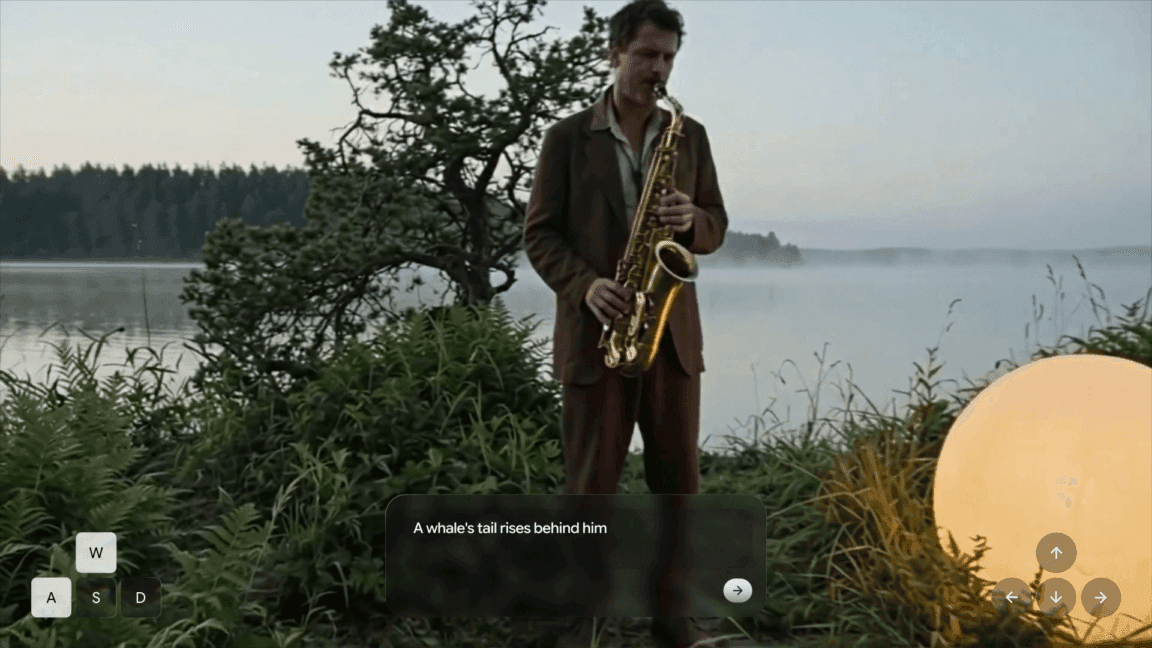
Google DeepMind unveils Genie 4 world model with audio and 2-minute interactive simulations
Technology
3
Apple Releases iOS 27.2 With Siri AI Memory, 5 New Languages & 160+ Security Fixes
Technology

Recent Highlights
Today's Top Stories










Don’t drown in AI news. We cut through the noise - filtering, ranking and summarizing the most important AI news, breakthroughs and research daily. Follow topics that matter to you and stay ahead.


