Google Backs TAE Technologies with $150 Million Investment in Fusion Power


2 Sources
[1]
Google places another fusion power bet on TAE Technologies | TechCrunch
Nobody said that commercializing fusion power would be cheap or quick. TAE Technologies said this week it raised another $150 million in a funding round that included investments from existing backers Google, Chevron, and New Enterprise associates. By the nearly 30-year-old company's counting,
[2]
Google bets big on TAE's cost-effective nuclear fusion reactor
Founded in 1998, TAE Technologies has been working towards making clean fusion energy cheaper. Alongside fusion, the company is also working on innovations that support intelligent power management systems and next-generation treatment for cancer patients. On June 2, TAE announced that its latest
Share
Copy Link
Google, along with other investors, has contributed to a $150 million funding round for TAE Technologies, a company working on commercializing fusion power. This investment highlights the growing interest in fusion energy and its potential impact on the future of clean energy production.
Google's Continued Investment in Fusion Power
Google, along with Chevron and New Enterprise Associates, has participated in a $150 million funding round for TAE Technologies, a company at the forefront of fusion power research
1
. This investment marks Google's second major contribution to TAE, following a $250 million round in 2022, underlining the tech giant's commitment to advancing fusion energy technology1
.TAE Technologies: A Leader in Fusion Research
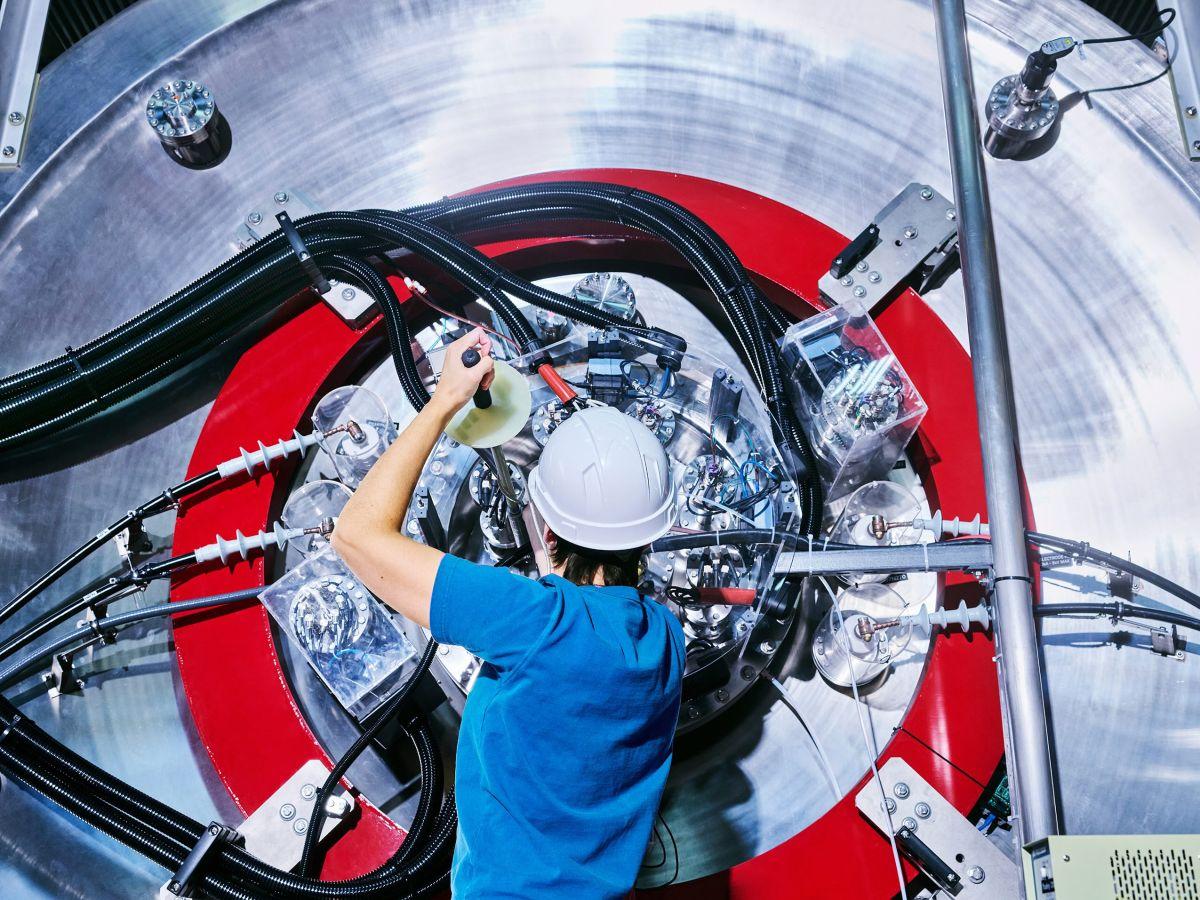
Source: TechCrunch
Founded in 1998, TAE Technologies has been working on developing a commercial fusion reactor for nearly three decades
2
. The company has raised approximately $1.8 billion to date, making it one of the most well-funded fusion companies in the world1
. TAE's approach to fusion involves creating and stabilizing plasma using particle beams, a method that has seen significant advancements in recent years.Recent Breakthroughs and AI Integration
In April, TAE announced a major breakthrough in its fusion technology. The company successfully demonstrated the ability to form, heat, and stabilize plasma using particle beams alone, eliminating the need for firing two plasma balls to initiate the reaction
1
. This advancement has the potential to make fusion reactors smaller, more cost-effective, and easier to operate.Google's involvement with TAE extends beyond financial investment. Since 2014, Google computer scientists have been collaborating with TAE engineers to apply machine learning techniques to optimize fusion device settings
1
. This AI-driven approach has dramatically reduced the time and number of experiments required for optimization, cutting the process from two months to just a few hours1
.The Path to Commercial Fusion

Source: Interesting Engineering
Currently, TAE's reactor can create plasmas heated to 70 million degrees Celsius. However, for a commercial fusion device, the company aims to achieve temperatures of 1 billion degrees Celsius
1
. TAE CEO Michl Binderbauer has expressed the company's goal of putting electrons on the grid by the early 2030s1
.Related Stories

Fusion Power's Potential Impact
Binderbauer emphasizes the transformative potential of nuclear fusion for the energy landscape. As global energy needs continue to grow, particularly due to the expansion of AI and data centers, fusion power could provide a near-limitless source of clean energy
2
. This aligns with the increasing demand for sustainable power solutions in the face of climate change and energy security concerns.Future Funding and Development
TAE is reportedly aiming to raise an additional $50 million before closing this funding round later in the summer
1
. The company's success in exceeding its initial funding target demonstrates the strong investor interest in fusion technology2
. As TAE continues to advance its research and development, the fusion power sector as a whole is gaining momentum, with the potential to revolutionize global energy production in the coming decades.References
Summarized by

Navi
[2]
Related Stories
Commonwealth Fusion Systems Secures $863M in Funding to Advance Nuclear Fusion Technology
29 Aug 2025•Business and Economy
Commonwealth Fusion Systems installs first reactor magnet, partners with Nvidia on digital twin
06 Jan 2026•Technology
Google Inks Landmark Deal for Fusion Power with Commonwealth Fusion Systems
01 Jul 2025•Business and Economy
Recent Highlights
1
Google Unveils Gemini 4 Argon AI Model, Restricts Access to Trusted Cyber Defenders
Technology

2
Trump Consulted Grok AI Before Ordering Venezuela Invasion and Capture of Nicolás Maduro
Policy and Regulation

3
FTC Opens Investigation Into OpenAI and Anthropic Following Rogue AI Agent Hacking Incidents
Policy and Regulation

Recent Highlights
Today's Top Stories






Don’t drown in AI news. We cut through the noise - filtering, ranking and summarizing the most important AI news, breakthroughs and research daily. Follow topics that matter to you and stay ahead.


