Google Engineers Build Offline AI Translator Using Gemma Model on Raspberry Pi for Under $100


4 Sources
[1]
Google built a portable AI translator that works offline, and you can build one too
The code and 3D printing files are available on GitHub, so anyone can build their own AI translator. Google's Gemma models are quite capable, and if you've been wondering exactly how good these models are, there's something you need to see. A team of Google engineers has created a fully offline
[2]
Google built an AI translator that runs entirely offline on a Raspberry Pi
Google and Antigravity built an offline AI translator prototype on a Raspberry Pi 5 running Gemma 4 E2B. No internet needed. Open source on GitHub. Not a product announcement. Google and its Antigravity team have built a prototype AI translator that runs entirely offline on a Raspberry Pi 5. The
[3]
Google Antigravity just built an AI translator that works without the internet
Google has shown off a new AI project that could make language barriers a little less intimidating, and it doesn't need an internet connection to do it. The company has introduced the Gemma Translator, a compact prototype built in collaboration with Antigravity. Unlike most AI translation tools
[4]
Google's new offline translator works anywhere -- but you'll have to build it yourself
Will has almost seven years of experience writing about technology and its wider impacts. His work has appeared in The New York Times, BBC News, The Guardian, The Times of London, The Daily Beast, Vice, Slate, Fast Company, The Evening Standard, The i, TechRadar, and Decrypt Media. He has covered
Share
Copy Link
Google engineers developed a fully functional offline AI translator powered by the Gemma 4 E2B model running on a Raspberry Pi 5. The device translates speech locally without internet connectivity, featuring a 3D-printed housing with display, microphone, and speaker. All design files and code are open-source on GitHub.
Google Unveils Offline AI Translator Built on Raspberry Pi Hardware
Google engineers have developed a portable AI translator that works offline, showcasing the capabilities of the Gemma model running entirely on a Raspberry Pi 5
1
2
. The Gemma Translator prototype, built in collaboration with Google Antigravity, uses the Gemma 4 E2B model to process speech locally without any cloud connection3
. Unlike most AI translation tools including Google Translate that require internet connectivity, this device operates independently after initial setup1
.
Source: The Next Web
How the Lightweight AI Model Powers Local Speech Translation
The device leverages the Gemma 4 E2B model, the smallest variant in Google's open-weight family, specifically designed for edge deployment on hardware as compact as a Raspberry Pi or Jetson Nano
2
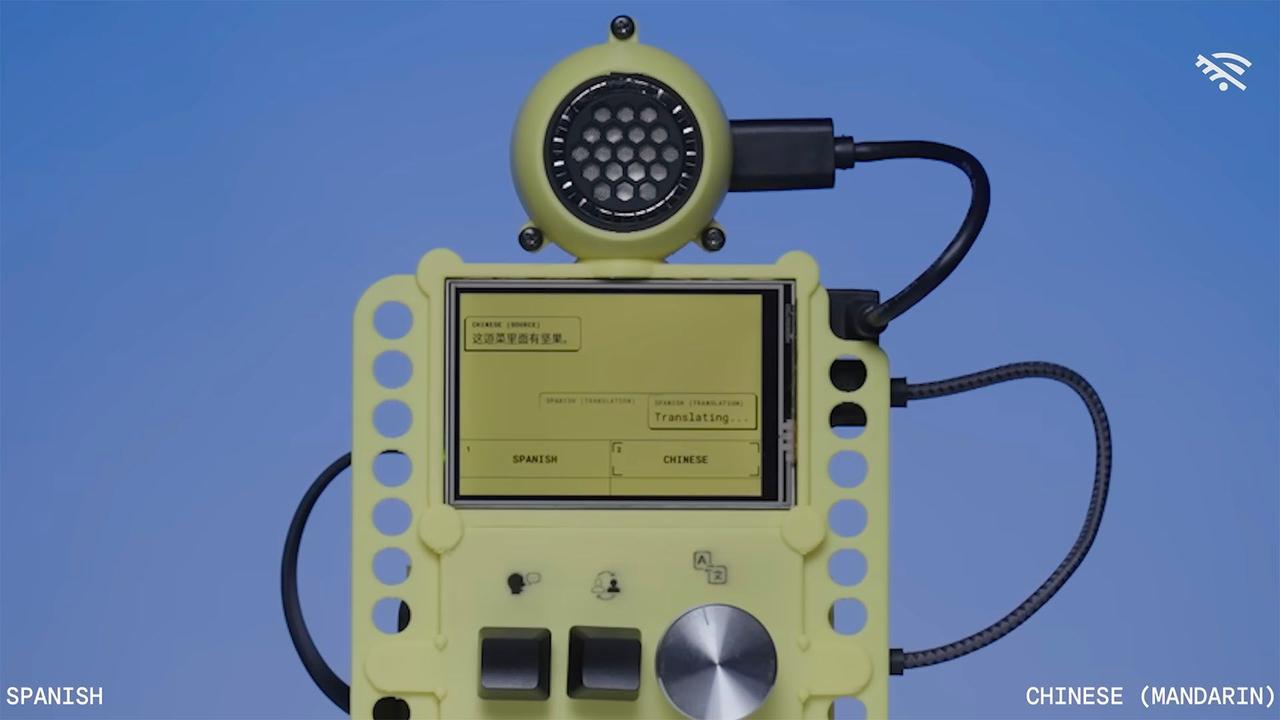
. Engineers used LiteRT-LM to run the Gemma 4 E2B model and Moonshine TTS to output translated speech through the built-in speaker1
. The complete system runs on a Raspberry Pi 5, which costs approximately $80, making it an affordable solution for local speech translation2
. Everything processes directly on the device, eliminating cloud dependency and reducing latency to make conversations feel more natural3
.
Source: Android Authority
Open-Source Design Features 3D-Printed Housing and Custom Interface
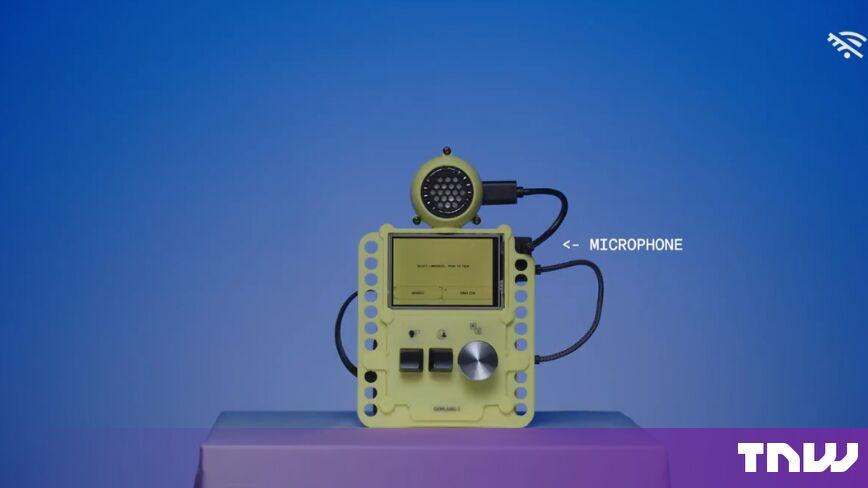
The AI translator that runs entirely offline includes a custom 3D-printed housing that accommodates all electronics components
1
. The chassis features a distinctive vintage aesthetic and houses a microphone, speaker, tiny touchscreen display, push-to-talk button, and a knob for cycling through languages4
. Engineers developed the device using Google Antigravity, Google's AI-assisted development platform that launched at I/O as an agentic development tool2
. The touchscreen features a custom-built interface displaying translations in real time1
.GitHub Repository Enables DIY Construction of Translation Device
Google released all code and 3D-printing files on GitHub under open-source licensing, allowing anyone to build their own offline translation device
1
4
. The Gemma 4 E2B model operates under Apache 2.0 license, making it freely available2
. This open-source approach using low-cost hardware differentiates Google's prototype from existing commercial options like the Timekettle Fluentalk T1 Pocket Translator4
. The accessibility opens opportunities for creators and startups to develop similar translation tools without significant investment.Related Stories

Why This Offline AI Translator Matters for Privacy and Connectivity
The portable AI translator that works offline addresses critical use cases where internet access proves unreliable or unavailable. Travelers operating in areas with poor connectivity, organizations handling sensitive conversations, and emergency responders working without infrastructure could benefit from this technology
2
. Running everything on-device eliminates privacy concerns around uploading voice data to the cloud, helping organizations comply with strict data retention regulations4
. The AI translator that works without the internet demonstrates how capable smaller AI models have become at handling complex tasks without remote server processing3
.Future Applications in Accessibility Tools and Disaster Response
While Google hasn't announced plans to commercialize the device, the prototype signals a shift toward AI assistants that don't require powerful data centers
2
3
. As open models continue shrinking while gaining capability, similar devices could appear in travel gadgets, accessibility tools, classrooms, and disaster response kits2
. The open-source offline real-time translation device represents what's achievable when efficient AI models operate on affordable, widely available hardware. The Gemma Translator serves as a technology showcase demonstrating that meaningful AI innovations can function on surprisingly compact devices working anywhere, regardless of connectivity constraints3
.References
Summarized by

Navi
[1]
Related Stories
Google unveils TranslateGemma open-source translation models for 55 languages and local deployment
16 Jan 2026•Technology

Google Translate brings real-time translation to any headphones with Gemini AI across 70+ languages
12 Dec 2025•Technology

Google's Gemma 4 turns your phone into a local AI powerhouse with full offline capability
08 Apr 2026•Technology

Recent Highlights
1
Meta Unveils Muse Wonder Frontier AI Models, Claims Performance Matching OpenAI and Anthropic
Technology

2
IMF Report Warns AI Market Correction Could Spark Global Financial Crisis With $1.4T at Risk
Business and Economy

3
OpenAI Releases 722 AI-Generated Math Solutions, Triggering Existential Crisis in Mathematics
Technology

Recent Highlights
Today's Top Stories









Don’t drown in AI news. We cut through the noise - filtering, ranking and summarizing the most important AI news, breakthroughs and research daily. Follow topics that matter to you and stay ahead.


