4 Sources
[1]
'The era of the pilot is over, the era of the agent is here': Google Cloud wants you to unlock the power of your data
"The era of the pilot is over," Google Cloud CEO Thomas Kurian declared at the company's annual Next conference earlier this mont, "The era of the agent is here." With more than 32,000 attendees on the ground and over 260 announcements made, spanning infrastructure, data, security and applications, the event marked one of the company's biggest moments yet. The message was clear: agentic AI is here, and Google Cloud wants to offer solutions across the whole stack. What agentic AI means for Google Central to this year's Next's narrative was a shift in how Google envisions organizations interacting with AI as they shift from generative to agentic AI. For the past two years, Google Cloud explained, most of the industry has focused on passive, copilot-style assistants to help employees write, code or analyze faster. This year, AI is moving beyond assistance to become an active participant in business operations, often totally separated from a human worker. Agents are being positioned as "intellectual peers" - not just tools - capable of reasoning, coordinating and executing tasks. Speaking in a pre-recorded message at the event, Google CEO Sundar Pichai revealed that around 75% of the company's new code is AI-generated, but we also now know that around 75% of Google Cloud's customers are now using AI in some capacity. To support growing interest, the company outlined what it's calling its agentic enterprise blueprint, which rethinks the full stack of enterprise IT architecture. Hence the seemingly endless new product announcements and updates. What agentic AI means for enterprises When he stated that the era of the pilot is over, Kurian means to say that investing in a unified platform of data, models, infrastructure and applications is key, rather than layering AI on top of existing, legacy systems. Speaking to a group of journalists, Agentic Data Cloud VP and GM Andi Gutmans explained that "humans can only click so many times a day." With agents effectively removing that ceiling, operating around the clock and at scale, enterprises must totally rethink their data foundations to maximize AI ROI. Gutmans stressed that, even today, around 90% of all enterprise data is unstructured 'dark' data that's historically been underused. Agentic technologies promise automated date discovery, interpretation and enrichment, and Google Cloud is not only at the forefront of this, but it's making strides to meet customers where they are. The company explicitly acknowledged that enterprises run multi-cloud and hybrid environments beyond just Google Cloud, and it has a clear vision to activate all enterprise data wherever it is, not to "move everything to Google Cloud." At the same time, company leaders acknowledged that this transition introduces new complexities such as agent management, governance, security and cost, all while systems become highly interconnected and interdependent. Something it aims to tackle with the new Gemini Enterprise platform, which we've covered separately. At the end of the day, agentic may be here but companies may not be agentic just yet, and Kurian's message serves as a warning message for them to reconsider their stack from the ground up rather than continuing to build and add layers of complexity on top of it. Follow TechRadar on Google News and add us as a preferred source to get our expert news, reviews, and opinion in your feeds. Make sure to click the Follow button! And of course you can also follow TechRadar on TikTok for news, reviews, unboxings in video form, and get regular updates from us on WhatsApp too.
[2]
Agentic AI infrastructure takes center stage at Google Cloud Next - SiliconANGLE
Three insights you might have missed from theCUBE's coverage of Google Cloud Next The race for AI dominance is about more than which model will reign supreme. The real action is happening underneath the surface, where hyperscalers such as Google LLC are focused on the infrastructure and the data pipelines that models run on -- especially as agentic AI infrastructure becomes the true battleground for enterprise scale. In an analysis of Google Cloud Next 2026, John Furrier, executive analyst of theCUBE Research, explained that Google is positioning itself as the dominant player in the agentic control layer - the operating system for the agentic enterprise and a core component of agentic AI infrastructure. "The control plane is that horizontal layer that moves data around and it connects to all the systems," Furrier told co-host Alison Kosik in a day one keynote analysis, during an exclusive broadcast on theCUBE, SiliconANGLE Media's livestreaming studio. "It's like the main nerve center. It's like the backbone, the spine of all the systems -- and whoever owns the control plane kind of wins." Enterprises are speeding ahead with major IT investments and AI deployments - to mixed results. Furrier mentioned the increasing presence of AI-native applications and agent-driven software coding, with some businesses reporting that they now have more machines than humans doing code work. Other organizations are still trying to determine which use cases will yield the biggest impact from AI, which in turn affects decision-making responsibilities across the enterprise, a challenge that underscores the importance of agentic AI infrastructure. "You have a new kind of currency going on with tokens, and that's changing the organizational structures," Furrier said. "That's changing how people are organizing their teams. That's changing how people work. It's a complete reset in the corporate world." During interviews at Google Cloud Next with industry experts at Google, OpenText Corp., Advanced Micro Devices Inc. and Sabre Corp., Furrier and Kosik discussed how AI is forcing enterprises to rethink data and compute infrastructure and where the biggest efficiencies are currently being found. They also covered examples of how organizations can achieve real value from AI with industry experts from McKinsey & Company Inc., Deloitte Consulting LLP and Covered California, among others. (* Disclosure below.) Here's the complete video interview with John Furrier and Alison Kosik, part of SiliconANGLE's and theCUBE's coverage of Google Cloud Next: Here are three key insights you may have missed from Google Cloud Next 2026: AI models are only as good as the data they are based on. Google Cloud is focused on enabling an intelligent agentic data cloud that is capable of delivering not just the correct data, but the best data at the right time, a critical requirement for scalable agentic AI infrastructure, according to Sailesh Krishnamurthy, vice president of engineering for databases at Google Cloud. "The models are amazing. The models surprise us every day. They can do a lot of work, but they don't have all the context," Krishnamurthy told theCUBE. "The context is in the data. The heart of the data is actually stored in these systems. You need to provide that context in order to answer the questions." Compared to legacy databases that simply stored data and delivered the exact results when queried, agent data clouds need the intelligence to parse the data and deliver the best quality results. To enable that, databases need capabilities such as graph traversal, vector embeddings, full-text search and relational operations all in one system without requiring data to move between environments -- all foundational to modern agentic AI infrastructure. Here's the complete video interview with Sailesh Krishnamurthy: Waqas Ahmed, VP of AI engineering at OpenText, echoed those thoughts. OpenText and Google Cloud are working together to build a full agentic stack built on context engineering, data sovereignty and open interoperability standards. "Enterprise information is not just files on a drive," Ahmed told theCUBE. "It is organized, governed, tagged with context, tagged with metadata and integrated with the business applications and customer processes. To wire that into the AI providers and LLMs, you have to be able to build that context so you are not flooding the LLMs with extra information, but you're giving them the right information at the right time." OpenText and Google Cloud are creating industry-specific solutions that provide a secure environment for users to easily access decades of enterprise documentation, according to Yemi Falokun, global AI and machine learning partner engineering lead at Google. "What they're now doing is taking the foundation they've built from 2023 into the AI agentic era," he said. "We're now deeply integrating the Gemini Enterprise Agent Platform so that we can allow our joint customers to deploy secure autonomous solutions at scale, leveraging those decades of information that they store on behalf of their users." Here's the complete video interview with Waqas Ahmed and Yemi Falokun: Enterprises need substantial compute resources for AI inference, without sacrificing security and control. This has implications for both the enterprise cloud and on-premises environments, and Google has partnered with vendors such as Nvidia Corp. and Dell Technologies Inc. to help enable AI-ready infrastructure, explained Muninder Sambi, VP and general manager for networking and security at Google. "The challenge is [enterprises] had a choice: Either you can be sovereign and be compliant or give it up and go to the cloud," Sambi told theCUBE. "With Google Distributed Cloud, we are actually bringing the power and the intelligence of Gemini and all that Google has to offer for an on-premises environment." Kubernetes has a key role to play in this new environment as one of the primary orchestrators of AI agents across hybrid environments, according to Drew Bradstock, senior product director for Kubernetes and Google Compute Engine at Google. "Kubernetes has become that operating system for AI -- from training to inference to [reinforcement learning]," he said. "This has really been the heart of everything. We're finding ourselves on the gun a lot more to adapt Kubernetes quite quickly, even faster than the [open-source community] can keep up." Here's the complete video interview with Muninder Sambi and Drew Bradstock: Businesses are also grappling with the rapid escalation of costs. In the search for financial efficiency, a trusted and time-tested compute standard - x86 - has become the answer because it is already embedded deeply into both cloud and on-premises infrastructure. "Most of the enterprise and larger customers that I see out there ... are running on-premise in their own real estate, but also running in cloud," explained Mike Thompson (pictured right), director of cloud product and go-to-market at AMD. "When you're running containers, that's one of the things that makes it easier. You have a container; it contains everything you need. You can drop it in. It's really hard to run a hybrid environment with containers on Arm, because generally those servers aren't available on-prem. I see containers being leveraged specifically on x86 because of the ease of migration between the two." The efficiency of x86 enabled immediate benefits when his business migrated more than 50,000 virtual CPUs to AMD-based instances on Google Cloud, according to Tim McArdle (left), senior FinOps engineer at Sabre, a travel technology company. "When we moved to the AMD platform, we experienced a price benefit. It's faster, we have a smaller footprint and we made zero code changes," he said. "For us, that's a huge win-win-win. We are able to take that savings and invest it in the new world of agentic AI. That has helped us immensely." Here's the complete video interview with Mike Thompson and Tim McArdle: Google is investing big into bringing together the various players in the agentic AI delivery chain. The company's $750 million commitment to build a partner ecosystem will help accelerate outcomes for over 120,000 members, according to Philip Larson, managing director of the Google Cloud Partner Network at Google. "Agents from our partners are going to talk to agents from the Google Cloud Partner Network across onboarding, training, etc.," Larson said. "It's going to infuse the content from my system into their internal systems. It's going to make targeted recommendations around what learning their reps should do in real time from within their systems. All of a sudden, the people are going to be sitting on top with an intelligence layer that's helping them figure out how to add value fast." Here's the complete video interview with Philip Larson: C-suite executives who say they're still struggling to find business value from large investments in AI may need to raise their horizons, according to Asutosh Padhi, senior partner and global leader of firm strategy at McKinsey & Company Inc. Successful AI projects require the ambition and focus of the entire C-suite to pursue big foundation-shaking projects. "Start with one of your tougher business problems," Padhi told theCUBE. "Demonstrate the fact that it works and then you can scale it up from there. When you start with something that will be a needle mover for the enterprise value, then everyone pays attention. The necessary focus from a change management and capability building standpoint goes into it. When you're working with something on a simple use case, it's something that's happening on the side that no one is really paying attention to. Even if it succeeds, no one really cares." Here's theCUBE's complete video interview with Asutosh Padhi: To that end, Covered California, the U.S.'s largest state-based health insurance marketplace serving more than 16 million enrolled residents, has provided an example of what's possible with ambitious AI initiatives. In partnership with Deloitte Consulting and Google, Covered California leveraged Google Document AI to streamline its eligibility and enrollment verification processes. The project resulted in an estimated 24,000 hours of annual savings in service center operations. Documents that once took 72 hours to verify could be completed in seconds, according to Shilpa Akunuri, chief technology officer at Covered California. "Our staff was spending a tedious number of hours -- no one wakes up on a Monday thinking that I'm going to manually process tons of documents today," she said. "It's not just manual labor hour savings, but they can now focus on high-value customer support and providing that operational excellence to the next level." In this case, AI not only led to faster operations, but a more empathetic customer journey, explained Vishal Prabhu, managing director at Deloitte. "While we hear that AI might replace the human touch, what I would submit to you is: Isn't AI the key to bring it back?" he said. "Technology is doing the heavy lifting and people can focus on people." Here's theCUBE's complete video interview with Shilpa Akunuri and Vishal Prabhu: Catch up on our complete video coverage of Google Cloud Next 2026:
[3]
Agentic control plane and the battle for enterprise AI - SiliconANGLE
The model wars are over. Now, Google is fighting for something bigger Whoever controls the agentic control plane controls enterprise AI. Google LLC just showed up to that fight with everything it has. The company claiming it can own the full stack arrived at Google Cloud Next 2026 firing on all cylinders, including unveiling the new Gemini Enterprise Agent Platform -- but the deeper story was about how that full stack is converging into a single architectural bet. The company is uniquely positioned as the only hyperscaler with a leading frontier model, sovereign infrastructure and an open, heterogeneous ecosystem all under one roof, according to John Furrier (pictured, right), co-founder and chief executive officer of SiliconANGLE Media Inc. But that positioning comes with real stakes, he warned. "If you commit to this platform, you're kind of in," Furrier said. "Agents are going to talk to agents -- that's a big theme we heard a lot here. It's a platform and that's causing all kinds of competitive dynamics, from being competitive to frenemies. The execution risk of going too slow or going too fast is the number one thing I'm taking away." Furrier spoke with Sarbjeet Johal (left), founder and chief executive officer of Stackpane Ltd., as part of a day three wrap at the close of Google Cloud Next, during an exclusive broadcast on theCUBE, SiliconANGLE Media's livestreaming studio. They discussed Google Cloud's full-stack AI momentum, AI economics and the emerging agentic control plane battle reshaping enterprise architecture. (* Disclosure below.) The economics case for Google's vertical integration is one analysts are watching closely. Because Google does not pay the same third-party silicon margins competitors absorb, its custom Tensor Processing Unit stack offers a structural cost advantage at production scale -- particularly as enterprises scale workloads across the agentic control plane, Johal noted. The two new TPUs announced at the show -- one for training, one for inference -- posted 2.7x and 5x price-to-performance improvements respectively. "At the end of the day, economics matters," Johal said. "When you put stuff in production, especially if it is at some decent scale, price to performance is the number one criteria for procuring any technology. Because they're vertically integrated, they have their own TPUs -- they don't have to pay a 70% margin to the likes of Nvidia. They have much better economics of AI, if you will." But governance -- not economics -- is emerging as the defining challenge that will determine which enterprise AI deployments survive contact with production. Just as developer operations made enterprise cloud adoption possible in the prior cycle, agentic governance is what will unlock AI-native apps in the enterprise this time around -- and the agent development lifecycle is still in its earliest stages, Johal explained. All three major cloud providers only just announced agent registries in April 2026, underscoring how rudimentary the foundational blocks still are. "In the hype cycle, governance is on the back burner," Johal said. "Take any hype cycle -- internet, internet 2.0. During that time, security is on the back burner, governance is on the back burner. It's by design." The path forward now lies in the data layer -- open lakehouse formats, aggregated data feeds and systems that let AI consume context freely across clouds and SaaS providers, Furrier noted. Separating models from control planes and data layers is what will accelerate enterprise value and insulate organizations from the velocity risk of constant model churn, Johal added. "If you confront it, most of the time you'll come out as a winner," Johal said. "But if you are afraid of change, it will kill you." Here's the complete video interview, part of SiliconANGLE's and theCUBE's coverage of Google Cloud Next 2026:
[4]
Google Cloud bets big on the agentic enterprise stack - SiliconANGLE
Google Cloud is rebuilding the enterprise stack for the age of agents Google Cloud is assembling an ambitious agentic enterprise stack it believes will close the gap between AI ambition and real business outcomes. But the transition from traditional, linear workflows to autonomous systems requires a shift in how organizations view their entire operating model. The focus is no longer incremental automation -- it's building an integrated environment where agents can reason, act and ultimately move the revenue needle, according to Karthik Narain (pictured), chief product and business officer at Google Cloud. "The vision of the agentic enterprise is that we build a system that creates a connective tissue between people, data and the business outcomes of the enterprise. To do that, we want to create the entire stack, starting from Gemini Enterprise, which [has gone] from being just the front door to intelligence and is now an end-to-end system from intelligence to action. We're bringing the Agentic Data Cloud to become the context layer for all these agents to operate autonomously at scale. We're bringing Agentic Defense so that all these activities can be happening in a protected environment. We are powering that with the full stack that everybody is talking about." Narain spoke with theCUBE's John Furrier and co-host Alison Kosik at Google Cloud Next, during an exclusive interview on theCUBE, SiliconANGLE Media's livestreaming studio. They discussed the full vision of the agentic enterprise stack Google is building. (* Disclosure below.) To support this new era of automation, Google Cloud has spent years developing a purpose-built infrastructure. This includes everything from custom Tensor Processing Units to the Agent Development Kit, which the company has open-sourced to encourage industry-wide interoperability, Narain noted. "If you have the talent to build the next generation models and products, we will give you all these capabilities that we have, that's helping us build Gemini, for you to build them," he said. "Across the stack, we are open. The new Gemini Enterprise Agent Platform is an improved and extended version of Vertex AI -- one of the most popular inferencing platforms for Anthropic's Claude models, as well as several open source models. That will continue." A key differentiator in Google's approach is the emphasis on grounding reasoning in enterprise data to ensure that agents are not just generating text but are performing high-quality reasoning with low latency. For many companies, the most significant impact is seen in revenue generation rather than just cost reduction, Narain explained. "It's not just about creating the next breakthrough product -- it's also about, 'How do I create the product that I was always thinking about creating, but I did not have the budget to create it?'" he said. "That's what we're seeing." The priority remains delivering on these advancements to meet the high demand for agentic solutions. By tightening the feedback loop between customer use cases and product development, Google Cloud aims to help enterprises accelerate their journey toward becoming fully agentic, Narain explained. "There is absolutely a necessity in today's day and age that we build products that are ... almost ready to deliver the outcome for the business," he said. "There is a changed expectation in enterprise buyers [and the] C-suite, not just the IT leaders -- even though the IT leaders' role is even more important now as the engine for execution. They are talking to us and saying, 'How do I increase the share of wallet from a customer?'" Here's the complete video interview, part of SiliconANGLE's and theCUBE's coverage of Google Cloud Next: (* Disclosure: TheCUBE is a paid media partner for Google Cloud Next. Sponsors of theCUBE's event coverage do not have editorial control over content on theCUBE or SiliconANGLE.)
Share
Copy Link
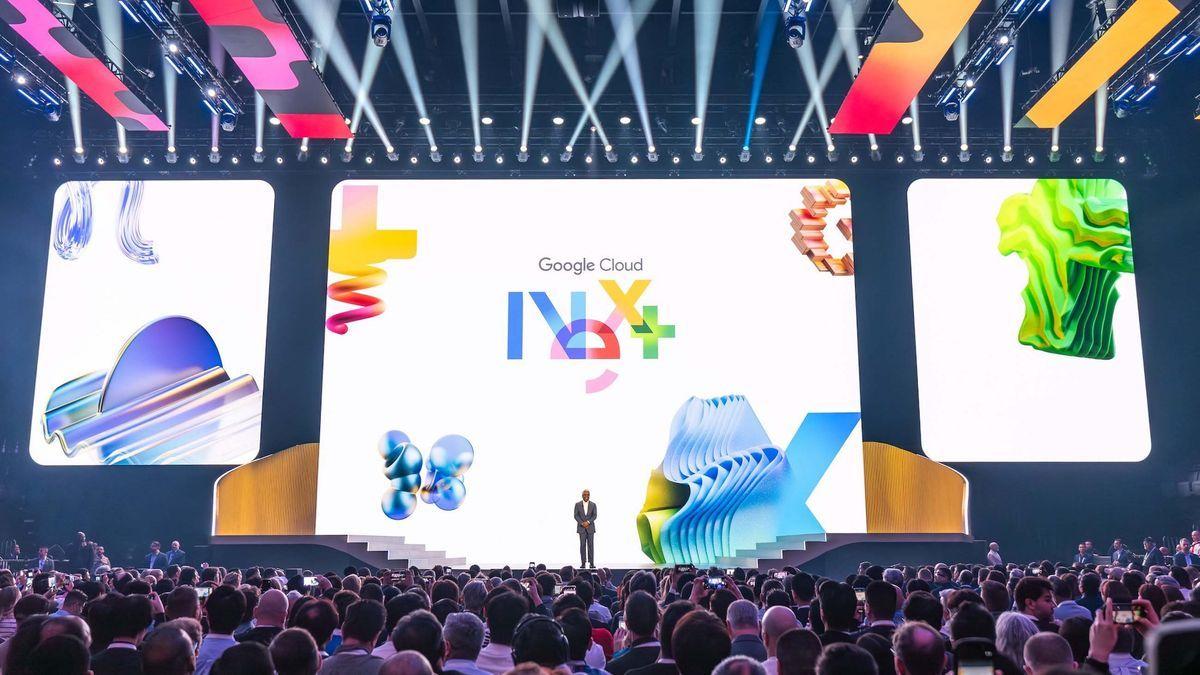
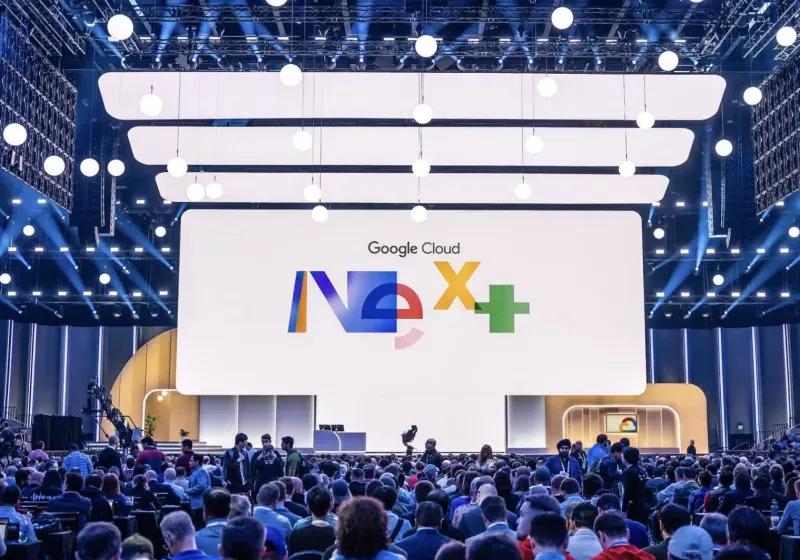
At Google Cloud Next 2026, CEO Thomas Kurian declared that the pilot phase is over and the era of agentic AI has arrived. With over 32,000 attendees and 260 announcements, Google unveiled its vision for the agentic enterprise stackโa complete infrastructure rethink spanning data, security, and applications designed to help organizations transition from passive AI assistants to autonomous agents that reason, act, and deliver business outcomes.
"The era of the pilot is over, the era of the agent is here," Google Cloud CEO Thomas Kurian declared at Google Cloud Next 2026, signaling a fundamental shift in how enterprises should approach artificial intelligence
1
. With more than 32,000 attendees on the ground and over 260 announcements spanning infrastructure, data, security and applications, the event marked one of the company's most ambitious moments yet. The message was clear: agentic AI is no longer experimental, and Google Cloud wants to provide solutions across the entire stack to help enterprises make the transition.
Source: TechRadar
For the past two years, most organizations have focused on passive, copilot-style assistants designed to help employees write, code or analyze faster. Now, AI is moving beyond assistance to become an active participant in business operations, often operating independently from human workers. Agents are being positioned as "intellectual peers" capable of reasoning, coordinating and executing tasks at scale
1
. Speaking in a pre-recorded message, Google CEO Sundar Pichai revealed that around 75% of the company's new code is AI-generated, while approximately 75% of Google Cloud's customers are now using AI in some capacity.Beyond model performance, the real competition is happening at the infrastructure level, where hyperscalers are racing to control what experts call the agentic control planeโthe horizontal layer that moves data around and connects all systems
2
. John Furrier, executive analyst of theCUBE Research, explained that this control plane functions as "the main nerve center" and "whoever owns the control plane kind of wins." Google Cloud is positioning itself as the dominant player in this layer, which serves as the operating system for the agentic enterprise.
Source: SiliconANGLE
The company's unique advantage lies in its vertical integration. Because Google does not pay third-party silicon margins that competitors absorb, its custom Tensor Processing Units (TPUs) offer a structural cost advantage at production scale
3
. The two new TPUs announced at the conferenceโone for training, one for inferenceโposted 2.7x and 5x price-to-performance improvements respectively. "At the end of the day, economics matters," noted Sarbjeet Johal, CEO of Stackpane. "When you put stuff in production, especially if it is at some decent scale, price to performance is the number one criteria."Kurian's statement that the pilot era is over carries a specific warning: enterprises must invest in a unified platform of data, models, infrastructure and applications rather than layering AI on top of existing legacy systems
1
. Andi Gutmans, VP and GM of Agentic Data Cloud, explained that "humans can only click so many times a day." With agents effectively removing that ceiling and operating around the clock at scale, enterprises must completely rethink their data foundations to maximize AI ROI.Even today, around 90% of all enterprise data is unstructured 'dark' data that has historically been underused. Agentic technologies promise automated data discovery, interpretation and enrichment
1
. Sailesh Krishnamurthy, VP of engineering for databases at Google Cloud, emphasized that while "the models are amazing," they lack context. "The context is in the data. The heart of the data is actually stored in these systems. You need to provide that context in order to answer the questions"2
.Compared to legacy databases that simply stored data and delivered exact results when queried, agentic AI infrastructure requires intelligence to parse data and deliver the best quality results. This demands capabilities such as graph traversal, vector embeddings, full-text search and relational operations all in one system without requiring data to move between environments.
Google Cloud has unveiled what it calls the agentic enterprise stack, designed to create a connective tissue between people, data and business outcomes
4
. At the center is the Gemini Enterprise Agent Platform, which has evolved from being just a front door to intelligence into an end-to-end system from intelligence to action. Karthik Narain, chief product and business officer at Google Cloud, explained that the company is bringing together the Agentic Data Cloud as the context layer for agents to operate autonomously at scale, along with Agentic Defense to ensure activities happen in a protected environment.
Source: SiliconANGLE
The platform builds on Vertex AI, one of the most popular inferencing platforms for Anthropic's Claude models and several open source models. Google has also open-sourced its Agent Development Kit to encourage industry-wide interoperability
4
. The company explicitly acknowledged that enterprises run multi-cloud and hybrid environments beyond just Google Cloud, with a clear vision to activate all enterprise data wherever it resides.Related Stories
While economics drive initial adoption, AI governance is emerging as the defining challenge that will determine which enterprise AI deployments survive production environments
3
. Just as developer operations made enterprise cloud adoption possible in the prior cycle, agentic governance will unlock AI-native applications this time around. However, the agent development lifecycle is still in its earliest stagesโall three major cloud providers only announced agent registries in April 2026, underscoring how rudimentary the foundational blocks remain.The transition introduces new complexities around agent management, governance, security and cost, particularly as systems become highly interconnected and interdependent
1
. Furrier noted that enterprises are experiencing "a new kind of currency going on with tokens, and that's changing the organizational structures. That's changing how people are organizing their teams. That's changing how people work. It's a complete reset in the corporate world"2
.A key differentiator in Google's approach is the emphasis on grounding reasoning in enterprise data to ensure agents are not just generating text but performing high-quality reasoning with low latency
4
. For many companies, the most significant impact is seen in revenue generation rather than just cost reduction. Narain explained that the priority is delivering business outcomes: "There is a changed expectation in enterprise buyers [and the] C-suite, not just the IT leaders. They are talking to us and saying, 'How do I increase the share of wallet from a customer?'"Waqas Ahmed, VP of AI engineering at OpenText, echoed the importance of context engineering: "Enterprise information is not just files on a drive. It is organized, governed, tagged with context, tagged with metadata and integrated with the business applications and customer processes"
2
. Organizations that confront this architectural shift head-on will likely emerge as winners, while those afraid of change risk being left behind in the rapidly evolving landscape of Enterprise AI.Summarized by
Navi
[1]
10 Apr 2025โขTechnology

22 Apr 2026โขTechnology

22 Apr 2026โขTechnology

1
Health

2
Technology

3
Technology