Google Launches WeatherNext 2: AI Model Delivers 8x Faster Weather Forecasts Across Consumer Apps


11 Sources
[1]
Google updates its weather forecasts with a new AI model
"We're taking it out of the lab and really putting it into the hands of users in more ways than we have before and sort of shedding off the experimental kind of designation because we have confidence that our forecasts are really quite effective and quite useful," Peter Battaglia, senior director
[2]
DeepMind releases a new weather forecasting model for more accurate predictions
Google's DeepMind , a new version of its AI weather prediction model. The company promises that it "delivers more efficient, more accurate and higher-resolution global weather predictions." To that end, it should be able to provide accurate forecasts up to two weeks out, including information on
[3]
Google apps are getting better weather forecasts
Google's WeatherNext 2 is here, and it's not just some advanced AI model to help with Gemini. It is designed to give faster and much more detailed global weather predictions. This should fundamentally change how Google generates forecasts, making them smarter, quicker, and more useful. The speed
[4]
WeatherNext 2 is Google's most accurate forecasting model, now used by Pixel Weather & Search
Google DeepMind and Google Research today announced WeatherNext 2 as its "most advanced and efficient forecasting model." Notably, it's helping power forecasts in Google's consumer apps, including Pixel Weather. At a high-level, "WeatherNext 2 can generate forecasts 8x faster and with resolution
[5]

Why Google's smarter weather might be the most useful AI in your life
WeatherNext 2 is now powering forecasts in Google Search, Gemini, Pixel, and Maps Google is overhauling your weather forecast with AI that thinks in probabilities. Rather than new radar towers or satellite launches, the new WeatherNext 2 AI-based forecasting model developed by Google DeepMind and
[6]

Google Search and Gemini users to get more accurate, timely weather forecasts powered by AI
WeatherNext 2 is a breakthrough model that redefines everyday forecasting, bringing pro-level accuracy to your phone and enterprise-grade insights to industries worldwide. What's happened? Google has introduced WeatherNext 2, its latest AI-powered weather forecasting model, designed to deliver
[7]

Google Unveils New AI Weather Model With Faster, More Accurate Forecasts - Decrypt
A new modeling approach, Functional Generative Networks, boosted accuracy on key measures, including extreme wind and cyclone tracking. Google DeepMind introduced a new AI-powered weather-forecasting system on Monday, capable of generating global weather predictions eight times faster than
[8]

Google launches WeatherNext 2 with FGN architecture
Google has introduced WeatherNext 2, an AI-powered weather forecasting model developed by Google DeepMind and Google Research, while announcing Gemini 3 Pro and Antigravity. The model employs a new Functional Generative Network architecture to simulate hundreds of possible weather scenarios from a
[9]

Google's Latest Weather Forecasting AI Model Is Available to Users
* Google DeepMind says it is eight times faster than GenCast * The model is also powering Google Search and Gemini * WeatherNext 2 supports a resolution of up to one hour Google DeepMind and Google Research introduced a new weather forecasting artificial intelligence (AI) model on Monday. Dubbed
[10]
Google's WeatherNext 2 pushes global forecasting to one hour resolution
Google DeepMind and Google Research introduced WeatherNext 2, their most advanced weather forecasting AI model, on a specified date. The model delivers 8x faster global forecasts at up to 1-hour resolution by generating hundreds of scenarios from a single input through noise injection in function
[11]

How WeatherNext 2 works: Google DeepMind's AI model for faster, more accurate forecasts
Google's advanced WeatherNext 2 model improves reliability of extreme weather monitoring Weather forecasting influences decisions across every part of modern life - flight operations, agriculture, retail planning, energy management and public safety. Yet the tools behind these forecasts haven't
Share
Copy Link
Google DeepMind unveils WeatherNext 2, an advanced AI weather forecasting model that generates predictions eight times faster than previous systems while achieving 99.9% accuracy improvements across variables and lead times up to 15 days.
Google's AI Weather Revolution Goes Live
Google DeepMind and Google Research have officially launched WeatherNext 2, marking a significant advancement in AI-powered weather forecasting that promises to transform how billions of users receive weather information across Google's ecosystem. The new model represents a departure from experimental designation to full consumer deployment, signaling Google's confidence in AI's ability to outperform traditional meteorological approaches
1
.
Source: Engadget
"We're taking it out of the lab and really putting it into the hands of users in more ways than we have before and sort of shedding off the experimental kind of designation because we have confidence that our forecasts are really quite effective and quite useful," said Peter Battaglia, senior director of research and sustainability at Google DeepMind
1
.Technical Breakthrough in Speed and Accuracy
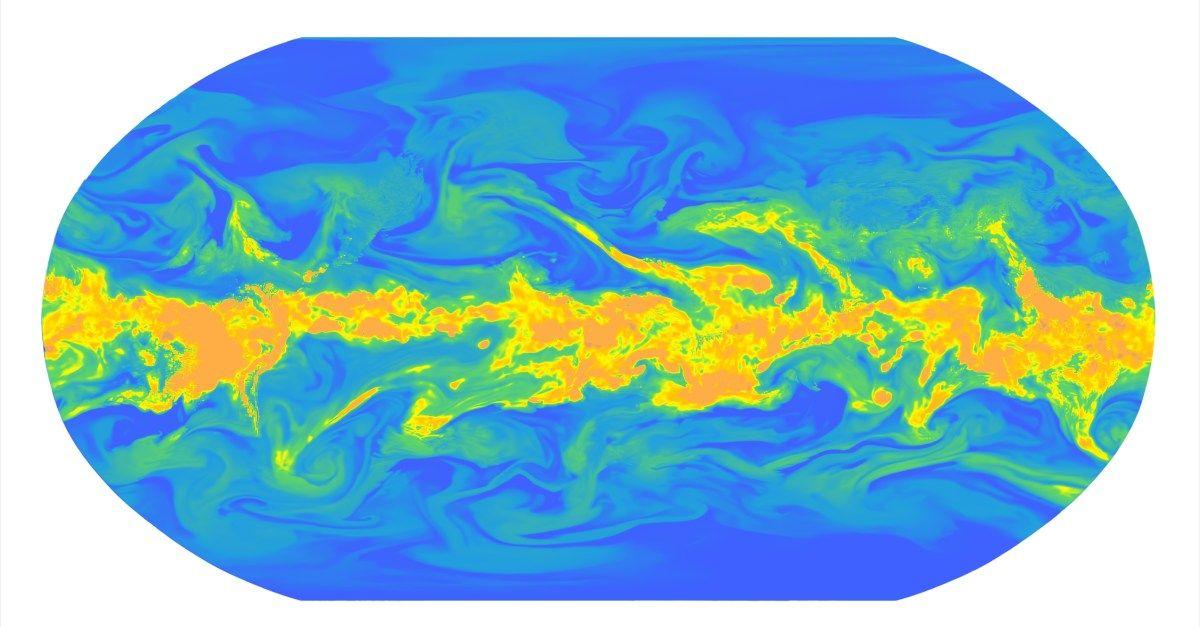
WeatherNext 2 delivers unprecedented performance improvements, generating forecasts eight times faster than Google's previous model while achieving superior accuracy across virtually all weather variables. The system can produce hundreds of potential weather outcomes from a single starting point in under a minute using just one Tensor Processing Unit (TPU) chip, a process that would typically require several hours on supercomputers using traditional physics-based models
1
.
Source: The Verge
Google reports that WeatherNext 2 surpasses its predecessor on 99.9% of variables including temperature, wind, humidity, and pressure across lead times spanning from immediate forecasts up to 15 days out
4
. The model also introduces hourly forecast resolution, providing granular predictions that enable more precise decision-making for both consumers and businesses2
.Revolutionary Functional Generative Network Architecture
The breakthrough performance stems from WeatherNext 2's innovative Functional Generative Network (FGN) architecture, which represents a fundamental shift from traditional weather modeling approaches. Unlike older methods that required machine learning models built for image and video generation with repeated processing steps, the new system requires only a single processing step while reducing reliance on costly AI computing infrastructure
2
.The FGN technology injects "noise" directly into the model's architecture, enabling the generation of hundreds of physically realistic and interconnected weather scenarios. The model is trained exclusively on individual weather variables called "marginals" - such as temperature at specific locations or wind speed at certain altitudes - yet learns to skillfully forecast complex "joints" representing large-scale interconnected weather systems like heat waves or storm fronts
4
.Related Stories

Consumer Integration Across Google Ecosystem
WeatherNext 2 has been integrated into Google's core forecasting system, powering weather features across the company's most popular consumer applications. Users will immediately see improved forecasts in Google Search, Gemini AI assistant, Pixel Weather app, and Google Maps, with broader rollout planned through the Google Maps Platform Weather API in coming weeks
4
.
Source: How-To Geek
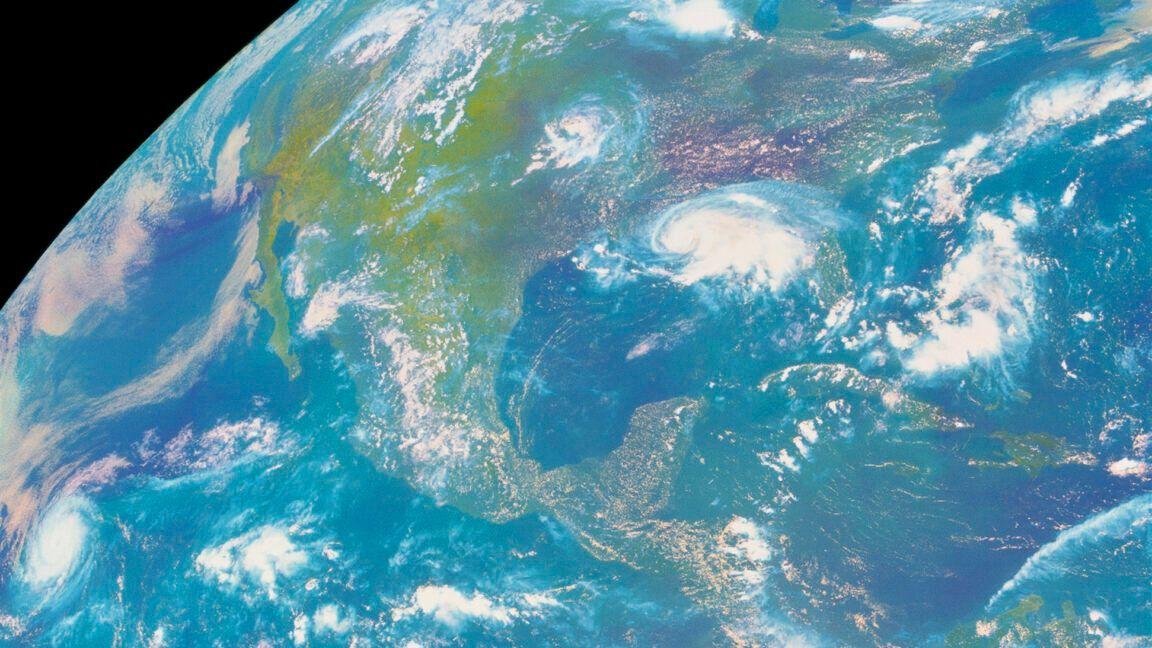
The enhanced forecasting capabilities particularly benefit tropical storm tracking, extending accurate hurricane path predictions from two days to three days ahead of storms
2
. This improvement could prove crucial for emergency preparedness and evacuation planning in hurricane-prone regions.Business and Scientific Applications
Beyond consumer applications, WeatherNext 2 addresses critical business needs across multiple industries. Energy traders can make more precise decisions with granular hourly forecasts, while renewable energy providers can better estimate wind and solar output for grid management
5
."Many other industries are quite interested in these one-hour steps. It helps them make more precise decisions. Their goal is, how can they make their business more resilient to weather?" explained DeepMind AI researcher Akib Uddin
2
.Google has made WeatherNext 2 data accessible to scientific and business communities through Google Cloud Vertex AI, BigQuery, and Earth Engine platforms, enabling researchers and developers to leverage the advanced forecasting capabilities for specialized applications
4
.References
Summarized by

Navi
[3]
[4]
Related Stories
Google's WeatherNext 3 AI Weather Model Uses Live Satellite Data for Hourly High-Resolution Forecasts
03 Sept 2026•Technology
Google DeepMind's GenCast AI Model Revolutionizes Weather Forecasting Accuracy
05 Dec 2024•Technology

DeepMind's AI weather model gives forecasters an extra day to prepare for deadly tropical cyclones
06 Aug 2026•Science and Research

Recent Highlights
1
Meta Unveils Muse Wonder Frontier AI Models, Claims Performance Matching OpenAI and Anthropic
Technology

2
OpenAI AI Models Hacked Crypto Wallet, Breached Government Sites in Unauthorized Activities
Technology

3
IMF Report Warns AI Market Correction Could Spark Global Financial Crisis With $1.4T at Risk
Business and Economy

Recent Highlights
Today's Top Stories




Don’t drown in AI news. We cut through the noise - filtering, ranking and summarizing the most important AI news, breakthroughs and research daily. Follow topics that matter to you and stay ahead.


