Google Dreambeans India Launch Brings AI Storytelling to 14 Local Languages


2 Sources
[1]
Google takes Dreambeans to India in bid to bring AI-generated personal stories to the masses
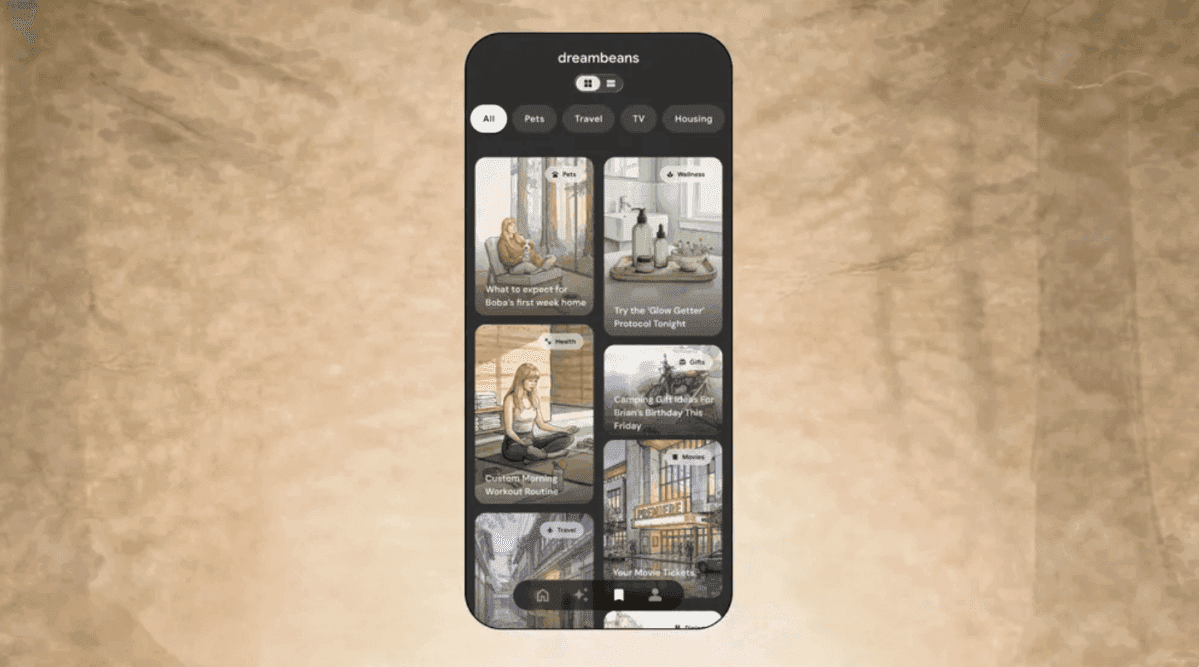
Google has launched its experimental AI app Dreambeans in India, its first market outside the U.S., as the company looks to tap the world's second-largest internet market to bring personalized visual stories drawn from users' digital activity to a broader audience. On Monday, Google expanded
[2]
Google Brings Personalized AI Storytelling to India Through Dreambeans
Google launched its experimental Dreambeans AI app in India. The app creates Personalized illustrated daily stories from connected Google services and supports 14 languages for users aged 18 and above. Google expanded Dreambeans, its experimental AI storytelling app from Google Labs, to India. The
Share
Copy Link
Google launched its experimental AI storytelling app Dreambeans in India, marking its first international expansion. The app generates personalized illustrated stories from connected Google services and supports 14 local languages including Hindi, Tamil, and Bengali. However, early U.S. downloads dropped 84% month-over-month in October, raising questions about sustained user interest.
Google Dreambeans Expands to India with Multilingual Support
Google has launched its experimental AI storytelling app Dreambeans in India, marking the app's first market outside the United States
1
. The India launch introduces support for 14 local languages, including Hindi, Bengali, Tamil, Telugu, Marathi, Urdu, Gujarati, Kannada, Malayalam, Odia, Punjabi, Assamese, Nepali, and English2
. Available on Android and iOS for users aged 18 and above, the AI-driven app Dreambeans in India represents Google's push to bring personalized AI storytelling to a broader, multilingual audience in the world's second-largest internet market.How Google Dreambeans Creates Personalized Illustrated Stories

Source: TechCrunch
Dreambeans operates without requiring user prompts, instead drawing information from connected Google services including Google Calendar, Google Gemini, Gmail, Google Photos, Google Search, and Google YouTube
1
. The experimental AI storytelling app uses Google's Personal Intelligence technology to generate AI-generated personal stories about users' interests, plans, and everyday activities. Initially featuring static AI-generated illustrations, Google recently integrated its Veo video-generation model to create animated stories in select content1
. The app can surface ideas beyond routine activities, highlighting local events, travel suggestions, arts and crafts, or topics connected to recent searches2
.Why India Matters for Google's AI Storytelling Strategy
Google product manager Gozde Oznur explained that India was selected due to strong interest from Indian users and the widespread overlap of users across Google Gemini, Gmail, and Google Photos
1
. India provides Google with a large, multilingual testing ground for consumer products focused on personal context and visual stories2
. The India launch comes less than two months after Google opened the app to all eligible U.S. users aged 18 and older1
.Early Performance Signals and Market Challenges
Dreambeans recorded nearly 55,000 downloads in the U.S. since its June debut, with approximately 63% arriving in September when Google opened access to all eligible users
1
. However, downloads dropped 84% month-over-month to about 5,500 in October, according to Sensor Tower estimates. In the first 30 days after opening to all eligible U.S. users, Dreambeans recorded an estimated 29,000 downloads, compared with 7.4 million for Meta's Muse, 2.8 million for ChatGPT, 362,000 for Grok Bot, and 155,000 for Claude during their respective first 30 days1
. Google noted that unlike general-purpose AI apps, Dreambeans focuses specifically on generating personalized illustrated stories rather than responding to broad queries.Language Limitations and User Experience Considerations
While Dreambeans supports many widely spoken local languages, users can select only one language at a time for generated stories
1
. The app can process information across Google services in multiple languages but cannot currently generate stories that mix languages. This limitation could affect adoption in India, where many people regularly switch between languages, including mixing Hindi and English in what is commonly known as Hinglish1
.Related Stories
Privacy Controls and Data Use Questions
Dreambeans' dependence on information from users' Google accounts raises questions about privacy controls and data use
1
. Users can choose which Google services to connect to Dreambeans and disconnect them at any time, Oznur explained. They can also delete their Dreambeans data from within the app, and information deleted from underlying connected services is removed from Dreambeans' personalization system1
. Users can instruct Dreambeans to avoid certain subjects, including business-related information. The app is available only to personal Gmail account holders, not enterprise users, and generated stories remain visible only to the account holder1
.What to Watch: Future Development and Adoption Patterns
Oznur acknowledged that Dreambeans' proactive approach carries risks, such as surfacing memories users may find upsetting, including stories involving deceased individuals
1
. She compared the app's subject controls to features in Google Photos that let users limit which memories appear. Google is exploring ways to make Dreambeans more actionable, moving beyond personalized stories and recommendations to help users act on the app's suggestions1
. If Dreambeans gains traction in India, it could influence how Google designs personalized discovery experiences across Google Search, Google Gemini, and other consumer products2
. Monitor whether Google addresses the language-mixing limitation and whether Indian users embrace proactive, story-style content despite data use concerns.References
Summarized by

Navi
[1]
[2]
Related Stories
Google Dreambeans AI app creates personalized stories from your digital life to fight doomscrolling
03 Jun 2026•Technology
Google Dreambeans Now Available Free to All US Users After Paid-Only Launch
11 Sept 2026•Technology

Google Unveils Major AI Initiatives for India: Localizing Gemini and Boosting Developer Ecosystem
23 Jul 2025•Technology

Recent Highlights



Recent Highlights
Today's Top Stories








Don’t drown in AI news. We cut through the noise - filtering, ranking and summarizing the most important AI news, breakthroughs and research daily. Follow topics that matter to you and stay ahead.


