Google DeepMind invests $75M in A24 to develop AI filmmaking tools amid industry controversy


15 Sources
[1]
Google DeepMind bets $75M on AI's future in Hollywood with A24 deal
A new alliance has formed between a Hollywood studio and a tech juggernaut. On Monday, Google DeepMind announced a $75 million investment (per the WSJ) into popular indie film studio A24, known for hits like "Marty Supreme," "Everything Everywhere All At Once," and the latest blockbuster
[2]
A24 Knows You're Mad About the Google AI Collab
Backrooms, the recent horror movie mega-hit, is a film replete with ideas about repetition and degradation. Its central theme -- the horror of a world that seems to be mindlessly, monstrously, ripping off our own -- was regarded in some circles as a critique of generative AI. The idea has clearly
[3]
Google DeepMind Partners With Hollywood Indie Darling A24 to Develop AI Filmmaking Tools
Expertise Video gaming, computer hardware, laptops, home energy, home internet A24 is the independent studio largely responsible for making modern arthouse movies mainstream, with recent hits like Marty Supreme and Backrooms shaping cultural conversations. Now the cult film production company is
[4]
Google invests in A24 to build AI movie tools
Google's DeepMind AI lab is teaming up with A24 to develop new movie production technologies that aim to help future filmmakers "expand their storytelling possibilities." As part of this new research and development collaboration, The Wall Street Journal reports that Google is investing "around $75
[5]

A24 takes on Google money help build AI tools - Engadget
A24 takes on Google money help build AI tools One imagines Kane Parsons is less than pleased. Google is investing $75 million in the film studio A24 and the companies are teaming up to develop, wait for it, AI tools. Google says the "partnership aims to expand what is possible in the future of
[6]

Google invests $75 million in A24 as DeepMind launches AI filmmaking research partnership
Google is investing $75M in A24 and launching a DeepMind research partnership to build AI filmmaking tools shaped by working directors. Google is investing roughly $75 million in A24, the independent studio behind recent hits including Backrooms and Obsession, as part of a new AI research
[7]

Indie Darling A24 Takes $75 million From Google for 'AI Research'
A24 has apparently decided that just distributing the film Ex Machina isn't enough -- it needs to make it real. The film production and distribution darling has entered an agreement with Google that will see the tech giant pour $75 million into the studio as part of what is being positioned as an
[8]

Google DeepMind and A24 team up on AI tools for filmmakers -- what does this mean for movies?
At least one movie producer is putting aside quarrels with AI giants. Google DeepMind has forged a partnership with indie movie studio A24 to help artists develop AI "workflows and techniques." The alliance will see the two companies collaborate on research and development across numerous
[9]

A24 Fans in Meltdown After It Enters AI Partnership With Google
Can't-miss innovations from the bleeding edge of science and tech A24 has spent years carefully crafting its image as a canny underdog studio that platforms artist driven films. It commands incredible loyalty among moviegoers, with its brand often preceding the names of the actual talent involved
[10]

Google is diving into the film world with millions of dollars, and yes, AI is involved
Google is investing roughly $75 million in A24, the studio behind the latest hits like Backrooms and Obsession, according to the Wall Street Journal. The investment comes attached to a new AI research partnership between A24 and Google DeepMind, Google's artificial intelligence research lab. What
[11]

The Studio Behind 'Ex Machina' Is Now Researching AI With Google
The deal comes as Hollywood continues debating the role of generative AI in filmmaking. Google is investing approximately $75 million in independent film studio A24 as part of a new artificial intelligence research joint initiative, according to a report by the Wall Street Journal. According to
[12]

A24 Fans Mourn Its Death Following $75 Million Google AI Deal
A24's 'artificial-intelligence research partnership' with Google DeepMind has, unsurprisingly, pissed off the studio's entire fanbase A24, the "independent" film production studio behind the likes of Backrooms, Uncut Gems, Everything Everywhere All at Once, and Hereditary, has signed an
[13]

Google DeepMind signs AI research deal with film studio A24
Google DeepMind, a leader in artificial intelligence, is now joining forces with celebrated indie studio A24 to delve into the effects of AI in the realm of film. This partnership aims to equip filmmakers with groundbreaking tools and streamline production processes while safeguarding artistic
[14]

A24 and Google DeepMind to Form an AI Venture
A24 is getting into the AI game, inking a joint venture with Google DeepMind. The film studio and the Google AI lab will develop AI tools together that can be used by the studio's filmmakers and also funnel back into the Google ecosystem. The news was first reported by The Wall Street Journal. As
[15]

Google's AI Moves: DeepMind Invests $75Mn in A24 Movie Studios
This isn't the first such attempt but the fact that a tech giant and a movie studio are seeking to work together portends something bigger Artificial Intelligence (AI) is getting omnipresent, though the word is still out on whether it can play an omnipotent role in humanity's future. The latest on
Share
Copy Link
Google DeepMind has announced a $75 million investment in indie film studio A24 to develop AI tools for filmmaking. The partnership, managed through A24 Labs, aims to create AI-generated storyboards and production tools. But the deal has sparked fierce backlash from A24's loyal fanbase and filmmakers who view AI as a threat to creative jobs and artistic integrity.
A24 Google DeepMind Partnership Marks Tech Giant's First Hollywood Investment
Google DeepMind announced a $75 million investment into A24, the indie film studio behind hits like "Everything Everywhere All At Once," "Backrooms," and "Marty Supreme"
1
. This marks the first time Google has taken a financial stake in a film studio, signaling Silicon Valley's deepening interest in AI in Hollywood4
. The multiyear, non-exclusive deal positions the partnership as "first-of-its-kind," with Google DeepMind receiving feedback from leading artists to develop AI tools for filmmaking1
.
Source: The Verge
A24 Labs to Develop AI Filmmaking Tools Starting With Storyboards
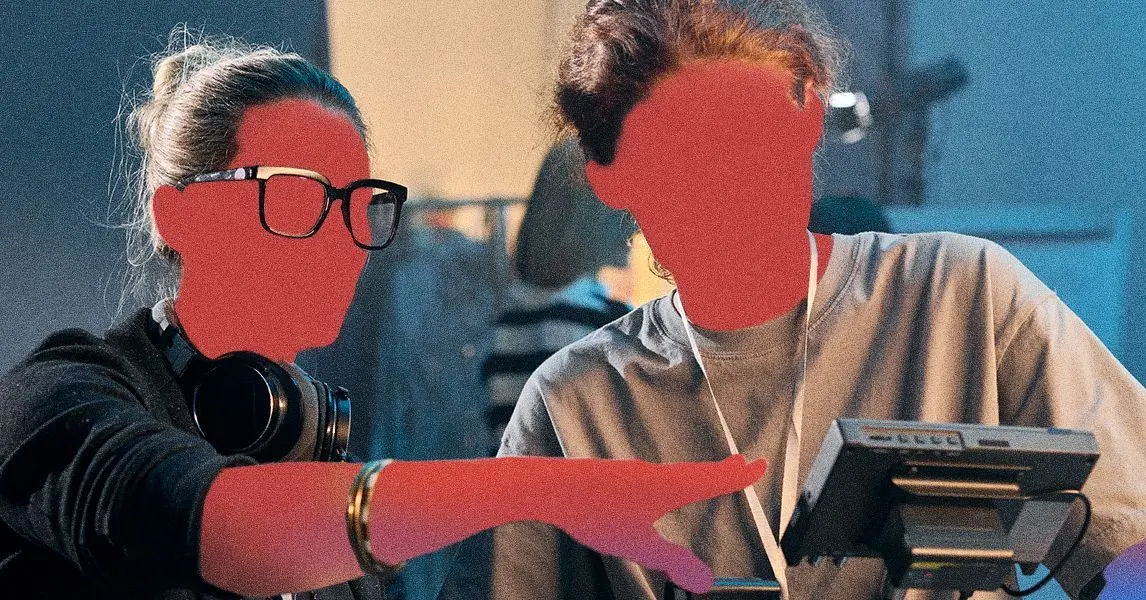
The $75 million investment flows into A24 Labs, a 20-person technology startup overseen by Scott Belsky, who left Adobe's executive team in January 2025 to join A24
3
. The initial focus centers on creating AI-generated storyboards—the rough draft art produced before a movie's visuals are fully developed3
. Belsky told The Wall Street Journal that these AI-powered filmmaking tools "won't look anything like the prompted generation type of AI that people feel uncomfortable with," emphasizing that the goal is to preserve creative control and support risk-taking rather than simply making movies cheaper and faster3
.The partnership will span multiple projects over time, with specific goals and technical outputs evolving as A24 and DeepMind foster what Google describes as a "deep research and development collaboration"
3
. Importantly, the deal does not grant Google access to A24's catalog of television shows and movies for training AI models3
. "We believe the best way to develop AI tools for filmmakers is to work directly with them," said Demis Hassabis, Google DeepMind co-founder and CEO1
.
Source: Wired
Fierce Backlash From A24's Loyal Fanbase and Filmmakers
The Google DeepMind partnership with A24 has triggered intense criticism from the studio's devoted followers. When A24 released the trailer for Jesse Eisenberg's new musical drama "The Debut," comments on social media were flooded with backlash—fans posted tombstones declaring the company's death, promised to pirate movies to hurt A24's profits, and made snarky remarks about the studio "ending itself with ai"
2
. The announcement proved especially contentious because A24 has cultivated a reputation as a tastemaker championing independent, artist-forward projects and emerging filmmakers2
.Kane Parsons, the YouTube creator who directed "Backrooms"—A24's highest-grossing film ever at over $300 million globally—has been vocal about his opposition to generative AI
2
. In an interview with The Australian, Parsons stated that "generative AI feels less like innovation than a symptom of a broader cultural and economic rot," adding that he gets "no enjoyment" from using the technology4
. The irony hasn't been lost on critics: "Backrooms," with its themes about repetition and degradation in a world that seems to be "mindlessly, monstrously, ripping off our own," was regarded by some as a critique of generative AI itself2
.Related Stories
A24's Response and the Broader Hollywood AI Landscape
Sophia Shin, who handles communications at A24, defended the decision in an email to WIRED: "This is a research partnership. We're working side-by-side with DeepMind's researchers to learn, iterate, and build having an active hand in shaping new tools and workflows"
2
. She emphasized that A24 wants "to dictate what tools get built for artists, and so they have a voice in shaping them rather than having tools handed to them. We'd rather have a seat at the table than on the sidelines"2
.
Source: Futurism
A24 isn't the first studio exploring AI integration. Netflix acquired Ben Affleck's company Interpositive earlier this year, which creates AI tools for filmmakers focusing on post-production tasks like color-mixing and relighting
1
. Amazon's MGM Studios launched an AI unit in 2025 for developing tools for television and movie production1
. However, the relationship between Hollywood and AI remains fraught—some studios have sued AI companies for copyright infringement, while Disney took a $1 billion stake in OpenAI's video generation model Sora late last year, only to see Sora shut down months later2
.What This Means for Next-Generation Entertainment and Creative Jobs
The partnership raises questions about the future of creative jobs in storytelling. There are approximately 2,000 working storyboard artists in the Hollywood system, along with 400 colorists and 2,800 active union members working as set lighting technicians . While the tools are being pitched as assistive rather than replacement technology, concerns persist about AI's threat to entry-level jobs and its potential to automate creative work
2
.For A24, the timing is notable. The company has experienced explosive growth, with revenue more than doubling in the past two years and a recent valuation reaching $3.5 billion
5
. "Backrooms" became the largest original horror movie debut in history, while "Marty Supreme" earned nearly $200 million and multiple Oscar nominations5
. The company's upcoming "Elden Ring" movie, directed by Alex Garland, commands a $175 million budget—A24's biggest production yet3
.As media studies professor Andrew DeWaard notes, A24 has successfully branded itself as "edgy, forward-thinking, and appealing to young people," creating a fandom for the company itself
2
. Whether that fandom survives this controversial move into AI development remains to be seen. The cultural clash is stark: while A24 elevates independent talent and first-time directors, it's still a business worth billions that answers to investors3
. Watch how filmmakers respond as these tools roll out, and whether A24 can maintain its reputation as a champion of authentic, meaningful storytelling while embracing AI technology.References
Summarized by

Navi
[4]
Related Stories
Netflix reveals AI shaped 300 titles as Hollywood grapples with automation's growing reach
17 Jul 2026•Technology
Amazon drops OpenAI movie after $50 billion investment raises conflict of interest concerns
20 Jun 2026•Entertainment and Society
Hollywood's Cautious Embrace of AI: Promises, Challenges, and Industry Concerns
18 Oct 2024•Technology

Recent Highlights



Recent Highlights
Today's Top Stories



Don’t drown in AI news. We cut through the noise - filtering, ranking and summarizing the most important AI news, breakthroughs and research daily. Follow topics that matter to you and stay ahead.


