Google tests website opt-out toggle for AI Search as publishers demand more control


8 Sources
[1]
Google Is Testing an Option for Websites to Opt Out of AI Search
Expertise Health and wellness tech, meal kits, home and kitchen tech, food, mental health Google is testing a new option that lets website owners manage how their content and links appear in the company's generative AI Search features, the company announced in a Keyword blog post early Wednesday
[2]
Google will allow websites to exclude themselves from AI search results - Engadget
The company says opting out won't impact placement in regular searches. More than three years after it began rolling out AI Overviews and a year after the debut of AI Mode, Google is giving webmasters the option to exclude their domains from its AI-generated search results. In a blog post
[3]
Google will let websites opt out of AI Overviews, but it's trying to tempt them not to
The control is being tested with a subset of websites in the UK and will be rolled out globally after thorough testing. Google's AI Overviews and AI Mode can be useful tools, but users and website owners have had their fair share of complaints about these features. Now, Google is testing a new
[4]
Google will let websites opt-out of AI Mode & Overviews in Search
Google announced today that it will let publishers determine whether their websites appear and are used by AI Mode and AI Overviews, independently of regular Search results. Google is introducing a new opt-out toggle in the Search Console tool to determine whether a site appears in and is used to
[5]

New opportunities, control and insights for website owners
People are increasingly turning to generative AI tools to help them find, sort through and understand information. As the way people want to look for information changes, we're designing our features in Search to highlight the web, while also providing new resources, insights and control for
[6]

Google will let websites opt out of AI search results
Google will enable websites to exclude themselves from its AI-generated search results without affecting their placement in regular search results. The company announced this new feature in a blog post Wednesday, revealing plans to test a toggle in its Search Console that allows website owners to
[7]

Google Is Letting Websites Opt Out of AI Overviews, But There's a Catch for Users
If you rely on Google's AI Overviews to get quick answers when you search, this might actually matter to you. Google announced today that it's giving website owners the ability to opt out of having their content used in AI Overviews and AI Mode, without any penalty to their regular search rankings.
[8]

Google Will Soon Let You Opt Out of AI Overviews for Your Website
Google will also let website owners opt out of AI Mode in Search Google is bringing new tools for website owners, giving them greater control over how their websites appear on the search engine. On Wednesday, the Mountain View-based tech giant announced that it has started testing new controls,
Share
Copy Link
Google announced a new Search Console toggle allowing website owners to exclude their content from AI Overviews and AI Mode. The feature launches first with UK publishers following regulatory pressure, as the company tries to balance AI innovation with publisher concerns about traffic loss.
Google Introduces Website Opt-Out for AI Search Features
Google announced Wednesday it's testing a new control that allows website owners to manage whether their content appears in Google AI Search features, including AI Overviews and AI Mode
1
. The toggle, accessible through Search Console, marks a significant shift in how publishers can exercise control over content in AI search as Google increasingly moves toward chatbot-like interfaces and away from traditional "10 blue links" results pages1
.
Source: 9to5Google
The feature launches initially with a small group of publishers in the UK before rolling out globally
2
. Website owners who choose to exclude websites from AI search results will not receive traffic or impressions from generative AI search features, but Google has confirmed this decision won't be used as a ranking signal for regular search results4
. This means publishers can safely opt out without affecting their website's position in traditional Google Search.Regulatory Pressure Drives New Publisher Controls
The timing of this announcement isn't coincidental. According to reports, this new control is a direct result of the UK's Competition and Markets Authority's recent ruling, which ordered Google to give publishers more control over how their content is used by the company
3
. The UK test reflects Google's response to growing regulatory scrutiny over how AI-powered search impacts the broader web ecosystem.Publisher concerns about traffic loss have intensified as Google expands its generative AI features. The worry centers on users staying on the search page instead of clicking through to websites themselves, despite those publishers often providing the information relayed by AI search tools
1
. These concerns reached a peak when Condé Nast CEO Roger Lynch told his teams to "assume there's no search" to bolster pageviews and revenue, later clarifying he expects referrals from Google to represent only single-digit percentages of total traffic moving forward2
.New Insights for Website Owners in Search Console
Alongside the opt-out toggle, Google is rolling out new insights for website owners within Search Console
5
. These metrics include impressions data, information about which pages appear in AI responses across different countries, and visibility into how content surfaces in generative AI search features1
. "We're continuing to work with website owners to understand what insights will be most helpful to inform their strategies, and we'll introduce additional metrics over time," said Mrinalini Loew, general manager of Google Search Ecosystem1
.
Source: CNET
The data transparency appears strategic. By showing website owners the impressions and visits their sites receive from AI Overviews and AI Mode, Google may be attempting to demonstrate value and discourage widespread adoption of the opt-out feature
3
. The company emphasized that AI Overviews now has over 2.5 billion monthly active users, while AI Mode has surpassed one billion monthly users3
.Related Stories

Google's Efforts to Balance AI Innovation and Publisher Relationships
Google has been working to make its generative AI features more publisher-friendly. The company increased the number of inline links directly within AI responses and added website previews to encourage click-throughs
5
. It also introduced "Preferred Sources" to AI Overviews and AI Mode, allowing users to choose which websites they want to see more prominently3
.The announcement comes weeks after Google's I/O 2026 developer conference, where the company showcased a new dynamic search box that can expand to fit complex queries and process videos, images, files, and Chrome tabs as inputs
2
. These changes prompted declarations about the "death of Google Search as you know it," though such sentiment may be premature.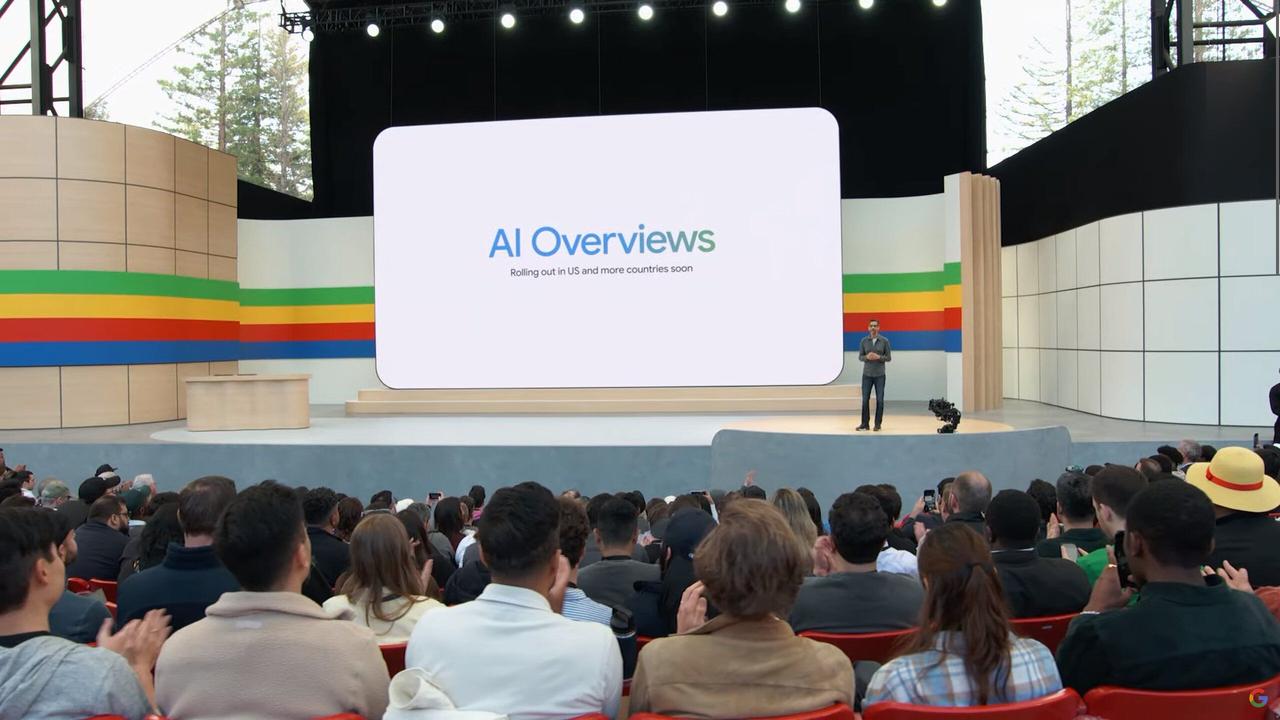
Source: Android Authority
As AI opens new discovery pathways, the tension between innovation and preserving the web ecosystem remains. Website owners will need to weigh the potential traffic from billions of AI search users against concerns about reduced direct engagement. Watch for how quickly publishers adopt this opt-out once it rolls out globally, and whether Google's transparency metrics successfully demonstrate enough value to keep most sites participating in its AI-powered search future.
References
Summarized by

Navi
[3]
Related Stories
UK Watchdog Pushes Google to Let Publishers Opt Out of AI Overviews Amid Traffic Concerns
28 Jan 2026•Policy and Regulation

Google introduces AI opt-out controls to address UK competition concerns over search dominance
18 Mar 2026•Policy and Regulation
Google must let UK publishers opt out of AI search and add clearer attribution, CMA rules
03 Jun 2026•Policy and Regulation
Recent Highlights
1
Meta Unveils Muse Wonder Frontier AI Models, Claims Performance Matching OpenAI and Anthropic
Technology

2
IMF Report Warns AI Market Correction Could Spark Global Financial Crisis With $1.4T at Risk
Business and Economy

3
Eight States Sue OpenAI Over ChatGPT Safety Concerns and Unlawful Collection of Children's Data
Policy and Regulation

Recent Highlights
Today's Top Stories









Don’t drown in AI news. We cut through the noise - filtering, ranking and summarizing the most important AI news, breakthroughs and research daily. Follow topics that matter to you and stay ahead.


