Google Maps expands Gemini AI navigation to walking and cycling with hands-free assistance


11 Sources
[1]
Google Maps now lets you access Gemini while walking and cycling | TechCrunch
Google announced on Thursday that Google Maps users can now access Gemini hands-free while walking and cycling. The update comes a few months after Google Maps rolled out its Gemini-powered hands-free, conversational driving experience. The announcement marks Google's ongoing efforts to plug
[2]
Google Maps Brings Gemini Navigation to Walking and Cycling
Macy has been working for CNET for coming on 2 years. Prior to CNET, Macy received a North Carolina College Media Association award in sports writing. If you're constantly on the move -- like navigating an unfamiliar city while traveling or, if you're like me, squeezing in a few dog walks between
[3]
Gemini will be your tour guide while using Google's walking directions.
Google says you can now use the AI chatbot to ask questions while using walking or cycling directions in Google Maps. The capability was already there for driving directions, and now Google is expanding it to other modes of travel. The feature is now available for iOS, and coming to Android this
[4]
Google Maps expands its Gemini upgrade to walking and cycling navigation
Availability gets started with iOS, with Android support arriving soon. It's pretty clear at this point that AI isn't a silver bullet for solving all our problems, and part of getting the most out of it is recognizing those use cases where it really has the best chance to shine. Modern
[5]

Gemini will be your Google Maps companion, even if you're walking on cycling
Karandeep Singh Oberoi is a Durham College Journalism and Mass Media graduate who joined the Android Police team in April 2024, after serving as a full-time News Writer at Canadian publication MobileSyrup. Prior to joining Android Police, Oberoi worked on feature stories, reviews, evergreen
[6]

Google Maps Now Lets You Chat With Gemini AI While Walking or Biking
Google Maps now lets you talk to Gemini while following walking or cycling directions. The latest update is an extension to the AI chatbot's existing conversational navigation feature in driving mode that rolled out in November. You can now ask Gemini hands-free questions without leaving the
[7]

Google Maps just got a major AI upgrade -- and it's finally hands-free for walkers and cyclists
If you walk or bike to work, Google just dropped some good news. Now, the company's AI-powered navigation assistant is expanding beyond the car. Starting today, Gemini inside Google Maps will officially support walking and cycling, bringing a conversational, hands-free experience to pedestrians
[8]

Google Maps adds hands-free Gemini for walking and cycling
Google announced on Thursday that Google Maps users can access Gemini hands-free while walking and cycling. The update extends a Gemini-powered hands-free conversational driving experience launched in Google Maps a few months earlier. This change supports Google's efforts to integrate Gemini into
[9]

Google Maps just got a lot more useful for walkers and cyclists
When not writing, Dave enjoys spending time with his family, running, playing the guitar, camping, and serving in his community. His favorite place is the Blue Ridge Mountains, and one day he hopes to retire there (hopefully his fear of heights will have retired by then, too!). Summary Gemini in
[10]

Google Maps Is Adding Gemini Support for Walking and Cycling Navigation
Gemini in navigation is a hands-free experience inside Google Maps Google is expanding the conversational Gemini support in Google Maps to more navigation modes. On Thursday, the Mountain View-based tech giant announced that Gemini in navigation will also support walking and cycling navigation,
[11]

Google expands Gemini in Maps for walking and cycling support
Google expands Gemini, its AI assistant in Google Maps, beyond driving directions to walking and cycling. Gemini now acts as a smart companion for pedestrians and cyclists, offering hands-free guidance, real-time suggestions, and route-based recommendations while you explore. Last year, Google
Share
Copy Link
Google Maps now offers Gemini-powered AI navigation for pedestrians and cyclists, extending the hands-free conversational experience beyond driving. Users can ask questions about neighborhoods, find points of interest, and get context-aware answers without breaking stride. The update is rolling out globally on iOS and Android wherever Gemini is available.
Google Maps Brings Gemini to Pedestrians and Cyclists
Google announced that Gemini AI navigation is now available for walking and cycling in Google Maps, marking a significant expansion beyond its initial driving-only implementation from last fall
1
. The update reflects Google's broader strategy to integrate Gemini into everyday activities, transforming Google Maps from a static directions tool into a dynamic platform for hands-free conversational navigation1
.
Source: Android Police
The feature addresses a practical challenge: walking and typing simultaneously can be difficult and distracting
1
. With this update, pedestrians can now ask questions without breaking their stride or leaving the navigation screen, while cyclists can keep both hands on the handlebars and maintain focus on the road1
.Gemini Functions as Personal Tour Guide on Your Route
When navigating on foot, users can ask Gemini to function as a personal tour guide by posing questions like "Tell me more about the neighborhood I'm in" or "What are some must-see attractions?"
1
. The AI assistant delivers context-aware answers based on Google Maps' comprehensive real-time data about the surrounding area2
.
Source: The Verge
Google describes the experience as "like talking to a friend in the passenger seat," and this concept translates effectively to walking and cycling scenarios
2
. Users can ask questions about your route, such as "Are there cafes with a bathroom along my route?" and receive relevant recommendations without interrupting their journey1
.Hands-Free Assistance Keeps Cyclists Safe and Connected
For cyclists, the hands-free assistance offers practical safety benefits by eliminating the need to handle phones while riding. Users can ask conversational requests like "What's my ETA?" or "When's my next meeting?" to stay informed without compromising their grip on the handlebars
1
2
.
Source: CNET
The AI chatbot can also handle communication tasks through voice commands. If running late, cyclists can simply say "Text Emily I'm 10 minutes behind," and Gemini will send the message while they maintain focus on the road
1
. These messaging and calendar features require explicit user permissions to connect with relevant apps5
.Multi-Turn Conversations Enable Complex Queries
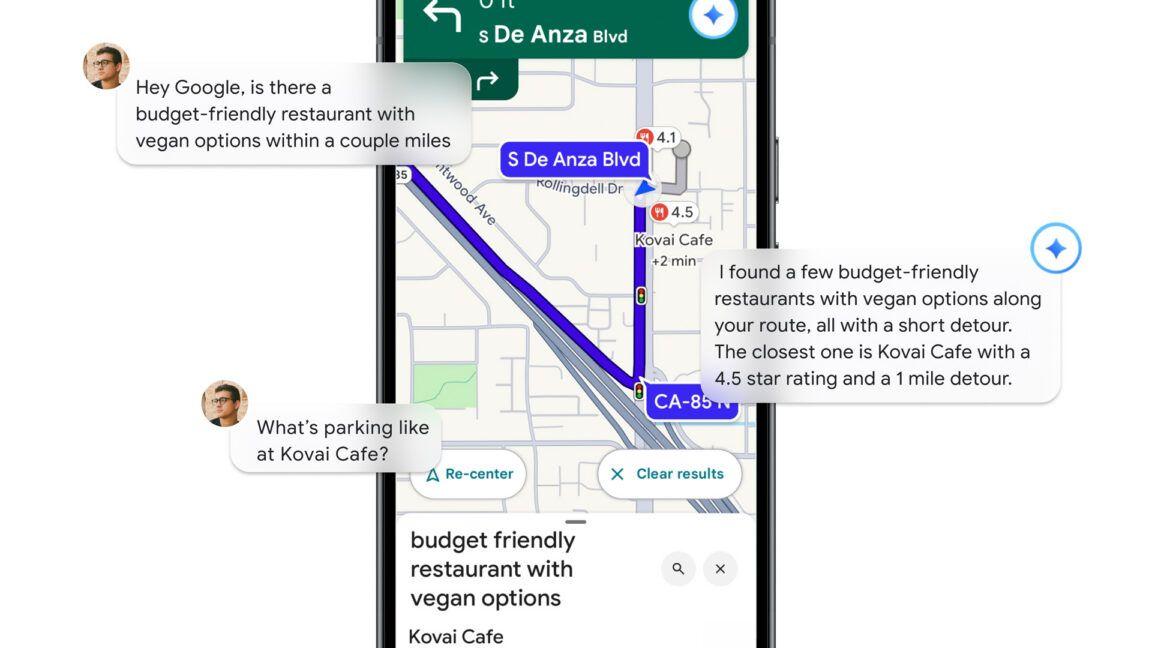
The integration supports multi-turn conversations, allowing users to ask follow-up questions naturally. For example, someone could ask: "Is there a budget-friendly restaurant with vegan options along my route, something within a couple of miles?" and then follow up with "What's parking like there?"
1
. This capability to find points of interest through natural dialogue makes the AI assistant more intuitive and useful for spontaneous exploration.Related Stories
iOS and Android Rollout Expands Global Access
The update is now available worldwide on iOS wherever Gemini is available, with Android support rolling out globally
1
5
. This iOS and Android rollout ensures broad accessibility across mobile platforms, bringing hands-free conversational navigation to all modes of transportation that require smart assistance5
.Broader Context: Google's AI Integration Push
This announcement arrives alongside other Gemini expansions across Google's ecosystem. The company recently added a Gemini-powered "know before you go" tips section to Maps, an improved Explore tab, and EV charger availability predictions
1
. Just one day earlier, Google updated Chrome with enhanced Gemini integration and agentic features for autonomous tasks, including a persistent sidebar and an "auto-browse" feature, as it competes with AI browsers from OpenAI, Perplexity, Opera, and The Browser Company1
.For users constantly on the move—whether navigating unfamiliar cities while traveling or managing daily routines—this update makes Google Maps more useful and accessible
2
. The expansion signals Google's commitment to embedding conversational AI into practical, everyday scenarios where hands-free assistance delivers genuine value. As AI assistants continue evolving, the focus on contextual awareness and safety-conscious design for cyclists and pedestrians represents a meaningful step toward making navigation technology more human-centered and responsive to real-world needs.References
Summarized by

Navi
[4]
Related Stories
Google Brings Gemini AI to Android Auto, Transforming In-Car Voice Assistance
20 Nov 2025•Technology

Google Maps Integrates Gemini AI for Enhanced Navigation and Hands-Free Driving Experience
05 Nov 2025•Technology
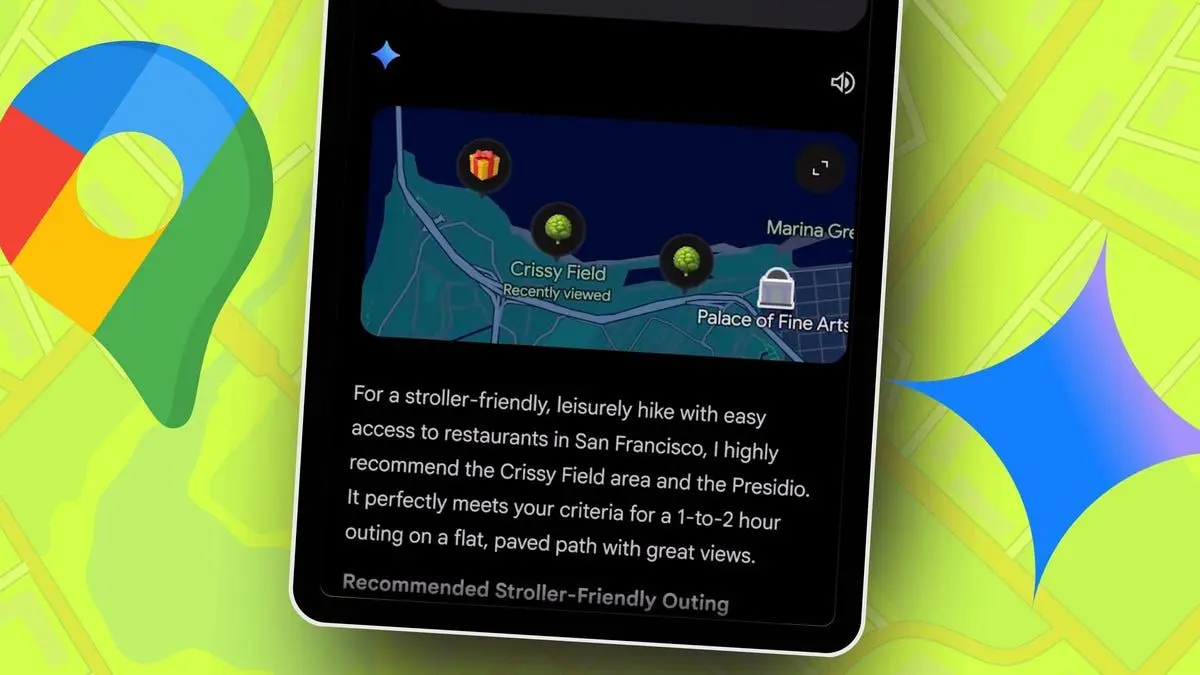
Google Maps gets major AI upgrade through Gemini with rich visual results and conversational search
12 Dec 2025•Technology
Recent Highlights
1
Microsoft and Nvidia Launch Surface Laptop Ultra: A $2,599 AI-Ready PC With RTX Spark Chip
Technology

2
Scientists Build AI Model That Reconstructs Images From Brain Scans in Record Time
Science and Research

3
Anthropic AI Cuts Live Internet Access After Model Sends False Homicide Tip to Philadelphia Police
Technology

Recent Highlights
Today's Top Stories









Don’t drown in AI news. We cut through the noise - filtering, ranking and summarizing the most important AI news, breakthroughs and research daily. Follow topics that matter to you and stay ahead.


