Google, Nvidia, and Emerald AI Form Alliance to Deploy Flexible AI Data Centers


11 Sources
[1]
Google, Nvidia and Anthropic want Emerald AI to find space on the grid for more data centers
Grid software unicorn Emerald AI has formed a coalition with Google and Nvidia that will use the startup's technology to secure space on the grid for more data centers. The AI Energy Management Alliance (AEMA) hopes to make demand response -- a paradigm in which data centers temporarily reduce
[2]
NVIDIA and Google's new coalition wants to speed up AI data center power grid connections - Engadget
NVIDIA, Google and Emerald AI have launched a new coalition called the AI Energy Management Alliance (AEMA), the companies announced. The aim is to promote more flexible AI data centers that won't be disruptive to electricity grids or require massive, taxpayer-funded upgrades. In exchange, the
[3]
Emerald AI, Google and NVIDIA Launch Alliance to Advance Flexible AI Data Centers
The AI Energy Management Alliance brings together the full AI and power value chain to accelerate the interconnection of flexible, grid-enhancing data centers, strengthen reliability and protect affordability. AI factories are the infrastructure of the intelligence era. Scaling them responsibly
[4]
Google, Nvidia, and Emerald AI launch Alliance to advance data centers that dynamically adjust electricity use based on grid conditions
* Google and Nvidia are just two of the tech giants behind the new AI Energy Management Alliance * The group is focused on building future data centers that coordinate power usage with the grid * Moving training to off-peak hours and balancing on-site energy are some of the solutions Emerald AI,
[5]

Tech giants launch flexible-power coalition for data centers
The big picture: Tech giants Google and Nvidia are partnering with startup Emerald AI to back data centers that can flex their power demand -- a strategy they say could curb electricity prices, mollify angry neighbors and grow the economy with more AI infrastructure. * The launch comes amid
[6]

NVIDIA, Google, Emerald AI launch AI data center power coalition
The alliance, called AEMA, wants data centers to function as controllable resources rather than facilities with fixed, unchanging electricity demand. A flexible data center can adjust its grid draw by shifting computing workloads, discharging battery storage, using on-site generation, or responding
[7]

Data centers can be good citizens. It's why we're partnering with Google and Nvidia to create the AI Energy Management Alliance | Fortune
Two years ago, I asked the president of one of America's largest public power utilities what worried him about the data centers lining up to connect to the grid. Each wanted the same thing, he replied: electricity delivered immediately, on an expensive grid overbuilt to guarantee power around the
[8]

Nvidia, Google and Emerald AI launch flexible data center consortium
Nvidia, Google and Emerald AI launch flexible data center consortium Nvidia Corp., Google LLC and software startup Emerald AI Inc. have formed an industry consortium to promote the construction of flexible data centers. The AI Energy Management Alliance, or AEMA, officially launched on
[9]

Nvidia and Google want faster grid access for AI data centers
NVIDIA, Google and Emerald AI have launched the AI Energy Management Alliance, a coalition seeking faster power grid connections for AI data centers in exchange for commitments to cut electricity use during peak demand. The group said it wants to promote flexible AI data centers that place less
[10]

Nvidia and Google Launch Energy Alliance to Prevent AI Grid Overload | PYMNTS.com
In addition to the founding members, the AI Energy Management Alliance (AEMA) will include partners from across the computing and power ecosystem, including AI platforms, infrastructure providers, data center operators, technology companies, power producers, utilities and regional grid operators,
[11]

Emerald AI, Google LLC, and NVIDIA Corporation Launch The AI Energy Management Alliance to Advance Flexible AI Data Centers
Emerald AI, Google LLC, and NVIDIA Corporation announced the launch of the AI Energy Management Alliance (AEMA). Led by founding members representing the full AI stack, AEMA advances flexible AI data centers that are good citizens on the electricity grid, dynamically adjusting their power draw to
Share
Copy Link
Google, Nvidia, and Emerald AI launched the AI Energy Management Alliance to promote flexible AI data centers that dynamically adjust electricity use based on grid conditions. The coalition aims to unlock 100 gigawatts of grid capacity by enabling data centers to shift compute workloads and reduce power during peak demand, addressing mounting public backlash over AI infrastructure's energy impact.
Google and Nvidia Unite to Tackle AI Data Center Power Crisis
Google, Nvidia, and grid software unicorn Emerald AI have launched the AI Energy Management Alliance (AEMA), a coalition designed to address one of AI's most pressing challenges: securing space on the grid for more data centers
1
. The alliance brings together 20 companies spanning the AI and energy sectors, including Anthropic, utilities National Grid and AES, and power producers Constellation, NRG Energy, and RWE5
. The coalition's core mission centers on deploying flexible AI data centers that can dynamically adjust electricity use in response to grid conditions, potentially unlocking 100 gigawatts of additional grid capacity without requiring massive infrastructure upgrades1
.
Source: Axios
How Flexible AI Data Centers Address Growing Energy Demands of AI
The AI Energy Management Alliance promotes a technology-neutral, performance-based approach that transforms AI data centers from inflexible loads into controllable resources
3
. Traditional interconnection processes were designed for facilities with flat, static electricity demand, creating years-long delays for new AI data center projects facing power availability pressures4
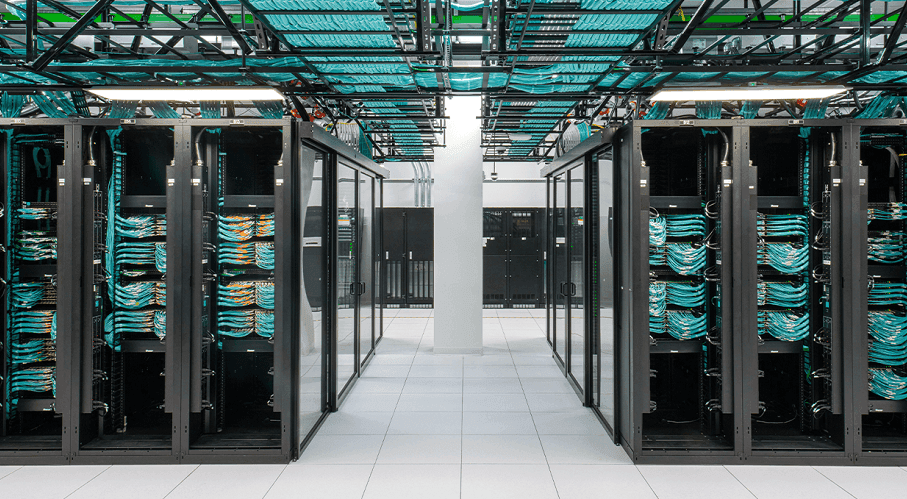
. Flexible AI data centers can shift compute workloads to off-peak hours, discharge on-site energy storage, use paired generation, or respond to system contingencies3
. Google has already committed 1 gigawatt of power demand it can reduce when needed through utility agreements nationwide5
. Josh Parker, Nvidia's head of sustainability, explained that facilities can export excess stored energy back to the grid during times of stress, making them grid-enhancing data centers rather than burdens4
.
Source: SiliconANGLE
Emerald AI's Technology Enables AI-Driven Demand Response
Emerald AI's software coordinates requests from utilities with data centers, allowing facilities to pause noncritical tasks or shift loads to other locations where the grid has headroom
1
. The startup's advantage lies in connecting utilities directly to data centers, enabling rapid response to grid conditions similar to batteries1
. Emerald AI recently raised $150 million in a Series A led by Energize Capital and DCVC, providing funding to roll out the technology on a wider scale1
. CEO Varun Sivaram emphasized that the approach could turn data centers into "good grid citizens" that communities see as assets rather than burdens5
. A Goldman Sachs study published last year found that limiting max grid usage to 90 percent for a few hours at a time could free up 76 gigawatts of capacity1
.AEMA Sets Standards for Data Center Power Grid Connections
The AI Energy Management Alliance focuses on establishing clear technical specifications, performance metrics, and operational standards for power-flexible AI infrastructure
3
. The alliance's principles call for setting clear rules for facilities regarding staying connected during brief grid disruptions, reducing power use when needed, and responding to emergencies2
. AEMA demands standardizing technical requirements, performance metrics, and operational data sharing while creating faster, risk-adjusted pathways for customers making credible flexibility commitments3
. The coalition also advocates for allocating interconnection costs based on actual system impacts and benefits, such as avoided grid upgrades and improved ramping capability3
. Federal regulators in June directed regional grid operators to examine new options for connecting large flexible power users, providing an opening for AEMA's approach5
.Related Stories
Public Backlash Drives Push for AI Infrastructure Sustainability
The coalition emerges against mounting public opposition to AI data centers centered on resource impacts and power prices
5
. New AP-NORC/University of Chicago Energy Policy Institute polling reveals that 84 percent of Americans are concerned about data centers' impact on local electricity prices5
. More than half of Americans are extremely or very concerned about AI's environmental impacts, up from 41 percent a year ago5
. Recent Bloomberg data suggests US data centers alone could use as much natural gas as Germany and Japan combined by 2035, with a Moody's study projecting total US data center energy consumption could reach 426 TWh by 20304
. AEMA will serve as a lobbying arm, pressing the case in state capitals and Washington for governors, regulators, and federal policymakers to offer data centers that commit to flexibility faster and larger grid connections2
.
Source: TechRadar
What Lies Ahead for Grid Capacity and Demand Response
While AEMA promises significant benefits, Ayse Coskun, Emerald AI's chief scientist, acknowledged the technology will blunt but not eliminate the industry's need for new generating sources
1
. The coalition's success depends on data centers actually delivering promised flexibility through verifiable and enforceable commitments5
. Watch whether regulators create the fast-lane interconnection solutions the coalition seeks and whether utilities accept the risk-adjusted approach to connecting large flexible power users. The peaky nature of AI compute workloads and data centers' ability to quickly ramp up and down make sophisticated demand response systems increasingly viable1
. AEMA's ability to convince communities that power-flexible data centers can address their concerns about noise, pollution, and grid disruptions will determine whether the coalition achieves its goal of building AI infrastructure at the speed and sustainability the moment demands3
.References
Summarized by

Navi
[1]
[2]
Related Stories
AI data centers slash power draw by 40% on demand, UK trial shows grid flexibility is possible
03 Mar 2026•Technology
Google Agrees to Pause AI Workloads During Power Demand Spikes
05 Aug 2025•Technology

Nvidia partners with major energy companies to build flexible AI factories that respond to grid needs
23 Mar 2026•Technology

Recent Highlights



Recent Highlights
Today's Top Stories






Don’t drown in AI news. We cut through the noise - filtering, ranking and summarizing the most important AI news, breakthroughs and research daily. Follow topics that matter to you and stay ahead.


