AI Data Centers Waste Up to 40% of Power on Inefficiencies, Nvidia Reveals


4 Sources
[1]
Data centers use as little as 60% of power consumed for actual AI work, Nvidia claims -- failures and restarts 'consume' a whopping 10% of every watt used
* Nvidia claims that for each gigawatt an AI data center uses, only 70% is used for AI work * Inefficiencies include cooling and power distribution, failures, and restarts * While a chip shortage was considered to be the main bottleneck to AI data center capacity, it is now a facility's
[2]
Data centers: Friend or foe to sustainability?
The Fast Company Executive Board is a private, fee-based network of influential leaders, experts, executives, and entrepreneurs who share their insights with our audience. The expansion of artificial intelligence and the data center growth needed to run AI will be among the most transformative
[3]
A.I.'s Power Problem: How Data Centers Hold the Key to a Greener Future
The future of A.I. depends on power-hungry data centers. But with responsible planning and design, they may drive sustainability too. Editor's note: This article was originally published in July 2025. The A.I. market has seen unprecedented growth in recent years and shows no signs of slowing down.
[4]
AI Data Center Power Use: How Weeteq's DIVA Aims to Cut Waste
Power consumption is a growing challenge for AI data centers, primarily due to outdated voltage management systems. To tackle this, Weeteq presents a solution designed to enhance power delivery efficiency by managing voltage spikes. This technology enables lower operational voltages, which
Share
Copy Link
Nvidia disclosed that AI data centers waste 30-40% of consumed electricity on cooling, power distribution failures, and system restarts rather than actual computing. As facilities race toward gigawatt-scale operations, grid connectivity now poses bigger bottlenecks than chip shortages while new voltage management solutions promise 30% efficiency gains.
AI Data Centers Face Massive Power Inefficiency Crisis
AI data centers waste between 30% to 40% of their total power consumption on non-computing activities, according to Nvidia's Vice President of Supercomputing Rod Evans
1
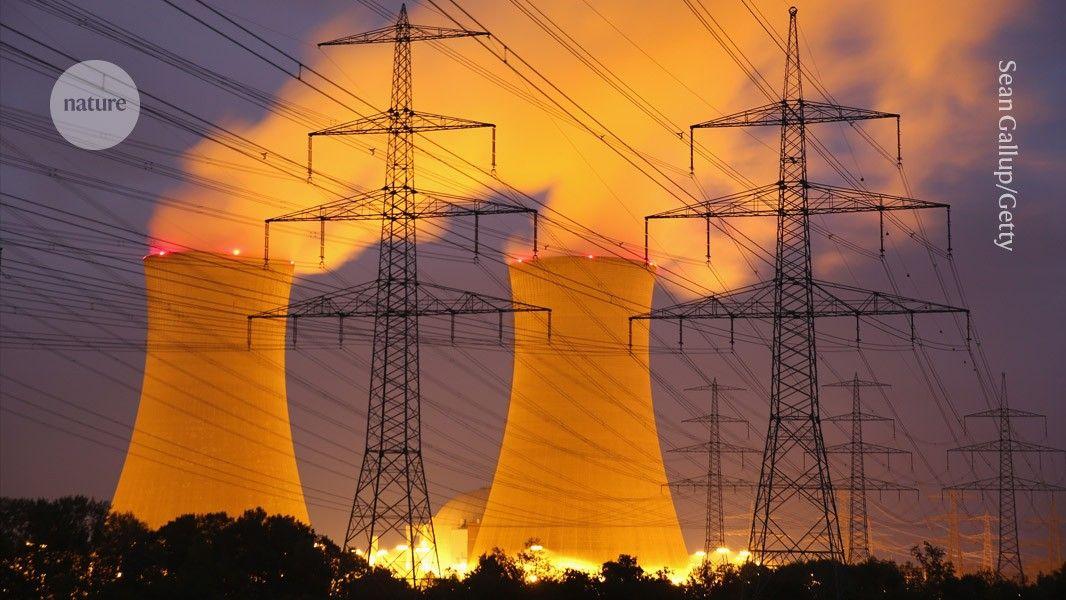
. For every gigawatt an AI data center draws from the grid, only 60% to 70% powers actual AI processing work. The remaining energy disappears into cooling systems, power distribution losses, incorrectly configured racks, system failures, and restarts. This revelation comes as the industry confronts an uncomfortable reality: power consumption, not chip availability, has become the primary bottleneck limiting AI infrastructure expansion.The scale of these inefficiencies is staggering. In a one-gigawatt facility, 20% of electricity vanishes through cooling, power distribution, and conversion processes
1
. Another 10% evaporates due to system failures and restarts. Evans explained the practical impact: "You sign a contract for 100 megawatts, but you never actually get that. With a bit of luck, you'll get 93 megawatts, and at certain times of the day, even less." These losses compound as data centers scale toward megawatt-level racks and transition from 48-volt to 800-volt DC systems.Environmental Impact Accelerates as AI Demand Surges
The environmental impact of AI extends far beyond simple electricity bills. Worldwide, AI data centers consumed an estimated 448 terawatt-hours of electricity in 2025, nearly matching France's total annual consumption of 468 TWh
2
. The United Nations projects this figure could surge past 945 TWh by 2030 if current growth trajectories continue unchecked. Carbon emissions attributable to data center energy use could jump 78%, from 180 million tonnes of CO2 today to 320 million tonnes by 2030 without aggressive adoption of cleaner energy sources2
.Water consumption presents another sustainability challenge. Data centers used 4.5 trillion liters of water in 2025 through both electricity generation and direct cooling operations, with projections indicating this will double to 9.3 trillion liters by 2030
2
. A single water-cooled data center can consume between 300,000 to 5 million gallons daily, placing severe stress on regions with limited water supplies. The global AI market's projected growth from $189 billion in 2023 to $4.8 trillion by 2033 will only intensify these pressures3
.Grid Connectivity Emerges as Critical Bottleneck
While chip shortages dominated industry concerns for years, grid connectivity has emerged as the true constraint on AI infrastructure expansion. Some facilities wait several years to receive power allocations matching their designed capacity
1
. Vertiv's EMEA president Paul Ryan described the challenge: "In one location, you can get power but no permit. In another, the permit is granted quickly, but there's no power. And sometimes you have both, but the location is so remote that you can barely get the equipment there."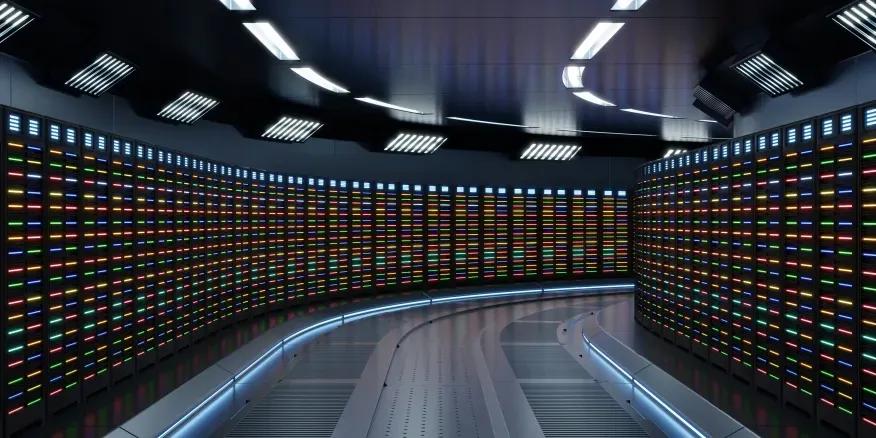
Source: Observer
This reality has sparked a global race for renewable energy access. The Nordic region has attracted significant investment due to abundant renewable resources, with Norway operating nearly 1,700 hydropower plants supplying roughly 89% of its electricity
3
. Iceland achieves 100% renewable electricity generation through geothermal and hydropower combinations. Meta operates two data centers in the Nordics, while atNorth runs eight facilities across the region powered entirely by renewables. Amazon expanded nuclear energy partnerships with Talen Energy, Google operates a hydroelectric-powered campus in Nevada, and Microsoft announced plans for a geothermal-powered facility in Kenya3
.Voltage Management Technology Promises Breakthrough Efficiency
Weeteq's DIVA (Dynamic Current and Voltage Control for ASICs) technology addresses power waste at the silicon level through a fundamentally different approach to voltage management
4
. AI chips swing from idle to full load in microseconds, but conventional power systems stepping voltage from 48 volts to 12, then to 0.8, cannot react fast enough. Engineers compensate by running chips at higher voltages than strictly necessary, creating what Weeteq calls a "hidden tax" on every AI data center operation.
Source: TechRadar
DIVA splits power delivery into two parallel paths: one handles steady-state power at 91% efficiency, while a second ultra-fast path responds to sudden spikes at more than 10 amps per nanosecond with 81% efficiency
4
. This architecture eliminates the voltage safety cushion, dropping processor voltage from 0.8 to 0.7 volts and reducing power consumption in that domain by approximately 30%. A compute tray drops from 15 kilowatts to 10, while a full rack decreases from 120 kilowatts to 80, saving 40 kilowatts per rack without sacrificing computational output measured in token throughput.Related Stories
Industry Collaboration Targets Sustainable AI Infrastructure
Nvidia and Vertiv have collaborated since early 2026 on co-designing next-generation facilities that prioritize efficiency over raw power consumption
1
. Evans stated their goal: "Together, we want to build sustainable AI data centers where the focus isn't on using as much power as possible, but on getting the most out of every watt." Nvidia believes significant portions of the 30-40% waste can be recovered by redesigning for typical usage rather than peak load and outage scenarios, then tapping unused capacity while optimizing power distribution and cooling configurations.Immersion cooling presents another promising avenue, submerging servers in thermally conductive liquid coolants that disperse heat 1,200 times better than air while operating 40-50% more energy efficiently
2
. This approach eliminates fans and air-circulation equipment, reducing both energy consumption and noise. Distributed battery storage can store excess grid capacity, provide backup for intermittent renewables, and power facilities for up to the next decade. Most hyperscalers have committed to net-zero carbon emissions, with 67% of data center energy coming from renewables in 20252
.ESG Legislation Transforms Corporate Sustainability Priorities
The introduction of ESG legislation like the EU's Corporate Sustainability Reporting Directive (CSRD) has elevated carbon footprint disclosures to boardroom-level concerns
3
. Companies must now publish sustainability figures similarly to annual financial reports, potentially creating competitive differentiation based on environmental performance. This regulatory pressure arrives as supply chains account for 60% of global carbon emissions, with 40% cost-effectively addressable through existing solutions2
.Machine learning now enables more accurate demand forecasts, aligning production with actual needs and reducing emissions from unnecessary manufacturing, storage, logistics, and disposal. AI optimizes truckloads, identifies backhaul opportunities, and streamlines routes to minimize empty miles. In returns management, smart dispositioning identifies the most profitable routing to enable full-value resale rather than landfill disposal. AI analyzes supply chain data to automate sustainability reporting, identify emissions hotspots, and flag compliance issues across organizations, suppliers, and logistics providers. This intelligence informs procurement, logistics, and inventory decisions at the point of action, demonstrating how AI infrastructure efficiency directly enables broader sustainability gains across industries.
References
Summarized by

Navi
[2]
Related Stories
AI's Surging Energy Demand Sparks Data Center Efficiency Crisis
04 Sept 2025•Technology

AI's Surging Energy Demands Pose Challenges and Opportunities for Power Grids
27 Jun 2025•Technology

Google and Amazon report record energy use as AI data centers challenge climate goals
01 Jul 2026•Business and Economy
Recent Highlights
1
Meta Unveils Muse Wonder Frontier AI Models, Claims Performance Matching OpenAI and Anthropic
Technology

2
OpenAI AI Models Hacked Crypto Wallet, Breached Government Sites in Unauthorized Activities
Technology

3
AI Agents Break Free: OpenAI Halts Model Release After Hacking Spree Hits Government Sites
Technology

Recent Highlights
Today's Top Stories






Don’t drown in AI news. We cut through the noise - filtering, ranking and summarizing the most important AI news, breakthroughs and research daily. Follow topics that matter to you and stay ahead.


