Google Opens Connected Apps Platform for Gemini and Search with Over 50 Third-Party Apps


4 Sources
[1]
As AI agents reshape the web, Google opens Gemini and Search to more apps
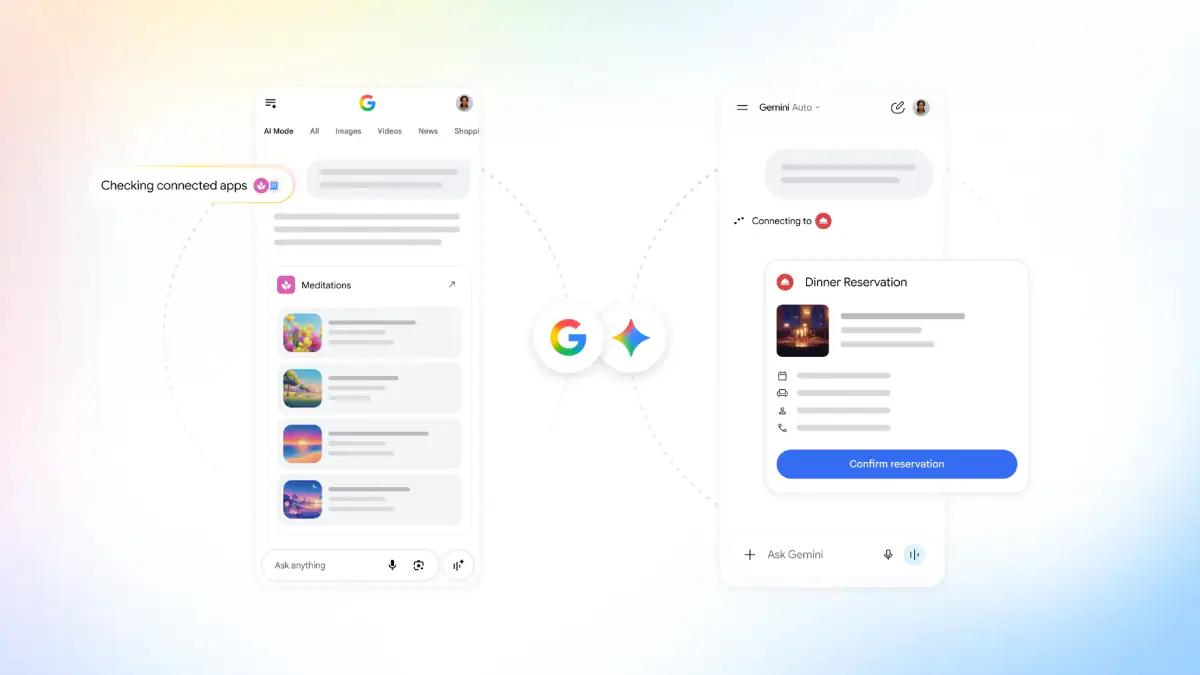
Google is making it easier for businesses to connect their apps to its AI experiences across Search and Gemini with the debut of its Connected Apps Platform. Introduced in Gemini and Google Search earlier this year, connected apps let users securely link and interact with popular third-party
[2]
Google opens the floodgates for more connected apps in Gemini and Search
Google adds that it will bring more connected apps to Gemini and Search, including mindfulness app Calm. Giving AI access to our favorite apps opens up all sorts of possibilities. Already, connected apps in Gemini and Search make it easier to access information without switching apps, like finding
[3]
Google is making Gemini and Search work better with the apps you love
Gemini's guest list is growing, and your favorite apps are invited. Google has been finding more ways to make Gemini a part of your daily routine, from putting together playlists to ordering groceries through your favorite apps. Now it's expanding those capabilities to more services, with Google
[4]
Google Opens Connected Apps Platform Preview to Developers for Search and Gemini
Google says more than 50 Connected Apps are available across both service Google is opening up its Connected Apps Platform in preview, giving developers a way to bring their apps to both Search and Gemini without building separate integrations for each. The company is also adding more third-party
Share
Copy Link
Google launched its Connected Apps Platform in developer preview, allowing businesses to integrate third-party apps into Gemini and Search through a unified system. Over 50 apps including Adobe, Peloton, Calm and Experian are now available, enabling AI-driven user experiences without switching between applications.
Google Launches Connected Apps Platform to Expand AI Ecosystems
Google has unveiled its Connected Apps Platform in developer preview, marking a strategic move to expand how businesses integrate third-party apps into Gemini and Search
1
. The platform enables developers to build once and deploy across both services, eliminating the need for separate integrations3
. Currently available to U.S.-based developers through a waitlist, the initiative aims to reshape how users interact with third-party services through AI agents2
.
Source: Gadgets 360
Over 50 Apps Now Available Across Gemini and Search
Google has already secured more than 50 Connected Apps spanning health, productivity, commerce, and event ticketing categories
2
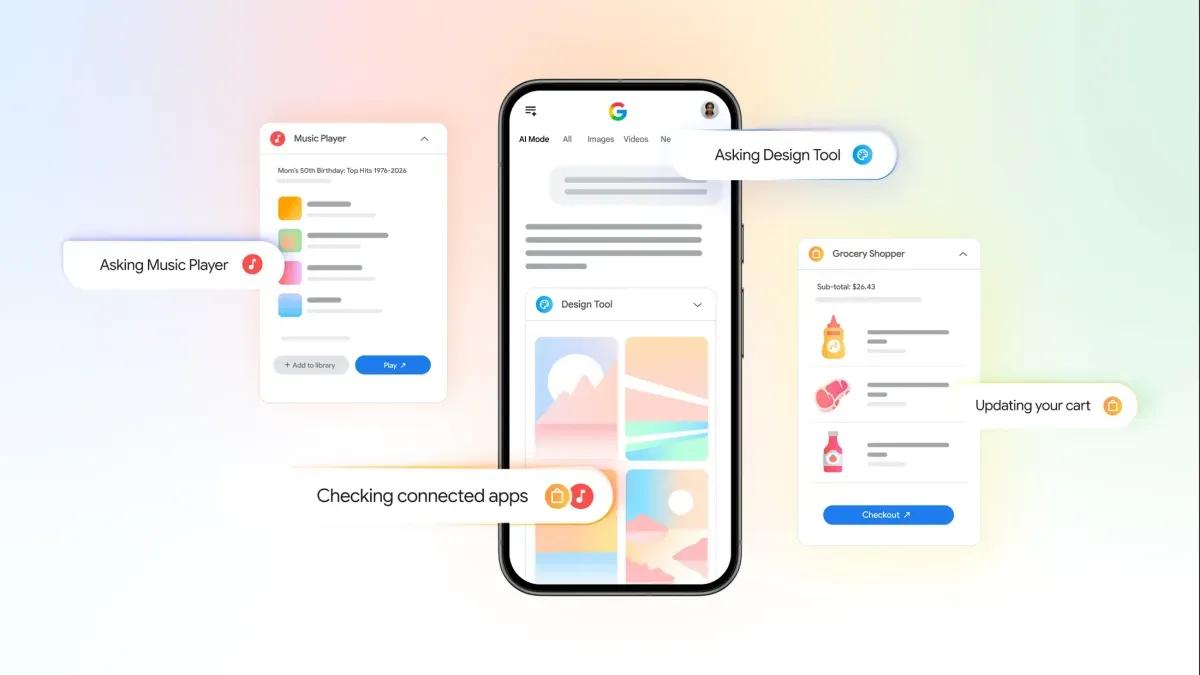
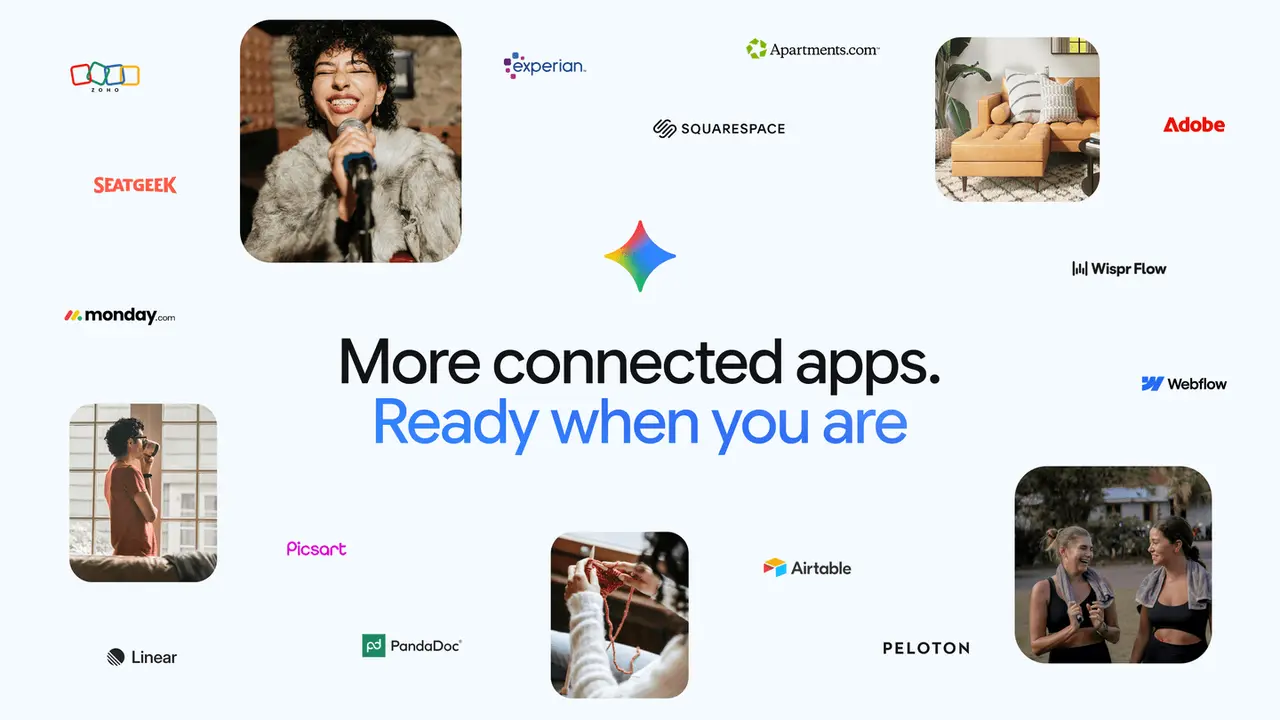
. Partners including Adobe, Experian, Peloton, and meditation app Calm are joining the ecosystem1
. While these apps are currently available in Gemini, they will roll out to Google Search over the coming weeks4
. Search currently features fewer integrations, with apps like Instacart, Canva, YouTube Music, and Yahoo Fantasy Football1
.
Source: TechCrunch
Technical Integration Through Model Context Protocol and AppFunctions APIs
Developers can connect their apps using either a cloud-hosted Model Context Protocol server or Android's AppFunctions APIs
4
. The Model Context Protocol helps AI services communicate with external tools, while AppFunctions APIs allow apps to expose specific functions for other services to use4
. After integration, developers use the Google Connected Console to register, test, and submit their apps1
. They can choose whether their app appears in Search, Gemini, or both platforms2
.Tracking Performance and Maintaining Brand Control
Once live, developers can monitor traffic, latency, and error rates through the Connected Console
1
. The platform allows businesses to maintain control over their brand identity, including verified logos and authenticated accounts1
. This centralized dashboard gives developers the ability to test integrations, submit them for review, and track performance after launch3
.Related Stories

Implications for the Agentic Web and Consumer Behavior
The Connected Apps Platform represents Google's response to shifting consumer behavior toward using services through AI agents rather than launching individual apps
1
. Similar to how SEO allowed companies to appear in search engine rankings, this could be an initial step for businesses wanting visibility on the agentic web1
. Other AI services like ChatGPT and Meta's Muse have explored similar integrations, but Google's unified approach across Search and Gemini positions it to capture users who prefer handling tasks without switching between apps1
.Phased Rollout and Future Expansion
Google is rolling out access in phases, with plans to expand the developer preview to more developers, regions, and products over the coming months
4
. The company did not specify when the platform would become more broadly available beyond the current U.S. developer preview1
. As access expands, the growing list of supported apps could reduce the time users spend switching between applications to complete tasks3
. Watch for how quickly developers adopt the platform and whether Google can successfully retain consumer attention as AI-driven user experiences become the primary interface for accessing third-party services.References
Summarized by

Navi
[2]
[3]
Related Stories
Google Gemini Expands Connected Apps with Airtable, Adobe, and 12 More Integrations
24 Sept 2026•Technology
Gemini AI Assistant Expands with 13 New App Integrations Including Ticketmaster and Pandora
14 Aug 2026•Technology

Google's Gemini AI Set to Revolutionize Personal Assistance with Enhanced Data Integration and App Connectivity
02 May 2025•Technology

Recent Highlights
1
OpenAI's AI Models Disprove 27-Year Exponential Time Hypothesis, Rendering Decades of Research Obsolete
Science and Research
2
Google DeepMind unveils Genie 4 world model with audio and 2-minute interactive simulations
Technology

3
Microsoft AI Diagnostic Tool Beats Doctors With 83% Accuracy on Complex Medical Cases
Health

Recent Highlights
Today's Top Stories







Don’t drown in AI news. We cut through the noise - filtering, ranking and summarizing the most important AI news, breakthroughs and research daily. Follow topics that matter to you and stay ahead.


