Google Launches AI Research Hub in Singapore With $13M Investment in Healthcare and Academia


3 Sources
[1]
Advancing research and partnering with universities in Singapore
Summaries were generated by Google AI. Generative AI is experimental. Technology is already transforming how we approach the world's toughest challenges, and continuing that momentum requires supporting the people driving foundational science. With our newly established research hub in Singapore,
[2]
Partnering with Singapore to bring frontier AI to public health
Summaries were generated by Google AI. Generative AI is experimental. We're deepening our partnership with Singapore to deploy frontier AI across the nation's healthcare system. The primary goals of the new collaboration, announced at the Google for Health Summit in Singapore, are to accelerate
[3]
Google to deploy AI tools across Singapore health system By Investing.com
Investing.com -- Alphabet's Google is setting up a research hub in Singapore and expanding its work with the country's healthcare institutions to deploy artificial intelligence across medical research and clinical care, the company said on Thursday. Google DeepMind is working with Singapore's
Share
Copy Link
Google is establishing its first research hub in Singapore with over $13 million in investments spanning healthcare AI deployment and academic research grants. The initiative includes partnerships with National University Health System and NHG Health to deploy AI co-clinician tools and predictive health analytics, while funding supports Alzheimer's research, AI safety frameworks, and regional language processing at NUS and NTU.
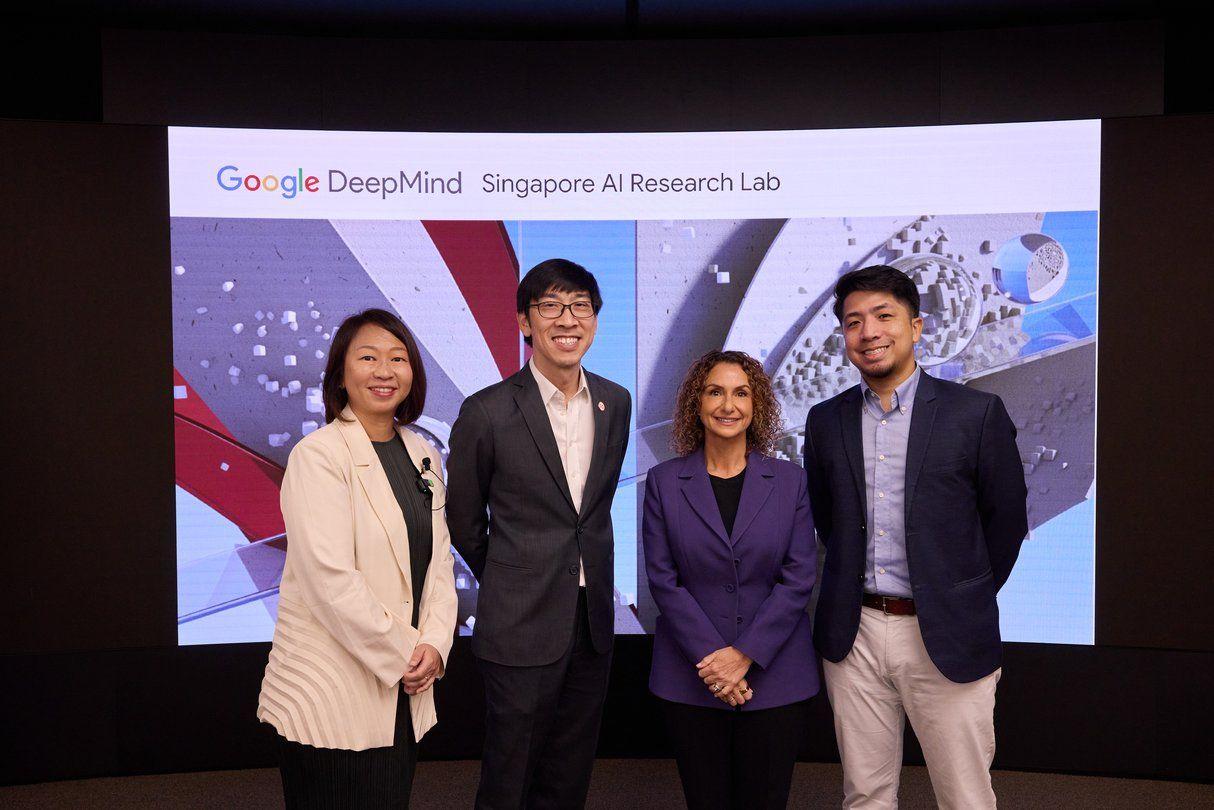
Google Establishes Research Hub in Singapore With Multi-Million Dollar Investment
Google announced the establishment of a research hub in Singapore, marking a strategic expansion of its AI in healthcare and scientific research initiatives across Southeast Asia
1
2
. The Google research hub in Singapore will comprise local research scientists and software engineers focused on advancing foundational AI models to accelerate scientific breakthroughs2
. This development, revealed at the Google for Health Summit in Singapore, represents the company's commitment to partnering with Singapore on deploying frontier AI across the nation's healthcare system and academic institutions2
.The initiative combines over $13 million in targeted investments spanning healthcare deployment, academic research grants, and capacity-building programs. Google is deepening academic partnerships by investing over $6 million in new research grants at National University of Singapore and Nanyang Technological University
1
. Additionally, Google.org and Google DeepMind are contributing $7 million to the Philanthropy Asia Alliance's Health for Human Potential Coalition, including $1 million for PathGen, an AI platform that helps countries detect disease threats faster while protecting data sovereignty2
.AI Tools in Health System Transform Clinical Care Delivery
Google DeepMind is working with the National University Health System to evaluate an AI co-clinician tool designed to help clinicians quickly synthesize information from medical guidelines and literature
2
3
. The tool assists doctors with clinical queries as they care for patients, enabling frontline workers to focus more effectively on patient care2
. This represents a practical application of AI in healthcare that addresses the immediate needs of medical professionals in clinical care settings.
Source: Google
Google Cloud is partnering with NHG Health on a population health program that uses AI-driven predictive insights to forecast health risks, particularly chronic conditions, across sub-populations
2
3
. These insights feed directly into an AI health coach on the NHG HealthBot, using Google's Gemini Enterprise for Customer Experience platform to deliver personalized lifestyle guidance and preventative care reminders to residents2
. The focus on predicting health risks before they manifest aligns with Singapore's shift toward personalized and preventive care in public health.Academic Grants Target AI-Driven Scientific Progress and Safety
The targeted grants address both urgent biomedical frontiers and core computing challenges. NUS received a $1.5 million AI for Science Google.org Impact Challenge Grant, selected from over 3,500 global applications, to advance breakthroughs in neurodegenerative disease research using AI models and data science, specifically focusing on Alzheimer's research
1
. This investment positions Singapore at the forefront of applying AI to complex medical challenges that affect aging populations globally.
Source: Google
NUS also secured a $500,000 grant supporting machine learning efficiency, focusing on sustainable compute and model serving optimization, alongside regional language processing to make AI more inclusive
1
. At Nanyang Technological University, Google is funding four sponsored research studies totaling $340,000 focused on advancing AI safety frameworks, robust evaluation methodologies, trustworthy multi-agent systems, and privacy-preserving LLM watermarking1
. These AI safety frameworks are critical as organizations navigate responsible AI deployment.Related Stories

Building Long-Term Research Capacity Across Southeast Asia
Beyond individual projects, NTU received a $750,000 AI for Science Capacity Fund Grant to build permanent research capabilities across Southeast Asia
1
. Under Professor Ho Teck Hua's regional academic leadership, this initiative will establish lasting infrastructure, foster internal research agents, and build ethical AI frameworks that elevate the region's scientific capacity1
. This represents a commitment to sustainable ecosystem development rather than short-term project funding.Google.org and Google DeepMind are providing $3 million to support INSEAD's Thrive Lab in Singapore, which aims to advance global research into how people and organizations can thrive alongside rapid technological change
1
. The lab will explore how education, workplaces, and communities can better support people to develop skills, find purpose, and build meaningful relationships in a changing world1
. This human-centered AI research complements the technical initiatives by addressing the societal implications of AI advancement.Scaling Open Models While Maintaining Data Sovereignty
Google Research will scale existing health research initiatives in Singapore, including bringing open models like MedGemma to frontline care settings
1
2
. This approach enables the development of secure, customized solutions while maintaining full data sovereignty, addressing concerns about sensitive health data leaving national borders2
. The emphasis on data sovereignty reflects growing global awareness of the need to balance AI innovation with privacy protection and regulatory compliance. As countries worldwide face shared challenges like aging populations and the shift toward personalized care, Singapore's healthcare institutions are positioned to serve as a blueprint for scaling AI safely for public good2
.References
Summarized by

Navi
Related Stories
Singapore secures major AI partnerships with Google and OpenAI, $234M investment announced
20 May 2026•Business and Economy

Google DeepMind Opens New AI Research Lab in Singapore to Advance AI Across Asia-Pacific
19 Nov 2025•Technology
OpenAI plants first overseas applied AI lab in Singapore with $235 million commitment
20 May 2026•Business and Economy

Recent Highlights


Recent Highlights
Today's Top Stories








Don’t drown in AI news. We cut through the noise - filtering, ranking and summarizing the most important AI news, breakthroughs and research daily. Follow topics that matter to you and stay ahead.


