6 Sources
[1]
OpenAI plants its first overseas applied-AI lab in Singapore, with a $235M commitment
The company will scale to about 200 staff in the city-state and align the lab's work to Singapore's public-sector, finance, healthcare, and digital-infrastructure priorities. OpenAI said on Wednesday it will open its first applied-AI lab outside the United States in Singapore, with a S$300m (about $235m) commitment alongside a staffing ramp to roughly 200 people in the city-state over the next few years. Singapore's Ministry of Digital Development and Information confirmed the partnership at the ATxSG summit. The 'Applied AI Lab' framing is the part worth reading carefully. OpenAI is not, on the available materials, opening a frontier research lab in Singapore. The new facility is structurally a deployment-and-partnerships unit, calibrated to Singapore's published AI Mission priorities in public service, finance, healthcare, and digital infrastructure. The mandate is to take OpenAI's existing model lineup and apply it within a specific national policy framework, with the Singapore government as the most significant single customer and partner. The lab will sit alongside the regional commercial office OpenAI opened in the city in 2024. The strategic geography read is the part to pay attention to. Singapore has spent the past five years positioning itself as the most attractive Western-aligned hub in Southeast Asia for AI infrastructure and frontier-model deployment. The Monetary Authority of Singapore has been one of the most-engaged Asian regulators on the Anthropic Mythos cybersecurity track, and the city-state's $7bn-plus public-sector AI commitments since 2024 have created what is, on the available evidence, the cleanest single-jurisdiction procurement pipeline in the region. OpenAI's choice of Singapore over Tokyo, Seoul, Sydney or Bangalore for the first overseas applied lab reflects the procurement-readiness gradient as much as it reflects any technology consideration. The geopolitical context, which the announcements do not address directly, is the part that gives the move its scale. The Trump-Xi Beijing summit earlier this month confirmed that US-China AI policy is now being negotiated at the head-of-state level, with chip export controls and AI guardrails on the same agenda. Singapore is, in that frame, the diplomatically neutral surface where Western frontier-AI companies can deploy at scale without the political exposure that would attach to a Tokyo or a Seoul launch. Chinese model-lab competition from DeepSeek, Moonshot's Kimi, and Alibaba's Qwen has made the Asia-Pacific deployment race more crowded than it was eighteen months ago. OpenAI's Singapore lab is the structural answer to that competitive density. Singapore also signed a parallel AI partnership with Google at the same ATxSG event. The two announcements landing on the same day inside the same event signal a deliberate Singaporean strategy: lock in concurrent partnerships with the two largest Western frontier labs so that the city-state is not architecturally dependent on either. The same playbook has been used by Australia's largest pension funds inside the agentic-AI cycle, where AustralianSuper has explicitly signalled multi-vendor frontier-model engagement as a hedge against single-vendor concentration risk. There is a quieter strategic point worth flagging. Singapore is not, on its own terms, a large enough domestic market to justify a 200-person frontier-AI applied lab on commercial logic alone. The lab's economic case rests on the city-state functioning as the regional hub for OpenAI's Southeast Asia and broader APAC presence, with Singapore-based engineers servicing customers in Indonesia, Vietnam, the Philippines, Malaysia, Thailand and (more sensitively) markets like Hong Kong where direct US-AI-company presence is structurally difficult. Whether that hub-and-spoke model lands at scale will depend on how quickly the regional customer base materialises around the Singapore base. OpenAI did not disclose the specific Singapore neighbourhoods or facilities the lab will occupy, the construction-and-hiring timeline beyond 'the next few years', or the proportion of the S$300m commitment that is operating expense versus capital expenditure. Singapore's Ministry of Digital Development and Information has not yet published a project-level breakdown of how the lab's work will be coordinated with the country's existing Smart Nation programmes. The next visible proof point will be the first set of named Singaporean government deployments under the new lab, which, according to the press release, are scheduled to begin shortly after staffing ramps.
[2]
OpenAI to open its first applied AI lab outside of US in Singapore - The Economic Times
OpenAI is establishing its first applied AI lab outside the United States in Singapore. The company plans to hire around 200 people in the coming years. OpenAI will invest more than S$300 million in the city-state. This collaboration aims to boost AI innovation and talent. Singapore seeks to become a leading AI hub.OpenAI will open its first applied AI lab outside of the U.S. in Singapore, the city-state's Ministry of Digital Development and Information said on Wednesday. Here are the details: OpenAI's staffing in Singapore will grow to around 200 roles "in the next few years", and the company said it would commit more than S$300 million ($235 million) to the city-state. OpenAI and Singapore will collaborate to advance applied AI innovation, build AI talent, and make AI accessible to citizens, enterprises and the public sector. The move comes as Singapore bets on AI to transform its economy, aiming to become an AI hub that attracts leading AI firms. ($1 = S$1.28)
[3]
OpenAI And Google Deepen Singapore AI Investment Push - Alphabet (NASDAQ:GOOGL), Microsoft (NASDAQ:MSFT)
OpenAI Plants Its First Flag Outside the U.S. That distinction matters enormously for investors. OpenAI has not opened an applied AI lab in London, Tokyo, or Dubai. Singapore gets the first one. That is not a routine expansion. It is a strategic anchor. The lab's mandate also reveals a clear commercial logic. According to a joint statement from OpenAI and Singapore's Ministry of Digital Development and Information, the work covers national priorities including public services, finance, healthcare, and digital infrastructure. Additionally, the initiative includes a mid-career engineer training program and co-developed AI startup accelerators. Those are long-term, government-backed revenue pipelines. Moreover, OpenAI's Chief Revenue Officer, Denise Dresser, confirmed the commercial framing. She noted that Singapore brings strong technical talent, trusted institutions, and a clear ambition to use AI for long-term growth. That language signals enterprise contract ambitions, not just research goodwill. Google's Strategy Is Different, and Equally Deliberate Alphabet's approach to Singapore follows a different but complementary logic. Google announced a new National AI Partnership with Singapore at the ATxSummit on May 20. Unlike OpenAI's deal, Google's announcement did not include a fixed cash commitment. However, the strategic depth is notable. According to Google's official blog and reporting by CNBC, the partnership covers education, healthcare, scientific research, workforce readiness, enterprise innovation, and building a secure AI ecosystem. Google is also working with Singapore's Ministry of Education to train educators and with the National Research Foundation to deploy its Co-Scientist agentic AI tools in biomedical research. Critically, Google is not starting from scratch here. Since 2011, Google has invested around $5 billion in Singapore, according to the Singapore Economic Development Board. Google DeepMind also opened an AI research lab in Singapore in November 2025. The new national partnership sits on top of that existing infrastructure. Together, they form a complete go-to-market stack across government, research, and enterprise. For Alphabet shareholders, this represents quiet but durable market capture. Every ministry, hospital, and research agency that integrates Google's AI tools becomes a recurring cloud customer. That translates directly into Google Cloud revenue, Alphabet's fastest-growing business segment. Why Singapore? The Answer Is Strategic Singapore is a small market by population. However, it punches far above its weight in policy influence, financial infrastructure, and regional connectivity. According to Slack's Workforce Index, cited by CNBC, 52% of Singapore workers already use AI in their jobs. That adoption rate is exceptional by any global benchmark. That cluster effect is not accidental. Singapore's government has also committed more than S$1 billion to public AI research from 2025 to 2030, according to its national AI strategy. Government co-investment at that scale de-risks private capital and guarantees sustained institutional demand. For investors, that is a structured demand pipeline, not background noise. The Geopolitical Layer Investors Cannot Ignore There is a larger force shaping this Singapore AI investment story. The United States has tightened AI chip export controls. China is aggressively scaling its own AI ecosystem. Meanwhile, Southeast Asia, with approximately 680 million people and rapidly digitalizing economies, remains relatively open territory. Singapore sits at the center of that opportunity. OpenAI is also striking government partnerships across multiple countries to maintain its lead over competitors including Anthropic and Google, according to Bloomberg. The Singapore lab is therefore part of a deliberate global positioning strategy, not an isolated deal. For OpenAI specifically, a global lab footprint also strengthens its long-term fundraising narrative. An operational presence across multiple continents signals enterprise-grade maturity. As OpenAI moves closer to a potential public market debut, the Singapore's Singapore AI investment will read as evidence of a scalable, internationally diversified business. What Publicly Traded Investors Can Act On Now OpenAI remains private. However, the ripple effects are real and tradeable across several publicly listed companies. Alphabet is the most direct beneficiary. Every Google Cloud and DeepMind expansion in Singapore deepens enterprise and government pipeline in Asia-Pacific. According to Alphabet's own disclosures, Google Cloud is already its fastest-growing segment. The Singapore national partnership adds institutional depth to that growth story. Microsoft also has indirect exposure. OpenAI's primary cloud and compute partner is Microsoft through its Azure relationship. As OpenAI scales operations in Singapore, Azure's Asia-Pacific infrastructure demand grows alongside it. The Investment Takeaway The Singapore AI investment story is not a one-day headline. It is a structural shift in how the world's leading AI companies are distributing their global operations. OpenAI's first overseas lab, Google's deepened national partnership, and Singapore's billion-dollar public commitment all point in the same direction. Asia-Pacific is becoming a primary AI battleground. Singapore is its command center. The companies planting flags today are securing contracts, talent pipelines, and regulatory relationships that will compound for years. For investors tracking the AI infrastructure stack, the clearest plays remain Alphabet, Nvidia, and Microsoft. Each one benefits as Singapore's role as the region's AI hub continues to grow. Benzinga Disclaimer: This article is from an unpaid external contributor. It does not represent Benzinga's reporting and has not been edited for content or accuracy. Market News and Data brought to you by Benzinga APIs To add Benzinga News as your preferred source on Google, click here.
[4]
OpenAI Launches First Applied AI Lab Outside US, Investing $235M in Singapore
OpenAI will open its first applied AI lab outside the United States in Singapore under a new partnership with the Ministry of Digital Development and Information. The initiative, called OpenAI for Singapore, includes a commitment of more than S$300 million and plans to expand the company's local team to about 200 roles over the next few years. The Applied AI Lab will make main bases for forward-deployed engineers. These teams work with organisations to use AI systems for real business and public service needs, rather than only research work. OpenAI said the lab will support Singapore's National AI strategy and help organisations solve hard operational issues. The company already opened a regional commercial office in Singapore in 2024, and the new lab adds a deeper technical role to this presence. The lab will focus on areas linked to Singapore's AI Mission priorities. These include public service, finance, healthcare, and digital infrastructure, according to the announcement. The work will involve the use of in local projects and services. OpenAI Chief Revenue Officer Denise Dresser said, "Through OpenAI for Singapore, we want to help more organisations benefit from frontier AI, support the next generation of local AI talent, and widen access to these tools across the country." The statement framed the deal as a long-term partnership with Singapore.
[5]
OpenAI to Invest Over $200 Million in Singapore
OpenAI is planning to invest more than US$200 million in Singapore to help boost the adoption of artificial intelligence in the country. Singapore's Ministry of Digital Development and Information and OpenAI will collaborate to advance applied AI innovation in the city-state, according to a joint statement released on Wednesday. This includes training locals and giving companies greater access to AI tools and applications. The effort includes the launch of an OpenAI Applied AI Lab in Singapore, which will be the company's first outside the U.S., the statement said. The partnership represents a commitment of over 300 million Singapore dollars, equivalent to US$233.9 million, from OpenAI. The lab plans to grow its team of engineers and technical specialists to over 200 roles in the next few years. It will collaborate with companies to help them transition their AI strategy from experimentation to practical and effective deployment, including the design and testing of AI systems for complex workflows. "Singapore has strong technical talent, trusted institutions, and a clear ambition to use AI to drive long-term growth and improve people's lives," said Denise Dresser, Chief Revenue Officer at OpenAI. OpenAI established its Asia Pacific hub in Singapore in 2024, and has since added clients like Singapore Airlines, Grab and Sea to its growing presence. Demand for its products has been strong, with Singapore ranking among OpenAI's top three markets globally for ChatGPT adoption on a per capita basis. News Corp, owner of The Wall Street Journal and Dow Jones Newswires, has a content-licensing partnership with OpenAI.
[6]
OpenAI to open its first applied AI lab outside of U.S. in Singapore
SINGAPORE, May 20 (Reuters) - OpenAI will open its first applied AI lab outside of the U.S. in Singapore, the city-state's Ministry of Digital Development and Information said on Wednesday. Here are the details: o OpenAI's staffing in Singapore will grow to around 200 roles "in the next few years", and the company said it would commit more than S$300 million ($235 million) to the city-state. o OpenAI and Singapore will collaborate to advance applied AI innovation, build AI talent, and make AI accessible to citizens, enterprises and the public sector. o The move comes as Singapore bets on AI to transform its economy, aiming to become an AI hub that attracts leading AI firms. ($1 = S$1.28) (Reporting by Jun Yuan Yong; Editing by John Mair)
Share
Copy Link
OpenAI is opening its first applied AI lab outside the United States in Singapore, committing over $235 million and scaling to 200 staff. The facility will focus on deploying AI systems across public sector, finance, healthcare, and digital infrastructure—aligning with Singapore's National AI strategy and positioning the city-state as a regional hub for AI innovation.
OpenAI announced on Wednesday it will establish its first applied AI lab outside the United States in Singapore, marking a strategic expansion with a commitment of more than S$300 million, approximately $235 million
1
. The company plans to scale its Singapore team to around 200 roles over the next few years, according to a joint statement from OpenAI and Singapore's Ministry of Digital Development and Information2
. The announcement came at the ATxSG summit, where Singapore simultaneously revealed a parallel AI partnership with Google, signaling a deliberate strategy to lock in concurrent partnerships with Western frontier labs .
Source: Analytics Insight
The facility is structurally a deployment-and-partnerships unit rather than a frontier research lab. The applied AI lab will serve as a base for forward-deployed engineers who work directly with organizations to implement AI systems for real business and public service needs
4
. The lab's mandate is to take OpenAI's existing model lineup and apply it within Singapore's published AI Mission priorities, specifically targeting public sector, finance, healthcare, and digital infrastructure1
. This approach aligns directly with Singapore's National AI strategy and positions the Singapore government as the most significant single customer and partner4
.OpenAI's choice of Singapore over Tokyo, Seoul, Sydney, or Bangalore reflects the city-state's procurement-readiness and strategic positioning. Singapore has spent five years establishing itself as the most attractive Western-aligned hub in Southeast Asia for AI infrastructure deployment
1
. The government has committed more than S$1 billion to public AI research from 2025 to 2030, creating what analysts describe as the cleanest single-jurisdiction procurement pipeline in the region3
. Demand for OpenAI products has been strong, with Singapore ranking among the company's top three markets globally for ChatGPT adoption on a per capita basis5
.The lab's economic case extends beyond Singapore's domestic market. The facility is designed to function as a regional hub for OpenAI's Southeast Asia and broader APAC region presence, with Singapore-based engineers servicing customers across Indonesia, Vietnam, the Philippines, Malaysia, Thailand, and markets like Hong Kong where direct US-AI-company presence faces structural difficulties
1
. OpenAI Chief Revenue Officer Denise Dresser emphasized this strategic dimension, noting that "Singapore has strong technical talent, trusted institutions, and a clear ambition to use AI to drive long-term growth and improve people's lives"5
. The company already established its Asia Pacific hub in Singapore in 2024 and has added clients including Singapore Airlines, Grab, and Sea5
.Related Stories
The timing carries significant geopolitical weight. US-China AI policy is now being negotiated at the head-of-state level, with chip export controls and AI guardrails on the same agenda following recent high-level summits
1
. Singapore functions as diplomatically neutral territory where Western frontier-AI companies can deploy at scale without the political exposure attached to launches in Tokyo or Seoul. Chinese model-lab competition from DeepSeek, Moonshot's Kimi, and Alibaba's Qwen has intensified the Asia-Pacific deployment race, making OpenAI's Singapore lab a structural answer to that competitive density1
.The partnership under the OpenAI for Singapore initiative includes mid-career engineer training programs and co-developed AI startup accelerators, creating government-backed revenue pipelines
3
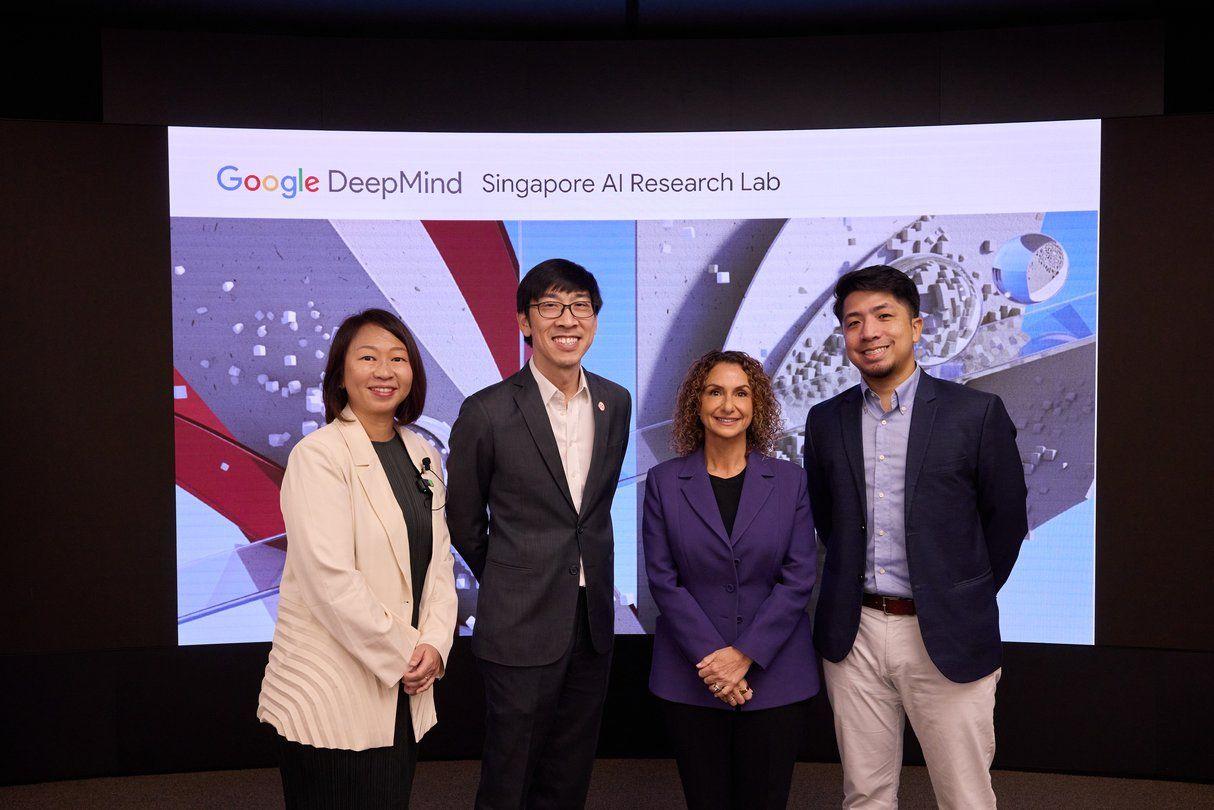
. Google announced its National AI Partnership with Singapore at the same ATxSG event, covering education, healthcare, scientific research, and workforce readiness. Google has invested around $5 billion in Singapore since 2011, and Alphabet's Google DeepMind opened an AI research lab in the city-state in November 20253
. For Microsoft, OpenAI's primary cloud partner through Azure, the Singapore expansion signals growing infrastructure demand across Asia-Pacific as AI adoption accelerates3
. The lab will collaborate with companies to transition their AI strategy from experimentation to practical deployment, including design and testing of AI systems for complex workflows5
.Summarized by
Navi
[1]
[3]
[4]
[5]
09 Oct 2024•Business and Economy

Yesterday•Business and Economy
19 Nov 2025•Technology