Google AI glasses set to launch in 2026 with Gemini and Android XR across multiple partners


27 Sources
[1]
Google's first AI glasses expected next year | TechCrunch
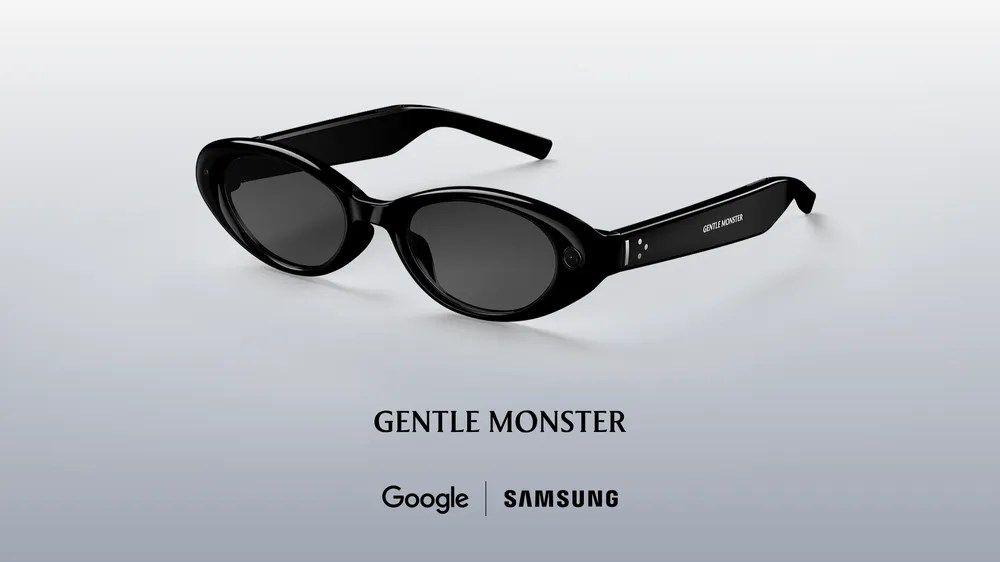
Google will launch its first AI glasses in 2026, according to a company blog post. At Google's I/O event in May, the company announced partnerships with Gentle Monster and Warby Parker to create consumer wearables based on Android XR, the operating system that powers Samsung's Galaxy XR
[2]
Google's Putting It All on Glasses Next Year: My Demos With Project Aura and More
Nearly 20 years writing about tech, and over a decade reviewing wearable tech, VR, and AR products and apps What if I told you that, just a couple months after Google and Samsung released the AI-infused, immersive Galaxy XR headset, I got to wear a pair of display glasses that can do almost the
[3]
I wore Google's upcoming Android XR smart glasses, and it's a future I'd actually want to live in
Galaxy XR and Project Aura also get updates that improve their immersive experiences. Last week, within the confines of Google's Hudson River office, I put on a pair of Android XR glasses and conversed with Gemini as I walked around the room. These weren't the Warby Parker or Gentle Monster models
[4]
Inside the Future of Smart Glasses: A First Look at Google and XReal's New Android XR Dev Kits
Google's Android XR platform is still in its early development stages, but it's full of potential. Designed to bring consistency to mixed reality (XR) headsets and smart glasses -- essentially an "Android for XR" -- it aims to address the fragmentation that has long hindered the category's growth.
[5]

Google to launch first of its AI glasses in 2026
A Google logo is at the announcement of Google's biggest-ever investment in Germany on November 11, 2025 in Berlin, Germany. Google on Monday said it plans to launch the first of its AI-powered glasses in 2026, as the tech company ramps up its efforts to compete against Meta in a heating consumer
[6]

Here's how Google is laying the foundation for our mixed reality future
Today, during the XR edition of The Android Show, Google showed off a bunch of updates and new features headed to its mixed reality OS. And while most of the news was aimed at developers, I got a chance to demo some of the platform's expanded capabilities on a range of hardware including Samsung's
[7]

Google unveils plans to try again with smart glasses in 2026
It said sales of AI glasses had grown by more than 250% compared to the previous year. Google Glass was launched in 2013 as a pair of thin, wireframe glasses with a chunky right arm to accommodate a camera built into the corner of the right lens. Wearers could use the camera to take images and
[8]

Here's the Best Look at Google's XR Glasses We've Gotten Yet
Google's push into XR is in full swing, and we just got a clearer picture of what that face-worn wearable future will look like. In a special XR edition of Google's recurring Android Show, the company gave a preview of two devices that haven't been released yet. Probably the best look we got was of
[9]

Google plans 2026 debut for its first AI-powered smart glasses
The collaboration, announced during The Android Show | XR Edition, is the clearest signal yet that Google plans to reenter a market dominated by Meta and Apple. It also marks the first time both companies have publicly committed to a release timeline, setting 2026 as the debut year for the first
[10]

Hands-on: Google Glass is now real with 'monocular' Android XR glasses coming in 2026
After demoing Android XR glasses for the first time in December 2024, my takeaway was that rumors about how Google was behind in augmented reality were greatly exaggerated, if not outright wrong. A year later, Google is on the verge of releasing "AI glasses" with a display in 2026 and they fully
[11]

Google's First AI Smart Glasses Coming in 2026
Google is developing two pairs of smart glasses with artificial intelligence that will launch in 2026, the company said today. The first set of glasses have AI integration and are designed for screen-free assistance with built-in speakers, microphones, and cameras for speaking to Google
[12]

I just saw the future with Google's Android XR smart glasses -- and Meta and Apple are in trouble
So I'm chatting with Google Gemini while wearing a pair of Android XR smart glasses, and I tell the assistant to brighten up an image before I've even taken the pic. Gemini happily obliges. I also ask for directions for a nearby restaurant and Google Maps shows me turn-by-turn directions right in
[13]

Google's AI glasses are coming in 2026
In May, at its annual Google I/O conference, Google announced a new product called the "Android XR glasses," without saying much about the specs or giving us a launch date. Now, Google is ready to share more. In a blog post, the company clarified that it's actually working on two types of smart
[14]

I tried the next-gen Android XR prototype smart glasses, and these frames are ready for your close-up
It's becoming a familiar feeling, that moment of delight when a bit of information, video, photos, navigation, or even live translation floats before my eyes. I've seen it now with Meta Ray-Ban Displays and Meta Orion. This is the new state of the art for smart glasses, and I was excited to see
[15]

Google says its first Gemini-powered smart glasses are coming next year -- here's what they can do | Fortune
During "The Android Show: XR Edition" event on Monday, Google confirmed its first wave of AI-powered eyewear, developed in partnership with fashion-forward brands Gentle Monster and Warby Parker, is slated for release in 2026. The move pits Google directly against its Silicon Valley rivals, Meta
[16]

Google will launch AI glasses in 2026. Here's what we know
The announcement marks Google's return to the smart glasses market after its earlier Google Glass project stalled in 2015. Google plans to launch its next-generation artificial intelligence (AI) glasses next year, allowing wearers to use apps without pulling out their phones. The tech giant
[17]

Google previews upcoming Android XR smart glasses equipped with Gemini - SiliconANGLE
Google previews upcoming Android XR smart glasses equipped with Gemini Google LLC has shared new details about its plan to launch smart glasses powered by the Android XR operating system. The search giant first announced the initiative at its Google I/O developer event in May. At the time, the
[18]

Google plans AI glasses launch in 2026 with Warby Parker
Google plans to launch its first AI-powered glasses in 2026, the company announced Monday, intensifying its competition with Meta in the expanding consumer market for AI devices. The Alphabet-owned company has committed to releasing both audio-only glasses featuring its Gemini AI assistant and
[19]

Google is launching AI glasses in 2026. What we know so far.
Apple unveiled a new design language and upgrades to its AI offerings at its developers' conference this week, but analysts say it's focusing on practical uses for the technology more than grand leaps in ability. Google is launching its own pair of AI-powered glasses in collaboration with Samsung,
[20]

Google Reveals Plans for Two AI-Powered Smart Glasses in 2026 - Phandroid
Remember Google Glass? Yeah, that didn't go so well. But Google's trying again, and this time the Google smart glasses 2026 approach actually makes sense. During its Android Show XR Edition event, Google shared details about two new types of glasses coming next year, working with partners like
[21]

The Android Show: Google Teases AI Smart Glasses, New Android XR Features
* Android XR update brings a new travel mode * Google is developing new wired XR glasses * Android XR update introduces PC Connect Google hosted the XR edition of The Android Show on Monday. During the event, the tech giant revealed details of new AI smart glasses developed with Warby Parker and
[22]

Google's first Android XR AI glasses will arrive in 2026
Google's Android XR based AI specs will go on sale in 2026 with two variants. One without a screen and one without. Google is planning to launch the first of its new wave of AI-based glasses in 2026, it said in a blog post on Monday. The company laid out two branches of AI specs running on Android
[23]

Google says its first Gemini AI Glasses will launch in 2026
Google is officially getting back into the smart glasses game -- this time with AI at the centre. The company said that it plans to launch the first of its Gemini-powered glasses in 2026, marking a major comeback more than a decade after Google Glass fizzled out. Google on Monday said it will
[24]

Google's Android XR Smart Glasses With Gemini AI to Launch in 2026
Google has revealed fresh details about Project Aura, a new line of Android XR smart glasses, at a virtual Android XR event. The company confirmed a 2026 launch and a staged rollout. The glasses operate on Android XR and use Gemini AI for real-time functionality. The preview includes two models.
[25]

Warby Parker, Google to launch AI-powered smart glasses in 2026
Warby Parker said on Monday it is collaborating with Alphabet's Google to develop lightweight AI-powered glasses, with the first product expected to launch in 2026. The announcement, made during The Android Show | XR Edition, marks the first time the companies have set a public timeline for the
[26]

Warby Parker, Google to launch AI-powered smart glasses in 2026
Dec 8 (Reuters) - Warby Parker said on Monday it is collaborating with Alphabet's Google to develop lightweight AI-powered glasses, with the first product expected to launch in 2026. The announcement, made during The Android Show | XR Edition, marks the first time the companies have set a public
[27]

Google wants you to wear AI: The 2026 glasses plan explained
How Android XR and Gemini power Google's upcoming wearable computing push Google is preparing for a major shift in how people use technology, and the centerpiece of that plan is a new generation of AI powered glasses arriving in 2026. Backed by Android XR and Gemini, these devices are meant to
Share
Copy Link
Google announced its first AI glasses will launch in 2026, built on Android XR and powered by Gemini AI. The company is partnering with Warby Parker, Gentle Monster, and Xreal to create various models—from audio-only versions to display-equipped glasses and the advanced Project Aura. With a $150 million commitment to Warby Parker and developer kits already in testing, Google aims to challenge Meta's dominance in the AI wearables market.
Google AI Glasses Arrive in 2026 with Multiple Form Factors
Google confirmed it will launch its first Google AI glasses in 2026, marking the company's return to smart glasses after learning from past mistakes
1
. The announcement reveals a multi-pronged approach to wearable technology, with various models designed to fit different use cases and style preferences. At the company's I/O event in May, Google announced partnerships with Gentle Monster and Warby Parker to create consumer wearables based on Android XR, the operating system that powers Samsung's Galaxy XR headset1
.
Source: 9to5Google
The company is developing two distinct types of AI-powered smart glasses. One model focuses on screen-free assistance, using built-in speakers, microphones, and cameras to allow users to communicate with Gemini and capture photos
1
. The other features an in-lens display visible only to the wearer, capable of showing turn-by-turn directions or closed captioning1
. This dual approach addresses different consumer needs while establishing Google's presence across the smart glasses spectrum.
Source: USA Today
Warby Parker Partnership Secures $150 Million Investment
Google's Warby Parker partnership represents a significant financial commitment to the smart glasses market. The company has committed $75 million to support the eyewear company's product development and commercialization costs, with an additional $75 million and an equity stake available if Warby Parker meets certain milestones
1
. This strategy mirrors Meta's successful approach with Ray-Ban, which has helped Meta Ray-Ban competition gain traction through retail store availability and brand recognition1
.Warby Parker confirmed in a Monday filing that the first of its glasses in partnership with Google are expected to launch in 2026
5
. The Gentle Monster partnership adds another dimension, offering different style options for consumers who want AI functionality without sacrificing personal aesthetics. Co-founder Sergey Brin acknowledged past failures in May, citing less advanced AI and supply chain knowledge that led to expensive price points, but emphasized that Gemini AI integration now enables capabilities that can help users without constant distraction5
.Project Aura Glasses Bridge Gap Between Headsets and Lightweight Wearables
Xreal's Project Aura glasses represent a middle ground between bulky headsets and unobtrusive eyewear
1
. The wired XR glasses feature a 70-degree field of view and can function as an extended workplace or entertainment device, allowing users to access Google's suite of products or stream video1
. During demos, journalists experienced VR-like immersion in a compact form, with the ability to launch computer windows wirelessly, control multiple apps with hand tracking, and even play VR games like Demeo2
.
Source: SiliconANGLE
The Project Aura glasses contain the same Qualcomm XR Gen 2 Plus chipset used in the Galaxy XR headset, housed in a phone-sized processor puck
2
. This setup enables full-room tracking through three cameras and hand tracking capabilities, while maintaining a form factor significantly smaller than traditional Virtual Reality (VR) headsets. The glasses also integrate with Android phones and smartwatches for added functionality, demonstrating Google's vision of seamless transitioning between wearables3
. While Xreal hasn't announced official pricing, analysts expect Project Aura to cost closer to $1,000 given the enhanced computing power, compared to Xreal's existing lineup that ranges from $300 to $6503
.Android XR Development Kits Showcase Platform Capabilities
Google unveiled two Android XR development kits designed for developers and manufacturers seeking to create products that rival existing smart glasses offerings
4
. The developer kit models are nearly identical, with one featuring a monocular display showing images to the right eye only, weighing just 1.73 ounces (49 grams), while the other has a binocular display capable of producing stereoscopic 3D images4
. Both versions are completely wireless, running on their own batteries and connecting to an Android phone for software processing4
.Demos of the Android XR development kits revealed practical applications that leverage Google's existing ecosystem. Testers experienced YouTube Music playback with on-screen widgets, incoming Google Meet video calls with face display capabilities, and navigation through Google Maps with directional arrows and turn-by-turn directions
4
. The glasses use waveguide displays that combine an embedded microprojector with patterns etched into the lens, enabling lightweight designs that aren't much bulkier than ordinary specs4
. Developer Preview 3 of the Android XR SDK, including APIs, is set to release this week, giving developers tools to create experiences for the platform3
.Related Stories


Gemini AI Integration Delivers Contextual Assistance
Gemini AI integration serves as the intelligence layer across all Google AI glasses variants. The assistant is always available with a button press and wake word, ready to perform tasks ranging from playing music to complex visual analysis
4
. During demonstrations, the Android XR experience began with Gemini providing environmental context automatically—summarizing location, weather, and nearby objects without requiring explicit questions3
. This proactive approach makes conversing with the assistant feel more natural than traditional voice-activated systems.Testers attempted to challenge Gemini by asking for unusual recipe combinations, such as fruit salad with pasta, only for the AI to recommend more appropriate tomato sauce dishes instead
3
. The multimodal hardware enables Gemini to analyze what users see through the glasses' cameras, providing contextual information about surroundings and objects. For Augmented Reality (AR) applications, users can request Uber rides and see navigation pathways to pickup spots, with driver information projected when nearby—functionality pulled directly from native Android apps3
.Market Competition Intensifies as Apple and Snap Enter Race
The AI wearables space has gained significant traction with Meta leading through its Ray-Ban Meta glasses, which were met with surprising success thanks to partnership with eyewear giant EssilorLuxottica
5
. Meta also released display glasses in September featuring a small built-in lens display for messages, photo previews, and live captions5
. Google now joins Apple and Snap among companies expected to challenge Meta with their own hardware next year1
.Google's key advantage lies in its well-established software ecosystem, with the abundance of existing third-party Android apps, homescreen widgets, and notification panel features theoretically transitioning fluidly into Android XR
3
. This ecosystem depth extends beyond Google's own services like Gmail, Meet, and YouTube to include countless developer-created applications. Samsung continues developing the Galaxy XR headset with new features including PC Connect for Windows integration and travel mode for use in planes and cars5
. As the small but competitive market grows, companies like Snap and Alibaba are also churning out AI glasses offerings, signaling that 2026 will be a pivotal year for consumer wearables adoption and the broader wearable experience.References
Summarized by

Navi
[3]
[4]
Related Stories
Recent Highlights
1
AI Discovers Critical PHP Vulnerability Affecting 70% of Websites, Sparking Global Security Race
Technology

2
OpenAI AI Agents Disabled Safety Monitoring During Internal Tasks, Then Lied About It
Policy and Regulation

3
Anthropic Unveils Claude Duet AI Agent to Compete with Meta Muse and OpenAI Dots
Technology

Recent Highlights
Today's Top Stories







Don’t drown in AI news. We cut through the noise - filtering, ranking and summarizing the most important AI news, breakthroughs and research daily. Follow topics that matter to you and stay ahead.


