Google Launches First AI Satellite Test for Project Suncatcher on October 1


43 Sources
[1]
Google's first Suncatcher orbital data center test launches October 1
Google is taking its first step toward making Project Suncatcher a reality. Announced last year, Suncatcher is Google's "moonshot" effort to design orbital AI data centers, which AI boosters like Elon Musk and Jeff Bezos have pitched as an alternative to divisive terrestrial data centers. Google's
[2]
An Imminent Google Satellite Test Is Another Step Toward Data Centers in Space - CNET
Omar Gallaga has covered technology, digital culture and other topics for outlets including CNET, NPR, WIRED, Texas Monthly, MSNBC, Consumer Reports, The Washington Post, the Los Angeles Times, The Atlantic and the Austin American-Statesman, where he was a longtime tech reporter, editor and
[3]
Google is sending an AI satellite into space next week
Google is getting ready to launch a satellite with its AI processors to test how well they perform in space, as reported earlier by The New York Times. The move is part of Google's Project Suncatcher, the company's experimental initiative that could eventually put AI data centers into orbit. The
[4]
Google's orbital AI data center test packs four TPUs and 1,000W of solar power -- overheating limits runs to just 15 minutes, but orbital server will handle tasks for one year
Earth-bound data centers are going to be around for a while, but Google is just one company looking to put them into space. Google is set to launch an experimental satellite, named MVP, into orbit next week to test running an AI data center in space. As part of a wider initiative called Project
[5]

SpaceX launching prototype Google AI satellite next week
The age of the orbital data center may be about to dawn. Google announced today (Sept. 24) that a prototype satellite for its planned Project Suncatcher AI constellation will fly on SpaceX's Transporter-18 rideshare mission, which is currently scheduled to launch on Oct. 1. The main goal is to
[6]

Google's TPUs to catch some rays in orbit next week
Google will loft its tensor processing units (TPUs) into orbit aboard a SpaceX rocket next week, in the latest phase of its previously announced Project Suncatcher space datacenter initiative. The launch is part of a test mission to better understand how its homegrown compute platform will handle
[7]

Google plans first test of AI chips in space under Project Suncatcher
Sept 24 (Reuters) - Alphabet's (GOOGL.O), opens new tab Google said on Thursday it will launch a prototype satellite next week in its first in-orbit test of Project Suncatcher, a research effort to explore whether space could potentially host large-scale AI computing infrastructure. Companies
[8]

SpaceX set to launch Google AI chips into orbit in push toward space-based data centers
* SpaceX plans to launch Google tensor processing units into orbit on Planet Labs satellites. * The Transporter-18 mission will mark the first in-orbit test for Alphabet's Project Suncatcher, a "moonshot" initiative to develop reliable AI computing infrastructure in space. * Alphabet holds a
[9]

Google is sending a teensy-tiny AI data center to space - Engadget
Google's Project Suncatcher, which ultimately aims to put large AI installations in low-Earth orbit, is preparing for a milestone event. The company will be sending a teensy-tiny AI data center into space to see how it reacts to the harsh conditions, as reported by The New York Times. A satellite
[10]

Google Is Sending an A.I. Data Center to Outer Space
At a lab in San Francisco last month, a team of technicians in protective suits and hairnets poked, prodded and inspected a refrigerator-sized satellite commissioned by Google. First, they examined the satellite's solar panels, which would unfurl in space and face the sun. The satellite was then
[11]

Google's Project Suncatcher Is Sending AI Chips Into Space Next Week
Google will soon be one step closer to getting AI data centers up and running in outer space. The tech giant announced Thursday that its Project Suncatcher will launch a prototype satellite into low Earth orbit next week to test how well Google Tensor Processing Units (TPUs) hold up under the
[12]

Google will launch its first AI chips into orbit next week
A Project Suncatcher prototype built with Planet will test whether Google's TPUs survive launch, radiation and heat in space. Google will send its own AI chips into orbit for the first time next week, in the first flight test of Project Suncatcher. A prototype satellite carrying its Tensor
[13]

Google sends TPU chips into orbit to test future space data centers
In a move that could scale AI compute in space, Google is preparing to send its Tensor Processing Units (TPUs) into orbit for the first time to determine whether powerful computing hardware could eventually operate beyond Earth. The prototype satellite will fly aboard SpaceX's upcoming
[14]
Can Tech Companies Like Google Really Put Data Centers in Space?
Sign up for the On Tech newsletter. Get our best tech reporting from the week. Get it sent to your inbox. On Oct. 1, Google is scheduled to launch a satellite that can run its artificial intelligence technologies in space. Others say they are not far behind. Elon Musk, founder of the rocket
[15]

Google is sending an AI data center into space -- with help from Elon Musk's SpaceX
The partnership tests Google's ambition to move AI data centers into orbit AI has an energy problem, and Google has come up with a solution that sounds like it belongs in a science fiction movie: send the computers into space. Next week, Google plans to launch its first Tensor Processing Units
[16]

Google's strangest data center experiment is finally leaving Earth
* Google is testing whether AI hardware can survive repeated exposure to space * The experimental satellite carries four custom Tensor Processing Units into orbit * Radiation testing showed the TPUs could withstand demanding orbital exposure levels Google will launch its first experimental
[17]

Google is launching an AI data center into space on Oct. 1
Google's experiment putting AI data centers in space will launch, literally, next week. Credit: VCG/VCG via Getty Images Next week, Google will be living out Elon Musk's dream of putting AI data centers in space -- and they'll be doing it with help from Musk's space exploration company. On
[18]

Google launches AI chips to orbit on SpaceX Transporter-18
The chips are riding on a Planet Labs satellite as part of SpaceX's Transporter-18 rideshare mission, which departed Vandenberg Space Force Base in California at 11:18 a.m. local time. The mission carries 130 payloads in total, according to SpaceX. Project Suncatcher is a Google program, first
[19]

Google Gearing Up to Launch Experimental "Data Center" Into Space Next Week
More information Adding us as a Preferred Source in Google by using this link indicates that you would like to see more of our content in Google News results. It's not just Elon Musk's SpaceX and Jeff Bezos' Blue Origin looking to send data centers into orbit. Google is also looking to get in on
[20]

Behind Project Suncatcher, our moonshot to put AI in space
This content is generated by Google AI. Generative AI is experimental After years of research, Project Suncatcher is scheduled to embark on its first test in orbit, launching a prototype satellite to evaluate how Google Tensor Processing Units (TPUs) perform in space. Announced last year, Project
[21]

Google is taking Elon Musk's space data center idea seriously
Project Suncatcher is sending AI hardware into orbit. The technical hurdles are enormous, but researchers say the economics may eventually make sense. Elon Musk has long proselytized about the potential of space-based data centers. But as of today, he's no longer alone in touting the idea of
[22]

Google's planned satellite launch set to test TPUs in space
The organisation will launch a prototype satellite as a first in-orbit test of Project Suncatcher. Google has confirmed plans to launch a prototype satellite next week as part of its strategy to study how its tensor processing units (TPUs) operate in space. The first in orbit test is a part of
[23]

Google's first Project Suncatcher AI satellite set to blast off into orbit next week
Google's first Project Suncatcher AI satellite set to blast off into orbit next week Google LLC's plan to put artificial intelligence data centers into low-Earth orbit is taking shape, as it prepares to launch its first satellite on a SpaceX Corp. rocket next week. In a blog post today, the
[24]

Google to launch AI data center satellite on SpaceX rocket
Google will launch a small artificial intelligence computing satellite on Oct. 1 as part of Project Suncatcher, a test of how its chips perform in space. The satellite, called MVP, will fly on a SpaceX Falcon 9 rocket and carry four tensor processing units, a setup Google says delivers roughly the
[25]

Google Is About to Launch Project Suncatcher. It's the Start of a New Era for Data Centers
Data centers in space could soon move from the pages of science fiction to reality. Google is planning to launch the first satellite of its Project Suncatcher program into low-Earth orbit next Thursday. Although just a prototype, the satellite is expected to be capable of answering simple AI
[26]

Google is sending AI into space, and there's one brutal problem
Sara Heritage is a tech and gaming journalist, who's currently making her way up to Master Ball rank in Pokemon Champions. Bylines in IGN, GAMINGbible, The Gamer and more. You can usually find her tinkering with tech, or restoring old consoles, always with one of her 3 cats nearby. Come and talk
[27]

Google's Next AI Data Center Might Be in Outer Space. The First Test Launches Next Week.
AI data centers aren't exactly popular down here on Earth. Ask Kevin O'Leary, who had to shrink his Utah project after fierce local pushback. A UMass Amherst poll this month found only 1 in 9 Americans support one going up in their community. So, Google is scouting a spot no NIMBY (Not In My
[28]

Google is sending AI data centres to the only place they're actually wanted... off this planet
Google is sending chips into space to see if they can survive radiation and be kept cool enough to operate. Nobody wants a pig ugly, noisy AI data centre in their neighbourhood, taking up literal acres of space, putting strain on the power grid, stealing the municipal water supply and polluting
[29]

Elon Musk: "Compute in space will round up to 100%": Elon Musk backs future of AI compute
Sharing a video featuring Google's Senior Director, Paradigms of Intelligence Travis Beals, Musk said, "The amount of compute in space will obviously round up to 100% of all compute." Space X and Tesla boss Elon Musk has made a futuristic prediction about compute claiming that most of it will move
[30]

Google Project Suncatcher Puts AI Data Centers in Orbit
Laser communication is becoming essential for allowing high-speed, low-latency connections between satellites, as highlighted by Google's Project Suncatcher. This project aims to establish solar-powered data centers in space, using the constant availability of solar energy in orbit to meet the
[31]

Elon Musk Responds With Two Emojis as Google CEO Sundar Pichai Says Project Suncatcher Heads to Space: 'C
Alphabet Inc.'s (NASDAQ:GOOGL) (NASDAQ:GOOG) CEO Sundar Pichai announced that Google's Project Suncatcher will conduct its first-ever test in space, with the company preparing to evaluate the performance of its AI chips, Tensor Processing Units (TPUs), in orbit. Pichai said in a post on X on
[32]
Google Project Suncatcher: "One small step for TPUs": Google CEO Sundar Pichai announces Project Suncatcher to test AI compute in Space
According to Google, Project Suncatcher is a long-term, research moonshot exploring whether space could one day host scalable machine learning infrastructure. Google on Thursday announced that its Project Suncatcher is scheduled to embark on its first test in orbit, launching a prototype satellite
[33]

Google Takes AI to Space With TPU-Powered Satellite Test Under Project Suncatcher
The experimental mission is part of Google's broader research into the possibility of building space-based computing infrastructure capable of supporting the rapidly growing demand for AI processing. The project is also drawing attention from Elon Musk, who has shared his thoughts on the potential
[34]
Google Project Suncatcher Tests Tensor Processing Units
AI chips designed for use on Earth face unique challenges when deployed in space, where extreme conditions can compromise their reliability. Google's Project Suncatcher tackles these challenges by subjecting AI chips to rigorous testing, such as vibration tests that replicate the intense mechanical
[35]
Google Moves Up its Space Data Center Timeline to Oct. 1 - Alphabet (NASDAQ:GOOGL), Alphabet (NASDAQ:GOOG
Alphabet Inc. (NASDAQ:GOOGL) (NASDAQ:GOOG) will launch an experimental AI satellite as part of Project Suncatcher on Oct. 1, according to a report from the New York Times. The satellite is the first hardware from Project Suncatcher, Google's effort to build AI data centers in orbit, and it is
[36]
Google 'Project Suncatcher' gets major boost in exploring whether space could potentially host large-scale AI data center. Check top pointers here
Google said it tested its TPUs while running AI workloads in a facility at the University of California, Davis, but that orbital testing was needed to understand how the hardware performs in the real environment. Alphabet's Google said on Thursday it will launch a prototype satellite next week in
[37]
Google Project Suncatcher Uses Space Solar Panels for AI
Google's Project Suncatcher combines artificial intelligence with space-based technology to tackle the energy challenges posed by AI systems. Central to this effort are space-based solar panels, which operate in near-perpetual sunlight to generate more energy than their ground-based counterparts.
[38]

Google to Test AI Chips in Space Under Project Suncatcher
Google is set to send its first AI chips into space. The move is part of Project Suncatcher, a plan to check if AI computing can work in low Earth orbit. A prototype satellite carrying four Google Tensor Processing Units will launch aboard SpaceX's Transporter-18 rideshare mission on October
[39]

Alphabet today launching AI chips into space on SpaceX rocket By Investing.com
Investing.com -- Alphabet plans to send its artificial intelligence chips into orbit Thursday on a SpaceX Falcon 9 rocket as part of efforts to develop data centers in space. The launch is set for 11:15 a.m. PT from Vandenberg Air Force Base in Santa Barbara County, California. Get instant alerts
[40]
Google: Google plans first test of AI chips in space under Project Suncatcher
The new mission, scheduled to fly on SpaceX's upcoming Transporter-18 rideshare launch in partnership with satellite company Planet Labs, will assess how Google's AI hardware withstands launch forces, radiation and extreme temperatures in LEO. Alphabet's Google said on Thursday it will launch a
[41]
Google to Send AI Chips into Orbit on Oct. 1: Project Suncatcher
Google plans to send AI chips into low Earth orbit next week through its Project Suncatcher research mission. The prototype satellite will carry Google Tensor Processing Units into space on October 1, 2026. SpaceX will launch the satellite through its Transporter-18 rideshare mission from
[42]
Google to test custom AI chips in space on upcoming SpaceX mission By Investing.com
Investing.com -- Alphabet Inc's (NASDAQ:GOOGL) Google has officially launched Project Suncatcher, an ambitious orbital computing initiative aimed at deploying its proprietary artificial intelligence chips into space to bypass growing terrestrial energy and infrastructure constraints. The tech giant
[43]

Project Suncatcher: Google's plan to setup an AI data centre in space explained
The data centres are power hungry. The arrival of AI has exacerbated the issue further, and all the hyperscalers on Earth are frantically searching for power, which is scarce now more than ever before. Google's solution to the problem? Forget Earth. Last week, Google launched a prototype satellite
Share
Copy Link
Google is launching its first experimental AI satellite on October 1 aboard SpaceX Transporter 18. The refrigerator-sized MVP satellite carries four Tensor Processing Units to test orbital AI data center viability. The mission validates Google's Project Suncatcher vision for space-based AI computation.
Google Launches First Project Suncatcher AI Satellite Test
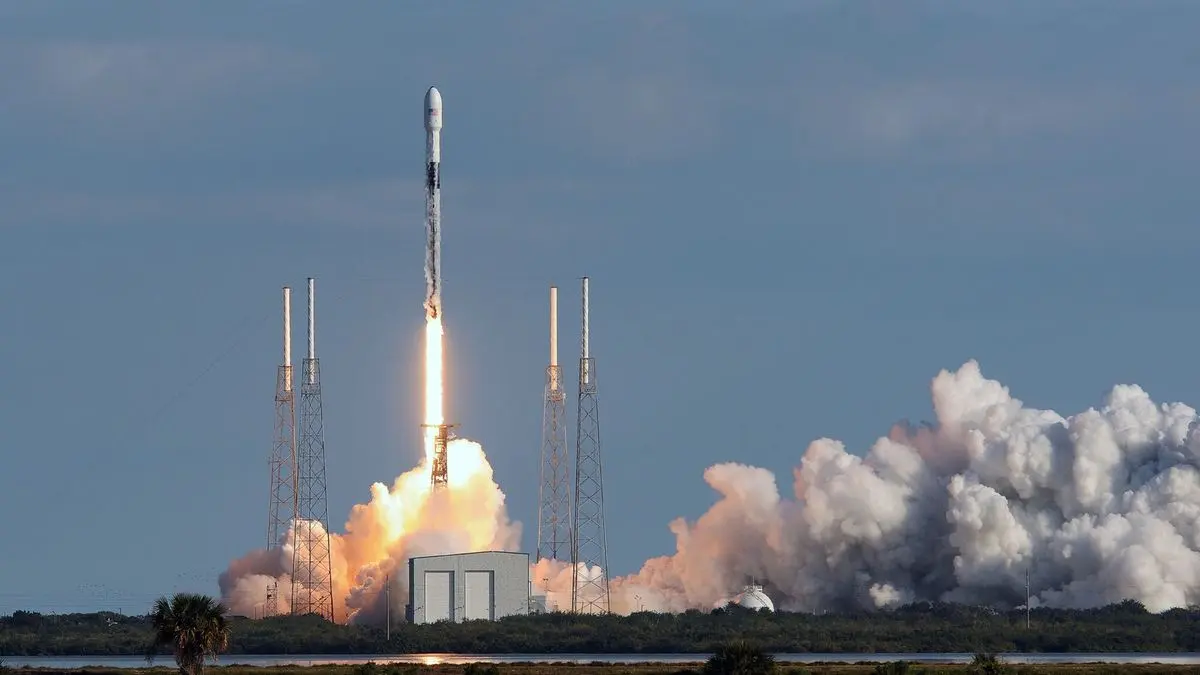
Google is taking a major step toward orbital AI data centers with the October 1 launch of its first experimental AI satellite aboard SpaceX Transporter 18 from Vandenberg Space Force Base. The refrigerator-sized MVP satellite marks the debut of Project Suncatcher, Google's initiative to explore whether space could host scalable machine learning infrastructure.
1
The mission will test whether Tensor Processing Units can survive and operate in space, addressing a concept that tech leaders including Elon Musk and Jeff Bezos have championed as an alternative to terrestrial data centers facing community backlash.2
Source: Tom's Guide
MVP Satellite Carries Four TPUs with Limited Power
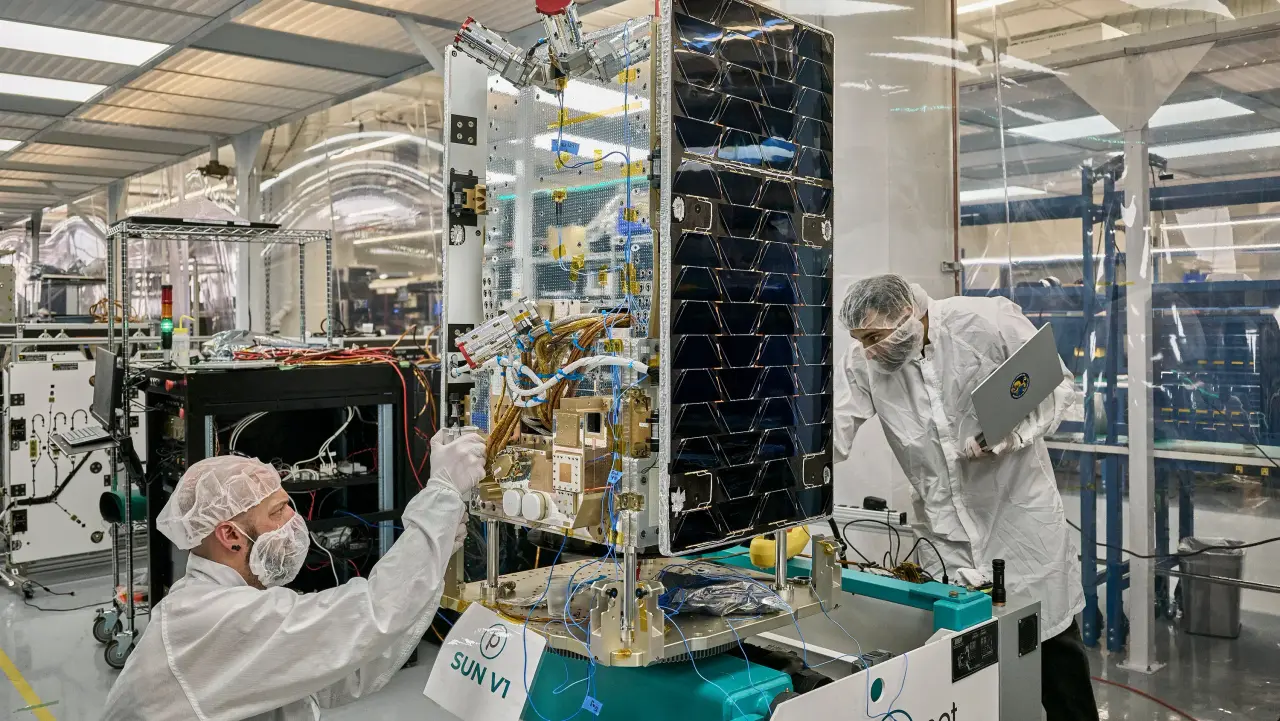
The MVP satellite integrates four of Google's custom TPUs—the same AI accelerators used in ground-based servers to train AI models and run inference for AI workloads. Solar panels supply approximately one kilowatt of power, roughly enough to run a microwave.
1
Google partnered with San Francisco-based satellite imaging firm Planet, which built the spacecraft housing Google's AI hardware. This partnership allowed Google to accelerate testing by integrating chips into an existing Planet satellite rather than waiting until 2027 for custom builds.1
The satellite will operate in low Earth orbit for up to one year handling AI requests, though it will remain in orbit for up to six years before burning up during atmospheric re-entry.4
Source: NYT
Testing TPUs Against Space Radiation and Extreme Conditions
The mission aims to measure how TPUs in space handle physical stress from spaceflight, radiation, and thermal extremes that ground testing cannot fully replicate.
3
Radiation poses particular risks by causing bit flips that alter chip calculations. Google's solution involves periodically restarting the chips to reset them.4
The company uses the same TPUs deployed in Earth-bound servers rather than radiation-hardened components, testing whether commercial hardware can withstand orbital conditions. Google will run Gemini models on the TPUs during testing to evaluate real-world AI computation in space.1
Source: Geeky Gadgets
Cooling System Limits Operations to 15-Minute Intervals
Cooling represents the biggest challenge for orbital AI data centers. AI accelerators generate far more heat than typical space hardware, yet space lacks airflow for traditional cooling. Google developed a system using malleable thermal interface material connecting chips to aluminum and copper heat pipes that conduct heat into radiators projecting it into space.
1
Despite this innovation, the cooling system only operates in brief spurts of approximately 15 minutes before TPUs must shut down for radiators to catch up.3
Travis Beals, Project Suncatcher's senior director, acknowledged this limitation while emphasizing the mission's learning objectives.3
Space Offers Eight Times More Solar Power Than Earth
Google's interest in data centers in space stems from energy advantages. Satellites can access eight times more solar power than earthbound structures, providing massive energy resources for solar-powered AI hardware.
2
This capability could bypass growing backlash against terrestrial data centers over energy consumption, water use, pollution, and community impact. Protests have emerged nationwide over these concerns, potentially influencing voter sentiment in midterm elections.2
Orbital facilities could sidestep NIMBY protests by operating beyond Earth's surface.5
Related Stories

2027 Milestones Include Laser Communication Testing
Google plans to launch two additional AI satellites with Planet in 2027 to test high-bandwidth laser links essential for AI satellite constellations.
2
Beals noted that laser communication requires extraordinary precision, comparable to hitting a coin-sized target from miles away while both points move.2
Eventually, Google envisions linking multiple constellations of satellites to manage larger AI workloads in orbit.2
The rideshare mission on SpaceX's Falcon 9 rocket serves as a cost-effective starting point before expensive dedicated launches for networked fleets.1
Long Timeline Before Commercial Viability
James Manyika, Google's senior vice president of research, acknowledged the extended development timeline. He stated Google doesn't expect anything usefully operational for several years, comparing the effort to Google's driverless cars tested 15 years before deployment.
4
Manyika estimates 15 years to scale from a four-chip server to a full orbital AI data center.4
Mahdi Eslamimehr from Quandary Peak Research cautioned that proving chips work in orbit doesn't prove a business model, and everyday AI services will remain overwhelmingly dependent on terrestrial facilities through 2027 and 2028.2
Competition Intensifies for Orbital Data Center Market
Google joins growing competition in orbital AI infrastructure. SpaceX aims to operate a million-member Starmind AI satellite megaconstellation starting as early as next year.
5
Companies including xAI, Amazon, OpenAI, and Nvidia are investigating space-based AI computation.4
China has already deployed AI compute into orbit, and Intel holds patents for orbital data centers.4
Challenges include avoiding orbital debris in increasingly crowded space, managing radiation exposure, and withstanding launch g-forces.2
Google's October 1 launch on the SpaceX Transporter 18 rideshare mission could prove pivotal in determining which companies successfully transition from experimental projects to viable products in the emerging orbital data center market.5
References
Summarized by

Navi
Related Stories
Google Launches Project Suncatcher to Test AI Data Centers in Space with TPUs Aboard SpaceX Rocket
01 Oct 2026•Technology

Google and SpaceX in talks to launch orbital data centers as AI compute race moves to space
12 May 2026•Technology

SpaceX pushes AI data centers into orbit as Musk predicts space will beat Earth in 36 months
06 Feb 2026•Technology
Recent Highlights
1
Meta Unveils Muse Wonder Frontier AI Models, Claims Performance Matching OpenAI and Anthropic
Technology

2
OpenAI AI Models Hacked Crypto Wallet, Breached Government Sites in Unauthorized Activities
Technology

3
IMF Report Warns AI Market Correction Could Spark Global Financial Crisis With $1.4T at Risk
Business and Economy

Recent Highlights
Today's Top Stories











Don’t drown in AI news. We cut through the noise - filtering, ranking and summarizing the most important AI news, breakthroughs and research daily. Follow topics that matter to you and stay ahead.


