7 Sources
[1]
AI may be written in code, but it runs on electricity and India has structural advantage: Jeet Adani
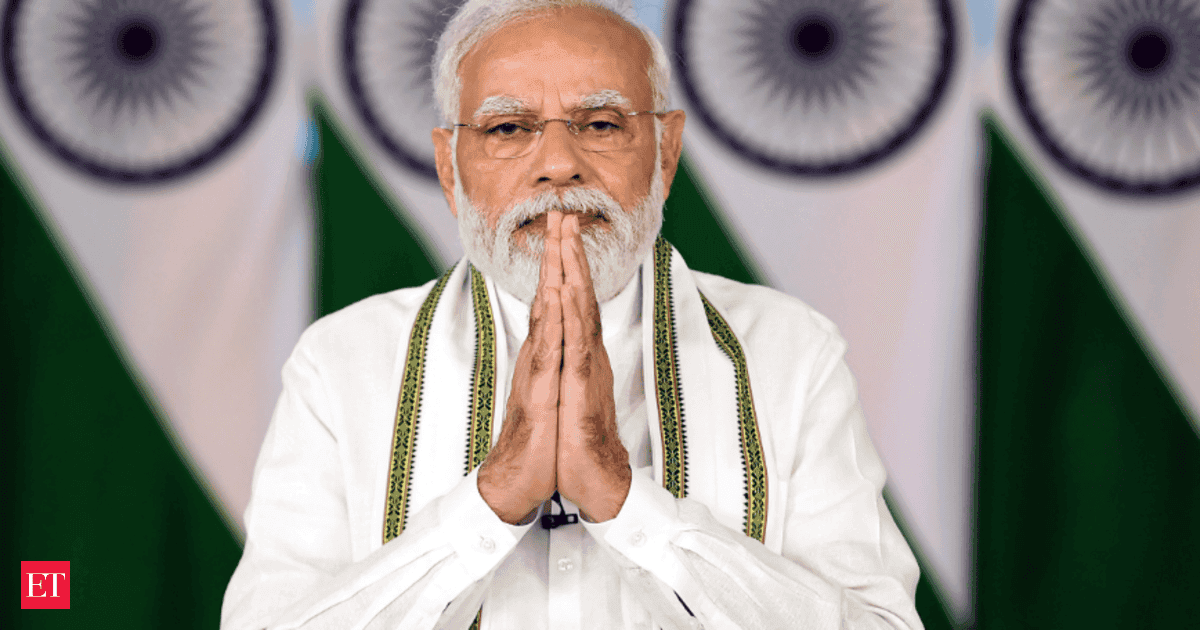
India's AI future hinges on infrastructure and energy, with Visakhapatnam emerging as a key digital gateway. Jeet Adani highlighted India's structural advantage in trust, execution, and abundant energy, crucial for powering AI's massive electricity demands. The Adani Group's $100 billion commitment to green energy and data centers will fuel this AI-led growth. Jeet Adani, Director, AdDigital Labs on Tuesday said that the future of artificial intelligence will be driven by infrastructure and energy, emphasising that India has a clear structural advantage as it enters a new phase of AI-led growth. Speaking at the groundbreaking ceremony of the Google Cloud India AI Hub in Visakhapatnam, Adani said the moment marks a significant turning point in India's digital journey. He described Visakhapatnam as an emerging gateway to India's digital future, where a new phase of development integrating energy, data and connectivity is taking shape. "India stands at approximately 1.3 gigawatts of data center capacity. Just for context, here today, we are envisioning nearly one gigawatt in a single location. That contrast reflects the scale of transformation ahead. India is entering a new leap of AI infrastructure, and India's advantage is very clear trust, execution, and most importantly, energy. AI may be written in code, but it runs on electricity," he said. Also read: Google AI data centre Vizag: CM Naidu kickstarts $15 billion push to build AI and cloud hub He noted that the global AI race is not defined by software alone, but by the ability to build the infrastructure that supports intelligence. According to him, countries that will lead in the coming years will be those that can design advanced systems and sustain them at scale. He noted that energy forms the largest component in the cost of compute, and in simple terms, the cost of intelligence is the cost of power. Adani said this gives India a strong advantage, especially as the country builds capabilities in energy and infrastructure. He added that the Adani Group is playing a critical role in this transformation by focusing on large-scale infrastructure development. He also pointed out that India's digital gateways have traditionally been concentrated in Mumbai and Chennai, but a shift is now underway. With the development of undersea cable landing infrastructure in Visakhapatnam, a new digital gateway is emerging, positioning the city closer to global data flows. Speaking on the broader partnership, Adani said it brings together global technology leadership, connectivity at scale, and integrated infrastructure capabilities. He added that the group has committed USD 100 billion to build a platform that supports India's AI growth, covering areas such as energy generation, transmission, digital networks and data centres. Also read: Reliance Industries to set up India's largest data centre cluster in Andhra Pradesh He said the platform will be powered by green and reliable energy and designed for scale, speed and resilience, with the aim of enabling the broader AI ecosystem in the country. Andhra Pradesh Chief Minister N Chandrababu Naidu laid the foundation stone of the Google Cloud India AI Hub in Visakhapatnam. The ceremony, part of the Adani-Google-Airtel Data Center project, was also attended by Union Minister for Electronics & Information Technology Ashwini Vaishnaw and Union Civil Aviation Minister Ram Mohan Naidu. (You can now subscribe to our Economic Times WhatsApp channel)
[2]
Airtel Nxtra to Power Google's Mega AI Hub in Vizag as India Pushes Gigawatt-Scale Digital Infrastructure
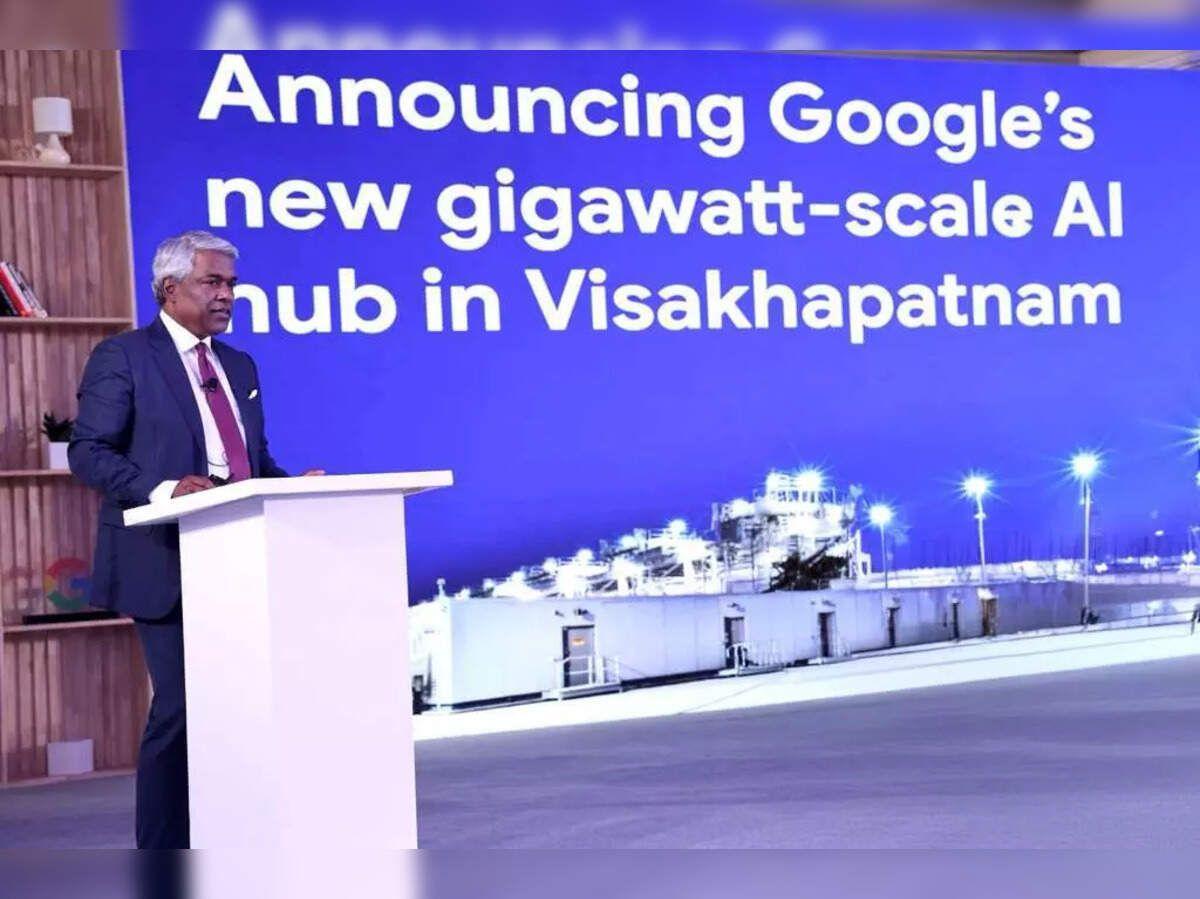
The infrastructure requirements for AI are fundamentally different from traditional cloud workloads. AI models demand high-performance computing, massive storage capabilities, and ultra-fast data movement across networks. This is where Airtel Nxtra's integrated approach becomes critical. Its pan-India fibre footprint, combined with advanced data centre capabilities, is expected to provide the low-latency environment needed to support AI applications at scale. Thomas Kurian, CEO, Google Cloud, said, This AI hub represents a key moment for India's AI-native future and will open new doors for economic opportunity across the country. The choice of Visakhapatnam is also strategic. The city is emerging as an important digital and industrial hub, supported by strong government backing and improving connectivity infrastructure. With subsea cable landing stations and expanding fibre networks, Vizag offers the kind of connectivity advantage that large-scale AI and cloud infrastructure projects require. Government officials and industry leaders present at the groundbreaking ceremony highlighted the importance of this initiative in strengthening India's position in the global technology landscape. Ashwini Vaishnaw, Union Minister for Electronics and IT, said, The AI hub and subsea cable infrastructure in Visakhapatnam will be critical for India's journey to becoming a global technology leader. From a broader perspective, this development reflects a shift in how digital ecosystems are being built. The focus is moving from consumer-facing applications to foundational infrastructure. Data centres, energy supply, and network capacity are becoming critical building blocks for future growth, especially as AI adoption accelerates across industries. A key aspect of the Vizag AI hub is its emphasis on sustainability. The project includes plans for integrating clean energy sources to power the data centres, aligning with India's long-term renewable energy goals. As data centres become more energy-intensive, the ability to operate on green power will be an important differentiator for infrastructure providers. Another important component is the expansion of fibre connectivity and subsea cable infrastructure. These elements are crucial for ensuring seamless data flow between India and global markets. The AI hub is expected to strengthen India's connectivity with international networks, improving performance for businesses and consumers alike. Beyond infrastructure, the project also has a strong focus on ecosystem development. Initiatives around skill development, digital literacy, and community engagement are expected to play a role in ensuring that the benefits of this investment reach a wider audience. Training programs aimed at preparing the workforce for roles in construction, operations, and AI-related fields are already part of the broader plan . For Airtel Nxtra, this is an opportunity to scale its capabilities and establish itself as a key player in India's data centre and AI infrastructure market. As competition intensifies with players like Reliance Jio and global cloud providers expanding their footprint, partnerships like these could prove crucial in shaping the future landscape. At the same time, the project highlights a larger trend: the convergence of telecom, cloud, and energy infrastructure. Companies that can integrate these elements effectively are likely to emerge as leaders in the next phase of digital growth. The Vizag AI hub is still in its early stages, but its impact could be far-reaching. From enabling advanced AI applications to strengthening India's digital backbone, the project represents a step forward in building a resilient and future-ready infrastructure ecosystem. As India continues its journey towards becoming a digitally empowered economy, investments of this scale underline the importance of strong partnerships between technology companies, infrastructure providers, and government bodies. Airtel Nxtra's role in this initiative positions it at the centre of this transformation, where the real value lies not just in connectivity, but in enabling the next generation of digital innovation.
[3]
Andhra CM Naidu to unveil Google AI data centre project in Visakhapatnam - The Economic Times
Andhra Pradesh Chief Minister N Chandrababu Naidu is scheduled to lay the foundation stone for a $15 billion Google AI data centre in Visakhapatnam on April 28. The CM will inaugurate the hyperscale AI data centre project at Tarluvada village, expected to position Visakhapatnam as a key technology hub and an AI gateway in Asia. "Naidu to lay foundation stone for Google's USD 15 billion AI data centre in Visakhapatnam on April 28. Mega project to be developed with 1 GW capacity, marking a major step in India's digital infrastructure growth," said a press release on Sunday. With a planned capacity of 1 gigawatt, the facility is expected to be one of the largest AI data centres in the country and will provide advanced AI cloud infrastructure and large-scale data storage capabilities, it said. The state government has outlined a long-term vision to develop a multi-gigawatt digital ecosystem with a total capacity of around 6.5 gigawatts, positioning Andhra Pradesh as a major data hub, it added. The Google project is being developed as part of the state government's efforts to attract global investments through its 'Speed of Doing Business' policy, the release said. The facility will be established across nearly 600 acres in Tarluvada, Adavivaram and Rambilli areas, with other private partners, aiming to build a larger multi-gigawatt digital ecosystem in the state. The data centre is expected to generate significant employment opportunities in artificial intelligence, cloud operations, cybersecurity, maintenance and data science, boosting job creation and industrial growth in the region. The state government also noted that the project will attract investments in allied sectors such as power systems, cooling technologies, server manufacturing and networking, contributing to the development of a robust AI ecosystem. "With global tech firms focusing on Visakhapatnam, the city is set to gain international recognition and emerge as a preferred destination for AI and cloud-based companies," the press release said. Moreover, the government said that with upcoming infrastructure such as subsea cable connectivity and Bhogapuram International Airport, Visakhapatnam is poised to transform into a global technology hub aligned with the 'Viksit Bharat 2047' (developed India) vision.
[4]
Google breaks ground on India AI Hub in Visakhapatnam
Google has officially initiated the construction of its largest digital infrastructure project in India to date, breaking ground on a new AI hub in Visakhapatnam (Vizag), Andhra Pradesh. The ceremony, held at Tarluvada, was conducted in collaboration with infrastructure partners AdaniConneX and Nxtra by Airtel. The event was attended by prominent government and corporate figures, including Union Minister Ashwini Vaishnaw; Andhra Pradesh Chief Minister Nara Chandrababu Naidu; Andhra Pradesh IT Minister Nara Lokesh; Bikash Koley, Vice President at Google Cloud; Karan and Jeet Adani, Directors at Adani Group; and Rakesh Mittal, Vice Chairman of Bharti Enterprises. The Visakhapatnam facility represents a core component of Google's $15 billion investment strategy slated for 2026-2030. This investment is aimed at establishing a comprehensive AI ecosystem that aligns with the Indian government's 'Viksit Bharat 2047' vision. First announced in October 2025, the project features India's first gigawatt-scale AI hub spread across three data center campuses. AdaniConnex and Nxtra by Airtel will oversee the construction of the physical infrastructure. Beyond data processing, the hub incorporates two major strategic initiatives: The completed hub is expected to deliver high-performance, low-latency AI services, enabling local businesses and organizations to scale AI-powered solutions and accelerate research and development. In conjunction with the infrastructure development, Google has outlined a series of community-centric initiatives designed to support local economic and environmental resilience in the region. Based on prior community consultations, these programs include: Alongside the groundbreaking, Google and the Government of Andhra Pradesh co-hosted the Bharat AI Shakti Conclave. Themed 'Collaborating to Deliver India's AI Corridor,' the conference served as a platform for suppliers, industry partners, and infrastructure stakeholders to discuss the regional economic impact of the project. The conclave highlighted a deliberate industrial strategy focused on a local-first procurement approach. By integrating regional small and medium enterprises (SMEs) under Google's global operational and safety frameworks, the initiative intends to build local capacity and elevate the competitiveness of Andhra Pradesh's industrial sector for future large-scale projects. Shri Ashwini Vaishnaw, Hon'ble IT Minister, Government of India: The groundbreaking ceremony of India AI Hub in Visakhapatnam reflects Hon'ble Prime Minister Narendra Modi Ji's vision of making India a global leader in technology. Thanks to the support and commitment of Hon'ble Chief Minister of Andhra Pradesh, N. Chandrababu Naidu Ji, in realising this vision.The India AI Hub and three subsea cables landing in Visakhapatnam will become very important infrastructure for the country's journey forward. Thank you Google for your continued trust in India. Shri N. Chandrababu Naidu, Hon'ble Chief Minister of Andhra Pradesh: Andhra Pradesh is emerging as India's premier investment destination, powered by speed, trust, and ease of doing business. Google's AI hub in Visakhapatnam will be a cornerstone of our growing tech corridor, driving innovation, creating high-value opportunities for our youth, and strengthening our position in the global digital economy. Our vision goes beyond attracting investment - we want local talent, startups, and enterprises to become active partners in this technology-driven growth story. With the strong support of the Central Government and in line with the vision of a developed India, this partnership with Google reflects our commitment to combining cutting-edge innovation with inclusive growth, ensuring opportunities reach every community across Andhra Pradesh. Thomas Kurian, CEO, Google Cloud:
[5]
A New Era for Indian Tech: Google Breaks Ground on National AI Hub
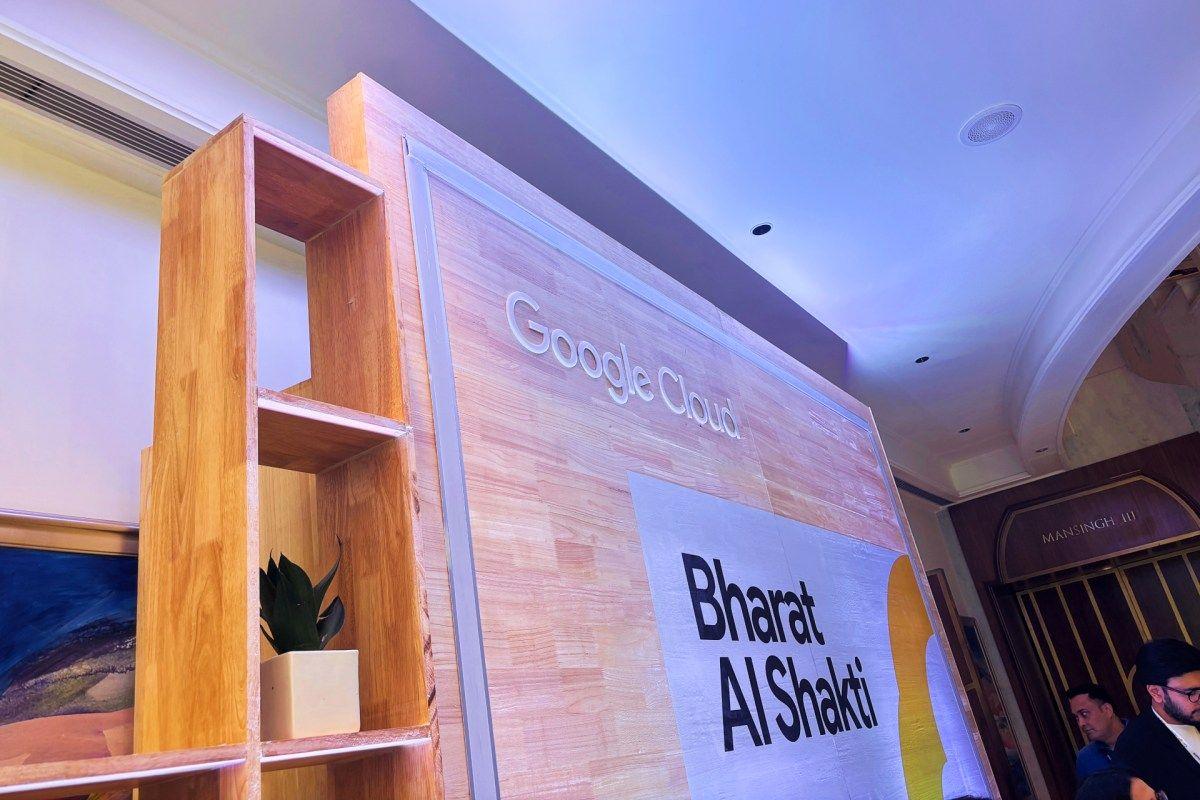
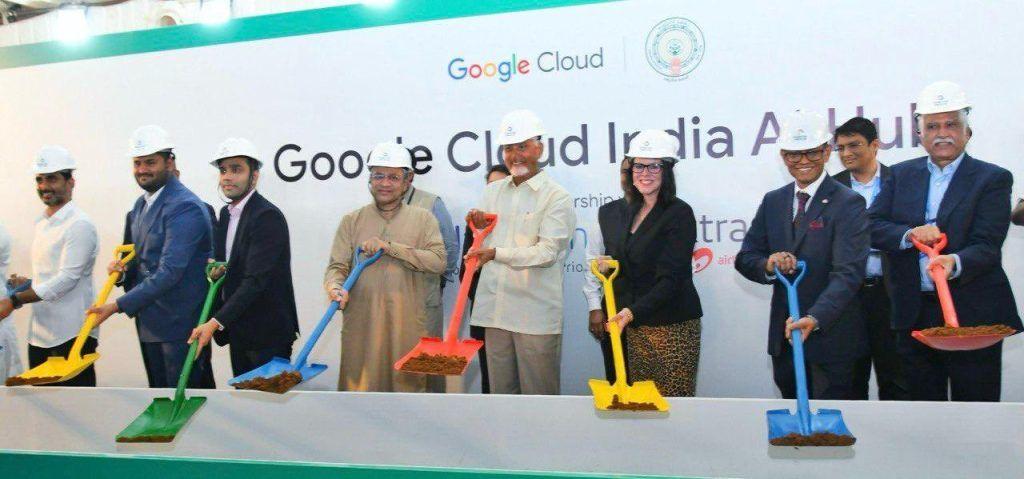
Today, Google officially broke ground on its landmark AI hub in Visakhapatnam (Vizag), Andhra Pradesh. This marks the start of construction on the company's largest investment in India's digital future to date, as well as reinforces Google's commitment to being a long-term partner and catalyst for India's economic and environmental resilience. The groundbreaking ceremony, celebrated together with AdaniConneX and Nxtra by Airtel, took place at Tarluvada, Andhra Pradesh, with key dignitaries: Shri Ashwini Vaishnaw, Hon'ble Minister for Railways, Information & Broadcasting and Electronics & Information Technology, Government of India; Shri Nara Chandrababu Naidu, Hon'ble Chief Minister of Andhra Pradesh; Shri Nara Lokesh, Hon'ble Minister for Information Technology, Electronics and Communications, RTG and HRD, Government of Andhra Pradesh; Shri Bikash Koley, Vice President, Google Cloud; Shri Karan Adani, Director, Adani Group; Shri Jeet Adani, Director, Adani Group; and Shri Rakesh Mittal, Vice Chairman, Bharti Enterprises. From L to R * Nara Lokesh - Hon'ble Minister for HRD ITC&E and RTG, Government of Andhra Pradesh * Jeet Adani Garu - Chairperson of Adani Group * Karan Adani - Managing Director of Adani Ports & SEZ * Ashwini Vaishnaw Sir - Hon'ble Union Minister for Railways, Information & Broadcasting, Electronics and Information Technology, Govt. of India * Nara Chandrababu Naidu - Hon'ble Chief Minister, Government of Andhra Pradesh * Laura Williams Garu - U.S. Consulate General * Bikash Koley Garu - Vice President of Google Global Infrastructure, Google Cloud * Rakesh Mittal Garu - Vice-Chairman, Bharti Enterprises Shri Ashwini Vaishnaw, Hon'ble IT Minister, Government of India: "The groundbreaking ceremony of India AI Hub in Visakhapatnam reflects Hon'ble Prime Minister Narendra Modi Ji's vision of making India a global leader in technology. Thanks to the support and commitment of Hon'ble Chief Minister of Andhra Pradesh, N. Chandrababu Naidu Ji, in realising this vision.The India AI Hub and three subsea cables landing in Visakhapatnam will become very important infrastructure for the country's journey forward. Thank you Google for your continued trust in India." Shri N. Chandrababu Naidu, Hon'ble Chief Minister of Andhra Pradesh: "Andhra Pradesh is emerging as India's premier investment destination, powered by speed, trust, and ease of doing business. Google's AI hub in Visakhapatnam will be a cornerstone of our growing tech corridor, driving innovation, creating high-value opportunities for our youth, and strengthening our position in the global digital economy. Our vision goes beyond attracting investment - we want local talent, startups, and enterprises to become active partners in this technology-driven growth story. With the strong support of the Central Government and in line with the vision of a developed India, this partnership with Google reflects our commitment to combining cutting-edge innovation with inclusive growth, ensuring opportunities reach every community across Andhra Pradesh." Thomas Kurian, CEO, Google Cloud: "Today's groundbreaking is a powerful realization of our shared vision with the Indian government, and an inflection point for the country's AI-native future. Together we are laying the foundation for Viksit Bharat, and opening new doors for economic opportunity nationwide. The Google AI hub will serve as a catalyst for growth built on deep community partnerships." Jeet Adani, Director, Adani Group: "India's AI moment will be defined by infrastructure. What we are building in Visakhapatnam, nearly 1 GW in a single location, signals that shift. When energy becomes more affordable and increasingly powered by clean sources, intelligence becomes more accessible and that is how India will lead the next phase of digital growth." Gopal Vittal, Executive Vice Chairman, Bharti Airtel: "Through our strategic partnership with Google and Adani to build this landmark AI hub, we will help advance India's digital ambitions. With Visakhapatnam emerging as a new hub on the world's AI map, we will ensure that India sets the pace for innovation, and sustainable growth, not just for our people, but for the whole world. Our full stack of best-in-class data centers, use of green power, pan-India ultra-low latency fiber and a next-gen cable landing station will enable large-scale, world-class AI infrastructure in Vizag." A US$15 Billion Blueprint for "Viksit Bharat" Today's groundbreaking marks a significant milestone in Google's $15 billion investment over five years (2026-2030) to establish a comprehensive AI ecosystem in India, designed to be an important contributor to the government's Viksit Bharat 2047 vision. First announced in October 2025, this project includes India's first gigawatt-scale AI hub comprising three data center campuses. AdaniConnex and Nxtra by Airtel will lead the construction of the data center buildings and connecting infrastructure, enabling Google to deploy advanced AI capabilities and scale digital services across India. The AI hub also comprises the America-India Connect initiative for an expanded fiber-optic network; and a long-term clean energy strategy that prioritizes bringing new clean energy supply to the electricity grid, accelerating India's national goal of reaching 500 GW of non-fossil fuel capacity by 2030. The AI hub will deliver the high-performance, low-latency services that businesses and organizations need to build and scale their own AI-powered solutions, accelerate research and development, and ultimately help India secure its place as a global leader in the AI-driven future. Driving Multi-Generational Impact and Community Resilience Beyond technical and industrial significance, the Google India AI hub represents a long-term investment in local job training, community projects, and the responsible stewardship of shared resources. Everywhere it operates, Google takes a community-first approach that translates global investment into local opportunity. In Vizag, Google conducted a thorough community impact assessment based on community consultations to guide its investments well before beginning construction. Today, Google announced a comprehensive set of community development initiatives to protect natural resources and economic security in Visakhapatnam: * Securing Water Futures: In line with its commitment to water stewardship, Google is partnering with Sponge Collaborative to launch an integrated watershed management and community empowerment plan that addresses existing hydrological stress and coastal ecosystem sensitivities around its data center campuses. This will also link watershed restoration with community needs such as integrating clean drinking water systems like reverse osmosis plants and 'Water ATMs,' while enhancing resilient livelihood opportunities in local agriculture and * Modernizing Maritime Trades: Integrating traditional maritime practices into the digital economy is a vital step toward long-term economic security for coastal residents. Through a strategic partnership with the Sambhav Foundation, Google is launching a program to equip over 1,000 individuals from the fishing community with GPS navigation and weather-forecasting applications to enhance safety and operational efficiency, and provide training in cold-chain management and value-added processing. The program also aims to bridge the digital divide by facilitating UPI-based financial literacy and streamlining enrollment in marine welfare schemes. * Empowering Grassroots Innovation: Working with ChangeX, the Google Udaan India Fund provides direct grants to local schools and social enterprises to advance community projects in the Visakhapatnam Metropolitan Region. These projects include AI-led skilling labs, digital literacy programs, local entrepreneurship, and climate-focused interventions. * Scaling Women-Led Enterprises: In collaboration with the Learning Links Foundation, Google is introducing the NARI Shakti program to support women from low-income backgrounds in building sustainable livelihoods and achieving long-term financial self-reliance. This incubator program focuses on transitioning home-based work into a stable source of income for 10,000+ existing and aspiring entrepreneurs. By providing targeted training in financial literacy, business planning, and digital tools, the initiative equips participants with the essential resources needed to successfully establish and grow their own micro-enterprises. * Building a Future-Ready Workforce: As Visakhapatnam grows into a major digital hub, Google is introducing the Skills Trade and Readiness (STAR) program to create sustainable career paths for local talent while developing a homegrown workforce ready to drive India's digital With hands-on training in high-demand fields like construction, welding, and facility operations, the program aims to prepare more than 1,000 people in the local workforce for vital roles in developing the city's digital infrastructure. To support long-term career success, the initiative integrates employability coaching and an AI Literacy Mission. In tandem, Google is partnering with ICT Academy to train 1,200+ local students and educators to gain access to specialized tracks in cloud computing and generative AI. As development of the Google India AI hub progresses, these and other new community-centric programs will continue to scale in direct response to evolving regional needs. This commitment ensures localized investments transcend immediate infrastructure requirements to drive sustainable, generational impact across Andhra Pradesh. Building India's AI Industrial Corridor: The Bharat AI Shakti Conclave The groundbreaking ceremony was accompanied by the Bharat AI Shakti Conclave, a first-of-its-kind conference organized in strategic partnership with the Government of Andhra Pradesh and the Hon'ble Minister Shri Nara Lokesh. The Conclave served as a unique platform for convening suppliers, industry partners, and infrastructure stakeholders to explore how to translate and accelerate Google's anchor investment into a tangible economic value chain for the region. Themed 'Collaborating to Deliver India's AI Corridor,' the Conclave reflects a deliberate industrial strategy: Google's investment in Visakhapatnam is designed not only to build world-class infrastructure, but to catalyze a broader technology ecosystem that multiplies the benefits to the local economy. From prioritizing a local-first procurement approach for vital infrastructure activities, to integrating local small and medium enterprises (SMEs) under Google's global safety and operational frameworks, the project aims to facilitate capacity building and effectively raise the competitiveness of regional industry players for future large-scale infrastructure work.
[6]
Google Cloud's $15B India AI Hub in Vizag Signals Big Tech Bet
Google Expands AI Infrastructure With NVIDIA Partnership and $185B Investment Plan The investment in the hub would have an economic multiplier. "Our commitment extends well beyond AI infrastructure. Building data centers the right way means uplifting our neighbors in our new community across key themes of job security, energy, water,'' Koley added. Rakesh Bharti Mittal, Vice Chairman, Bharti Enterprises, said Vizag was historically a gateway for maritime trade; however, now it would be a gateway to the intelligence age for India and the globe. "At the heart of this mammoth initiative is Nxtra by Airtel, India's leading homegrown data center business. - It currently boasts 14 core campuses across India, with 120+ data centers, managing 270 megawatts of live capacity. More importantly, this project is going to be self-sustainable and eco-friendly, which is again our commitment,'' he said. "The entire project was backed by strong global confidence, with nearly 400 megawatts of renewable energy that Nxtra will utilize to ensure India moves towards net zero by 2031," he added. Jeet Adani of revealed that Adaniconnex's role will be to create an infrastructure ecosystem with the clean energy needed for an AI data center. "While India now has 1.3 GE data center capacity, this new center here alone will have 1 GE capacity," Jeet Adani said The AI hub aims to deliver high-performance, low-latency services that businesses and organizations need to build and scale their own AI-powered solutions, accelerate research and development, and ultimately help India secure its place as a global leader in the AI-driven future. When operational, the new data center campus will join Google's network of existing AI data centers that spans 12 countries.
[7]
Google Picks Vizag for $15 Billion AI Data Center, Puts City on Global Tech Map
Google will lay the foundation for its $15 billion AI data center campus in Visakhapatnam on April 28. According to reports, N. Chandrababu Naidu, Chief Minister of Andhra Pradesh, will lead the ceremony. The project is one of the largest foreign investments in India's digital infrastructure. This initiative comes as a long-term bet on the country's AI and cloud market. The Vizag project will create a large data center network. The project will include multiple data centers across different locations. The initial projections indicate that capacity will reach between 1 gigawatt and 5 gigawatts in subsequent phases. For the move expands its global data infrastructure footprint while tapping India's growing developer base. Here are the key highlights of the project: Moreover, the campus will cover multiple hundred acres throughout the Vizag region. The system will combine modern cooling technologies with high-capacity server systems and interconnected .
Share
Copy Link
Google has officially launched construction of its largest digital infrastructure project in Indiaโa gigawatt-scale AI hub in Visakhapatnam. The $15 billion investment over five years aims to establish India as a global AI leader, with Adani Group and Airtel Nxtra partnering to build the physical infrastructure. The facility marks a shift in India's data center capacity and positions Visakhapatnam as an emerging digital gateway.
Google has officially broken ground on its India AI Hub in Visakhapatnam, Andhra Pradesh, marking the beginning of the company's largest digital infrastructure project in the country to date. The groundbreaking ceremony at Tarluvada village brought together key figures including Union Minister Ashwini Vaishnaw, Andhra Pradesh Chief Minister N Chandrababu Naidu, Google Cloud CEO Thomas Kurian, Jeet Adani from Adani Group, and representatives from Airtel Nxtra
1
. This $15 billion investment spanning 2026-2030 represents a major commitment to establishing a comprehensive AI ecosystem development aligned with the Indian government's Viksit Bharat 2047 vision5
.
Source: FoneArena
The facility will be India's first gigawatt-scale AI hub, spread across three data center campuses covering nearly 600 acres in Tarluvada, Adavivaram, and Rambilli areas. With a planned data center capacity of 1 gigawatt in a single location, this project signals a dramatic shift in India's digital infrastructure capabilities. Jeet Adani emphasized this transformation, noting that India currently stands at approximately 1.3 gigawatts of total data center capacity, making this single facility nearly equivalent to the country's entire existing infrastructure
1
.
Source: Analytics Insight
The project involves strategic partnerships between Google, AdaniConneX, and Airtel Nxtra, who will oversee construction of the physical infrastructure and connecting systems
4
. This collaboration brings together global technology leadership, connectivity at scale, and integrated infrastructure capabilities. The Adani Group has committed $100 billion to build a platform supporting India's AI growth, covering energy generation, transmission, digital networks, and data centers.Airtel Nxtra's role extends beyond basic infrastructure provision. The company's pan-India fiber footprint combined with advanced data center capabilities will provide the low-latency environment needed to support AI applications at scale
2
. Gopal Vittal, Executive Vice Chairman of Bharti Airtel, highlighted that their full stack of best-in-class data centers, green energy usage, pan-India ultra-low latency fiber, and next-generation cable landing station will enable world-class AI infrastructure in Visakhapatnam5
.Jeet Adani made a compelling case for why energy infrastructure will define AI leadership, stating that "AI may be written in code, but it runs on electricity"
1
. He noted that energy forms the largest component in the cost of compute, meaning the cost of intelligence is fundamentally the cost of power. This gives India a structural advantage as it builds capabilities in both energy generation and infrastructure development.
Source: ET
The project emphasizes sustainability through plans to integrate clean energy sources and green energy to power the data centers, aligning with India's long-term renewable energy goals
2
. As data centers become increasingly energy-intensive, the ability to operate on green power will serve as an important differentiator for infrastructure providers. The platform will be powered by reliable green energy and designed for scale, speed, and resilience1
.The choice of Visakhapatnam for this technology hub reflects strategic considerations around connectivity infrastructure. India's digital gateways have traditionally concentrated in Mumbai and Chennai, but a shift is now underway with the development of subsea cable infrastructure in Visakhapatnam
1
. Three subsea cables will land in Visakhapatnam, positioning the city closer to global data flows and strengthening India's connectivity with international networks4
.Ashwini Vaishnaw emphasized that "the India AI Hub and three subsea cables landing in Visakhapatnam will become very important infrastructure for the country's journey forward"
4
. The expansion of fiber connectivity and subsea cable infrastructure will ensure seamless data flow between India and global markets, improving performance for businesses and consumers alike2
. With upcoming infrastructure including subsea cable connectivity and Bhogapuram International Airport, Visakhapatnam is poised to transform into a global technology hub.Related Stories
The data center is expected to generate significant employment opportunities in artificial intelligence, cloud computing, cybersecurity, maintenance, and data science, boosting job creation and industrial growth in the region. Beyond direct employment, the project will attract investments in allied sectors such as power systems, cooling technologies, server manufacturing, and networking, contributing to development of a robust AI ecosystem.
Google has outlined community-centric initiatives designed to support local economic and environmental resilience, including programs focused on skill development, digital literacy, and community engagement
2
. Training programs aimed at preparing the workforce for roles in construction, operations, and AI-related fields are already part of the broader plan. The Bharat AI Shakti Conclave, co-hosted by Google and the Government of Andhra Pradesh, served as a platform for suppliers, industry partners, and infrastructure stakeholders to discuss regional economic impact4
. The conference highlighted a local-first procurement approach, integrating regional small and medium enterprises under Google's global operational frameworks to build local capacity.The state government has outlined a long-term vision to develop a multi-gigawatt digital ecosystem with total capacity around 6.5 gigawatts, positioning Andhra Pradesh as a major data hub. N Chandrababu Naidu stated that "Google's AI hub in Visakhapatnam will be a cornerstone of our growing tech corridor, driving innovation, creating high-value opportunities for our youth, and strengthening our position in the global digital economy"
5
.Thomas Kurian described the hub as "a key moment for India's AI-native future" that will "open new doors for economic opportunity across the country"
2
. The completed hub is expected to deliver high-performance, low-latency AI services, enabling local businesses and organizations to scale AI-powered solutions and accelerate research and development4
. This development reflects a broader shift in how digital ecosystems are being built, with focus moving from consumer-facing applications to foundational infrastructure where data centers, energy supply, and network capacity become critical building blocks for future growth as AI adoption accelerates across industries2
.Summarized by
Navi
[1]
[2]
1
Technology

2
Policy and Regulation

3
Science and Research