Gradial raises $65M as agentic AI platform transforms enterprise marketing automation


3 Sources
[1]
Gradial raises $65M as startup sees rapid growth around agentic tools for enterprise marketing
Seattle startup Gradial continued its hot funding streak, raising another $65 million for its agentic AI platform that automates enterprise marketing. The Series C round was led by Insight Partners alongside existing investors VMG, Madrona, and PruVen Capital. Gradial raised $35 million in
[2]
Gradial raises $65M for agentic enterprise marketing
The Seattle startup, founded by four ex-SpaceX and Microsoft engineers, has raised more than $110mn in 16 months to plug AI agents into the marketing tools enterprises already run, from Adobe to Salesforce. Every software company is racing to bolt an AI agent onto its own product. Gradial is
[3]
Exclusive: Gradial raises $65M for agentic marketing
Why it matters: The AI era is motivating brands to rethink their marketing operations as the current systems can be slow and burdensome. How it works: Gradial is building an operating system for marketing where AI agents can execute work across the dozens of tools large organizations already use
Share
Copy Link
Seattle-based Gradial has raised $65 million in Series C funding for its agentic AI platform that automates enterprise marketing operations. The startup, valued at $675 million, has now raised over $110 million in just 16 months as major brands like T-Mobile, AWS, and Prudential adopt its AI agents to execute work across existing marketing tools.
Gradial Secures $65M to Scale Agentic AI Platform for Enterprise Marketing
Seattle startup Gradial raises $65M in Series C funding led by Insight Partners, with participation from existing investors VMG, Madrona, and PruVen Capital
1
. The round values the company at $675 million and brings its total funding to over $110 million raised in the past 16 months2
. Founded in 2023 by four Dartmouth alumni shortly after ChatGPT's debut, Gradial has experienced rapid growth as enterprises seek to modernize their marketing operations through agentic AI.Building an AI-Powered Marketing Operating System That Spans Workflows

Source: Axios
Gradial is building what CEO Doug Tallmadge calls an AI-driven operating system for marketing that fundamentally differs from the current wave of AI features being added to individual software products
3
. Rather than creating separate AI agents trapped within each tool, Gradial's platform plugs AI agents into the marketing tools enterprises already use—including Adobe, Salesforce, ServiceNow, and Databricks—and enables them to execute work across these systems2
. "You should have an agent that spans across your workflow, not a separate agent for every step of the workflow," Tallmadge told Axios3
.The platform handles the operational grind of getting content live: content authoring, quality assurance, brand compliance checks, and routing updates through existing approval chains
1
. This approach to automate enterprise marketing workflows frees marketers to focus on strategy and creativity while the agents handle what Gradial describes as the plumbing between systems2
.Addressing AI-Generated Search Gaps and Delivering Measurable Results
One particularly timely capability addresses what has become a pressing concern for brands: visibility in AI-generated search results. Gradial's agents can identify where a brand is missing from AI-generated answers, draft the necessary fixes, push them through approval processes, and publish them across systems—all without requiring a human to queue up an agency ticket
1
3
.The platform is delivering significant efficiency gains for enterprise clients. T-Mobile cut its execution time for marketing campaigns by 80% to 90% with an accuracy rate of 99%, according to Nick Pappas, the carrier's senior digital director business manager
3
. Gradial's client roster now includes AWS, Prudential, T-Mobile, Vanguard, Kaiser Permanente, and US Bank1
.Related Stories

Early Adoption from Regulated Industries Highlights Compliance Value
Some of Gradial's earliest adopters came from heavily regulated industries including healthcare and financial services
3
. These organizations have particularly valued the ability to encode compliance rules into workflows, ensuring that AI agents consistently apply regulatory requirements that humans might overlook2
. This capability addresses a critical need as regulated industries explore marketing automation while maintaining strict compliance standards.Experienced Team Plans Aggressive Expansion
Source: GeekWire
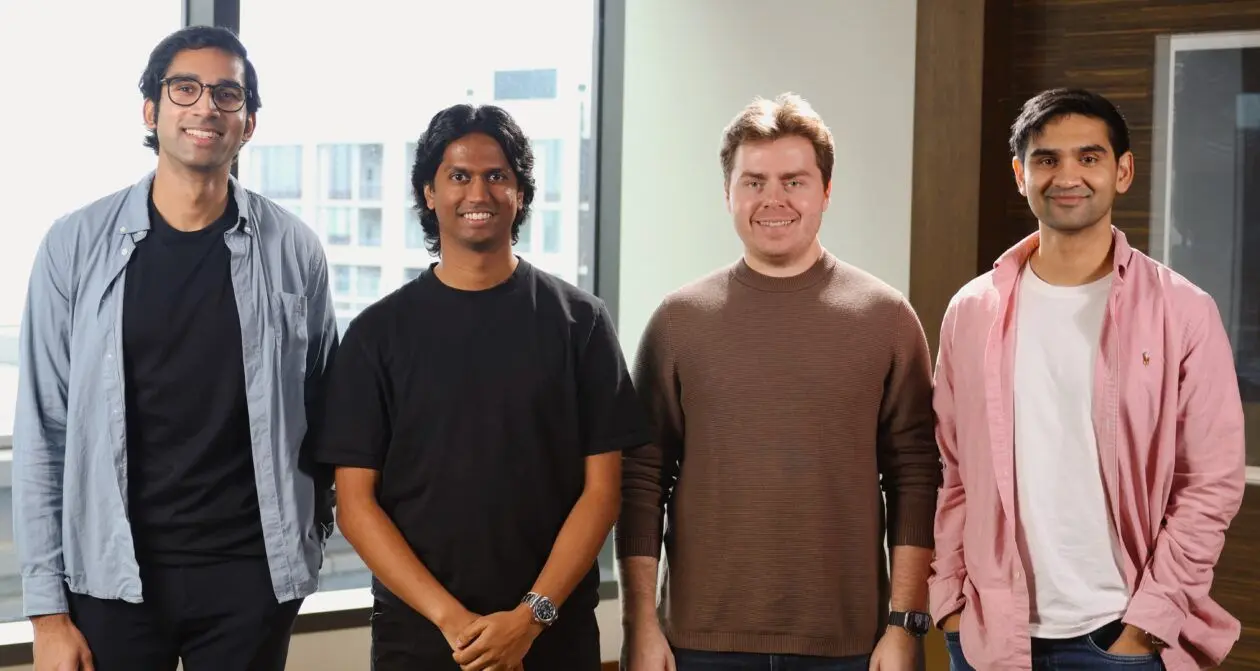
The four co-founders who launched Gradial in 2023 bring deep technical and strategic expertise from leading technology companies. CEO Doug Tallmadge previously worked as a software engineering manager at SpaceX, as did CTO Deip Kumar
1
. Chief growth officer Anish Chadalavada worked on AI strategy at Microsoft and on deep tech investments at Point72 Ventures, where COO Anup Chamrajnagar also worked3
.The 100-person company plans to deploy the Series C funding to hire across engineering, sales, and marketing as it scales to meet enterprise demand
1
. Gradial's bet on orchestration rather than point solutions positions it to capture value as enterprises deploy agentic tools for enterprise marketing faster than they can integrate them, and as the broader wave of AI agents moves from pilot projects into production systems that companies run daily2
.References
Summarized by

Navi
[1]
[2]
Related Stories
Integrail Secures $10M Seed Funding for No-Code Agentic AI Platform
13 Feb 2025•Technology

Gradium Emerges from Stealth with $70M to Revolutionize Voice AI with Ultra-Low Latency Models
02 Dec 2025•Startups

Multiply Raises $9.5M to Build AI Agents That Solve B2B Advertising's Decay Problem
18 Mar 2026•Startups

Recent Highlights



Recent Highlights
Today's Top Stories








Don’t drown in AI news. We cut through the noise - filtering, ranking and summarizing the most important AI news, breakthroughs and research daily. Follow topics that matter to you and stay ahead.


