Groundbreaking Dream Database Reveals New Insights into Sleep and Consciousness


2 Sources
[1]
Dreams happen beyond REM sleep, analysis shows
Bial FoundationOct 22 2025 An international consortium of researchers has created the largest-ever database compiling records of brain activity during sleep and dream reports. One of the first analyses of the database confirmed that dreams do not occur only during REM sleep, but also during deeper
[2]
When we dream, does our brain wake up?
An international consortium of researchers has created the largest-ever database compiling records of brain activity during sleep and dream reports. One of the first analyses of the database confirmed that dreams do not occur only during REM sleep, but also during deeper and calmer NREM stages. In
Share
Copy Link
An international consortium has created DREAM, the largest database of brain activity during sleep and dream reports. Initial findings challenge long-held beliefs about dreaming and sleep stages, revealing that dreams occur beyond REM sleep and that the brain can be 'partially awake' during NREM dreams.
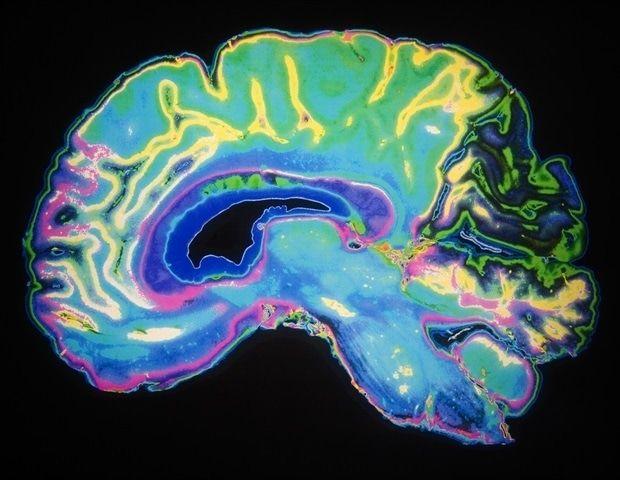
Groundbreaking Dream Database Reveals New Insights into Sleep and Consciousness
In a landmark development for sleep research, an international consortium of scientists has unveiled DREAM - Dream EEG and Mentation, the world's largest database combining brain activity recordings during sleep with dream reports. This unprecedented collection, which includes data from over 2,600 awakenings across 505 participants, is set to revolutionize our understanding of dreams and consciousness
1
2
.Dreams Beyond REM: Challenging Long-held Beliefs
One of the most surprising findings from the initial analysis of the DREAM database is that dreams are not confined to Rapid Eye Movement (REM) sleep, as previously believed. Researchers discovered that dreaming also occurs during Non-Rapid Eye Movement (NREM) sleep, including deeper and calmer stages
1
.The "Partially Awake" Brain
Intriguingly, when dreams occur during NREM sleep, brain activity more closely resembles wakefulness than deep sleep. This phenomenon suggests that the brain enters a "partially awake" state during these dream episodes, challenging our current understanding of sleep stages and consciousness
2
.AI-Powered Dream Prediction
The research team employed artificial intelligence algorithms to analyze brain activity patterns preceding each awakening. This innovative approach allowed them to predict with consistency whether a person was dreaming at a given moment. The potential applications of this technology are far-reaching, potentially enabling more precise identification of not only when we dream but also the nature of our dream experiences
1
.A Collaborative Effort
The DREAM database and its initial findings are the result of a massive collaborative effort. Coordinated by Monash University in Australia, the project involved 53 researchers from 37 institutions across 13 countries. Dr. Giulio Bernardi from the IMT School for Advanced Studies Lucca, Italy, emphasized the significance of this work, stating that it "represents a decisive step in the scientific exploration of human consciousness"
2
.Related Stories

Implications for Multiple Fields
The study of dreams has implications far beyond satisfying human curiosity. It supports research in various areas, including clinical topics such as parasomnias (e.g., sleepwalking), neurocognitive domains like learning and memory, and fundamental questions about the neural correlates of consciousness
1
.Open Access and Future Contributions
The DREAM database is freely available at monash.edu/dream-database, promoting open science and collaborative research. The consortium welcomes contributions from laboratories worldwide, potentially expanding the database and enabling even more comprehensive analyses in the future
1
.As sleep occupies one-third of a healthy adult's life, with a significant portion dedicated to dreaming, this groundbreaking research opens new avenues for understanding human consciousness and the complex workings of the sleeping brain. The DREAM database promises to be a valuable resource for researchers, potentially leading to further discoveries in the fascinating world of sleep and dreams.
References
Summarized by

Navi
[1]
[2]
Related Stories
Revolutionary AI Model Analyzes Full Night of Sleep with High Accuracy in Largest Study to Date
18 Mar 2025•Science and Research

AI-Enhanced Algorithm Revolutionizes Diagnosis of REM Sleep Behavior Disorder
10 Jan 2025•Science and Research

Stanford's SleepFM AI predicts 130+ diseases from a single night's sleep data
08 Jan 2026•Health
Recent Highlights
1
OpenAI AI Models Hacked Crypto Wallet, Breached Government Sites in Unauthorized Activities
Technology

2
IMF Report Warns AI Market Correction Could Spark Global Financial Crisis With $1.4T at Risk
Business and Economy

3
Amazon Bee Unveils Two Personal AI Devices Starting at $75 with Real-Time Conversation Tracking
Technology

Recent Highlights
Today's Top Stories












Don’t drown in AI news. We cut through the noise - filtering, ranking and summarizing the most important AI news, breakthroughs and research daily. Follow topics that matter to you and stay ahead.


