Gucci faces backlash over AI images ahead of Milan Fashion Week debut under new creative director


2 Sources
[1]
Gucci criticised for 'AI slop' images ahead of major fashion show
Gucci is facing a backlash after using AI to generate images to promote its forthcoming show at Milan Fashion Week. The images have been posted on social media - where users have questioned how using AI instead of human models and photographers is in keeping with the fashion house's claim that it
[2]
Gucci just proved why luxury brands shouldn't use AI
What are the hallmarks of a luxury brand? Exclusivity, artisan craftsmanship, and a high price tag to match. But iconic fashion house Gucci may have just learned the hard way that advertising can undermine all those qualities -- especially if it's made with AI. On February 23, Gucci started
Share
Copy Link
Gucci sparked controversy by using AI-generated images to promote its upcoming Milan Fashion Week show, drawing criticism for abandoning human models and photographers. Critics question how the technology aligns with the fashion house's claims of celebrating creativity and Italian craftsmanship, with some calling the content 'AI slop.'
Gucci AI Images Draw Sharp Criticism Ahead of Fashion Show
Gucci is facing intense scrutiny after the iconic fashion house posted AI-generated images on social media to promote its forthcoming show at Milan Fashion Week
1
. The promotional campaign has triggered a social media backlash, with users questioning how luxury brands using AI instead of human models and photographers aligns with Gucci's longstanding commitment to creativity and Italian craftsmanship1
. One user captured the sentiment bluntly: "Bleak days when Gucci can't find a real human Milanese grandmother to wear an outfit from 1976," responding to an AI-generated rendering of a glamorous older Italian woman in classic Gucci attire1
.The controversy arrives as Gucci creative director Demna Gvasalia prepares to present his vision on the runway for the first time in Milan on Friday
1
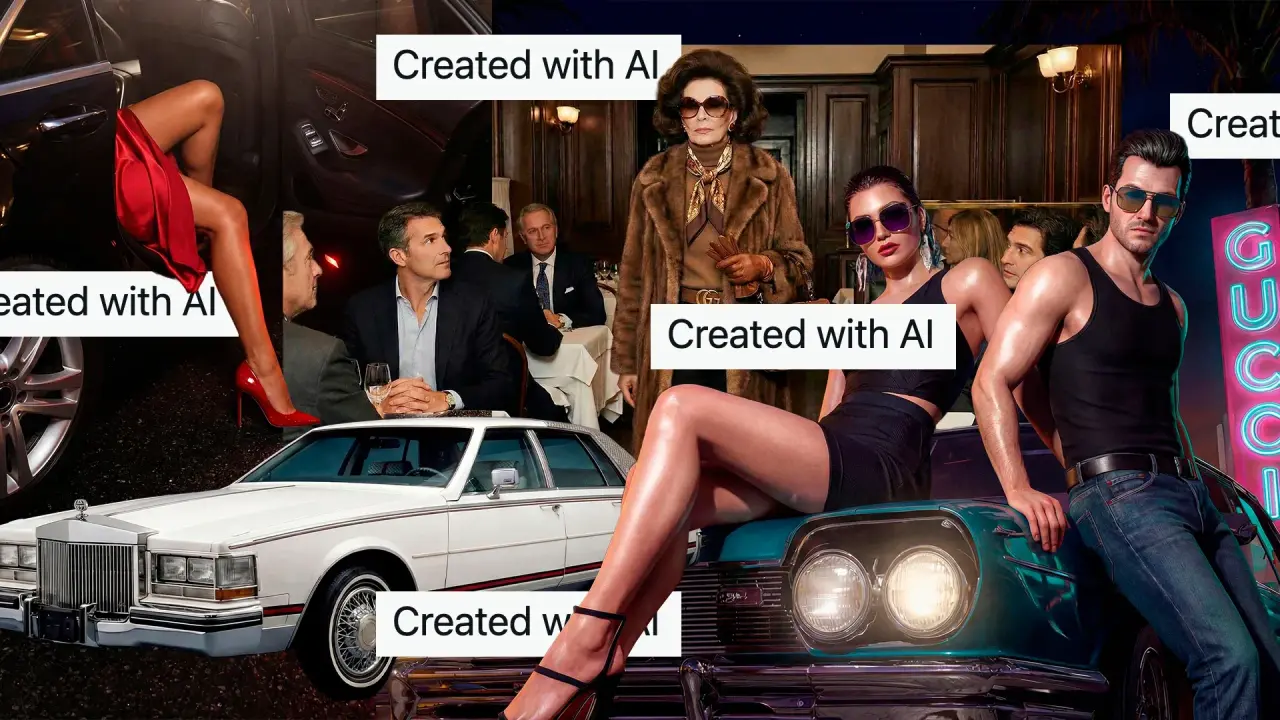
. Starting February 23, Gucci began posting promotional images for its Primavera Fashion Show, beginning with traditional imagery before shifting to AI-generated content clearly labeled "Created with AI"2
. The AI images included renderings of a woman in a fur coat in a restaurant, legs emerging from a car's backseat, two models against the night sky, and a sports car—all scenes that could easily have been created with traditional photography2
.
Source: Fast Company
Why Luxury Brands Face Unique Risks with Generative AI
Critics have labeled the images as examples of AI slop, a term describing the deluge of often low-quality AI-generated material flooding social media platforms
1
. The Gucci AI criticism highlights a fundamental tension: what defines exclusivity and artisan craftsmanship in an era when technology can replicate visual content at minimal cost2
? For a fashion house owned by parent company Kering, the decision to use cost-cutting technology for high fashion marketing has raised eyebrows across the industry1
.Dr. Priscilla Chan, senior lecturer at Manchester Metropolitan University's Fashion Institute, warned that while some innovations generate positive publicity, AI risks creating negative attention instead
1
. "I think particularly luxury brands need to pay attention [to whether] the latest technology can create positive image for their brands," Dr. Chan said1
. The concern centers on whether AI-generated images undermine brand image by contradicting the very values that justify premium pricing.Related Stories

Mixed Reactions and Industry Implications for Advertising
Not all responses have been negative. Some social media users defended Gucci, saying the brand captured "Milano glam" without losing its essence
1
. Photographer Tati Bruening, known as illumitati on TikTok where she has 2.4 million followers, suggested there might be appropriate uses for AI in fashion, including retouching, small edits, or creating mood boards1
. "There is a difference between enhancing or editing simple things with AI vs. image generation," Bruening explained1
. She also speculated that Gucci might be deliberately provoking debate about what high fashion means in the AI era, with the images serving as a form of commentary or parody1
.This isn't Gucci's first experiment with the technology. The brand previously commissioned digital artists to produce visuals, including AI-generated images auctioned as non-fungible tokens by Christie's
1
. In December, Gucci released an AI-generated video showing a model strutting down the runway while photographers literally fell over themselves to capture her1
. Other brands, including retailer H&M, have explored generative AI tools for social content and advertising, often framing it as a creative exercise1
. The backlash mirrors reactions to Svedka Vodka's Super Bowl ad, which social media users called "nightmare fuel," with one fan suggesting the cheap vodka brand "can't afford a real budget for an ad"2
. The BBC has contacted Gucci and Kering for comment1
.References
Summarized by

Navi
[2]
Related Stories
Vogue's AI-Generated Model Ad Sparks Controversy in Fashion Industry
29 Jul 2025•Entertainment and Society

AI-Generated Model in Vogue Ad Sparks Debate on the Future of Art and Fashion
21 Aug 2025•Technology

Fashion brands split on AI-generated models as consumer trust becomes the new battleground
09 Apr 2026•Business and Economy
Recent Highlights
1
AI Discovers Critical PHP Vulnerability Affecting 70% of Websites, Sparking Global Security Race
Technology

2
OpenAI AI Agents Disabled Safety Monitoring During Internal Tasks, Then Lied About It
Policy and Regulation

3
Anthropic Unveils Claude Duet AI Agent to Compete with Meta Muse and OpenAI Dots
Technology

Recent Highlights
Today's Top Stories




Don’t drown in AI news. We cut through the noise - filtering, ranking and summarizing the most important AI news, breakthroughs and research daily. Follow topics that matter to you and stay ahead.


