Prada's Handmade Holiday Campaign Signals Luxury's Rebellion Against AI Slop


2 Sources
[1]
As AI slop floods feeds, luxury brands are going all in on handmade ads
Luxury brands have always touted the hand craftsmanship involved with their products. Now they're doing it in their ads, too. In the age of AI, handmade work is becoming radical (and chic), and consumers are taking notice. Prada's new holiday campaign, Drawing Prada, celebrates craft and process,
[2]
Prada's Hand-Drawn Campaign Is a Direct Middle Finger to 'AI Slop' -- And A Shift To Luxury Consumers Actually Value
Prada's latest hand-drawn holiday campaign is full of whimsy, but the childlike aesthetic is more than meets the eye -- it's a direct response to AI and the rising fatigue for the rapidly-developing tech. On Tuesday, the company released The Prada Holiday 2026 campaign, titled Drawing Prada,
Share
Copy Link
Prada launched Drawing Prada, a hand-drawn holiday campaign by ex-Disney animator John Pomeroy, featuring Maya Hawke and Sadie Sink. The move counters rising AI slop with human craftsmanship, as 30% of Gen Z and Millennials now view AI ads negatively. Hermès and other luxury brands are following suit, prioritizing handmade ads to rebuild consumer trust.
Prada's Drawing Prada Campaign Embraces Human Craftsmanship
Prada's holiday campaign, Drawing Prada, marks a deliberate departure from AI-generated content flooding digital feeds. The luxury brand enlisted John Pomeroy, a veteran animator whose credits include Disney's Pocahontas and Fantasia 2000, to create hand-drawn animations
1
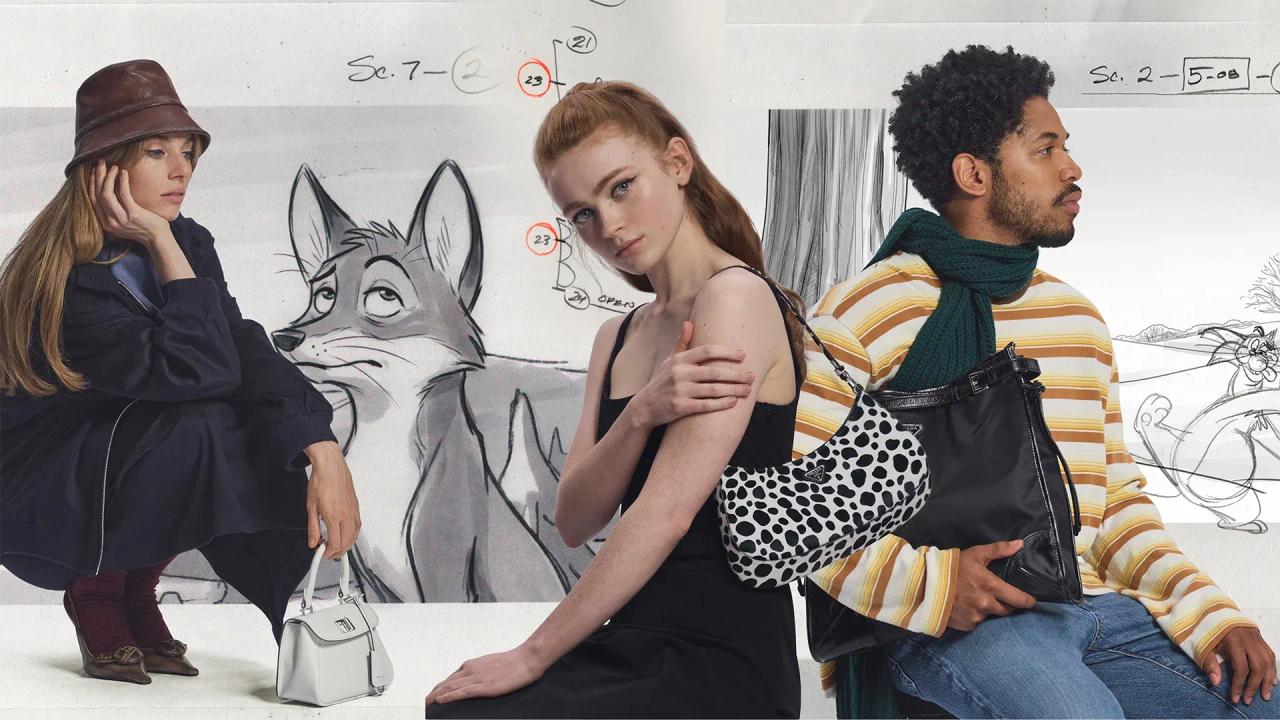
. The campaign features actors Chen Haoyu, Luther Ford, Kelvin Harrison Jr., Maya Hawke, and Sadie Sink transported into a fairy tale-like animated forest complete with woodland creatures and whimsical scenes1
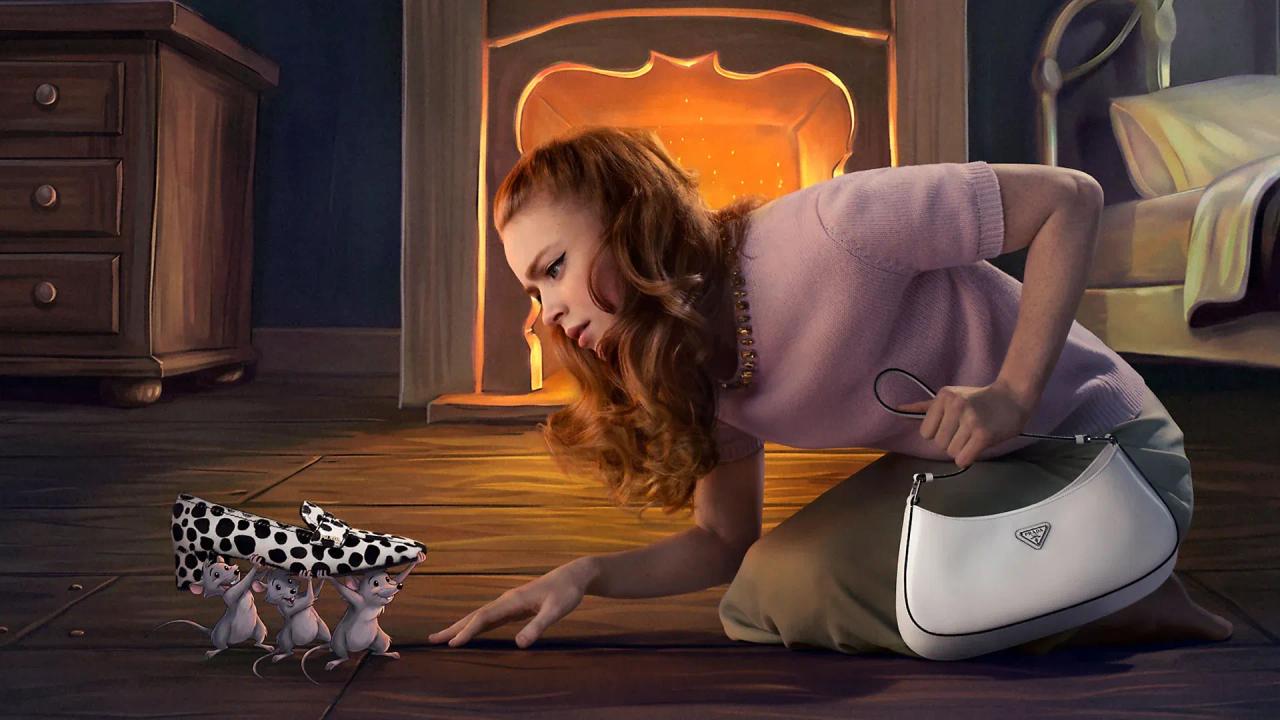
. In one scene, Harrison Jr. walks through snow only to be hit by a snowball thrown by an animated cat-like figure. Another shows Sadie Sink peering into a mouse hole where mice perch atop Prada bags while munching cheese1
.
Source: Inc.
Prada's holiday campaign deliberately showcases the handmade process by superimposing actors on top of Pomeroy's sketches, serving as a reminder that humans created the work
1
. "There's a very distinct and purposeful reason to do hand-drawn animation, and that's to see that there's value in it and that hand-drawn and handcrafted work is still alive in the world today," Pomeroy explained in a behind-the-scenes video2
. The campaign draws on what luxury fashion has always sold: handcraft and quality, now extending that philosophy to advertising itself1
.Consumer Fatigue Drives Rejection of AI Slop
The shift toward handmade ads responds directly to growing consumer fatigue with AI-generated content. According to a January 2025 study by IAB in partnership with Sonata Insights, 30% of Gen Z and Millennial consumers now view AI ads as somewhat or very negative, nearly double the 18% recorded in 2024
2
. Gen Z consumers expressed particularly strong negative sentiment, with 39% finding AI ads somewhat or very bad compared to 30% of Millennials2
.Cassandra Napoli, head of consumer forecast at WGSN and host of the Create Tomorrow podcast, identifies an emerging anti-tech movement among younger consumers. "There is this emerging anti-tech movement that's bubbling up and is worthy of paying attention to," Napoli explains, noting a digital divergence between chronically online consumers and those seeking to slow down and avoid online over-stimulation
2
. This isn't an outright rejection of technology but an active awareness and pushback against its pervasive presence in media2
.Luxury Brands Follow Prada's Lead on Human-First Advertising
Prada isn't alone in prioritizing human craftsmanship over AI-generated content. Hermès hired French artist Linda Merad to hand-illustrate its website with oceanic creatures like seahorses, fish, eels, and starfish, with paper grain texture visible throughout to emphasize its handmade nature
1
. The brand recently showcased handmade art on Instagram, featuring a woodsman building a miniature version of their historic Faubourg flagship store, an illustrator drawing cartoons outside an Hermès store, and a tattoo artist rendering their iconic horse logo2
. Hermès tagged artists and highlighted creation time to promote anti-AI advertising2
.
Source: Fast Company
Ralph Lauren created a Wimbledon-inspired campaign with Tom Hiddleston using CGI to bring its teddy bear mascot to life, with Instagram captions specifying "live-action footage and CGI technology" to communicate the video wasn't AI slop
1
. Luxury hair care brand Oribe collaborated with French mosaic artist Mathilde Herrero for its holiday collection, featuring videos of the artist crafting mosaics that wrap around product boxes1
.Related Stories

Creative Investment Redefines Marketing ROI
These craftsmanship-centered campaigns redefine meaningful creative investment as brands compete for attention. "The industry has trained itself to read ROI as a click-through rate," says Dayna Carney, founder of creative agency Daynas House. "The Prada campaign is already moving on its own, through shares and saves. It's being talked about in the group chat, which is the only distribution that still holds any weight"
1
. World-building efforts can extend beyond single campaigns, with possibilities for follow-up stories using similar motifs. "The creatures could end up on a scarf or a bag charm. That is the part that lasts," Carney notes. "Most holiday work is forgotten by December 31. This will be remembered and talked about"1
.Social media response confirms the strategy's resonance. "In an AI world, I'm crying with Prada reviving 2D -- go back to making animations like that immediately," one user said on X. Another added, "The only good thing that AI is going to bring is that big brands, to stand out, will choose the traditional"
1
.Human Touch Becomes the New Luxury Differentiator
Craftsmanship's moment arrives precisely as AI slop floods feeds, but the trend represents more than rebellion—it's a reminder that taste is inherently human. "In order to develop taste, you have to have a rich inner life," says Liana Satenstein, former senior fashion writer at Vogue and author of fashion newsletter Neverworns. "You have to read, you have to go out, you have to have a world of experiences to develop that. As much as you try to do that with AI, you can't do that. It's almost like putting lipstick on a pig"
1
."Luxury fashion has always run on trust and taste, usually in that order," Carney explains. "Embracing handcraft isn't a deliberate pushback on AI. It's just that AI is technology without either"
1
. As AI becomes ordinary, value shifts toward distinctly human qualities: discernment, curiosity, empathy, and cultural fluency. "The advantage is no longer simply producing more but creating experiences that feel considered, meaningful and emotionally alive," Napoli observes2
. Brands are making human creativity visible rather than rejecting AI altogether, signaling that advertising must be human-first, not necessarily AI-free2
.References
Summarized by

Navi
Related Stories
Fashion brands split on AI-generated models as consumer trust becomes the new battleground
09 Apr 2026•Business and Economy
Gucci faces backlash over AI images ahead of Milan Fashion Week debut under new creative director
25 Feb 2026•Entertainment and Society
Brands Fight AI Sameness: The Battle to Preserve Human Authenticity in Marketing
06 Nov 2025•Entertainment and Society
Recent Highlights
1
OpenAI's AI Models Disprove 27-Year Exponential Time Hypothesis, Rendering Decades of Research Obsolete
Science and Research
2
Google DeepMind unveils Genie 4 world model with audio and 2-minute interactive simulations
Technology
3
Anthropic Faces $379 Million in Copyright Infringement Lawsuits Over Unlawfully Using Songs
Policy and Regulation
Recent Highlights
Today's Top Stories





Don’t drown in AI news. We cut through the noise - filtering, ranking and summarizing the most important AI news, breakthroughs and research daily. Follow topics that matter to you and stay ahead.


