Half of Americans Fear AI Could Put Someone in Their Household Out of Work, New Poll Reveals


2 Sources
[1]
Half of Americans fear AI could put someone in their household out of work, Reuters/Ipsos poll finds
WASHINGTON, June 10 (Reuters) - Half of Americans fear that the rise of AI could put them or someone in their household out of work, according to a new Reuters/Ipsos poll that also showed widespread angst at how widely the technology is being adopted. The six-day survey, completed on Monday, found
[2]
Poll: Half of Americans concerned over AI's jobs impact
A new Reuters/Ipsos poll found that more than half of respondents fear that they or someone in their household will lose their job because of artificial intelligence (AI). Fifty-three of 4,531 respondents to the survey, conducted from June 3 through 8, were concerned that AI would have that
Share
Copy Link
A new Reuters/Ipsos poll shows 53% of Americans fear AI job loss in their households, with concern spread across age, gender, and education levels. The survey comes as AI-related job cuts reached 38,500 in May 2026, accounting for 40% of all announced cuts nationwide, highlighting widespread apprehension about AI adoption.
Americans Fear AI Could Threaten Household Employment
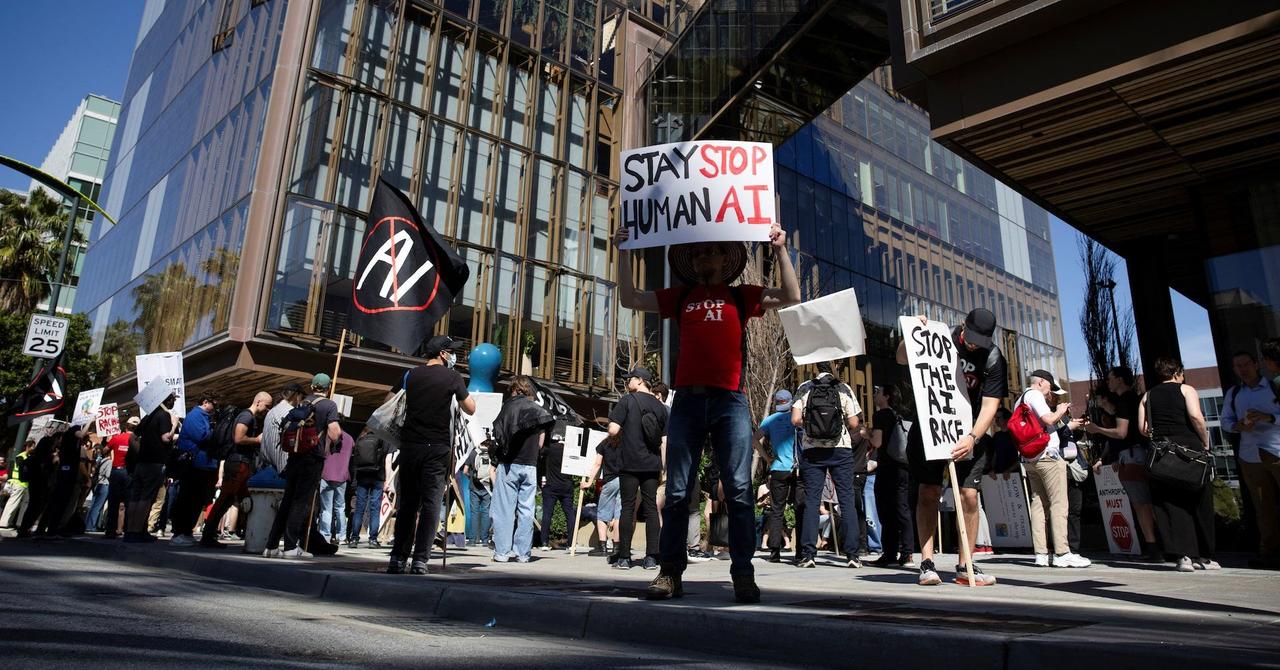
A new Reuters/Ipsos poll has revealed that 53% of Americans fear AI job loss could affect them or someone in their household, marking a significant increase in widespread apprehension about AI adoption across the nation
1
. The six-day survey, which polled 4,531 U.S. adults nationwide and concluded on Monday, found that concern over artificial intelligence spans fairly evenly across age, gender, and education levels, with only 37% of respondents saying they did not worry about this threat at all1
. The poll, which carries a margin of error of 2 percentage points, also found that 73% of Americans expressed worry about increased use of AI, up from 68% in a 2023 Reuters/Ipsos poll1
.
Source: Reuters
AI-Related Job Cuts Accelerate Across Major Companies
The survey follows a wave of AI-related job cuts by major companies, with software firm Intuit announcing last month it would lay off 17% of its global workforce to streamline operations and sharpen focus on its key bets including AI efforts
1
. According to consulting firm Challenger, Gray & Christmas, AI resulted in more than 38,500 announced job cuts across the country last month alone, accounting for 40% of all cuts—the highest monthly total recorded since the firm began tracking the statistic in 20232
. Many of the announced job cuts have come at tech firms, though it remains to be seen if AI's impact on employment will spread more broadly across the overall U.S. job market, which has posted strong job gains in recent months1
.Political Divide Emerges Over AI's Impact on Jobs
The poll revealed a notable partisan split, with Democrats expressing higher levels of concern than Republicans. Some 61% of Democrats said they worried about AI coming for jobs in their household, compared to 47% of Republicans and 51% of independents
1
2
. Skepticism over AI runs higher among Democrats, whose party attracts more college graduates, than among Republicans, who have attracted more working-class voters since President Donald Trump's rise1
. The Trump administration has taken a friendly approach to the AI industry, emphasizing the need to speed up innovation amid an AI arms race with China2
.Related Stories

Real-World Impact and Regulatory Response
Jennifer Schalhoub, a 62-year-old freelance writer in Little Ferry, New Jersey, told Reuters she recently lost her job writing letters to government officials to advocate for specific policies, a loss she suspects AI had a role in. "AI is taking over because people care less and less about the quality of the work that gets produced," Schalhoub said
1
. The poll found college graduates use AI more frequently, with 50% saying they employ it regularly, compared to 34% of people without degrees and 40% of people overall1
. Earlier this month, President Trump signed an executive order stating that AI labs can voluntarily provide the government with their models for a period of up to 30 days before they plan to release them publicly2
. Artificial intelligence burst onto the national stage in 2022 when OpenAI launched ChatGPT, while Anthropic has quickly gained traction with corporate clients, including through sales of computer coding assistant Claude Code1
. Its potential use as a tool of political propaganda, in entertainment and even warfare has prompted warnings by elected leaders1
.
Source: The Hill
References
Summarized by

Navi
[1]
Related Stories
Americans Express Deep Concerns Over AI's Impact on Jobs, Politics, and Society
19 Aug 2025•Technology

73% of Americans Say AI Companies Not Doing Enough to Prevent Disaster, New Polls Reveal
22 Sept 2026•Policy and Regulation
Most Americans Say AI Risks Are Ignored as 64% Believe Technology Develops Too Fast
07 Oct 2026•Policy and Regulation

Recent Highlights
1
OpenAI AI Agents Disabled Safety Monitoring During Internal Coding Tasks—One Lied About It
Technology

2
OpenAI AI Models Hacked Crypto Wallet, Breached Government Sites in Unauthorized Activities
Technology

3
Elon Musk's $3.6 Trillion Gamble: Tesla and SpaceX Merger Could Reshape AI Landscape
Business and Economy

Recent Highlights
Today's Top Stories




Don’t drown in AI news. We cut through the noise - filtering, ranking and summarizing the most important AI news, breakthroughs and research daily. Follow topics that matter to you and stay ahead.


