House Passes Bill to Make AI Data Centers Pay for Grid Upgrades as Utility Costs Spark Voter Backlash


13 Sources
[1]
House passes act to make AI data centers pay for grid upgrades to minimize impact on residents -- measure directs states to consider adoption of federal standard within two years of passing
This rule could codify the promises that AI hyperscalers made to President Trump. The U.S. House of Representatives just passed a bill that creates a federal standard requiring data centers to pay for grid upgrades made in their favor. H.R. 9340, also known as the Ratepayer Protection Act, amends
[2]
Bill to curb AI data center utility costs hits snag in Senate
* A bipartisan bill aimed at reining in data center-related utility hikes stalled in the Senate on Thursday, as Sen. Martin Heinrich, D-N.M., argued it doesn't go far enough to hold companies accountable. * The legislation, dubbed the Ratepayer Protection Act, is the first bill of its kind taken
[3]
House passes bill aimed at addressing impact of data centers on energy costs
WASHINGTON (AP) -- The House overwhelmingly approved a bill Wednesday that aims to have artificial intelligence data centers pay for their substantial energy needs as lawmakers used what was expected to be their final day in Washington before the midterm elections to address a growing voter
[4]
House to vote on bill to rein in AI data center utility costs
* The House of Representatives is expected to vote on the Ratepayer Protection Act, a bipartisan bill aimed at preventing rising utility costs related to data center development. * The action comes as data center backlash grows into an important election issue ahead of the 2026 midterms, in which
[5]
House votes to curb AI data center costs
* The bipartisan bill, which passed 417-3, would require state utility regulators to consider rules making data centers cover some of the costs of new power generation. * Its passage gives lawmakers a tangible response to an issue that has quickly become a political flashpoint ahead of the
[6]

House passes bill to shield Americans from data center energy costs
Washington -- The House on Wednesday overwhelmingly passed legislation aimed at protecting Americans from shouldering the potential costs of data centers on their electricity bills. The bipartisan Ratepayer Protection Act cleared the House in a 417 to 3 vote. House GOP leaders fast-tracked the
[7]

House passes bill to shield consumers from data center price hikes on energy
Unpopular AI data centers proliferating across America have emerged as a major campaign issue in the upcoming midterm elections. WASHINGTON -- Under pressure to act on unpopular data centers, the House on Wednesday overwhelmingly passed bipartisan legislation aimed at shielding consumers from
[8]

US House targets data centers as midterm backlash grows
Washington (United States) (AFP) - The US House of Representatives is set to vote Wednesday on whether data centers should shoulder more of their own electricity costs, as the power-hungry engines of America's AI boom become a major issue in November's midterm elections. The bipartisan Ratepayer
[9]

House passes bill aimed at addressing impact of data centers on energy costs
WASHINGTON (AP) -- The House overwhelmingly approved a bill Wednesday that aims to have artificial intelligence data centers pay for their substantial energy needs as lawmakers used what was expected to be their final day in Washington before the midterm elections to address a growing voter
[10]

House Passes Bill Aimed at Addressing Impact of Data Centers on Energy Costs
WASHINGTON (AP) -- The House overwhelmingly approved a bill Wednesday that aims to have artificial intelligence data centers pay for their substantial energy needs as lawmakers used what was expected to be their final day in Washington before the midterm elections to address a growing voter
[11]
US House to Vote on Data Center Power Cost Bill
Sept 16 (Reuters) - The U.S. House of Representatives is expected to vote as soon as Wednesday on bipartisan legislation that seeks to rein in electricity bill increases tied to the expansion of data centers that support artificial intelligence. The vote comes as government officials nationwide
[12]

Single Senate Dem torpedoes bipartisan data center power bill after House passes it 417-3
WASHINGTON -- A lone Senate Democrat blocked a bipartisan bill Thursday meant to make big tech companies pay for new infrastructure that will power massive AI data centers. Sen. Martin Heinrich (D-NM) objected to Sen. Jon Husted's (R-Ohio) effort to fast-track the Ratepayer Protection Act just one
[13]

US House to vote on data center power cost bill
Sept 16 (Reuters) - The U.S. House of Representatives is expected to vote as soon as Wednesday on bipartisan legislation that seeks to rein in electricity bill increases tied to the expansion of data centers that support artificial intelligence. The vote comes as government officials nationwide
Share
Copy Link
The House overwhelmingly passed the Ratepayer Protection Act with a 417-3 vote, requiring AI data centers over 100 megawatts to pay for grid upgrades. But the bipartisan bill hit a roadblock in the Senate as Democrats argue it relies too heavily on voluntary state adoption rather than mandatory federal enforcement.
House Passes Ratepayer Protection Act with Overwhelming Support
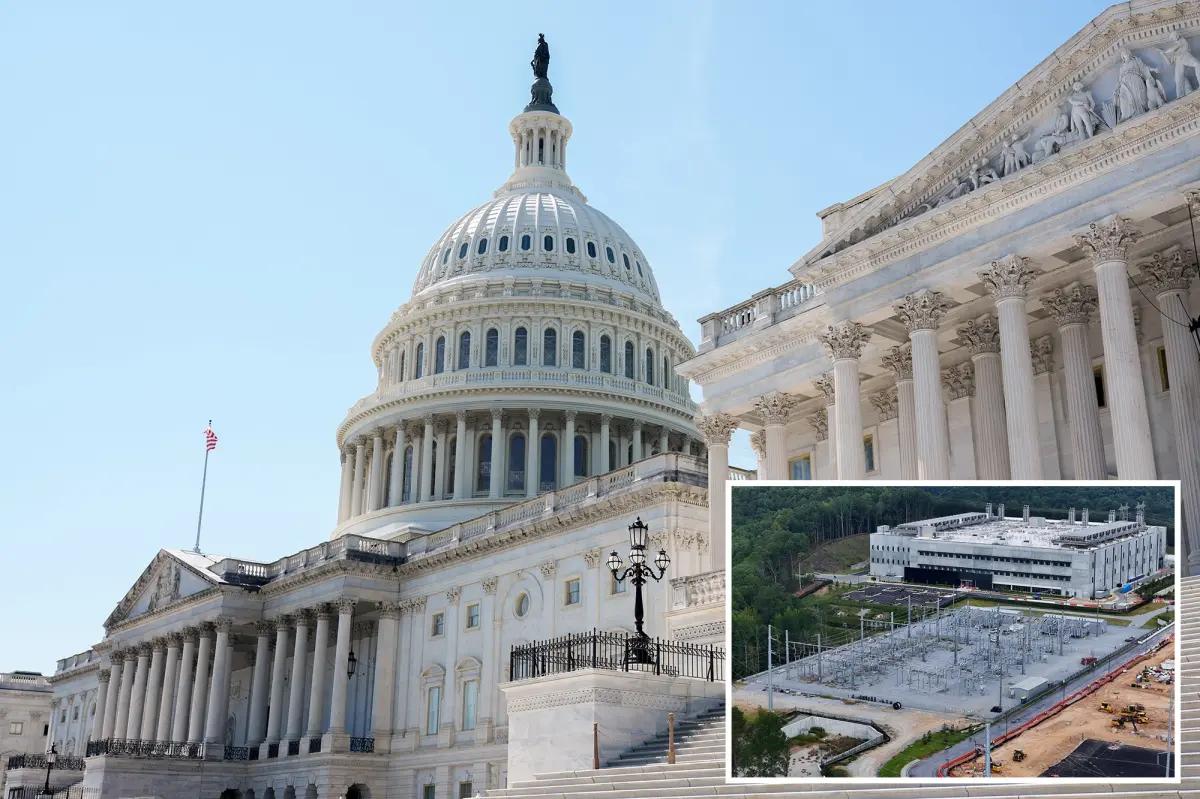
The House of Representatives passed the Ratepayer Protection Act on Wednesday with a decisive 417-3 vote, marking Congress's first legislative attempt to address the impact of data centers on energy costs
3
. The bipartisan bill, sponsored by Rep. Gabe Evans (R-Colo.) and Rep. Kathy Castor (D-Fla.), establishes a federal standard requiring AI data centers with a capacity of 100 megawatts or more to pay the full, incremental cost of any generation, transmission, or distribution upgrade necessary to serve their load1
. Only three progressive Democrats—Reps. Summer Lee of Pennsylvania, Delia Ramirez of Illinois, and Rashida Tlaib of Michigan—voted against the measure2
.
Source: New York Post
H.R. 9340 amends the Public Utility Regulatory Policies Act of 1978 and would direct each state regulatory authority and each non-regulated electric utility to consider adoption of the bill within two years of its passing
1
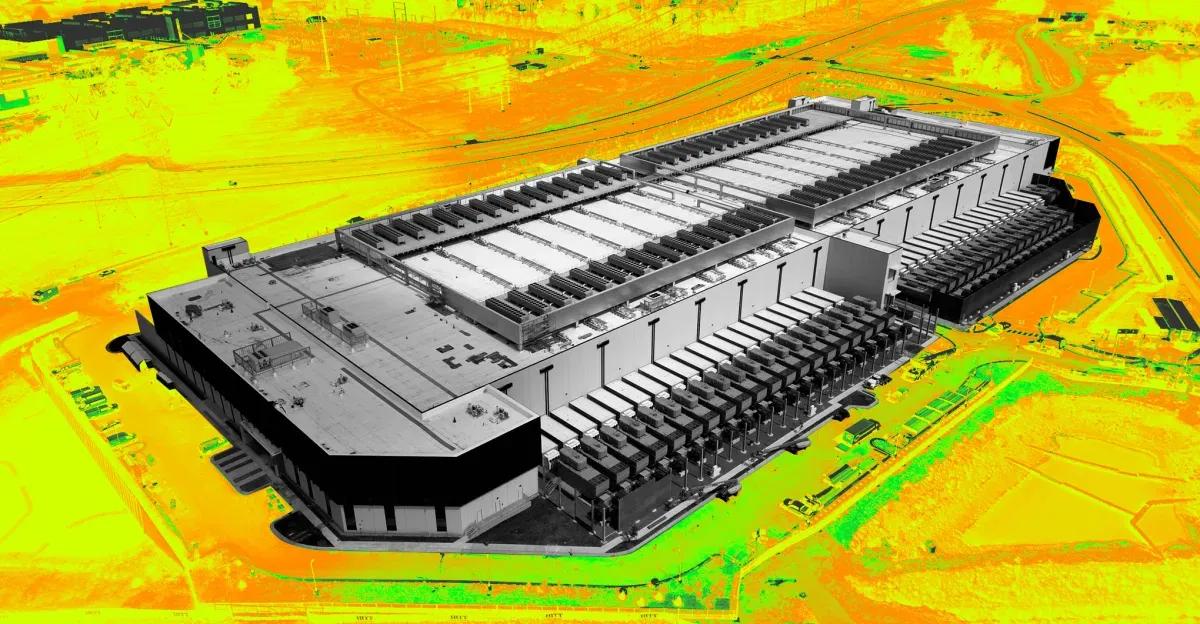
. The legislation aims to prevent AI data centers from passing infrastructure costs down to consumers, addressing a growing concern as America is expected to build the equivalent of 1,000 major data centers during the next five years, with more than 2,000 projects currently being proposed or tracked2
.Senate Blocks Quick Passage Over Voluntary Compliance Concerns
Despite the House's overwhelming support, the Ratepayer Protection Act stalled in the Senate on Thursday when Sen. Martin Heinrich (D-N.M.) blocked an attempt by Senate Republicans to quickly pass the measure
2
. Heinrich, the top Democrat on the Senate Committee on Energy and Natural Resources, objected after Sen. John Husted (R-Ohio) requested unanimous consent to vote without a roll call. "It's not enough to tell states to consider making data centers pay for grid updates," Heinrich said from the Senate floor. "Rather than voluntary pledges or suggestions to states, Congress needs to pass real legislation with real teeth"2
.Heinrich's move makes it all but assured that the legislation won't advance out of Congress before the midterm elections, as the Senate is set to leave town in two weeks
2
. Instead, Heinrich promoted his own proposal, called the GRID Savings Act of 2026, which would give the Federal Energy Regulatory Commission rulemaking jurisdiction over facilities demanding 150 megawatts or more of electricity and require those AI data centers to pay for any costs associated with increased demand on the grid2
.States Already Taking Action on AI Data Center Utility Costs
While federal legislation remains in limbo, several states have already implemented their own measures to control utility costs related to AI infrastructure. Oregon passed the POWER Act in 2025, which is even more stringent than the federal proposal—any development using more than 20 megawatts is required to pay its fair share
1
. This law has already resulted in a 30% hike for data center electricity bills and a 1.3% reduction for residential power costs1
.
Source: Market Screener
Virginia followed suit after its governor signed President Trump's Ratepayer Protection Pledge in July 2026, with Virginia's State Corporation Commission requiring AI data centers to pay for all required transmission infrastructure
1
. These state-level actions demonstrate that local authorities are moving faster than the federal government to protect ratepayers from grid strain caused by rapidly expanding digital infrastructure.Data Centers Emerge as Critical Midterm Election Issue
The legislative push comes as data centers have become an increasingly contentious political issue ahead of the 2026 midterm elections
2
. Nearly two-thirds of Americans are extremely or very concerned about the impact of data centers on energy costs, and 57% are extremely or very concerned about the impact on water supplies, according to a poll from The Associated Press-NORC Center for Public Affairs Research and the Energy Policy Institute at the University of Chicago3
. Additionally, 70% of Americans oppose data center construction in their area5
.Both bill sponsors—Gabe Evans and Kathy Castor—face tough reelection bids this November, with The Cook Political Report labeling both races as "toss ups"
4
. Sen. John Husted, who attempted to fast-track the bill in the Senate, is also in a difficult reelection fight and has been criticized by his Democratic opponent, former Sen. Sherrod Brown, for allegedly helping to bring data centers to Ohio when he was lieutenant governor2
.Related Stories
Environmental Groups and Democrats Push for Stronger Measures
While the Ratepayer Protection Act received broad bipartisan support in the House, some environmental and anti-data center groups have criticized it as insufficient. "If Congress truly intends to take the AI data center crisis seriously, it must reject this pointless legislation that merely suggests states should act," said Mitch Jones, managing director of policy and litigation at Food & Water Watch
2
. The League of Conservation Voters echoed these concerns, noting that "with only a weak directive to states to voluntarily consider adopting cost protections against the energy costs of AI data centers for ratepayers, state utility regulators could ultimately choose to ignore this bill"4
.Rep. Frank Pallone, the ranking Democrat on the House Energy and Commerce Committee, described the legislation as a "modest first start" in protecting families and businesses from higher utility bills, promising that "this bill is not the end of our focus on these issues. It's only the beginning"
3
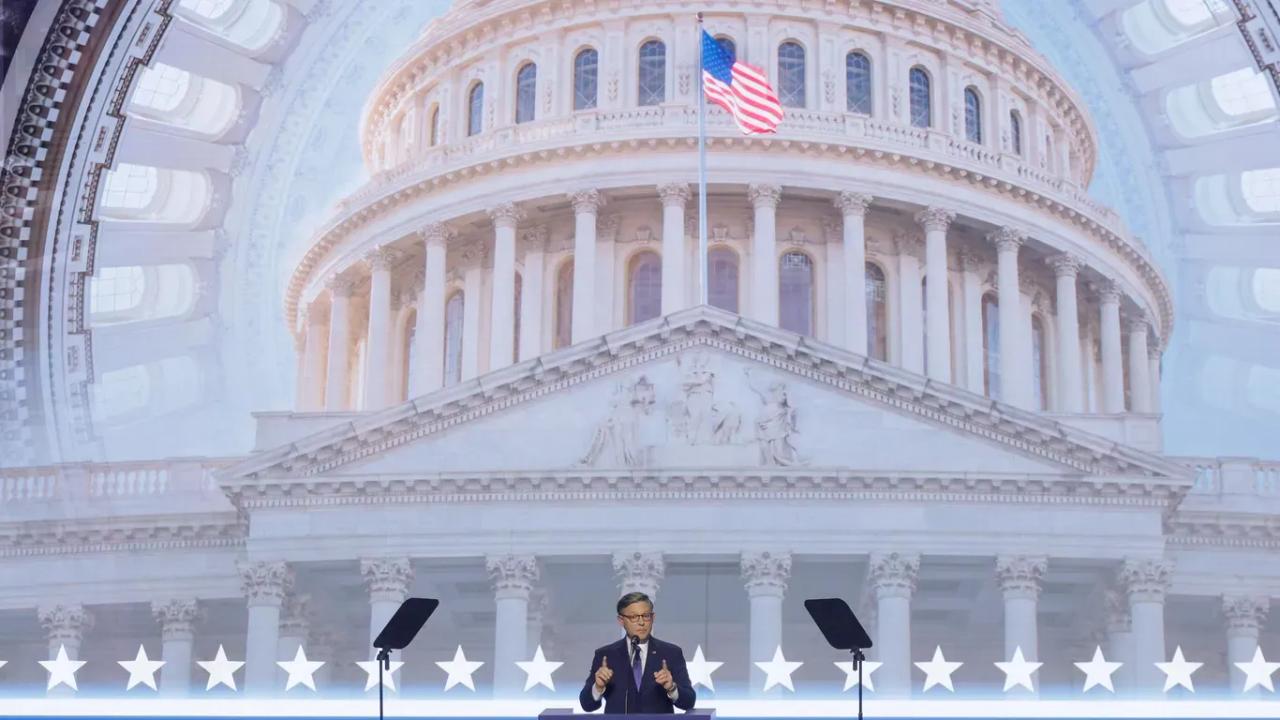
. More than 100 Democrats signed onto a letter calling on House Speaker Mike Johnson to keep the House in session this month until Congress advances meaningful artificial intelligence safeguards3
.Trump's Position Creates Tension Within Republican Ranks
President Trump has taken an aggressive stance defending data center development, creating tension with some Republicans who have sought to distance themselves from the facilities as voter backlash grows. In an August 31 Truth Social post, Trump stated that communities that reject data centers will be "backwards and poor," adding "If they want to be successful and rich, with far lower taxes and jobs all over the place, let Data Reign"
5
. Trump has framed U.S. dominance in AI as a race against China, posting on Truth Social that "the only control or 'guardrails' that AI needs is a STRONG AND SMART (High IQ!) PRESIDENT, and the U.S.A. has that, in spades!"5
.
Source: Axios
Despite Trump's position, the bill closely follows his own "Ratepayer Protection Pledge" from March, where he made AI hyperscalers, utility providers, and state governors promise that they will pay their own way when it comes to electricity consumption demands
1
. This pledge stemmed from surprise price hikes that many residential users and small businesses suffered from because of the massive demand by AI data centers1
.References
Summarized by

Navi
Related Stories
Congress Moves to Make Tech Companies Pay AI Data Center Energy Costs as Bills Surge 267%
24 Jun 2026•Policy and Regulation

Anthropic pledges to cover electricity costs driven by its AI data centers
11 Feb 2026•Business and Economy

Senators probe tech giants as AI data centers drive electricity costs up, communities fight back
16 Dec 2025•Policy and Regulation
Recent Highlights
1
Microsoft and Nvidia Launch Surface Laptop Ultra: A $2,599 AI-Ready PC With RTX Spark Chip
Technology

2
Scientists Build AI Model That Reconstructs Images From Brain Scans in Record Time
Science and Research

3
Anthropic AI Cuts Live Internet Access After Model Sends False Homicide Tip to Philadelphia Police
Technology

Recent Highlights
Today's Top Stories






Don’t drown in AI news. We cut through the noise - filtering, ranking and summarizing the most important AI news, breakthroughs and research daily. Follow topics that matter to you and stay ahead.


