3 Sources
3 Sources
[1]
HP wants your next work PC to be an AI assistant
Serving tech enthusiasts for over 25 years. TechSpot means tech analysis and advice you can trust. With the rapid rise of autonomous agents like OpenClaw and Anthropic's Claude Work, along with the wide range of opinions about their impact on the future of work, it is not surprising to see renewed interest in workplace PCs. Add to that Intel's recent release of commercial vPro versions of its Core Ultra 3 CPUs (Panther Lake), and the result is a timely wave of business PC news. HP has timed this to roll out a broad update across its commercial lineup during its annual HP Imagine event. The company introduced refreshed ProBook and EliteBook notebooks, ZBook mobile workstations, Z-series desktops, and a mix of supporting software and services, all framed around the evolving role of PCs in modern work environments. HP also pointed to survey data underscoring how critical reliable PCs and printers remain for productivity. Most of HP's new commercial systems are built around Intel's Core Ultra Series 3 chips. That said, the company opened with something different: the EliteBook 6 G2q, powered by Qualcomm's Snapdragon X2 platform. HP is positioning it as the "world's most configurable Arm-based PC," with options ranging from a 12-core X2 Elite to 6- and 10-core X2 Plus variants. Buyers can configure memory and storage extensively, and add options like HP Go cellular service and a Qualcomm 5G modem. HP ZBook 8 G2a HP also showed Intel and AMD versions of the same design, which is now 15% thinner than the previous generation. Elsewhere in the lineup are the EliteBook 8 G2 and ProBook 4 G2, each offering different form factors, display sizes, and silicon options. Workstations also received updates. HP introduced new ZBook models, including the ZBook 8 G2 with both Intel and AMD CPU configurations, alongside the Intel Core Ultra Series 3-based ZBook X. As expected, these systems can be outfitted with Nvidia discrete GPUs, though Intel's upgraded Xe3 integrated graphics, with up to 12 cores, are now a more viable option for certain workloads. On the desktop side, the redesigned Z8 Fury G6i stands out. It supports the latest Intel processors and can be configured with up to four Nvidia RTX Pro 6000 GPUs. HP also previewed a more forward-looking design tweak: an optional side panel, compatible with the Z4 as well, that increases internal volume by up to 15% to accommodate larger next-generation GPUs and additional cooling. The company also updated its ZBoost software, which allows idle GPUs on networked workstations to be pooled for distributed workloads. The latest version expands support to rendering applications like Catia, TwinMotion, and Siemens NX, while continuing to support AI workloads introduced earlier. One of the more interesting announcements was HP IQ, a new software platform set to enter beta later this spring. It is designed as a local AI assistant, accessed through a pull-down interface at the top of the screen. Queries are processed by an on-device model that can tap into local data. Alongside standard features like writing assistance, summarization, and transcription, IQ introduces a set of proximity-based features under the HP NearSense umbrella. Built on Google's D2DI (Device-to-Device Infrastructure) standard, NearSense enables simplified local connectivity. One feature allows users to discover nearby devices and share files without traditional setup steps. Another integrates with HP's Poly conferencing hardware, letting IQ-enabled PCs automatically connect to meetings when entering rooms equipped with supported Poly Studio systems. These are not major breakthroughs on their own, but they hint at the kind of seamless interactions vendors are trying to build into modern PCs. As a big believer in the potential of on-device AI, I love the concept of what HP is doing with IQ - and it's great to see an application that will actually leverage the NPU of newer AI PCs as IQ does. Still, enterprise adoption is likely to be gradual. IT teams tend to be cautious with anything resembling autonomous agents, even if IQ does not offer the same level of open-ended control seen in tools like OpenClaw. There are also ecosystem considerations. IQ is launching as an HP-exclusive feature, which can complicate deployment in mixed hardware environments. It also depends on HP's Work Experience Platform (WXP), where organizations manage policies and controls. While WXP brings device management and telemetry features, it enters an already crowded space where many companies have established solutions in place. Even with those hurdles, HP's approach with IQ is worth watching. The interface offers a relatively straightforward way to integrate agentic AI into everyday workflows, and it could become more compelling as local models improve. Beyond AI, HP also emphasized security. The company introduced TPM Guard, now integrated across its latest PCs and workstations. The feature addresses a known weakness where BitLocker-encrypted data can be accessed through low-cost hardware attacks. TPM Guard mitigates this by encrypting communication between the CPU and the Trusted Platform Module. For security-focused environments, that closes a meaningful gap. Combined with Intel's DTECT malware detection technology, included in vPro-enabled Core Ultra Series 3 systems, the latest generation of PCs adds another layer of protection. DTECT uses AI models alongside NPUs and GPUs to detect threats in real time. For years, commercial PCs have not drawn much attention outside enterprise refresh cycles. However, with the ability to run more powerful AI tools, perform on-device AI, and start thinking about autonomous agents, these systems are starting to feel relevant again. As HP demonstrated at Imagine, it is very much in the thick of these developments, and this year's commercial PCs and workstations open up some very interesting opportunities. Bob O'Donnell is the founder and chief analyst of TECHnalysis Research, LLC a technology consulting firm that provides strategic consulting and market research services to the technology industry and professional financial community. You can follow him on Twitter @bobodtech
[2]
HP refreshes EliteBook lineup and introduces new AI workstations
The new devices are built for local AI workloads and modern hybrid work. HP has unveiled a new lineup of EliteBook laptops and Z-series workstations, and the message is pretty clear: everything is now about AI. Announced at HP Imagine 2026, the company introduced devices like the EliteBook 6 G2q and updated ZBook mobile workstations. The new machines are all designed to handle local AI workloads, hybrid work, and enterprise-grade security. This isn't just a spec bump, but instead a shift toward making AI a core part of everyday computing. What's new with the EliteBook lineup? The highlight here is the new EliteBook 6 G2q, which HP is positioning as a next-gen AI PC. It comes powered by Snapdragon X2 Elite and X2 Plus processors, with up to 85 TOPS of NPU performance, enabling fast, on-device AI tasks without relying heavily on the cloud. HP says the laptop is designed for mobile professionals and office users, combining strong performance with long battery life, always-on connectivity, and a lightweight design. It also integrates enterprise security features like HP Wolf Pro Security and physical intrusion detection to protect sensitive data. In short, it's a business laptop that's trying to do more thinking on-device. What about the new workstations? HP is also doubling down on performance with its updated ZBook mobile workstations. Models like the ZBook X G2i and ZBook 8 series are built for heavy AI workloads, creative tasks, and complex simulations, offering configurations with AMD and Intel processors, scalable memory, and both integrated and discrete graphics. The key idea here is flexibility, that these powerful machines can handle demanding workloads, but are still portable enough for hybrid work setups. HP isn't just upgrading hardware, but it's also adding a layer of smarts with HP IQ, an AI system designed to connect devices and workflows. Paired with NearSense, it lets devices talk to each other seamlessly, enabling things like instant file sharing and smoother cross-device work without relying on the cloud. For users, this means a shift toward AI-first computing that happens locally on the device, making things faster, more private, and more reliable.
[3]
HP Imagine 2026 in New York: AI PCs, security push, and a bigger bet on hybrid work
HP Imagine 2026 centered on the company's push to bring AI deeper into everyday work experiences through its devices and software ecosystem. It unveiled new AI-powered PCs, including models designed to run more tasks locally, along with features like contextual search, meeting assistance, and seamless device connectivity. The company also introduced upgrades in security, focusing on protecting data as AI usage grows, and expanded its enterprise tools to help IT teams manage systems more proactively.
Share
Share
Copy Link
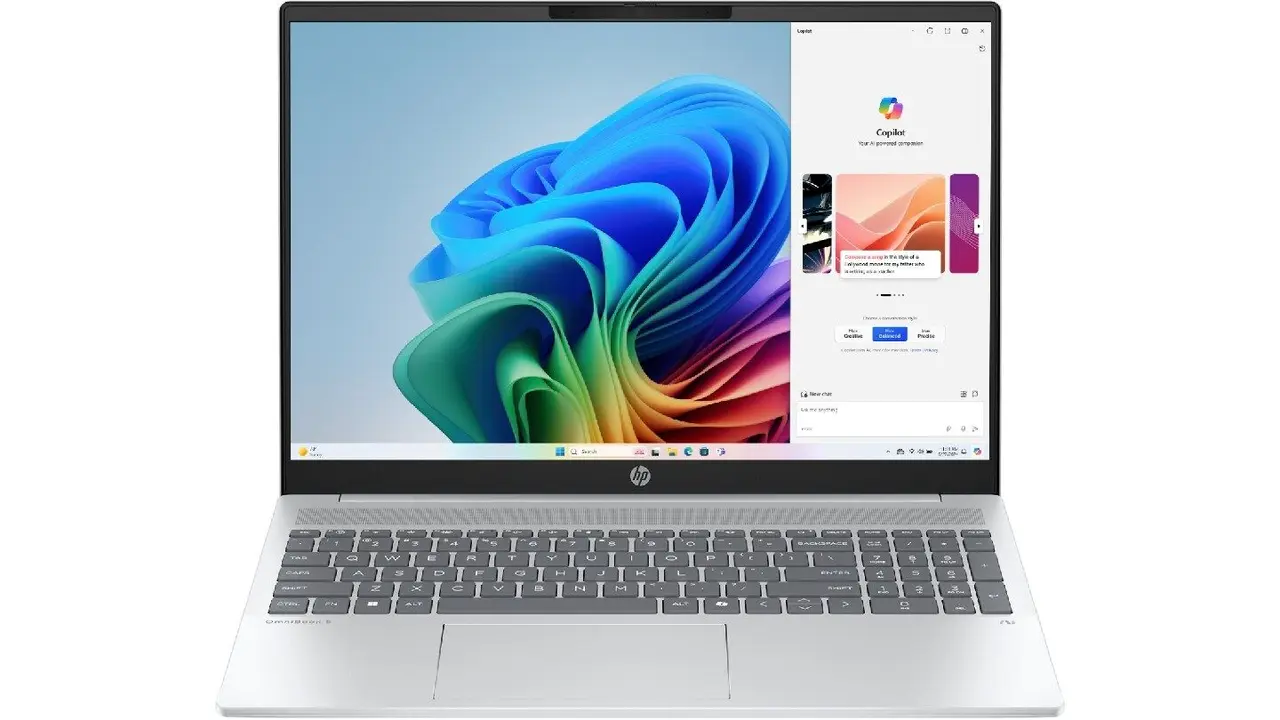
HP introduced a sweeping refresh of its commercial PC lineup at HP Imagine 2026, unveiling AI-powered PCs with a new local AI assistant called HP IQ. The EliteBook 6 G2q features Snapdragon X2 processors with up to 85 TOPS NPU performance, while updated ZBook workstations target demanding AI workloads. HP is positioning these devices as the foundation for hybrid work, though enterprise adoption may face hurdles.
HP rolled out a comprehensive update to its commercial PC lineup at its annual HP Imagine event, introducing AI PCs built around a new local AI assistant software platform called HP IQ
1
. The announcement comes as autonomous agents gain traction in workplace environments and Intel releases commercial vPro versions of its Core Ultra 3 processors. HP's refresh spans EliteBook and ProBook notebooks, ZBook mobile workstations, and Z-series desktops, all framed around the evolving role of on-device AI in modern work settings3
.
Source: ET
Set to enter beta later this spring, HP IQ operates as a local AI assistant accessed through a pull-down interface at the top of the screen
1
. Queries are processed by an on-device model that taps into local data, offering features like writing assistance, summarization, and transcription. The platform leverages the NPU of newer AI PCs, addressing a gap where many AI-powered PCs lack applications that actually utilize their neural processing capabilities.The EliteBook 6 G2q, powered by Qualcomm's Snapdragon X2 platform, leads HP's push into the next generation of work PCs
2
. HP positions it as the "world's most configurable Arm-based PC," offering options from a 12-core X2 Elite to 6- and 10-core X2 Plus variants, with up to 85 TOPS of NPU performance for handling local AI workloads1
2
. Buyers can extensively configure memory and storage, and add HP Go cellular service with a Qualcomm 5G modem. Intel and AMD versions of the same design are also available, now 15% thinner than the previous generation.The new AI workstations include updated ZBook models like the ZBook 8 G2 with both Intel and AMD CPU configurations, alongside the Intel Core Ultra Series 3-based ZBook X
1
. These systems can be outfitted with Nvidia discrete GPUs, though Intel's upgraded Xe3 integrated graphics with up to 12 cores now provide a viable option for certain AI workloads2
. On the desktop side, the redesigned Z8 Fury G6i supports up to four Nvidia RTX Pro 6000 GPUs, with an optional side panel that increases internal volume by 15% to accommodate larger next-generation GPUs.Source: TechSpot
HP IQ introduces proximity-based features under the HP NearSense umbrella, built on Google's D2DI (Device-to-Device Infrastructure) standard
1
. This enables simplified local connectivity, allowing users to discover nearby devices and share files without traditional setup steps. Another feature integrates with HP's Poly conferencing hardware, letting IQ-enabled PCs automatically connect to meetings when entering rooms equipped with supported Poly Studio systems2
. These capabilities aim to make hybrid work environments more fluid, reducing friction in cross-device workflows without relying on cloud infrastructure.Related Stories
While HP emphasized enhanced security features like TPM Guard integrated across its latest PCs and HP Wolf Pro Security for protecting sensitive data
2
, enterprise adoption of HP IQ may face challenges. IT teams tend to be cautious with anything resembling autonomous agents, even though IQ doesn't offer the same level of open-ended control seen in tools like OpenClaw1
. IQ launches as an HP-exclusive feature, which complicates deployment in mixed hardware environments. It also depends on HP's Work Experience Platform (WXP) for device management and policy controls, entering a crowded space where many companies already have established solutions.Despite these obstacles, HP's approach offers a relatively straightforward way to integrate agentic AI into everyday workflows. As local models improve and organizations become more comfortable with on-device AI capabilities, HP IQ could gain traction among businesses seeking to balance AI functionality with data privacy concerns. The platform's ability to process queries locally without heavy cloud reliance addresses growing demands for faster, more private computing experiences in enterprise settings.
Summarized by
Navi
[1]
[2]