12 Sources
[1]
Google Search as you know it is over | TechCrunch
Google unveiled on Tuesday an AI-powered overhaul of Search centered around a reimagined "intelligent search box" -- what the company describes as the biggest change to this entry point to the web since the search box debuted more than 25 years ago. Instead of returning a simple list of links, Google Search will drop users into AI-powered interactive experiences at times. Google is also introducing tools that can dispatch "information agents" to gather information on a user's behalf, along with tools that let users build personalized mini apps tailored to their needs. The resulting experience will no longer look much like how people envision Google Search, which has long been defined by ranked links to websites that have the information you need. With the revamped Search experience, the new search box simply expands to accommodate longer, more conversational queries, rather than making you decide what type of search experience or mode you want to choose at the start of your query. It will also have a new AI-powered query suggestion system that goes beyond autocomplete to help people craft more complex and nuanced queries, Google says. Google's AI Overviews will also allow users to ask follow-up questions in AI Mode, beginning Tuesday, the company noted. Google is also introducing agentic capabilities and AI-powered interactive features into the search experience. This means people will spend even less time clicking the traditional blue links that Google Search used to return. Starting this summer, people will be able to create, customize, and manage multiple new "information agents" within Google Search. These agents can work in the background 24/7, to track changes on the web and alert you to new information. For instance, you could have an agent track market movements based on customer parameters, Google suggests. While the underlying technology here is powered by AI, which makes it more capable, the idea itself is not a new one. In 2003, Google launched Google Alerts, a change-detection service that emailed users when new web results matched their search terms. The web was smaller and more manageable then, of course, so this became a part of many information workers' toolsets. (That service still exists in some form, but is no longer the way most web users go about aquiring new information.) Information-gathering agents are an evolution of Google Alerts. Beyond spotting changes, they can make sense of them, too. "You could send an alert to track market movements in a particular sector with very specific parameters, and the agent will map out a monitoring plan for you, including the tools and the data it needs to access -- like our real-time finance data," Google's Head of Search, Liz Reid, explained in a press briefing. "And it will then keep track of those changes and let you know when the conditions are met, and provide a synthesized update with links and information you can dive into further," she added. This shift means that "searching the web" will increasingly be performed by AI agents rather than humans. Instead, people will focus more on acting on the information those agents provide instead of manually clicking links. Links will become an afterthought with the coming changes to the Search results experience, which builds on Google's earlier launches of AI search features, like its short summaries known as AI Overviews and its conversational search, AI Mode. AI Overviews are now used by more than 2.5 billion monthly users; meanwhile, its conversational search mode, launched last year, now tops 1 billion monthly users. (ChatGPT, for comparison, has 900 million weekly active users, as of earlier this year. This suggests that ChatGPT is now seeing more frequent engagement, with users coming back repeatedly throughout the week, while Google has more total unique people touching its AI features over the course of a month.) Now, thanks to a combination of Gemini and Google Antigravity, the company's agentic development platform, Search results will begin to look more like interactive web pages. "Search can build custom experiences just for your individual questions, from dynamic layouts, interactive visuals to persistent and stateful project spaces that you can return to again and again," says Reid. One of the ways Google is integrating these new capabilities is with "generative UI" (user interface), where it builds custom widgets and visualizations on the fly in answer to users' search questions. You can imagine, for example, how a question about black holes in space could lead to an interactive visual that brings the concept to life, Reid said, adding that users can then ask follow-up questions and see Google respond with brand new visuals in real-time. Google says the new system was built in partnership with the Google DeepMind team and uses Gemini Flash 3.5. It will roll out to everyone who uses Google, free of charge, this summer. In addition, Google will allow users to tap into Antigravity to build their own customizable, stateful experiences -- think "mini apps" -- directly in Search using natural-language commands. Again, this isn't so much about information retrieval, but about action. For instance, you could build a meal-planning app using information from your own calendar to help you decide what to prep and when to eat, or a fitness app created for your specific goals. Combined, these changes will likely further decimate Google referrals to publishers, which have already been suffering from declining referrals due to AI Overviews. This has already put some ad-dependent media operations out of business, and now things will likely get worse. There's little time left for publishers to adapt. The new search box is arriving this week, and generative UI is arriving this summer. Both are free. The mini-app building feature and information agents will roll out first to Google AI Pro and Ultra subscribers this summer. But Google's long-term plan is to make its AI technology more broadly accessible, including its personal AI agent Spark, which will eventually be free, as will many of the AI features. "Part of the reason we focus on delivering frontier models - highly capable, but also very efficient, fast, and at a lower price -- is because we want to bring it to as many people as possible, and so I think that's an area where we will shine," Google CEO Sundar Pichai said in a press briefing ahead of I/O.
[2]
Google Search Is Getting an AI-Heavy Makeover
Macy has been working for CNET for coming on 2 years. Prior to CNET, Macy received a North Carolina College Media Association award in sports writing. Google is blurring the line even more between its search engine and its AI products. The company revealed some major changes for Google Search at its annual Google I/O developers conference on Tuesday, with more conversational AI in more searches. Until now, AI has shown up in Google Search in the form of its so-called AI Overviews and in a separate AI Mode that feels more like talking to the Gemini chatbot. A new interface will instead adjust to match the tone and results of your search query -- including an "intelligent search box" that lets you ask longer, more complex questions. Here's what's coming to Search from Google I/O. Robby Stein, Google's vice president of product for Search, framed this year's I/O updates as a major step in combining Google Search with advanced AI, tracing progress from AI Overviews to AI Mode and, now, a unified AI search experience. He said a billion people use Google's AI Mode each month, and they're asking it more questions. These tools let people ask virtually anything and get rich, real-time answers from Google's extensive knowledge systems, he said. "This is a very exciting time for Search," Stein told reporters ahead of I/O. "People can ask really anything on their mind and people's curiosity is fairly endless." The company is doubling down on integrating frontier AI models with Google's live data (web pages, business listings, products, images, finance) to deliver deeper, conversational search results. The changes come as Google also announced the rollout of Gemini 3.5 Flash, a more capable model focused on reasoning, coding and complex tasks. Stein said building Search tools around the new model raises the overall answer quality on Search. Alongside the model upgrade, Google is introducing an "intelligent search box" that expands for long queries, accepts uploads (photos, PDFs), auto-completes nuanced prompts and can access contextual sources like open Chrome tabs to support multi-step research. AI Overviews now transition seamlessly into AI Mode for follow-ups. So instead of just getting an AI-generated answer in Search, you can have a conversation with the AI providing your search results to get the answers you're looking for. Stein also introduced dynamic, interactive "widgets" and larger "super widgets" generated by the system (enabled by Gemini and developer tooling). These can simulate physics, visualize concepts, build calculators or become persistent mini-apps for tasks such as moving, health tracking or trip planning -- optionally using connected personal data (Gmail, Photos, Calendar) to personalize results across 200 markets and 98 languages. Stein described Search moving into an "agentic" era where AI agents perform tasks on your behalf, such as monitoring topics, sending alerts (like when your favorite artist announces a tour) or booking services by browsing the web and making calls to businesses to make appointments or reservations.
[3]
Google's new AI Search box is here - along with agents and 5 more upgrades
Search information agent monitors topics in the background. Remember when Google Search felt simple? You typed a few words into a box, scanned a list of blue links, and hoped for the best. That version of Search is long gone, buried deep under AI. At I/O 2026, Google announced a bunch of Search updates that make it clear the product is becoming something more conversational, more personal, and more like an assistant that can do things for you. Also: Sick of AI in Search? These 7 Google alternatives still put links first The company said it is bringing "advanced model capabilities to Search with new AI features," including a new AI Search box, information agents, agentic coding, and a personalization feature that pulls from your Google app data, to name a few things. "The goal of Search has always been simple: to help you ask anything on your mind," said Liz Reid, vice president and head of Search. The difference now is that Search is designed not just to answer, but to research, shop, book, monitor, and create on your behalf. Here's what's new, who gets it, and when you can actually use it. The AI Mode tab in Google Search on desktop and mobile is powered globally by a new model called Gemini 3.5 Flash. At I/O, Google announced the Gemini 3.5 family and described it as a "major leap forward in building more capable, intelligent agents." It said 3.5 Flash can provide "frontier performance for agents and coding, excelling at complex long-horizon tasks." It's basically a faster, agent-ready model that can reason across sources, handle longer prompts, understand images and video, and complete multistep workflows. Google said it is also making it easier to "continue the conversation" in Search. You can now ask follow-up questions from an AI Overview, move into a "conversational back and forth with AI Mode," and Search keeps your context. Also: How to remove AI Overviews from Google Search: 4 easy ways According to Google, AI Mode has passed one billion monthly users. Now, it is rolling out 3.5 Flash as the default model behind it. Google is overhauling the Search box and decoupling it from keywords. Instead of making you compress a messy thought into a few search terms, the new box is built for conversational, multimodal questions. You can just go ahead and enter whatever you want now. As Google put it, "Because your curiosity doesn't always fit into keywords," it is introducing "the biggest upgrade to our Search box in over 25 years... now completely reimagined with AI." For you, that means Search should better understand your specific, multipart ramblings. So instead of typing "best portable Bluetooth speaker waterproof Alexa," you could ask something closer to how you would ask a person: "I want a portable Bluetooth speaker to take out by the pool. It'd be nice if it were waterproof and supported Alexa. Which ones are worth buying?" Also: Use Google AI Overview for health advice? It's 'really dangerous,' investigation finds You can ask with text, images, files, videos, or Chrome tabs. Google said the new AI Search box would put "powerful AI tools right at your fingertips" with AI suggestions that "go beyond autocomplete." One of the more interesting new Search features may just be agents. Google said it is entering "the era of Search agents," where you can create, customize, and manage multiple AI agents inside Search. The idea is that these Search agents can keep working in the background after you ask a question. The first version is information agents. You can tell it what you want to monitor, and it will keep checking the web, blogs, news, social posts, and other recent sources. Google used apartment hunting as an example: "You can brain dump all of the exact requirements you're looking for, and your agent will continuously scan for you, notifying you when listings meet your needs." Also: How Google just revamped Gemini Enterprise for the agentic era - here's what's new Search is adding agentic booking capabilities for local services and appointments. Google's example: Need a private karaoke room for six people on a Friday night, with food? Google Search with Gemini 3.5 Flash will show you the latest pricing and availability with "direct links to finish booking through the provider of your choice." But for select categories, like home repair, beauty, or pet care, you will be able to ask "Google to call the business on your behalf." Also: Inside Google's vision to make Gmail your personal AI agent command center Google also announced a new AI-powered shopping cart feature connected across Search, Gemini, Google Pay, Gmail, and YouTube. Called Universal Cart, it follows your shopping research across Google services. It remembers products you're considering, watches for price drops, finds alternatives, and helps build a cart using your payment, membership, loyalty, and shipping details. Also: I let Chrome's AI agent shop, research, and email for me - here's how it went Google said it was built on Google Wallet and "lets you quickly find opportunities for hidden savings or points." It gave the example of building a custom PC, which needs a few parts from several retailers. "Your cart will proactively flag any product incompatibilities and suggest alternatives," Google said. "It understands your payment method perks, loyalty information, and merchant offers." Google is putting one of AI's most popular use cases front and center in Search. Or, as Google put it, it is bringing "the power of Google Antigravity and the agentic coding capabilities of Gemini 3.5 Flash right into Search." That means you can ask Search to code small tools or apps, complete with a custom generative UI, layout, and real-time components such as interactive graphs. Also: I stopped using ChatGPT for everything: These AI models beat it at research, coding, and more Google's examples include an astrophysics visualization, a wedding-planning dashboard, a moving tracker, and a fitness app that pulls in new data from reviews, live maps, local sources, and weather. Google is bringing its opt-in personalization features to Search through what it calls Personal Intelligence in AI Mode. Also: This powerful Gemini setting made my AI results way more personal and accurate If you choose to connect apps such as Gmail, Google Calendar, or Google Photos, Search can use your information from those apps to provide more personalized answers. That means it could be better at more personal questions, like finding a receipt buried in your Gmail or surfacing relevant Google Photos while you research something. You can connect or disconnect any app at any time. Google Search has come a long way from the list of blue links. What Google is building now looks more like a control panel for AI agents. I suppose this new version is for people who already use AI to search. It can handle your long, messy, oddly specific questions, monitor topics for you in the background, shop for products, book local services, build small tools, and personalize answers with information pulled directly from connected Google apps. For power users, that's the fun part: Google is putting agentic tools directly into Search. For everyone else, I suspect the most noticeable changes will be the new Personal Intelligence features (if they opt in), the Gemini 3.5 Flash capabilities in AI Mode, and the new AI-powered Search box. Google Search is no longer just a place to type a few keywords and click around. It is smarter, more personal, and, in some cases, willing to do more of the tedious work for you. The trade-off is that the more Search becomes an agent that can personalize, monitor, and act for you, the more you have to trust Google with your data and the context behind what you're asking.
[4]
Google Search is getting its biggest changes ever
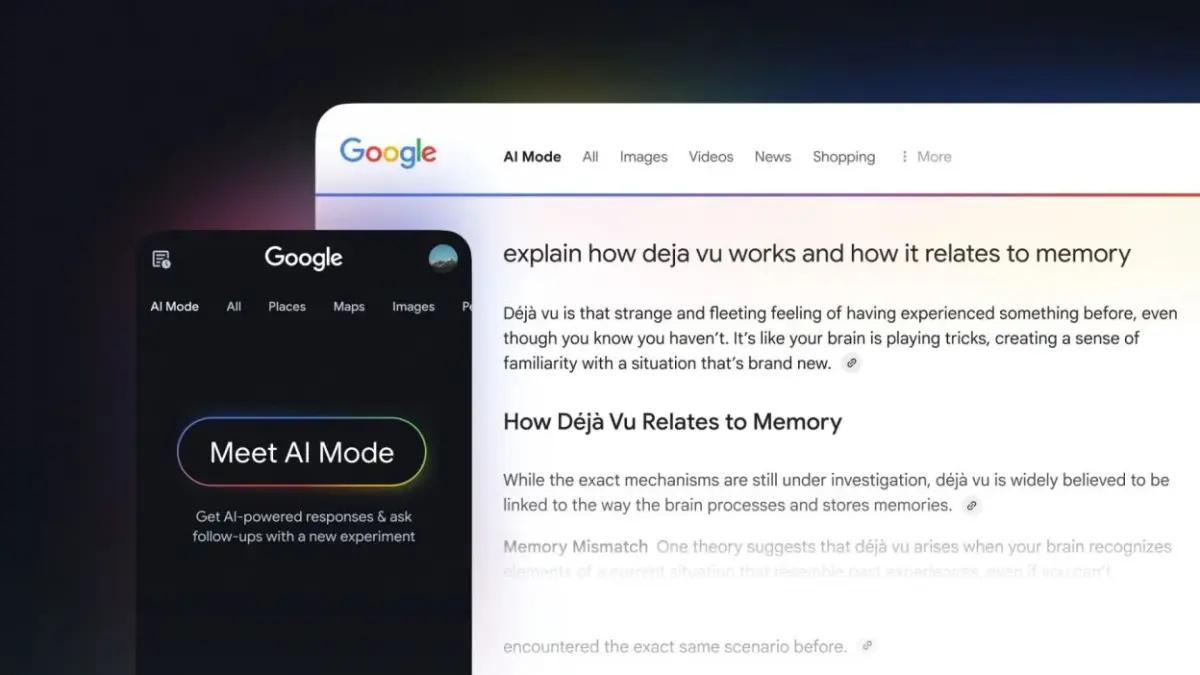
Google Search is entering the next phase of its AI evolution. During Google I/O 2026, the company showed off a reimagined search box that makes it easier to flow between AI Overviews, the AI-generated summaries that appear at the top of search results, and AI Mode, Google's chatbot-like search experience. Powered by the new Gemini 3.5 Flash model, Google's updated search box expands for longer queries, while offering a new AI-powered autocomplete feature to build on your question. Robby Stein, Google's vice president of product for Search, told The Verge you'll "reliably" see AI Overviews if you ask a natural-language question. Asking follow-up questions in an AI Overview will redirect you to AI Mode, but you can just jump straight into AI Mode by attaching documents, photos, videos, and Chrome tabs to the search box and entering a question. Liz Reid, Google's vice president of Search, said during a briefing that the company wanted to eliminate the "friction" between AI Overviews and AI Mode. "We really work to make that much more seamless and simplified, so that for most users, they don't have to think about where to go, they can just go to the search box they're familiar with and it feels like they get the best experience afterwards," Reid said. The updated search box is rolling out across desktop and mobile devices globally starting on Tuesday. You can still view traditional results only by selecting the "Web" tab in Google Search. Google is also moving toward a future where it does the googling for you. This summer, it will roll out new AI information agents for AI Pro and AI Ultra subscribers that can monitor topics when you're not online. If you want to keep track of when your favorite band is going on tour, for example, Google's AI agents can look for upcoming shows in the background and then notify you of an update. "You could be asleep, and it's researching, finding information, doing tasks for you," Stein said. These new AI agents can connect to your other Google accounts using Personal Intelligence, allowing them to pull information from apps like Gmail to personalize their response. The updates provided by agents look a bit like the responses you'd get in AI Mode, complete with text, links to the web, and videos. Google is expanding its AI-powered booking feature this summer as well, which will soon be able to schedule local experiences and services on your behalf. The feature can also call certain businesses for you, such as pet groomers, beauty businesses, and home repair services. Search is becoming even more capable in other ways, too, as a new "generative UI" feature arriving in the coming months will help you build custom widgets and apps directly in the search engine. Google's AI Overviews can now code interactive visualizations, such as a diagram showing how a black hole works, and include them in its response. Google AI Pro and AI Ultra subscribers will also gain access to a new feature that allows them to create "super apps" directly in Search. Subscribers can ask Search to create a home fitness tracker, for instance, and connect it with real-time information, like the weather and your calendar. Google will use AI to whip up an app that users can revisit and share with others. "This is really the next generation of what it means to be Search," Stein said. "This is really a moment for AI Search itself to be available to everyone and easy to use for the world, so that they can really ask anything right within Google now."
[5]
Google shoves more AI into Search, including a dynamic Search box and agentic features - Engadget
Google Search is becoming even more of a showpiece for its AI ambitions. Today at Google I/O 2026, the company announced that Search has been upgraded to the Gemini 3.5 Flash model, which it says offers faster inferencing, smarter results and the ability to process different types of media. As a result, Google is also launching a new Intelligent Search Box that can dynamically get larger to fit complex queries, as well as use videos, images, files and even Chrome tabs as inputs. None of this is a surprise, though. Over the past year, we've seen Google slowly upgrade the AI mode in Search -- now, the company is just making an AI a more essential part of searching the web. That's good news for users who like the more conversational capabilities of Google's AI, but it's even worse news for the people who are trying to maintain the simple purity of Google's original search engine. There's no word on if you'll be able to turn off any of the new AI features -- it was already tough to get rid of earlier AI search capabilities. The new Google Search features, which the company says are its biggest changes to the search box in 25 years, are available to use today. "It's more intuitive than ever, dynamically expanding to give you space to describe exactly what you need," Liz Reid, Google's head of Search, said in a blog post. "Designed to anticipate your intent, it also helps you formulate your question with AI-powered suggestions that go beyond autocomplete." As you'd expect, your AI queries won't be as ephemeral as old school search prompts. The company says you'll be able to continue asking questions after your initial prompts, and that doing so should lead to more refined results. We'll need to take a closer look at Google's revamped Search to see if the company's claims are true, but at first glance, it sounds like it could be a smart way to entice users to spend more time with the its AI tools.That's exactly what Google wants, of course. For its paying Gemini Pro and Ultra users, the company also plans to launch a slew of new agentic capabilities this summer. Like other agentic AI features, these are meant to run on their own after initial prompting. Upcoming information agents, for example, should be able to scour the web for specific apartments after you've told Search what you're looking for. The agents will be able to view "everything" on the web, according to Reid, including "blogs, news sites and social posts, plus our freshest data, such as real-time info on finance, shopping and sports." In a way, the new agentic Search sounds like a souped-up version of Google Alerts, which has been one of the easiest ways to keep track of keywords popping up on the web for the past two decades. The big difference now is that you're looking for more complex information than a mere text string, and Google's AI should be able to format its findings in more useful ways. Free users will get a handful of agentic updates in the summer, as well, including the ability to book "local experiences and services." The company claims you'll be able to search for something like a karaoke room, find accurate pricing and complete your booking. You can also have Google call certain businesses for appointments, similar to the Duplex AI feature that launched with Google Assistant back in 2018. Let's just hope it's less jarring -- Duplex AI sounded far too robotic, and it could be confusing to local business owners who have no idea why a Google robot is calling them. The company also plans to bring its agentic coding app, Antigravity, into Search this summer. You'll be able to have Antigravity build generative UI elements to answer questions, like understanding how your watch works, according to Google. Even more intriguing, the company claims you can use Antigravity to build "mini apps" within Search, which could do something like build a custom fitness tracker just for you. That feature will initially head to Google AI Pro and Ultra users in the US "in the coming months. Clearly, the goal for Google is to turn Search into more of a centerpiece of your life, instead of just being a thing you use briefly to find other websites. We've already seen this in action with existing AI summaries, which recap information without even needing to visit another site. Again, I haven't tested any of the new Search features, so I can't quite judge if they live up to Google's expectations. But bringing Antigravity into Search could be an easy way to make users accustomed to the idea of generative coding. It won't be for everyone, but I could see power users leaning into it. The company says it's also expanding its Personal Intelligence in AI Mode to nearly 200 countries and 98 languages, without the need for a subscription. The feature lets you connect Gemini to your Gmail, Photos and Calendar information, with the goal of delivering more accurate results. The company stresses that "you're always in control" of these features, since you can specifically choose to connect your accounts. But given how much Google wants to take the lead in consumer AI, I wouldn't be surprised if the company starts opting in all of your accounts by default.
[6]
Powered by A.I., Google Changes Its Search Box for the First Time in 25 Years
For 25 years, Google's iconic search box was a long, slender bar where people typed in keywords like "World Cup." But over the past three years, artificial intelligence allowed people to type in longer, more complex questions like "Who are the top 24 teams in the World Cup and what chance does the United States have of advancing?" On Tuesday, Google said the A.I. shift inspired it to overhaul its search bar for the first time since 2001. The box is getting bigger and more interactive, so that people can ask even longer questions and upload photographs and videos into queries. In addition, people can ask follow-up questions with a chatbot on Google's main search page. The company will also offer digital assistants, known as agents, to automate searches, so that someone who might be apartment hunting can get notified of a new listing without opening a real estate site like Zillow. The search features will be powered by a new artificial intelligence model, Gemini 3.5 Flash. Google said the model has improved on creating software code and performing autonomous tasks, works faster and is less expensive to run than comparable models. Sundar Pichai, Google's chief executive, said Gemini's speed and affordability made it possible to deliver it broadly -- which will ultimately benefit Google. "When people use our A.I.-powered features in search, they use search more," Mr. Pichai said in an interview Tuesday before Google's annual developer conference, where the changes to search and Gemini 3.5 anchored a nearly two-hour showcase of A.I.-powered products from the company, including a new video tool, an internet shopping cart and a system to autonomously read and draft emails. Google has increasingly narrowed the A.I. head start of rivals like OpenAI and begun challenging for the lead. After OpenAI released ChatGPT in 2022, Google faced concerns that A.I. start-ups would disrupt its dominance in search. The worries deepened after one of its early A.I. products recommended people use glue to make pizza. But last year, Google solidified its position as an A.I. heavyweight. In addition to its Gemini models, it was producing A.I. chips and pouring hundreds of billions of dollars into data centers for its cloud computing business. Its Gemini app, which can do coding and research, now has 900 million active users -- about the same number as ChatGPT. Google is using A.I. to burrow into more pockets of the digital economy. Web summaries generate more searches, while longer queries provide more insight into users and new shopping features make it easier to connect customers with retailers. Richard Kramer, a financial analyst with Arete Research, said the changes were helping Google make more money from advertising. Last year, Google's ad clicks rose 6 percent, and it charged 7 percent more for each click. The company's annual profit has more than doubled since 2022 to $132 billion. "The open web is on its way out," Mr. Kramer said, referring to the way internet traffic now often begins and ends with a visit to Google rather than visiting other sites. "With A.I., Google is reducing everyone to raw data providers." Google's A.I. transformation particularly stands out with search. In 2024, the company stopped fulfilling some queries with a list of websites and instead provided automatically generated responses called A.I. Overviews. Last year, it added a search tab called A.I. Mode where people can ask multiple questions on the same subject as they would with a chatbot. Google said those features were being combined. On searches that deliver A.I. Overviews, people can ask follow up questions in A.I. Mode, which Mr. Pichai called "a revelation." Google is also bringing one of A.I.'s biggest breakthroughs -- software coding -- to search. When people research complex topics like astrophysics, Gemini can build interactive graphics and simulations behind the scenes to provide a deeper answer than its previous listing of websites. The feature builds on recent products from Anthropic and OpenAI, which created tools that autocomplete code and produce agents to automate email, research and office drudge work. Google said it was introducing an alternative to the agents powered by Anthropic's Claude Code and OpenAI's Codex. Called Gemini Spark, the service is embedded in Gmail, Docs and other Google products where it can turn meeting notes spread across emails and chats into a single document. It can also read and draft emails. The company also unveiled an update to its A.I. coding platform. Called Antigravity 2.0, Google said it would have access to Gemini 3.5 Flash and would be able to deliver huge cost savings for companies that are processing huge chunks of A.I. data daily to write code. While many A.I. labs have pushed their models to accomplish more complex tasks, Google has focused on weaving Gemini more deeply into its already-popular services like shopping and YouTube. Shoppers can now build a cart in search or YouTube as they browse for products, rather than going to a merchant's website to save items for purchase. Google's A.I.-driven shopping cart will also recommend discounts when products go on sale, and warn people when they select items that could be incompatible with each other, such as picking out the wrong chips while building a custom computer, or the wrong filters when shopping for a coffee machine. Google also plans to bring Gemini to photo editing. The company created an editing tool called Gemini Omni that will allow people to, for example, change a vacation video in the Gemini app by telling the system to remove someone from the background. The company said the editing tools will be available in its photos app in the future, as well. Omni doubles as a video-generation tool. Google said it can generate 10-second videos with Hollywood quality, using prompts like asking for "videos that explain a snippet from a textbook" or "render an imaginary character from a sketch." Unlike Sora, a free video generation tool from OpenAI that has been discontinued, only subscribers to one of Google A.I. services -- which range from $8 to $250 a month -- will have access to Omni's video-generation tool. (The New York Times has sued OpenAI and Microsoft, claiming copyright infringement of news content related to A.I. systems. The two companies have denied the suit's claims.) Koray Kavukcuoglu, the chief technology officer at Google DeepMind, the company's A.I. lab, said plugging Gemini into Google's products will help the company stay ahead of competitors with information about users' needs. "That feedback, that signal that we get, is the most important information flow that we have," he said. Google also said that it would bring Gemini to glasses this fall with Samsung Electronics and the eyewear companies Warby Parker and Gentle Monster. The glasses, which will work similarly to Meta's Ray-Ban smart glasses, come with a camera, microphone and speakers for people to ask Gemini about their surroundings, such as the name of a monument they are staring at. David Gilboa, a co-chief executive of Warby Parker, said he wore the glasses to ask Gemini for guidance while installing a new car seat for his 3-year-old daughter, and also uses it when she asks the question "Why?" about all sorts of things. "These glasses have been a massive unlock," he said. "I can actually get her accurate information to her questions."
[7]
Google gets 'intelligent' Search box redesign, information agents, mini apps, & more
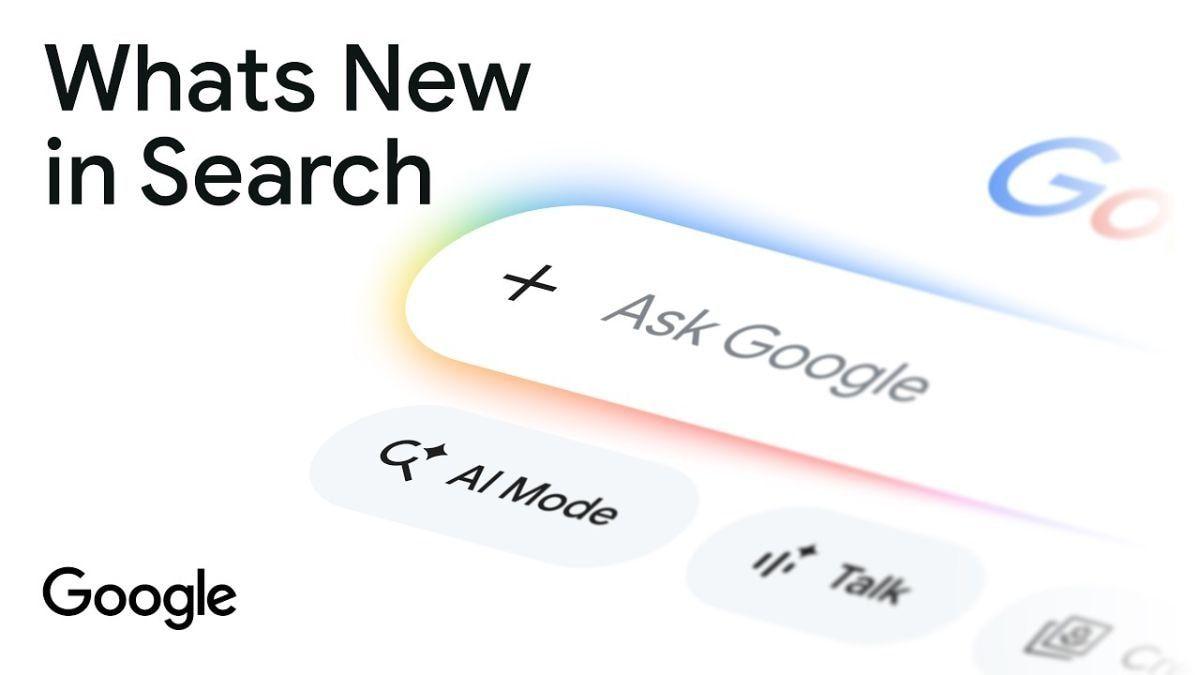
Google Search received big updates at I/O 2026. For starters, AI Mode is now powered by Gemini 3.5 Flash globally and has over 1 billion users every month. Google is introducing a new intelligent Search box that expands the more you type. Billed as the "biggest upgrade to [the] Search box in over 25 years," it reflects how people have longer and more conversational queries. This experience features new AI-powered query suggestions that go beyond autocomplete by anticipating your intent. Underneath the text box, you'll have new shortcuts to access AI Mode, Talk (Search Live), and Create (Nano Banana in Google Lens). The 'plus' menu lets you upload images (Gallery + Camera) and documents (Files) to the query. This new intelligent Search box is rolling out starting May 19. Google is also globally rolling out the seamless transition between AI Overviews and AI Mode when you tap "Show more" on the results page. New agentic capabilities are coming to Search. Google announced "information agents" that work in the background 24/7. You'll get an "intelligent, synthesized update, with the ability to take action." With information agents, you can stay updated on whatever matters most to you. Your agent will intelligently look across everything on the web, like blogs, news sites and social posts, plus our freshest data, such as real-time info on finance, shopping and sports, to monitor for changes related to your specific question. This will be available to Google AI Pro and Ultra subscribers this summer. Agentic coding in Search will leverage the latest Gemini models and Google Antigravity to build custom dynamic layouts and interactive visuals. Whether you want to wrap your mind around astrophysics or visualize how your watch works, Search can design custom layouts, assembling components (like interactive visuals, tables, graphs or simulations) in real-time. Generative UI is coming to all users for free this summer. Search will soon be able to build custom dashboards and trackers for continuous tasks, "like planning a wedding or managing a home move." These "mini apps for your own specific tasks" will be available in the coming months for AI Pro and Ultra subscribers in the US.
[8]
Google Search just got the biggest makeover in nearly 30 years -- here's the biggest upgrades
Google Search is getting AI agents, generative UI, and a redesigned Search box. Google's biggest product is still Search. During its last earnings call, the company said Google Search queries had reached an all-time high, helping the business grow by 19%. Google has also been steadily adding new AI-focused features to Search, including AI Mode, which was introduced at last year's I/O. And today at Google I/O 2026, Search is getting what the company calls its biggest upgrade in nearly 30 years. It's much bigger than just a redesign of the Search box. Search is becoming far more conversational, multimodal, proactive, and even capable of generating custom interfaces and tools in real time. Google has long offered autocomplete suggestions, but now it's expanding that experience into AI Mode as well. The company says Search can better understand natural language queries and surface much smarter suggestions that go well beyond basic autocomplete. The biggest visual and functional change, though, is how Google is putting multimodal inputs front and center. Users will now be able to search using combinations of text, images, videos, files, and even Chrome tabs. Google says the Search interface can dynamically expand depending on the complexity of your query while also surfacing AI-powered suggestions in real time. Search agents can now monitor information 24/7 Google is also introducing Search agents. These AI agents can continuously operate in the background 24/7 to monitor information, track changes, and send updates automatically without requiring users to repeatedly search for the same thing. For example, you could create agents to track stock market movements based on specific conditions or monitor apartment listings matching your exact preferences. These agents continue working in the background and notify you whenever something changes. Think of it like Google Flights price tracking, but expanded to almost anything you repeatedly search for. Google says these information agents will launch later this summer for Google AI Pro and Ultra subscribers in the U.S. first. Search can now generate custom mini apps in real time Another major addition is something Google calls "agentic coding in Search." Powered by Gemini 3.5 Flash and Google's Antigravity system, Search can now dynamically generate custom visualizations, simulations, interfaces, and widgets in real time depending on the question you're asking. For example, if you search for something related to astrophysics, Search could generate an interactive visualization alongside the search results to help explain the concept visually. Google says these visuals will even update dynamically as users continue asking follow-up questions. These generative AI capabilities are expected to roll out to all Google Search users later this summer. But that's not all. Google is also letting users build persistent mini apps and dashboards directly inside Search for themselves. For example, users could create custom fitness dashboards pulling together weather data, maps, meal plans, reviews, calendar events, and more. Google says similar tools could also be built for things like wedding planning, moving, or other long-term projects. These mini apps will initially launch only in the U.S. for Google AI Pro and Ultra subscribers. Google says all of these upgrades are powered by Gemini 3.5 Flash, which is now becoming the default model powering AI Mode inside Google Search globally. Want to know more about everything revealed at today's event? Check out our Google I/O 2026 live blog for up-to-the-minute announcements and reactions. Follow Tom's Guide on Google News and add us as a preferred source to get our up-to-date news, analysis, and reviews in your feeds. Subscribe to Tom's Guide on YouTube and follow us on TikTok. Finally, you can visit our dedicated Tom's Guide Savings Squad hub for expert help on getting the best products for less.
[9]
Google just redesigned the search box for the first time in 25 years -- here's why it matters more than you think.
For a quarter century, the Google search box has been one of the most recognizable interfaces in computing: a thin white rectangle, a blinking cursor, a few typed words, and a list of blue links. On Tuesday, Google will formally retire that paradigm. At its annual I/O developer conference, Google announced a sweeping redesign of the search box itself -- the literal text field where billions of queries begin every day -- transforming it from a simple keyword input into a dynamic, AI-driven conversation starter that can accept text, images, PDFs, videos, and even open Chrome tabs as inputs. The company is also merging its AI Overviews and AI Mode features into a single, seamless search flow, eliminating the friction that previously forced users to choose between a traditional results page and an AI-forward experience. Liz Reid, Google's vice president and head of Search, called it "the biggest upgrade to our iconic search box since its debut over 25 years ago" during a press briefing on Monday. The announcement arrived alongside a blizzard of other news -- new Gemini models, a personal AI agent called Spark, an intelligent shopping cart, a reimagined developer platform -- but the search box redesign may prove to be the most consequential. It is the clearest signal yet that Google views the future of its flagship product not as a place where users type fragmented keywords, but as an interface where they hold open-ended, multimodal conversations with an AI system backed by the entire web. The new search box expands, accepts files, and coaches you on what to ask The changes show a fundamental shift in how Google expects people to interact with the product that generates the vast majority of Alphabet's revenue. The box itself now dynamically expands to accommodate longer, more conversational queries. Where the old interface subtly encouraged brevity -- a narrow field suited to two- or three-word keyword strings -- the new design invites users to fully articulate complex questions in granular detail. It also now supports multimodal inputs directly. Users can upload images, PDFs, files, and videos, or drag in content from Chrome tabs, right from the main search interface. Previously, some of these capabilities existed in AI Mode, but reaching them required extra steps. Now they sit at the primary entry point. Google is also deploying what it describes as an AI-powered query suggestion system that "goes beyond autocomplete." Rather than simply predicting the next word a user might type based on popular searches, the system helps users formulate complex, nuanced queries -- essentially coaching them toward the kind of detailed questions that AI Mode handles best. The new search box is starting to roll out immediately in all countries and languages where AI Mode is available. Google is merging AI overviews and AI mode into one seamless experience Perhaps more significant than the box itself is the architectural change happening behind it. Google is unifying AI Overviews -- the AI-generated summary panels that appear atop traditional search results -- with AI Mode, the more immersive conversational search experience the company launched at I/O one year ago. Starting Tuesday, this merged experience will be live across mobile and desktop worldwide. A user can type a question, receive an AI Overview alongside traditional results, and then continue directly into a back-and-forth AI Mode conversation to ask follow-up questions -- all without navigating to a separate interface. Reid explained the logic during the press briefing: the new AI search box is "an upgrade of our traditional search box, and so the results take you directly to main search rather than AI mode." She noted that while some power users actively sought out AI Mode, "for most users, they don't actually want to have to think about, do they want more of a traditional page or an AI-forward search experience." The goal, she said, was to ensure that "for most users, they don't have to think about where to go, they can just go to the search box they're familiar with, and it feels like they get the best experience afterwards." One billion users and doubling queries reveal how fast search behavior is shifting Google's decision to redesign the foundational interface of its most important product did not happen in a vacuum. The company shared a set of usage statistics during the briefing that reveal just how rapidly user behavior is already changing. AI Mode, which launched in the United States at I/O 2025, has surpassed one billion monthly users in its first year. AI Mode queries have been doubling every quarter since launch. AI Overviews, the lighter-weight AI summaries, now reach more than 2.5 billion monthly users. And overall search query volume hit an all-time high last quarter -- a data point the company had previously disclosed on its earnings call. Sundar Pichai, Google's CEO, framed these figures as evidence that AI features are additive, not cannibalistic, to search usage. "When people use our AI-powered features in search, they use search more," he said. He added that he loves "how search has become less about individual queries and feels more like an ongoing conversation, giving users deeper insights and connecting you with the vastness of the web." Reid reinforced the point: "It's not just that people are searching more, it's that they're searching differently. They're fully expressing their questions in granular detail, asking those follow-up questions and searching across modalities." Gemini 3.5 Flash gives Google's AI search the speed it needs to work at scale Under the hood, the new search experience runs on Gemini 3.5 Flash, Google's newest AI model, which the company also introduced at I/O. Google upgraded AI Mode's underlying model to 3.5 Flash to deliver what Reid described as "an even more powerful AI search experience." Gemini 3.5 Flash is the workhorse of this year's announcements. Google claims it outperforms its previous frontier model, Gemini 3.1 Pro, on nearly all benchmarks while running four times faster in output tokens per second than comparable frontier models. Pichai described it as being "in a league of its own in the top right quadrant" of the Artificial Analysis index, which plots intelligence against speed -- meaning it delivers near-frontier quality at dramatically lower latency. That speed matters enormously for search. A conversational AI search experience that feels sluggish would be dead on arrival for a product that serves billions of queries daily. By coupling the redesigned interface with a model optimized for both quality and throughput, Google is attempting to make AI-powered search feel as instantaneous as the old keyword experience -- while being dramatically more capable. Search can now build interactive visuals and custom mini apps on the fly The redesigned search box is also the gateway to a set of new capabilities that push search far beyond text-based answers. Google announced what it calls "generative UI" -- the ability for search to dynamically build custom widgets, interactive visualizations, and even mini applications in real time, tailored to a user's specific question. Reid offered a concrete example during the briefing: a user could ask "How do black holes affect space time?" and receive an interactive visual in an AI Overview that brings the concept to life. Follow-up questions would trigger the system to dynamically generate entirely new visuals in real time. This is possible, she explained, because of "a novel real-time code generation system we built in partnership with the Google DeepMind team" that runs on Gemini 3.5 Flash. Generative UI capabilities will roll out to everyone this summer, free of charge. But Google is going further still. For ongoing tasks -- planning a wedding, organizing a move, tracking a fitness routine -- users will be able to build what the company describes as customizable, stateful experiences within search, powered by its Antigravity development platform. These require no coding expertise. Users simply describe what they want in natural language, and search builds it. Those experiences will be available in coming months, starting with Google AI Pro and Ultra subscribers in the United States. AI agents that monitor the web around the clock are coming to search results The redesign also opens the door to what Google calls "information agents" -- AI agents that users can configure directly within search to monitor the web 24/7 for specific conditions and deliver synthesized updates when those conditions are met. A user could, for example, set up an agent to track market movements in a particular sector with specific parameters. The agent would create a monitoring plan, tap into real-time finance data, and proactively notify the user when conditions are met -- complete with links and context for further research. Other use cases include apartment hunting, tracking sneaker drops, or monitoring any topic a user cares about. Information agents will launch first for Google AI Pro and Ultra subscribers this summer. These agents sit within a much larger strategic pivot that Google articulated throughout the briefing: the company is going all-in on AI systems that don't just answer questions but proactively take actions on users' behalf. Beyond search, Google introduced Gemini Spark, a 24/7 personal AI agent that runs on dedicated virtual machines in Google Cloud. It unveiled the Universal Cart, an intelligent cross-merchant shopping cart. It announced the Agent Payments Protocol for agents to make secure purchases. And it expanded its Antigravity developer platform into a full ecosystem for building autonomous AI agents. Publishers, advertisers, and SEO professionals face a new reality The redesign raises profound questions for the sprawling ecosystem -- publishers, advertisers, SEO professionals -- that has been built around the old model of keyword search and blue links. If users increasingly express their needs as full, conversational sentences rather than fragmented keywords, the entire discipline of search engine optimization will need to evolve. Keyword-density strategies become less relevant when the AI is parsing natural language intent rather than matching strings. Content that answers deep, nuanced questions in authoritative ways becomes more valuable; content engineered to rank for two-word keyword fragments becomes less so. For publishers, the stakes are existential. AI Overviews already synthesize information from across the web and present it directly in search results, reducing the need for users to click through to source material. The new seamless AI Mode integration deepens that dynamic: users can now get an AI-generated answer and ask multiple follow-up questions without ever leaving the search page. Google has consistently maintained that its AI features drive more traffic to publishers, but the redesign puts that claim under renewed scrutiny as the search results page becomes more self-contained. For advertisers -- who fund the vast majority of Google's revenue -- the shift from keywords to conversations changes the calculus of ad targeting. Conversational queries contain richer intent signals, which could make ad targeting more precise and valuable. But they also create new ambiguities: when a user is in the middle of a multi-turn conversation with AI Mode, where does an ad naturally fit? Google did not detail changes to its advertising model during the briefing, but the structural shift in the interface will inevitably reshape how ads are surfaced and measured. The search box was always more than a product -- it was a habit for billions of people There is a reason Google chose to redesign the search box rather than simply adding new features behind it. The search box is not just a product element at this point; it is a cultural artifact -- one of the few pieces of digital infrastructure used by essentially the entire internet-connected world. Changing it sends an unmistakable message about where the company believes computing is headed. For 25 years, the search box trained billions of people to think in keywords -- to compress their curiosity into the shortest possible string of words. The new box invites them to do the opposite: to think out loud, to upload what they're looking at, to ask follow-up questions, to let an AI system handle the compression. Pichai tied the company's broader ambitions to a striking statistic: Google's surfaces now process over 3.2 quadrillion tokens per month, up seven-fold from a year ago. The company expects capital expenditures of approximately $180 to $190 billion in 2026 -- roughly six times the $31 billion it spent four years ago -- largely to support the infrastructure required for this AI transformation. When asked about the future of traditional search, he was direct. "Search is the most used AI product in the world," he said. The blinking cursor in Google's search box still invites you to type. But after 25 years of teaching the world to speak in keywords, Google is now asking it to speak in sentences -- and betting roughly $190 billion that it will.
[10]
Google I/O 2026: Even more AI is coming to Google Search
At Google I/O 2026, many new AI-powered Google Search features were unveiled like Search agents. Credit: Google According to Google, AI Mode in Google Search has now surpassed 1 billion monthly users. And, of course, AI Overviews are now ubiquitous at the top of every Google search results page. At Google I/O 2026 today, Google shared some new updates coming to Google Search -- and surprise! -- even more AI features are coming to the search giant's search product. First up, Google is upgrading its AI Mode in Google Search to the brand-new Gemini 3.5 Flash, which was also just announced at I/O. Google is upgrading the search box with AI, too. The new AI Search Box with Intelligent Search is the first update to Google's search box in more than 25 years. When typing a search query, the search box will now expand, offering users more space to use natural language to ask Google their questions. The new AI Search Box will also allow users to upload images, videos, files, and Chrome tabs alongside their query for reference. AI Overviews is also getting an upgrade as well. Users will be able to ask a follow-up question in AI Mode about the information AI Overviews display at the top of a search results page. The feature will allow back-and-forth conversation, much like an AI chatbot, so users can dive deeper into the topic based on the information AI Overviews provide. Another big search-related announcement at Google I/O 2026: AI Search agents are coming to Google Search. According to Google, users will be able to provide a Search agent with all the relevant details for a query. The Search agent will then scan 24/7 for sources, like news websites, blogs, and social media, to find the most relevant and up-to-date information. Google provided examples of when a user would utilize Search agents. If a user is apartment hunting, they can input all their housing requirements with a search agent, which will scan around-the-clock for new apartment listings that match those parameters. These information agents will be available for Google AI Pro and Ultra subscribers in the summer. Agentic AI capabilities are also being upgraded for shopping and booking experiences and services in Search. Users will be able to see the latest prices, availabilities, and direct booking links after providing agents with what they're looking for. In addition, AI agents will be able to call specific businesses for certain services. These agentic capabilities will be available for all users this summer. Speaking of AI features for all users, Google says it's expanding Personal Intelligence in Search to even more users, no subscription required. With Personal Intelligence, users can connect their apps, such as Gmail and Google Photos, so that Google's AI in search can understand search query context using their personal information. Google says the ability to connect Google Calendar to Personal Intelligence is coming soon, and users will continue to have full control over the feature and the data that is used. Additionally, Google is bringing AI coding tools, powered by Google Antigravity, directly into Google Search. It appears that Google is looking to pull non-developers into the mix, offering use cases such as building a custom fitness tracker or a custom dashboard to plan a wedding.
[11]
Google's AI Mode Is Getting Gemini's Latest Model
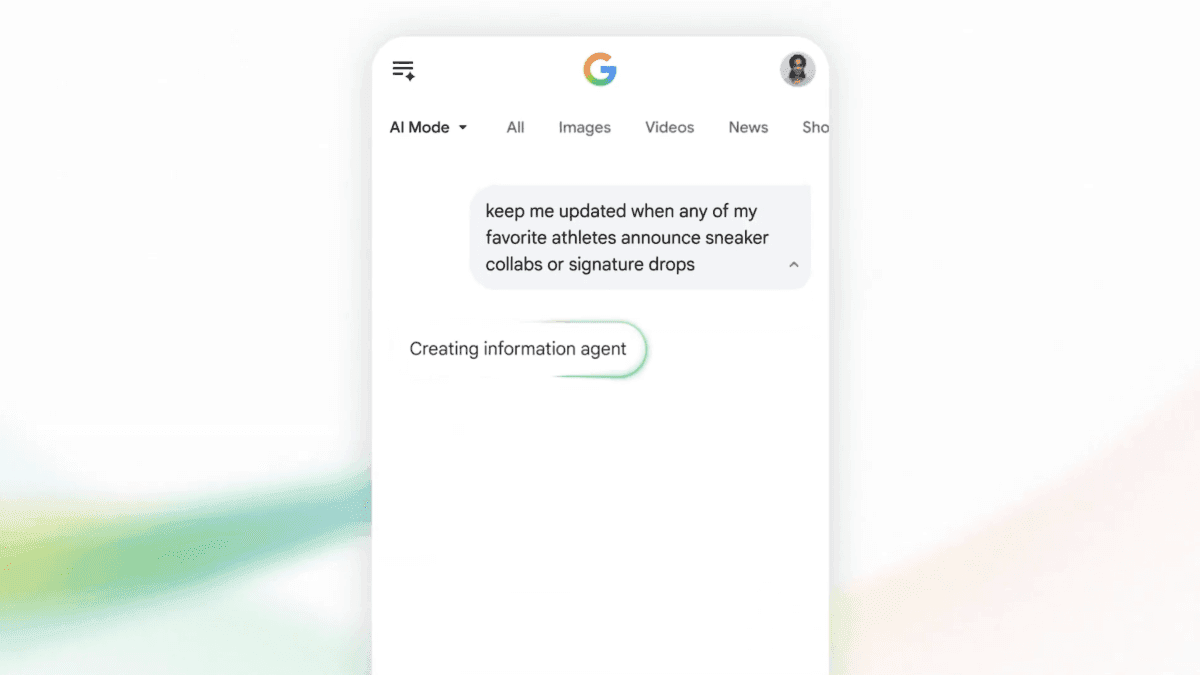
At Google I/O 2026, Google announced that they're going all in on AI Search. According to Google, AI Mode now has more than a billion monthly users. To tackle all those questions, Google is plugging their best new Gemini 3.5 model directly into AI Mode, and, of course, they're integrating agents directly into Google Search so they can accomplish things on your behalf. Starting today, Google is integrating its latest Flash model, the Gemini 3.5 Flash, directly into AI Mode -- and it's going to be available to everyone, globally. Google also sees the AI Mode search queries as the beginning of a longer conversation, so they're making the input more dynamic. According to Google, the text box in Google Search will dynamically expand when you're asking a longer question. And now you can search across different modalities, using text, images, videos, files, and even Chrome tabs as input. Users will also be able to ask a question from AI Overviews, leading to a conversation view in AI Mode. As you provide more context, the results will get more relevant. This experience is also rolling out for desktop and mobile users worldwide today. Google is also integrating Personal Intelligence directly into AI Mode. That means your AI Search queries can return personalized information based on your Google account. Google is launching this feature in more than 200 countries and across 98 languages, and it will be available for free. The feature remains opt-in. Surprising absolutely no one, Google is starting to roll out agents directly in Google Search. You will be able to create and manage multiple AI agents in the search interface itself. Google is starting off with information agents that work in the background 24/7, getting you updated information that you need. A Search agent can search across different sources on the web, like articles, social media posts, and Google's real-time information on shopping, sports, and finance. Search can then send you timely updates, and because this is an agent, it can also take action on your behalf. According to an example from Google, Search agents can monitor sneaker collabs between your favorite sneaker brands and your favorite athletes, and it can notify you about new drops (providing a way to place an order as well). Agents will also be integrated into Google Shopping directly. Google is also expanding its agentic booking experience to local experiences and services. Search can help you book an experience, with details about time slots and pricing ready to go. Don't worry, though; you'll be the one placing the final order with the provided link. Information agents are coming first to Google AI Pro and AI Ultra subscribers this summer. Google is also integrating coding elements from Google Antigravity directly in Gemini 3.5 Flash, so you can now ask Google Search to help you explain complex topics by creating interactive models. You can also use it to generate personalized dashboards to visualize data, generating what Google calls "mini-apps." For example, it can help you build a custom fitness tracker with real-time data sources like live weather data, maps data, and more. This feature will first roll out to U.S. users in the coming months, and it's limited to Google AI Pro and Ultra subscribers.
[12]
Google reimagines search with AI agents and generative interfaces - SiliconANGLE
Google reimagines search with AI agents and generative interfaces Google LLC's search is getting an artificial intelligence makeover today, as the company announced during its Google I/O developer conference that it's upgrading the search experience to "reimagine it with AI," making it feel less like a static results page and more like an AI workspace. At the forefront, the search box itself will now expand to let users type and view longer queries as they write. According to Google, with the rise of AI-enabled searches, users are beginning to ask longer and more complicated questions about what they're looking for, and the constrained search box is getting in their way. Now, as they type, the search box will enlarge so users can see more of what they're writing, similar to the larger AI Mode query field. It will also allow users to search across different inputs, including text, images, videos and Chrome tabs. Users will still get a potential AI summary and a list of results in every search, but now they'll also get an additional follow-up box directly below the AI Overview. This will flow into a conversational back-and-forth within AI Mode. There will no longer be a need to click a button to trigger AI follow-ups. Google noted that it's the "agentic era," meaning more people are getting used to telling an AI system what they want and having it go out and do the work. As a result, the company is adding Search Agents, which can run in the background 24/7, collect information and bring it back. With information agents running searches, users can customize them with the assets and information they're looking for, and the agents can scour the web to return regular reports on what has changed. For example, if users are apartment hunting, they could "brain dump" all their requirements for a new home. The agent could then search continuously and report back whenever a matching listing comes onto the market. Google is also extending agents beyond simply finding information, using AI to generate new interfaces when a list of links or a written answer is not enough. To do this, the company is bringing the power of agentic coding into Search by incorporating the company's Antigravity tool and its newly released Gemini 3.5 Flash model. Together, these tools can build an appropriate mini app that provides a slide, visual or other interactive experience to help elucidate the subject. For example, if a user asks for information on the solar system and how the planets move in relation to one another, the system might build a semi-interactive visualization with the sun in the center and the planets orbiting around it. It can also create custom components such as interactive tables, graphs or similar simulations. Google calls these "generative UI," or user interfaces. Growing out of this experience, some users might be more interested in building their own apps, not just having a mini app for a one-off question. For example, if users have something they search for over and over, such as being on a diet or following a health routine, they could ask Search to build them a custom fitness and diet tracker. It could tap into local maps and real-time sources such as weather, and provide a tracker for fitness routines, routes with maps, a calorie spreadsheet and more. This experience will roll out to users over the summer for Pro and Ultra subscribers.
Share
Copy Link
Google unveiled a major AI-powered overhaul of Search at I/O 2026, introducing an intelligent search box that expands for conversational queries and AI information agents that work 24/7 in the background. Powered by Gemini 3.5 Flash, the update moves Search beyond traditional blue links into interactive experiences. With over 2.5 billion monthly users already using AI Overviews, Google is doubling down on making AI the core of how people find information online.
Google Search as users have known it for over two decades is fundamentally changing. At Google I/O 2026 on Tuesday, the company unveiled what it describes as the biggest transformation to its search box in more than 25 yearsโan AI-powered overhaul centered around an intelligent search box and agentic features that shift how people interact with the web
1
. Instead of returning simple lists of ranked links, Google Search now drops users into AI-driven interactive experiences, with tools that dispatch AI information agents to gather information on their behalf and build personalized mini apps tailored to individual needs1
.
Source: NYT
The revamped experience marks a decisive move away from traditional search results. "This is really the next generation of what it means to be Search," said Robby Stein, Google's vice president of product for Search
4
. The new intelligent search box dynamically expands to accommodate longer, more conversational queries rather than forcing users to compress thoughts into keywords3
. It accepts multimodal queries including text, images, videos, PDFs, and even open Chrome tabs as inputs2
.
Source: Lifehacker
Driving this AI-heavy makeover is the new Gemini 3.5 Flash model, which Google describes as delivering "frontier performance for agents and coding, excelling at complex long-horizon tasks"
3
. The model enables faster inferencing, smarter results, and the ability to process different types of media, fundamentally changing how Search understands and responds to user intent5
.The conversational AI search experience now seamlessly transitions between AI Overviewsโshort summaries that appear at the top of resultsโand AI Mode, Google's chatbot-like search interface
4
. Liz Reid, Google's vice president and head of Search, explained that the company wanted to eliminate the "friction" between these modes so users can simply go to the familiar search box and receive the best experience automatically4
. Users asking natural-language questions will "reliably" see AI Overviews, and follow-up questions redirect them into AI Mode for deeper exploration4
.Google is entering what it calls "the era of Search agents," where users can create, customize, and manage multiple AI information agents within Search
3
. These agentic features represent an evolution of Google Alerts, the 2003 change-detection service that emailed users about new web results1
. Unlike simple keyword tracking, these agents can work continuously in the background, monitoring topics 24/7 and making sense of changes across the web1
.
Source: Mashable
Starting this summer, users will be able to deploy information agents for complex monitoring tasks. "You could send an alert to track market movements in a particular sector with very specific parameters, and the agent will map out a monitoring plan for you, including the tools and the data it needs to accessโlike our real-time finance data," Reid explained
1
. The agents then track changes and provide synthesized updates with links when conditions are met1
. For apartment hunting, users can detail exact requirements, and agents will continuously scan listings, notifying them when matches appear3
.Through a combination of Gemini and Google Antigravityโthe company's agentic development platformโSearch results now look more like interactive web pages
1
. The generative UI capability builds custom dynamic widgets and visualizations on the fly in response to user questions1
. A question about black holes in space, for example, could generate an interactive visual that brings the concept to life, with the ability to ask follow-up questions and see brand new visuals in real-time1
.Google AI Pro and Ultra subscribers will gain access to create super apps directly within Search in the coming months
4
. Users can ask Search to build a home fitness tracker and connect it with real-time information like weather and calendar data4
. These persistent mini apps become "stateful project spaces" that users can return to repeatedly and share with others1
. The feature leverages multi-step workflows to create personalized tools tailored to individual needs2
.Related Stories
Google is adding agentic booking capabilities for local services and appointments, allowing Search to show latest pricing and availability with direct links to complete reservations
3
. For select categories including home repair, beauty, and pet care, users can ask Google to call businesses on their behalfโan evolution of the Duplex AI feature that launched with Google Assistant in 20183
5
.The company is also expanding Personal Intelligence in AI Mode to nearly 200 countries and 98 languages without requiring a subscription
5
. This feature connects Gemini to Gmail, Photos, and Calendar information to deliver more accurate, personalized results5
. Additionally, a new Universal Cart feature tracks shopping research across Search, Gemini, Google Pay, Gmail, and YouTube, remembering products under consideration and watching for price drops3
.The scale of adoption reveals how quickly AI has reshaped search behavior. AI Overviews now reach more than 2.5 billion monthly users, while AI Mode has surpassed 1 billion monthly users since launching last year
1
. For comparison, ChatGPT has 900 million weekly active users as of earlier this year, suggesting more frequent engagement with users returning repeatedly throughout the week, while Google captures more total unique people touching its AI features monthly1
.The updated search box with AI-powered autocomplete that goes beyond simple suggestions to help craft complex, nuanced queries rolls out globally across desktop and mobile starting Tuesday
1
4
. Users can still access traditional results by selecting the "Web" tab4
. The new system, built free of charge for all Google users, fundamentally changes how "searching the web" worksโincreasingly performed by AI agents rather than humans manually clicking links1
. "People can ask really anything on their mind and people's curiosity is fairly endless," Stein told reporters, framing the updates as doubling down on integrating frontier AI models with Google's live data to deliver deeper results2
.Summarized by
Navi
[1]
[4]
1
Technology

2
Technology

3
Technology