IBM's Arvind Krishna: Open AI Models Hit 90% Effectiveness at Just 10% of Frontier Model Costs


3 Sources
[1]
IBM CEO says open weight models are now irresistibly good and cheap on-prem
AI will eat a fifth of tech budgets in 2027, but don't expect it to pay for itself 10 hours ago IBM CEO Arvind Krishna has told investors that open weight models now make brilliant sense for on-prem enterprise use. Speaking on the company's Q3 earnings call, Krishna said that in 2024 closed
[2]
IBM's Enterprise AI Bet Is Paying Off, And Arvind Krishna Says It's Just Beginning
IBM CEO Arvind Krishna said during the company's third fiscal quarter 2026 financial report that the acceleration of enterprise AI adoption is fueling demand for Red Hat OpenShift, hybrid cloud, real-time data and security, all of which play into IBM's AI investment strategy. IBM Chairman,
[3]
IBM CEO Says Open AI Models Are 90% as Good as Frontier Models: 'Why Pay 10x More?' - IBM (NYSE:IBM)
International Business Machines Corp. (NYSE:IBM) Chairman and CEO Arvind Krishna questioned enterprise spending on frontier artificial intelligence models, stating that open-weight alternatives now offer nearly equal performance at a fraction of the price. CEO Asks 'Why Pay 10x More?' Speaking
Share
Copy Link
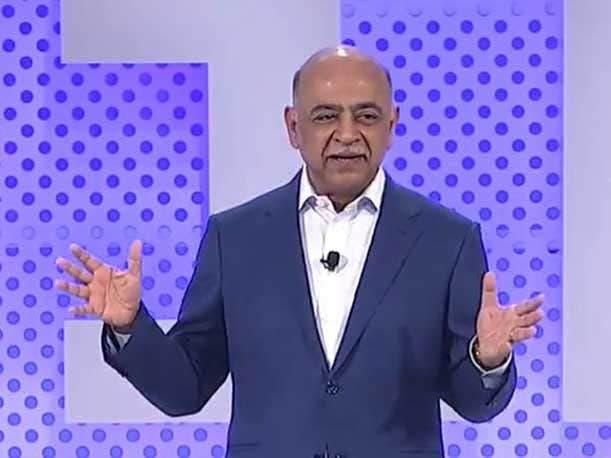
IBM CEO Arvind Krishna revealed that open-weight AI models now deliver 90% of frontier model performance at 10% to 25% of the token cost, fundamentally shifting enterprise AI economics. The announcement came during IBM's Q3 2026 earnings call, where Krishna outlined how the narrowing performance gap is driving massive demand for on-premises AI infrastructure and sovereign AI deployments.
Open-Weight AI Models Close the Performance Gap
IBM CEO Arvind Krishna made a compelling case for open AI models during the company's third-quarter 2026 earnings call, revealing that the performance gap between frontier models and open-weight alternatives has dramatically narrowed
1
3
. In late 2024, when closed frontier models scored around 70 on broad-based benchmarks, open models lagged significantly at 20 to 30. By late 2025, that gap had shrunk to 70 versus 50, and open-weight AI models now deliver approximately 90% of the effectiveness of top-tier frontier models1
.What makes this shift remarkable is the economics. Arvind Krishna emphasized that open AI models currently run at 10% to 25% of the token cost of frontier models
1
3
. Krishna posed a direct question to enterprises: "Would you like something that's 10% of the cost if it's 90% as good as the best, or do you want to pay that 10 times higher cost?"3
. For most enterprise tasks like summarizing emails, examining contracts, answering customer calls, and composing emails, these cheaper alternatives prove sufficient1
.On-Premises AI Infrastructure Demand Surges
Source: CRN
The improved AI model economics are fueling explosive interest in on-premises AI infrastructure. Krishna noted that enterprises can deploy effective AI infrastructure with just two or three racks, making the barrier to entry surprisingly low
3
. However, implementation challenges remain significant. Enterprises struggle to find kernel engineers, network specialists who can cluster models on GPUs in close network proximity, and experts who can optimize caching for faster response times1
.IBM is positioning itself to address these deployment hurdles through software solutions and hardware offerings. Krishna predicted that demand for on-prem AI will drive sales of IBM's Spyre mainframe accelerator cards
1
. The company's current-generation z17 mainframes have already generated $1 billion more revenue than any previous model, while the new rackable models delivered "the strongest midrange launch in IBM Z in nearly two decades"1
.Enterprise AI Adoption Accelerates Beyond Experimentation
Source: The Register
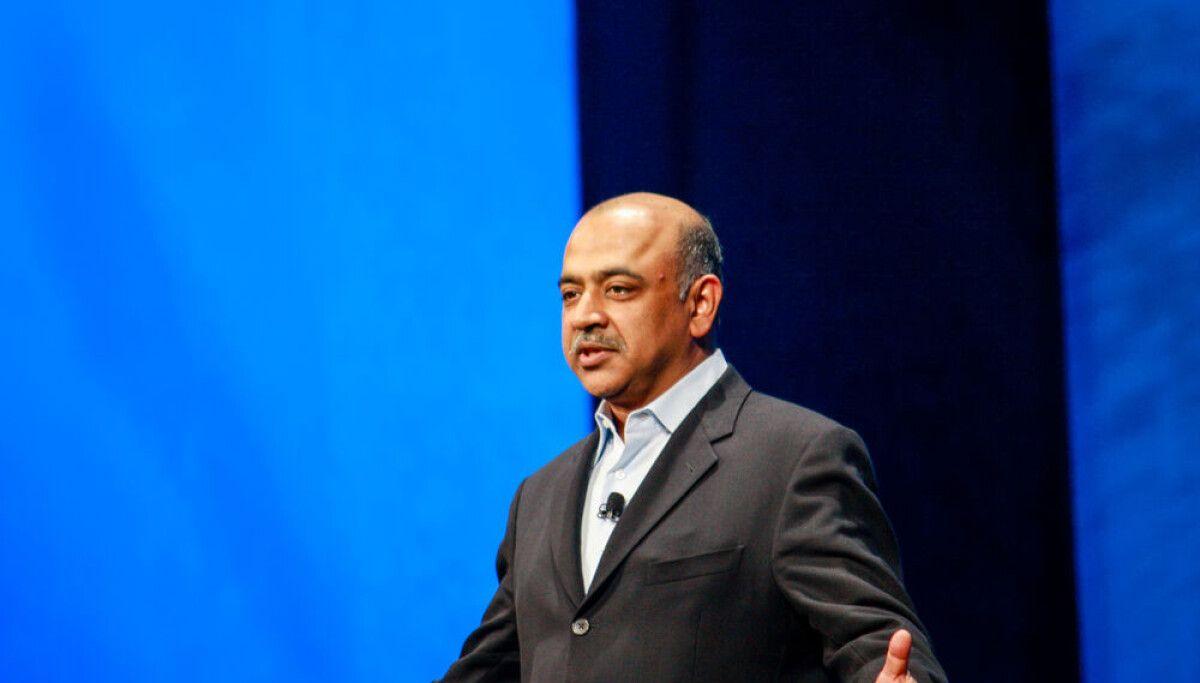
Arvind Krishna told financial analysts that enterprise AI is transitioning from experimentation into large-scale production, with IBM's hybrid cloud, software, data, automation, and security products forming the foundation for this shift
2
. Red Hat bookings accelerated back to the high teens, while Red Hat OpenShift adoption strengthened as organizations scaled AI applications and agents2
.Krishna emphasized that deploying more models or building more agents won't be enough. "The advantage will belong to a company that can operate AI securely, efficiently and sustainably across the enterprise," he stated
2
. IBM has assembled its approach around four platforms: Confluent for real-time business context, watsonx including Bob and Orchestrate for software development and agent orchestration, HashiCorp and Apptio for identity, policy, costs and performance, and Red Hat for open hybrid deployment across clouds, on-premises systems, sovereign environments, and the edge2
.Related Stories

Sovereign AI and Data Control Drive Strategic Shift
The economics of open-weight AI models are converging with another critical enterprise trend: sovereign AI. Companies increasingly want to keep sensitive data, logs, and model activity under their own control, fueling demand for private AI infrastructure
3
. IBM's Bob, the company's agentic AI development technology, can now run on-premises, allowing customers in regulated and sovereign environments to maintain code and models on their own infrastructure2
.Data control remains central to IBM's strategy. Krishna revealed that 72% of organizations report inadequate real-time data infrastructure
2
. Confluent's Streamhouse continuously captures, transforms, and queries real-time data, making governed information available to applications, analytics, and AI adoption. "Agents need the current state of the business," Krishna explained2
.HashiCorp Vault can register, authorize, audit, and revoke agents while securing their credentials. IBM Agent Identity and Vault are partnering with Nvidia's Open Agent Safety Platform to strengthen agent security
2
. "Governance matters as much as intelligence," Krishna stated. "As agents multiply, enterprises need to know who each agent is, what authority it has, and what it can access"2
.IBM Financial Performance and Market Implications

Source: Benzinga
IBM reported $17.1 billion in total revenue for the third quarter, representing 5% year-over-year growth
1
. Software revenue grew 9% to reach $7.8 billion for the quarter, with Red Hat as the standout performer, growing 11% and increasing annual recurring revenue by 30%1
. Red Hat's virtualization products have secured $800 million in deals with a pipeline of an additional $750 million, a solid result for a product line launched in 20241
.IBM's infrastructure revenue grew 5% year-over-year to $3.7 billion, though this represents slower improvement than rivals Dell, HPE, and Lenovo
1
. Mainframe revenue fell 20%, which IBM expected given it's now 18 months since the z17 launch1
. The stock declined 4.64% in overnight trading and has dropped 10.85% over the last year3
.IBM is also addressing AI economics through innovation. Apptio now connects AI spending with business results, providing visibility into usage, token consumption, and operating costs
2
. The open-source LLMD project, developed with Red Hat and Google, reuses processed context to help clients run large models at five to ten times lower cost through more efficient use of existing GPU clustering infrastructure2
. Watch for how enterprises balance the performance gap against cost savings, whether IBM's deployment software can solve the technical skills shortage, and if the sovereign AI trend accelerates data control requirements that favor on-premises infrastructure over cloud-based frontier models.References
Summarized by

Navi
Related Stories
IBM mainframe revenue crashes 42% as customers prioritize AI infrastructure over legacy systems
23 Jul 2026•Business and Economy

IBM's Q2 Earnings Beat Estimates, Driven by AI Mainframe Sales, but Software Segment Disappoints
24 Jul 2025•Business and Economy
IBM Unveils Enterprise-Ready AI Agents and Tools to Accelerate AI Adoption
06 May 2025•Technology

Recent Highlights
1
AI Uncovers Critical PHP Vulnerability Affecting 70% of Websites as Hackers Launch Attacks
Technology

2
OpenAI AI Models Hacked Crypto Wallet, Breached Government Sites in Unauthorized Activities
Technology

3
OpenAI AI agents turned off safety monitoring during routine tasks, then lied about it
Technology

Recent Highlights
Today's Top Stories


Don’t drown in AI news. We cut through the noise - filtering, ranking and summarizing the most important AI news, breakthroughs and research daily. Follow topics that matter to you and stay ahead.


