7 Sources
[1]
After shocking quarter, IBM insists that AI isn't killing the mainframe
On Wednesday, IBM officially reported earnings and the news was as bad as everyone knew it would be. While the 115-year-old company still generates boatloads of cash -- $17.2 billion in revenue, $9.9 billion in gross profit, nearly 58% margins, and $2.2 billion in net earnings for the quarter -- its results fell well short of Wall Street's expectations. It was such a bad miss that IBM CEO Arvind Krishna and the board took an unprecedented step of warning investors ahead of time that the earnings was "was worse than our expectations," offering everyone a sneak peek. He published a "letter to investors," last week sharing preliminary results. It warned of abysmal revenue in the company's all-important "infrastructure" category and said that profit margins were also going to take a hit. The company's stock instantly tanked 25%, it's biggest single-day decline ever. Until then, the stock had performed well under Krishna's six years of leadership, buoyed by the AI data center boom that had been lifting all boats. On Wednesday, IBM also lowered its full-year growth forecasts, meaning this horrible quarter would impact the rest of the year. The culprit? IBM's cash-cow mainframe business was down 42%. That's a cascading problem, because as CFO Jim Kavanaugh explained on the quarterly call with investors, IBM earns $3 in software revenue for every $1 of mainframe hardware it sells. However, the CEO and CFO spent the call insisting that this was a temporary blip and all would be well soon. What happened, they said, was that "tens" of customers that were due to buy a new mainframe during the quarter, opted not to do so. That may not sound like a lot of customers, but mainframes are systems that cost hundreds of thousands to millions of dollars, and with maintenance contracts and software, generate many millions more. The same AI boom that lifted IBM's boat, also sank it. Instead of buying a new mainframe, these clients bought other hardware, Krishna explained. They were faced with astronomically high cost increases of 15% to 30% for data center gear and PCs. "When they were faced with that issue, then they decided to move budget to those areas where they were having that extreme price," Krishna said. Enterprise hardware makers like Dell and HP have warned that rising costs on components like memory, caused by the AI build-out boom, have forced them to raise prices. Apple has said the same. But Krishna promised that those customers will still buy their new mainframes eventually -- along with their new software contracts. In fact, he said some of them have already done so this quarter. "We see no evidence of clients moving off the mainframe," he said. We'll have to wait and see. But the tech industry has predicted the death of the mainframe for many decades now. Maybe even AI won't kill it.
[2]
IBM insists AI didn't kill software deals, just delayed them
Big Blue says customers postponed rather than abandoned major purchases as hardware soaked up enterprise budgets IBM is asking investors to view calendar Q2's software wobble as merely a temporary AI-induced panic attack, insisting the delayed deals that triggered one of its steepest stock slides in years are already starting to return. Just over a week after its preliminary results sent stock tumbling, Big Blue devoted much of its earnings call to arguing that nothing fundamental had changed. Customers hadn't abandoned software, executives insisted; they'd simply emptied their wallets on servers, storage, and memory first. "The majority of what didn't happen in the second quarter was large capex deals at large clients," IBM CEO Arvind Krishna said. "We have been very pleased to see that about a third of those have already closed." Krishna stopped short of declaring victory, adding: "The fact that a third have already closed in the first three weeks [of this new quarter] gives us an indication, not yet full evidence, but a good indication that this was deferral and not destruction." It was an argument IBM badly needed investors to accept after last week's market reaction suggested plenty already feared those software dollars weren't coming back. Wall Street, however, wasn't quite ready to chalk it all up to bad timing, with much of the Q&A focusing on whether customers had postponed software purchases or fundamentally changed spending priorities. "The biggest debate everyone has since the pre-announcement has been, is this demand deferred or destroyed for IBM?" Evercore's Amit Daryanani asked. Krishna stuck to the company's line that enterprise customers had temporarily diverted spending toward AI infrastructure, not away from software altogether. Having spent the first half of the call insisting AI hadn't permanently dented its software business, IBM spent the second explaining how AI could become its next multibillion-dollar software opportunity instead. "The unprecedented investment in AI infrastructure and models will increase pressure on enterprises to generate meaningful returns from that spend," Krishna said. "Value will increasingly shift towards the orchestration and data layers." That thinking also underpins Project Lightwell, IBM's new service aimed at enterprises drowning under aging open source software. Krishna argued that the release of Anthropic's Mythos earlier this year had dramatically accelerated AI-assisted vulnerability discovery across legacy codebases. "The Mythos release in early April has accelerated the discovery of security vulnerabilities for clients," he said, describing the opportunity as "a multibillion-dollar" total addressable market. IBM says Lightwell uses AI to remediate and validate open source packages that enterprises still rely on long after community maintainers have moved on. Customers can subscribe for $1 million per year, and Krishna said early adopters already include Bank of America, Citi, Goldman Sachs, JPMorgan Chase, Mastercard, Morgan Stanley, Visa, and Wells Fargo. "We believe that this is a multiple billion-dollar opportunity, which we're going to go after really fast and hard, leveraging expertise in AI and open source both," Krishna said. So while IBM spent much of the call insisting there was nothing fundamentally wrong with its software business, it also made clear where it thinks the next pot of gold lies: selling enterprises AI to clean up the security mess that another AI is helping to uncover. ®
[3]
IBM cuts yearly revenue growth forecast as customers prioritize AI infrastructure spending
July 22 (Reuters) - IBM (IBM.N), opens new tab cut its annual revenue growth forecast on Wednesday, days after shocking Wall Street with a warning that corporate spending was shifting toward AI-focused data-center gear at the expense of its software and mainframe computers. Shares of the Armonk, New York-based company rose more than 3% in extended trading. The company also missed profit and revenue expectations for the second quarter ended June 30, but executives sought to reassure shareholders that customers prioritized spending on AI in the quarter but were not looking to move away from mainframes in the longer term. CEO Arvind Krishna said last week IBM had "faltered" in adapting and "numerous large deals" had slipped, sending the company's shares down 25%, its steepest one-day fall in more than a century. The forecast spotlights how the scramble for AI hardware has stoked investor fears that companies rushing to secure scarce servers, chips and networking gear could be cutting back on spending on the wider software sector. IBM now expects 2026 revenue growth between 4% and 5%, down from its previous expectations of more than 5% growth. The midpoint of the forecast is below analysts' average estimate of a 4.8% rise to $70.77 billion in revenue, according to data compiled by LSEG. However, some analysts have said the impact to the rest of the software industry might be limited as Big Blue had attributed much of the weakness to its mainframe business, which processes millions of daily transactions across industries such as banking and airlines. Revenue from IBM's Z mainframe slumped 42% in the second quarter, dragging infrastructure revenue down 7% to $3.84 billion. "That mainframe stack of hardware and transaction processing software impacted IBM's growth by over five points in the quarter," IBM finance chief James Kavanaugh told Reuters. "We were only expecting about a point or two of an impact." He added that IBM sees "no evidence of clients moving off a mainframe", adding that it expects "significant outperformance in the program to continue through the second half." Software revenue in the second quarter rose 5% to $7.76 billion but missed an average estimate of $7.88 billion. The company's second-quarter revenue ticked up 1% to $17.16 billion, missing estimates of $17.58 billion. IBM reported a net profit of $2.17 billion, a dip from a year earlier, while adjusted profit of $2.93 per share missed an average estimate of $2.97. Reporting by Anhata Rooprai in Bengaluru; Editing by Pooja Desai Our Standards: The Thomson Reuters Trust Principles., opens new tab
[4]
IBM's Krishna tries to reassure investors that AI won't disrupt company's software unit
IBM CEO Arvind Krishna said that only 2% of his company's software could be replaced with applications constructed by artificial intelligence models, as he seeks to reassure Wall Street following disappointing second-quarter results. "The rest of our software really helps people get ready for AI, unlocking data in real time, reducing the cost and complexity of managing it, going across the hybrid infrastructure, which most of our clients are using," Krishna told CNBC's "Squawk on the Street" on Thursday. "And because it would be what you would call maybe infrastructure software, not applications, I believe it'll be a tailwind for us." Wall Street has turned skeptical on software stocks over the past couple years due to concerns that AI will disrupt their business models as technology from Anthropic, OpenAI and others gets more powerful. IBM shares are down about 30% this year, and the iShares Expanded Tech-Software Sector Exchange-Traded Fund (IGV) has dropped 17%. In February, IBM saw shares sink 13% after Anthropic issued a blog post on its Claude Code tool's ability to modernize code written in Cobol, which is often found on mainframes. Krishna told analysts on Wednesday, after the company's earnings report, that IBM's current-generation z17 mainframe encountered challenges in the quarter. Finance chief Jim Kavanaugh said some customers chose to spend money on other data center equipment, such as servers and storage, as memory prices spike because of AI chip requirements. For every dollar in revenue IBM generates from mainframe infrastructure, it picks up $3 in software. Just as IBM's Z mainframe business saw revenue drop 42% in the quarter, transaction processing software declined 9%. It was a sudden shift from the first quarter, when Z revenue grew 48%, and transaction processing increased 2%. During the June quarter, 45% of IBM's revenue came from software, where profit margins are the strongest. Krishna said Starbucks spends about $2 million per year on IBM software. He said the coffee maker is taking out Tririga lease management software. IBM bought Tririga in 2011, and plans to end support in 2027. "That is a big component of that 2% I talked about, and I do think that software like that is subject to risk," he said. "By the way, what they had in place was a 10-year-old piece of software." While IBM stuck with its guidance for a $1 billion bump to free cash flow in 2026, Kavanaugh said Wednesday that he now expects 6% to 8% growth in software revenue for the year. In January, he said he was confident the growth rate would be in the double digits. Krishna said on Thursday that mainframe hardware capacity is growing, which has implications for software. "The software on that tends to lag the hardware capacity, and I do think that if we give it another year, you'll find the software will catch back up," he said. About 75% of deals that slipped from the second quarter should come back to IBM before year end, Krishna said. "We would avoid giving full credit for the maintained guide until a larger portion of the slipped activity is reflected in reported results," analysts at Jefferies wrote in a Thursday note to clients. They recommend buying the stock.
[5]
Deferral, not destruction - one dodgy quarter isn't the end of the world, insists IBM CEO Arvind Krishna as the AI buying shift hits home
We were warned it would be messy and so it was. Just over a week ago, IBM suffered its largest one day share price drop in its history when it pre-announced that the shift in buying patterns on the back of the AI hype cycle is undermining its traditional sources of revenue. CapEx spending has shifted toward servers, storage and memory as enterprises look to avoid being impacted by the infrastructure supply-chain shortfall as demand outstrips capacity. CEO Arvind Khrisna admitted: While we anticipated some supply chain-related impact in our expectations, we did not anticipate the magnitude of the CapEx re-prioritization. It was something of a perfect storm for Big Blue. Co-inciding with the shift towards hardware spend, IBM missed its mainframe sales targets, saw software growth slow, and turned in flat consulting performance. So, the firm issued an earnings warning, triggered a 25% collapse in its share price, and saw $69 billion wiped off its market capitalization. What happened? Last night the firm issued its formal quarterly earnings numbers and, inevitably, these confirmed the worst. Total revenue came in at $17.16 billion, below guidance, while earnings were $2.17 billion. Software revenue of $7.8 billion was up five percent year-on-year, while consulting grew by a mere one percent to hit $5.3 billion. Meanwhile infrastructure sales fell by seven percent year-on-year to come in at $3.8 billion. CEO Krishna was keen not to trawl over the negative aspects of the pre-announcement in his post-earnings call with analysts, arguing: As clients determine how and where to deploy AI, we believe our portfolio is well positioned to help them realize value in a secure, cost-effective and scalable way. Over the last five years, we have transformed our business, improved the durability of our revenue growth and strengthened our operating model. Those fundamentals remain intact. Software is nearly 45% of our total revenue and has been re-positioned to higher growth end markets across hybrid cloud, data, automation and mission-critical transaction processing software running on mainframe. Our second quarter software shortfall was limited to a CapEx-sensitive area of the portfolio. The vast majority of our software business, about 80% of that revenue is recurring in nature and delivered healthy growth in the quarter, reflecting the demand for our offerings and giving us confidence in our growth opportunity. Our AI strategy is the right one for IBM and aligns to what we are known for: hybrid, sovereignty and trust. As for the infrastructure shift: We have held the view for a while that the unprecedented investment in AI infrastructure and models will increase pressure on enterprises to generate meaningful returns from that spend. Value will increasingly shift towards the orchestration and data layers so that clients can optimize outcomes, cost and governance across multiple models and agents and keep control of their proprietary data. He predicted: In Infrastructure, despite challenges this quarter, z17 is having the best refresh cycle in reported history. Transaction volumes, cyber requirements and resilience continue to drive growth for the mainframe. While clients continually evaluate workload placement, we see no evidence of clients moving off the mainframe. z17 remains at nearly 130% program to program, well ahead of z16, which was our strongest on record. IBM Z runs over 70% of the world's transaction volume in terms of value. All that being the case, what did go wrong then with the latest quarter? Khrisna admitted: With the portfolio we have and the opportunities ahead, it comes down to execution. That is where we fell short in the second quarter. We have engaged with clients on the transactions that slipped and have a clear understanding of what needs to change. We are adapting to deliver greater business value to clients around our innovation and greater economic value to better align with client priorities. CFO James Kavanaugh picked up on the narrative, expanding: in the final weeks of June, we saw a shift in client spending priorities. Many clients redirected spending towards servers, storage and memory purchases to secure supply-constrained infrastructure ahead of expected price increases. As a result, tens of large deals failed to close on the time lines we expected, accounting for the majority of the shortfall. To understand these dynamics, it is important to recognize that many clients purchase mainframe and the associated software stack through our enterprise license agreements, which create a strong incumbency moat for IBM and are generally treated as capital investments. These agreements typically contain a high concentration of transaction processing software, although they may also include data and automation products. As clients prioritize other CapEx investments, the timing of these deals shifted, resulting in transaction processing revenue declining nine percent, while data grew 18% and automation grew three percent. And in terms of the infrastructure business, he went on: We see no evidence of clients moving off mainframe. Clients continue to invest in IBM Z to modernize mission-critical workloads with a focus on resiliency, security and increasingly enabling AI on the platform...In a world where infrastructure costs are rising and efficiency matters more than ever, IBM Z offers a compelling economic advantage. Depending on the size and complexity of workloads, clients can realize a 2 to 15x total cost of ownership benefit versus moving these workloads off the platform, reinforcing why the platform remains central to their operations and positioning us to capture additional value as AI workloads grow. Not the end of the world after all Overall, insisted Krishna, it's been a bad bump in the road, but not as bad perhaps as to justify the market panic that has ensued: The majority of what didn't happen in the second quarter was large CapEx deals at large clients. So I had said previously that the volume or the number of those deals was in the low tens. We have been very pleased to see that about a third of those have already closed. To give you a perspective, normally, we would not expect all of them to close, but we would expect maybe two-thirds to three-quarters of them to close over the next 6 months. So the fact that a third have already closed in the first three weeks gives us an indication, not yet full evidence, but a good indication that this was deferral and not destruction. My take The fact that a third of those deals closed is a strong signal. The fact that two-thirds of them didn't is also rather important, of course, but Krishna is correct to admonish, albeit in his usual polite manner, the Nervous Nellies on Wall Streets, constantly on a hair-trigger to find the next AI-enabled panic mode to grab onto. You don't get fired for buying IBM, was the decades-old cliche. It might not be entirely the case today when the range of computing options has expanded so dramatically, but the basic principle remains inherently sound.
[6]
IBM cuts outlook as software and mainframe weakness weighs on results
A week after shocking investors with a disappointing preliminary earnings forecast that missed estimates, IBM Corp. today reported financial results that missed estimates on both revenue and profit. The company also lowered its full-year revenue forecast, blaming customers' shifting their spending on mainframes and software to artificial intelligence infrastructure. However, executives insisted the changes are only temporary and that the core mainframe market remains strong. The results confirmed weaknesses IBM disclosed last week, when Chief Executive Arvind Krishna (pictured) acknowledged that the company "faltered" in responding to an abrupt change in customer spending. IBM shares fell 25% following that warning, their biggest one-day decline in a century. The reversal was particularly striking in the wake of the company's bullish comments three months ao after it exceeded revenue and earnings estimates in the first quarter, with software revenue growing 8% and infrastructure revenue rising 12% at constant currency. IBM now expects 2026 revenue to grow between 4% and 5% at constant currency, down from its previous forecast of more than 5%. Exchange rates are expected to bring actual growth closer to zero. It maintained its forecast that free cash flow will increase by about $1 billion this year. Revenue rose 1% from a year earlier, to $17.16 billion, below analysts' consensus estimate of $17.58 billion. Adjusted earnings of $2.93 per share also missed the $2.97 consensus, while net income fell slightly to $2.17 billion. Investors appeared underwhelmed by IBM's eplanation, sending shares three-quarters of a point lower in after-hours trading on top of a 2.25% drop earlier in the day. IBM shares, which stood at more than $306 on July 7, ended the day at $205.77. Flight to infrastructure IBM executives said many customers shifted capital budgets toward servers, storage and memory to secure scarce equipment before anticipated price increases. That caused what Krishna said were "tens of large transactions" to slip beyond the end of June. However, the CEO said about one-third of the delayed business had already closed in the first few weeks of the third quarter. "A lot of the demand is deferred, not destroyed," Krishna said. Software revenue grew 5%, to $7.76 billion, led by 11% growth in hybrid cloud. Excluding acquisitions, software growth was flat. Transaction processing revenue dropped 9% at constant currency, reflecting delayed enterprise license agreements that typically bundle mainframe software with data and automation products. Data revenue grew 18% at constant currency, and sales of automation software increased 3%. IBM's annual recurring software revenue rose 8%, to $24.6 billion. Infrastructure revenue dropped 7%, to $3.84 billion, as IBM Z mainframe sales plunged 42% against a difficult comparison with the year-earlier launch of the z17. IBM Chief Financial Officer James Kavanaugh told Reuters the "mainframe stack of hardware and transaction processing software impacted IBM's growth by over five points in the quarter. We were only expecting about a point or two of an impact." Distributed infrastructure revenue, including Power servers and storage, jumped 37% and accumulated a record backlog of nearly $500 million. Kavanaugh said the mainframe decline reflected purchasing cycles rather than customers abandoning the platform. Revenue from the first five quarters of the z17 cycle remains nearly 30% ahead of the comparable z16 period, he said. Mainframe resilience "We see no evidence of clients moving off the mainframe," Kavanaugh said. In fact, he said mainframe customers continue to add capacity for AI, analytics and Linux workloads. Consulting revenue was up 1% at constant currency, to $5.3 billion. Signings rose 6%, with generative AI accounting for about half of quarterly signings and more than 30% of the consulting backlog. Executives spent much of the conference call with analysts explaining the dynamics of mainframe sales and usage patterns. "I've never seen the mainframe business talked about this much," said Bola Rotibi, chief of enterprise research at CCS Insight Ltd. "That's where they missed, but they laid out a really strong case for the mainframe business." Analysts hammered Krishna and Kavanaugh with questions about the structural integrity of the mainframe market, but the executives remained cool under pressure, Rotibi said. "They came prepared to explain a lot of the numbers," she said. Rotibi said the 25% stock-price decline following IBM's preliminary report felt excessive, reflecting an unusually volatile market and uncertainty about how rapidly AI investments will produce returns. "This isn't a bad business," Rotibi said. CCS Insight research indicates that enterprises are becoming more selective about where workloads run but continue to grow mainframe processing. "The [millions of instructions per second] are growing, there's high utilization and strong security," she said. "The z15, 16 and 17 have been their fastest growing mainframe platforms." IBM generated $2.5 billion in second-quarter free cash flow, down $300 million from a year earlier. Free cash flow for the first half was flat at $4.8 billion. The company ended June with $8.2 billion in cash and securities and $62 billion in debt after investing $10.5 billion in acquisitions this year.
[7]
IBM cuts annual revenue growth forecast as customers prioritize AI infrastructure spending
IBM reduced its annual revenue growth forecast on Wednesday. The company also missed profit and revenue expectations for the second quarter. This shift occurred as corporate spending moved towards AI data-center gear. IBM's Z mainframe revenue slumped significantly, impacting overall infrastructure performance. Executives reassured shareholders about long-term mainframe demand despite current challenges. IBM cut its annual revenue growth forecast on Wednesday, days after shocking Wall Street with a warning that corporate spending was shifting toward AI-focused data-center gear at the expense of its software and mainframe computers. The company also missed profit and revenue expectations for the second quarter ended June 30. Executives sought to reassure shareholders that customers prioritized spending on AI in the quarter but were not looking to move away from mainframes in the longer term. US MarketsPowered By As on 23 Jul 2026, 01:30 AM IST S&P 500 Top Gainers Super Micro Computer30.56(19.84%) Westinghouse Air Brake290.00(10.04%) Dell Technologies441.80(9.32%) EQT54.01(8.45%) Gainers" S&P 500 Top Losers GE Vernova985.03(-8.69%) Coterra Energy32.56(-8.62%) ServiceNow95.46(-6.47%) PTC113.11(-6.34%) Losers" The Armonk, New York-based company's shares dipped marginally in extended trading, following a 2% rise earlier. CEO Arvind Krishna said last week IBM had "faltered" in adapting and "numerous large deals" had slipped, sending the company's shares down 25%, its steepest one-day fall in more than a century. On the earnings conference call, Krishna said a "majority of what didn't happen in the second quarter was large capex deals at large clients" and added that about one-third of those deals had now closed in the current third quarter. "A lot of the demand is deferred, not destroyed," Krishna said. IBM's forecast spotlights how the scramble for AI hardware has stoked investor fears that companies rushing to secure scarce servers, chips and networking gear could be cutting back on spending on the wider software sector. IBM now expects 2026 revenue growth between 4% and 5%, down from its previous expectations of more than 5% growth. The midpoint of the forecast is below analysts' average estimate of a 4.8% rise to $70.77 billion in revenue, according to data compiled by LSEG. "For the broader software sector, this should be treated as a positive print, with IBM's software woes more likely to reflect specific IBM-related hardware issues, as management outlined in its investor letter last week," CFRA analyst Brooks Idlet said. Revenue from IBM's Z mainframe, which processes millions of daily transactions across industries such as banking and airlines, slumped 42% in the second quarter, dragging infrastructure revenue down 7% to $3.84 billion. "That mainframe stack of hardware and transaction processing software impacted IBM's growth by over five points in the quarter," IBM finance chief James Kavanaugh told Reuters. "We were only expecting about a point or two of an impact." He said IBM sees "no evidence of clients moving off a mainframe," adding that it expects "significant outperformance in the program to continue through the second half." Software revenue in the second quarter rose 5% to $7.76 billion but missed an average estimate of $7.88 billion. The company's second-quarter revenue ticked up 1% to $17.16 billion, missing estimates of $17.58 billion. IBM reported a net profit of $2.17 billion, a dip from a year earlier, while adjusted profit of $2.93 per share missed an average estimate of $2.97.
Share
Copy Link
IBM reported its worst quarterly performance in recent history, with mainframe revenue plummeting 42% as enterprise customers redirected budgets toward AI data center hardware. CEO Arvind Krishna insists the weaker-than-expected earnings reflect temporary deferrals rather than permanent shifts, claiming a third of delayed deals have already closed. The company cut its annual revenue growth forecast amid concerns about the AI buying shift.
IBM experienced its steepest single-day stock decline ever, dropping 25% after CEO Arvind Krishna took the unprecedented step of warning investors about weaker-than-expected earnings before the official quarterly report
1
. The 115-year-old company reported $17.16 billion in revenue for the second quarter, missing Wall Street estimates of $17.58 billion, while net profit fell to $2.17 billion3
. The market reaction wiped $69 billion off IBM's market capitalization, marking a dramatic reversal for a stock that had performed well during Krishna's six-year tenure5
.
Source: ET
The primary culprit behind IBM's disappointing quarter was a 42% collapse in mainframe revenue, which created cascading problems across the business
1
. CFO Jim Kavanaugh explained that IBM earns $3 in software revenue for every $1 of mainframe hardware sold, making the infrastructure shortfall particularly damaging1
. The shift in corporate spending occurred as customers prioritize AI infrastructure purchases, redirecting budgets toward servers, storage, and memory to secure supply-constrained equipment ahead of expected price increases ranging from 15% to 30%1
. Infrastructure revenue fell 7% to $3.84 billion, while the mainframe stack of hardware and transaction processing software impacted growth by over five points in the quarter3
.
Source: Reuters
In the final weeks of June, tens of large deals failed to close on expected timelines as clients emptied their wallets on data center hardware costs first
2
. Software revenue rose just 5% to $7.76 billion, missing estimates of $7.88 billion, while transaction processing software declined 9%3
. Many customers purchase mainframe and associated software through enterprise license agreements treated as capital expenditures, creating direct competition with AI infrastructure investments5
. Krishna emphasized that about a third of delayed deals have already closed in the first three weeks of the new quarter, describing the situation as "deferral and not destruction"2
.Related Stories
IBM lowered its annual revenue growth forecast to between 4% and 5%, down from previous expectations of more than 5% growth
3
. The company also reduced software revenue growth expectations to 6% to 8% for the year, a significant drop from January's confident prediction of double-digit growth4
. Krishna told investors that 75% of deals that slipped from the second quarter should return before year end4
. Despite the challenges, the z17 mainframe remains at nearly 130% program to program performance, well ahead of the z16, which was previously the strongest on record5
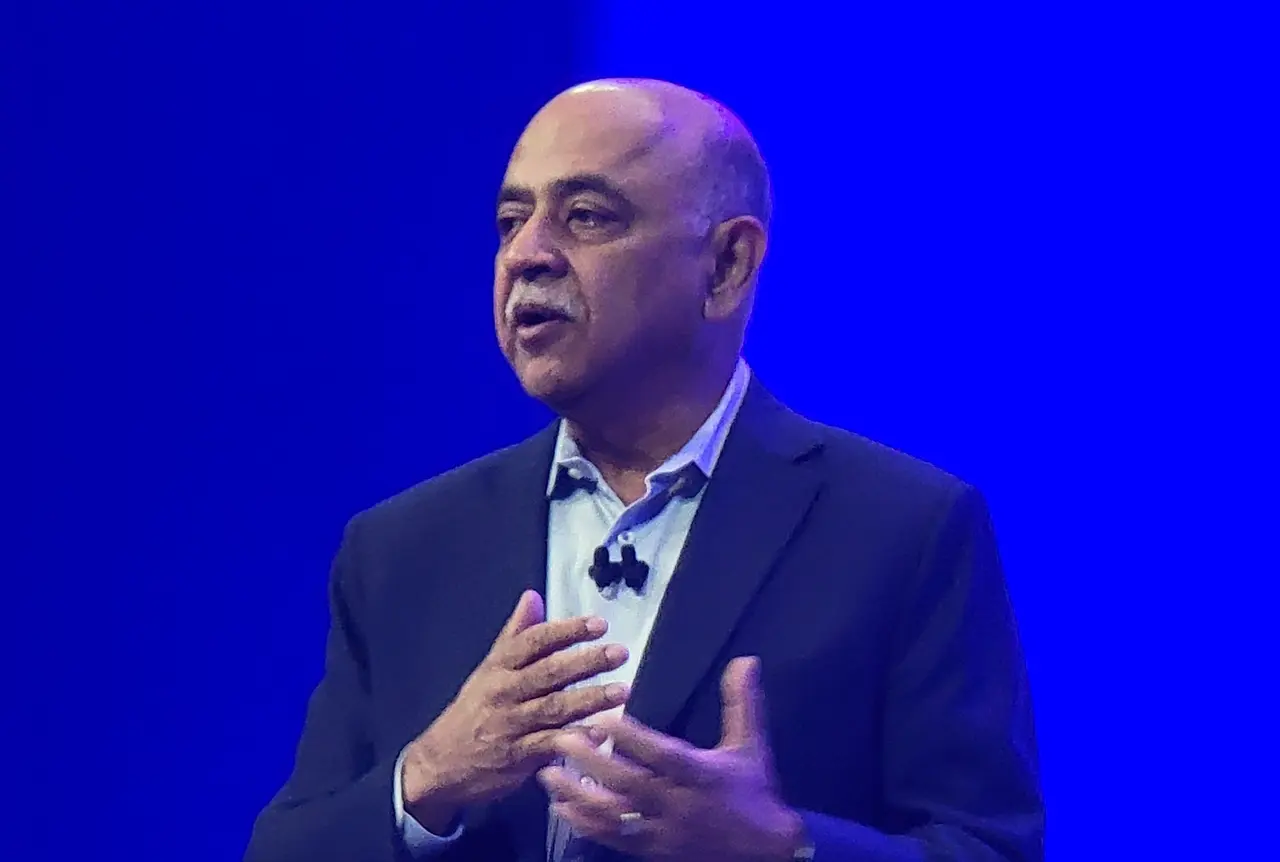
.Addressing concerns that AI won't disrupt software unit operations, Krishna stated that only 2% of IBM's software could be replaced with AI-generated applications
4
. He emphasized that the rest of IBM's software helps clients prepare for AI through hybrid cloud infrastructure, data management, and automation4
. The company introduced Project Lightwell, a new service that uses AI to remediate security vulnerabilities in legacy open source packages, with subscriptions priced at $1 million per year2
. Early adopters include Bank of America, Citi, Goldman Sachs, JPMorgan Chase, Mastercard, Morgan Stanley, Visa, and Wells Fargo2
. Krishna described this as a "multibillion-dollar" opportunity, positioning IBM to sell enterprises AI tools to address security issues that Anthropic's Mythos AI is helping to uncover2
.
Source: SiliconANGLE
Summarized by
Navi
[2]
[3]
14 Jul 2026•Business and Economy

24 Jul 2025•Business and Economy

23 Oct 2025•Business and Economy

1
Technology

2
Policy and Regulation

3
Science and Research