14 Sources
[1]
IBM's mainframe sales get mugged by AI hardware panic, stock loses more than a quarter of its value
CEO Krishna: Customers blew their Z budgets on servers and storage before prices spike, Q2 financials 'disappointing' IBM says customers spooked by soaring demand for AI infrastructure raided their mainframe budgets to stockpile servers, storage, and memory instead, knocking Big Blue's flagship Z business off course. Ahead of its full calendar Q2 earnings release next week, IBM took the unusual step of publishing preliminary quarterly results alongside a letter from CEO Arvind Krishna explaining why the numbers fell short of expectations. The biggest disappointment came in Infrastructure, where revenue fell 7 percent, despite what IBM had previously described as the strongest launch of a mainframe generation in its history. The disclosure has led to a near-26 percent plunge in Big Blue share price. The Q2 culprit wasn't a sudden loss of affection for mainframes, according to Krishna, but a last-minute scramble to secure hardware increasingly caught up in the AI spending boom. "In the last few weeks of June, we saw clients shift their quarterly capex spend toward servers, storage, and memory purchases to secure supply-constrained infrastructure ahead of expected price increases," Krishna wrote. "This dynamic impacted client buying patterns." IBM had expected some disruption from supply chain pressures, he said, "but we did not anticipate the magnitude of the capex reprioritization." That's an unusually candid admission from a company whose Z mainframes remain one of its highest-margin businesses. Customers, it seems, preferred to refresh infrastructure they fear might soon become more expensive or harder to obtain. The spending shift also rippled through IBM's software business because fewer mainframe deals meant weaker sales of the transaction-processing software that typically accompanies them. Krishna pointed to another factor as well, saying clients were distracted by "rapidly evolving, industry-wide cybersecurity concerns" during the quarter, though he offered no further details on what those concerns were or how they affected purchasing decisions. IBM was willing to shoulder some of the blame. "These conditions require our teams to execute perfectly, and this quarter we faltered," Krishna wrote. "We did not adapt and move quickly enough, and numerous large deals failed to close on the timelines we expected, driving the majority of our shortfall." Not everything disappointed. Red Hat revenue grew 11 percent, recent acquisitions including HashiCorp and Confluent performed strongly, and IBM's Distributed Infrastructure business posted record reported growth of 37 percent, driven by Power servers and storage systems. Still, the quarter offers another sign of how the AI infrastructure race is reshaping enterprise IT budgets. For at least one quarter, customers decided the safest investment wasn't the newest mainframe - it was buying as much in-demand hardware as possible before someone else did. ®
[2]
Manic markets show no mercy to IBM
IBM issued a profit warning that sent its shares plunging more than 20 per cent, as customers raced to redirect spending to servers and storage ahead of price increases driven by the AI boom. The tech company had expected strong sales in mainframes and related software but instead corporate clients shifted to buying computing infrastructure from elsewhere. [...] Shares closed 25 per cent lower, in the biggest drop since at least 1972. International Business Machines Corporation, whose full name is just a bit less clunky than its predecessor firm, the Computing-Tabulating-Recording Company, has not been on tech's cutting edge for a while. Though the company is perhaps most well known for its hardware-driven enterprise mainframe computing business, today most of its revenue comes from software. It also has considerable IT consulting and finance segments. In recent years, they've tried a rebrand as a "hybrid cloud and AI" company, a transition that has been executed with mixed results. Red Hat, a 2019 cloud acquisition, has been a notable growth engine, but watsonx, IBM's longstanding AI play, has largely been lapped by the rise of the big AI labs. With over $8.3bn in R&D spend last year the company hasn't thrown in the towel on innovation, but it's definitely at the more value end of information technology. But many companies that are far from the cutting edge are doing just fine in the AI boom. So what has gone wrong here? Goldman's post-results analysis flags what they call "company-specific execution issues". The company knew it was delivering bad news, accompanying its announcement with a letter from CEO Arvind Krishna, who wrote: These conditions require our teams to execute perfectly, and this quarter we faltered. We did not adapt and move quickly enough, and numerous large deals failed to close on the timelines we expected, driving the majority of our shortfall. These are not excuses, but they are realities. In their announcement, the company highlighted increasing capex in servers and memory for worse earnings results, which speaks to memory mania that isn't slowing down. What's interesting about the massive sell-off is that the hard numbers behind it seem . . . not that bad? Infrastructure revenue fell 7 per cent in the second quarter, IBM said, compared with an expectation for a "low single-digit" decline. Software revenue rose 5 per cent. Overall revenues were $17.2bn, up 1 per cent on the same period a year ago but below analyst estimates of $17.8bn. Earnings per share fell 2 per cent to $2.27 and were also below forecasts. We're surprised that produced a drop that surpasses Enron's inter-day change the day the SEC opened an accounting enquiry (-20.7 per cent). IBM's modest losses don't seem to justify such a harsh sell-off -- nor Krishna's Masayoshi Son-style apologies. But these are not normal times. It might not be all bad news. Though Goldman "expect[s] the stock to trade meaningfully lower" following the announcement, they maintained their 2026-2028 EPS estimates. HSBC, however, downgraded them from hold to reduce. Shares ended the day at $217 -- a far cry from the price target of $350 Barclays set last month in a report that compared IBM's trajectory in the quantum space to Nvidia's. They say that "no one ever got fired for buying IBM". That procurement adage may not apply to portfolio managers today.
[3]
IBM shares plunge after preliminary Q2 revenue falls short of estimates despite surging AI bookings
IBM shares fell sharply after preliminary Q2 revenue came in below estimates despite AI bookings topping $12 billion cumulatively. IBM issued preliminary second-quarter results on Monday showing revenue of roughly $17 billion, up one percent year over year but well below the $18 billion that analysts had expected. Shares fell as much as 17 percent in premarket trading, erasing weeks of gains that had been fuelled by bullish analyst coverage and a stock rally of 30 percent in May alone. CEO Arvind Krishna called the results disappointing in a letter to investors. The miss was broad. Software revenue rose five percent, with Red Hat up 11 percent, but both fell short of forecasts, while consulting was essentially flat and infrastructure revenue dropped seven percent as clients pulled back on mainframe and storage purchases. Krishna blamed execution issues including large deals that failed to close, and said some clients shifted capital spending toward servers, storage, and memory in the final weeks of June ahead of expected tariff-related price increases. Adjusted earnings per share came in at nearly three dollars, also below the roughly three dollar consensus. Gross profit margin fell to just under 58 percent, down about one percentage point from a year earlier, while pre-tax margin slipped to just over 14 percent. The combination of weaker revenue and narrower margins drove the sharp sell-off. The one bright spot was artificial intelligence. IBM said cumulative AI bookings have now surpassed $12 billion, suggesting sustained enterprise demand for AI consulting and infrastructure even as the broader business stumbled. The company has been investing heavily in AI partnerships, including a recent tie-up with OpenAI on enterprise cybersecurity, and Krishna has framed AI as the growth engine that will eventually reshape the company's revenue mix. But the preliminary results raise questions about whether that AI momentum can offset weakness in IBM's legacy businesses quickly enough. The infrastructure decline and consulting stagnation are familiar problems for the company, and the execution issues Krishna cited suggest internal challenges beyond macroeconomic headwinds. IBM plans to release full quarterly results later this month. For investors who had bought into the thesis that IBM was finally turning a corner, the preliminary numbers are a reminder that the transition from legacy enterprise computing to an AI-driven business remains uneven. The stock had been one of the best performers in the technology sector this year before Monday's drop.
[4]
This "will rattle many": IBM stock tanks as AI budgets shift
Why it matters: The software industry is suffering as companies shift their tech spending from conventional software to AI tokens and data centers. Driving the news: IBM CEO Arvind Krishna delivered a preliminary look at the company's second-quarter earnings, saying IBM had "faltered" in adapting to the AI spending shift. * "We did not anticipate the magnitude of the capex reprioritization," Krishna said in a letter to shareholders, noting that clients were also "distracted" with cybersecurity needs driven by emergent AI threats. * "This a major miss that will rattle many," Baird managing director Ted Mortonson tells Axios in an email. Threat level: Krishna said the rising costs of chips left less room for IBM's bread and butter: mainframes and software. * "In the last few weeks of June, we saw clients shift their quarterly capex spend toward servers, storage, and memory purchases to secure supply-constrained infrastructure ahead of expected price increases," Krishna said. Zoom in: IBM saw this play out with sales in its Z platform, mainframes that process many of the world's financial transactions, airline reservations and other mission-critical computing workloads. * IBM launched the newest generation of the platform, the AI-focused z17, in 2025, in what it called its strongest second quarter launch in company history. But Tuesday, Krishna noted a "shortfall" in sales in the recent quarter. * The results suggest more customers are deferring purchases, with Krishna noting that "numerous large deals failed to close on the timelines we expected." By the numbers: IBM's software revenue is expected to rise 5%, compared with Wall Street's expectation of 10%, according to Evercore ISI analysts. * Infrastructure revenue is expected to fall 7%, compared with expectations of a 3% decline. Yes, but: While software spending is under pressure, AI spending is increasingly under scrutiny, as well. * Companies are implementing AI usage caps and shifting toward lower-cost models to preserve budgets, according to UBS analyst Taylor McGinnis. What we're watching: Whether IBM can fill the gaps with new sources of revenue, such as quantum computing. * The company recently announced plans to partner with the U.S. Department of Commerce to build Anderon, matching $1 billion in federal funding to build the quantum wafer foundry. * Krishna said IBM is also "on track to deliver the first large-scale fault-tolerant quantum computer by 2029." The bottom line: The AI economy is starting to claim some victims.
[5]
'Worse than our expectations': IBM's shares drop 25% after CEO says it hasn't adapted quickly enough to AI industry changes
IBM's share price just dropped by a whopping 25%. That's thanks to IBM's CEO, Arvind Krishna, saying the company didn't adapt quickly enough to the industry moving towards spending less on software and more on data centre infrastructure (via CNN). As noted by CNN, this puts the company in the vicinity of its worst day ever, which was Black Monday in 1987. Although it should also be noted that this steep drop occurred during pre-market trading, which tends to be more volatile than in-hours trading. We'll have to see where the chips actually fall by the end of the day. There's also the fact that although it's a big drop for a single day, it's just returned things to how they were back in mid-May, with the stock price sitting at around $215. That's already climbed back up ever so slightly to around $220. According to CNN, the company CEO explained: "What played out was worse than our expectations. We did not adapt and move quickly enough... While we anticipated some supply chain related impact in our expectations, we did not anticipate the magnitude of the capex reprioritization." "These conditions require our teams to execute perfectly, and this quarter we faltered. These are not excuses, but they are realities." Given this tone will have been directed at investors, it's obvious why the share price has fallen. Investor calls and previews are times for presenting as good an image as possible, and given this context, presenting "not excuses" but "realities" isn't likely to inspire much confidence. IBM is now largely a business-to-business software solution and consulting company, and it's understandable how the once-dominant behemoth could therefore have struggled to make the most of the new AI data centre-centric industry. That being said, the company does still have its foot in hardware, as it recently announced the "world's first" sub-nanometre chip tech. The CEO's comments were a preview of the actual reporting of the company's second-quarter earnings. Those are set to be reported next week, on July 22.
[6]
IBM shares plummet 25% on weak preliminary earnings
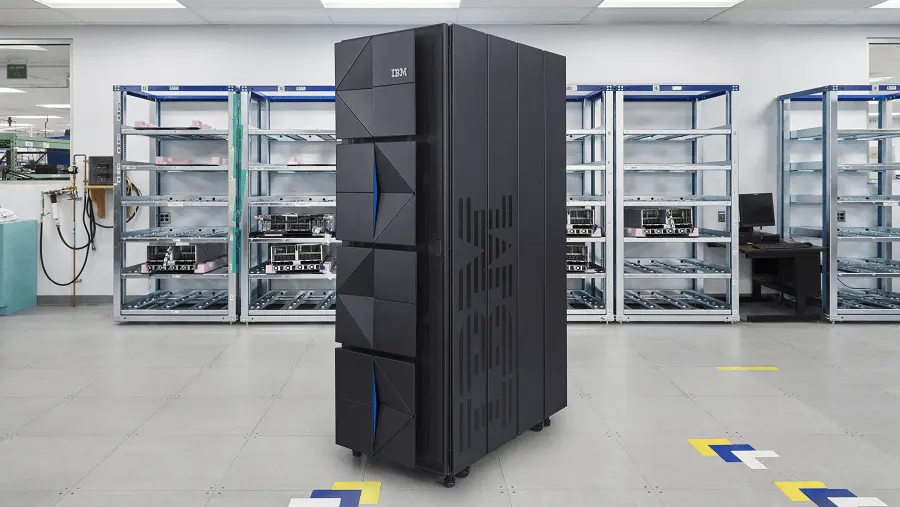
Shares of IBM Corp. dropped 25% today after it posted preliminary second quarter earnings that missed expectations. The company estimates that it generated $17.2 billion in revenue during the three quarters ended June 30. Analysts polled by FactSet expected $660 million more. IBM's adjusted earnings of $2.93 per share also fell short of the consensus estimate, which forecasted $3.01 per share. IBM Chief Executive Officer Arvind Krishna attributed the weak results to slow mainframe demand. In April, the company debuted a new flagship mainframe called the IBM z17. It features a custom chip with an eight-core central processing unit and an artificial intelligence accelerator. Krishna wrote in an investor letter that "this was the strongest start to a mainframe program in our history" but sales ultimately missed expectations. The slowdown dented demand for IBM's mainframe-based transaction processing software, which further weighed on its revenue. The company says that its mainframes help process 87% of all financial transactions. IBM's mainframe business counts 44 of the world's 50 largest banks as customers. Krishna attributed the slow demand to changing customer priorities. The executive wrote in today's investor letter that IBM clients prioritized servers, storage and memory over mainframe purchases in the second quarter. "These conditions require our teams to execute perfectly, and this quarter we faltered," Krishna wrote. "We did not adapt and move quickly enough, and numerous large deals failed to close on the timelines we expected, driving the majority of our shortfall." The spending shift to servers and storage had a silver lining for IBM. The company's distributed infrastructure business, which includes its Power server line and storage systems, saw sales grow 37% year-over-year. That's an all-time record, but IBM's overall infrastructure revenue still declined 7% on account of weak mainframe sales. The strong demand for IBM's distributed infrastructure products wasn't the only bright spot in its second quarter earnings. The company's software revenue rose 5% year-over-year thanks partly to its recently acquired HashiCorp and Confluent units. The former business develops tools that automate infrastructure management tasks. Confluent, in turn, sells a platform that enables companies to move data between applications in near real-time. IBM's consulting revenue rose only 1% in the second quarter. However, Krishna noted that the company experienced "continued growth in consulting signings led by strong GenAI contribution." In May, IBM and Red Hat teamed up to provide AI-powered cybersecurity services through an initiative called Project Lightwell. It's designed to help organizations fix vulnerabilities in the open-source components that power their software.
[7]
Why IBM shares crashed 26%: CEO Arvind Krishna highlights customer spending shifts towards AI
IBM's second-quarter results missed expectations, impacted by customer spending shifts, triggering one of the worst crashes in its stock. CEO Arvind Krishna said clients prioritized AI infrastructure, securing supply-constrained hardware in June. He also atrributed the shortfall to execution lapses and a mainframe business setback. IBM Chairman and CEO Arvind Krishna attributed the company's weaker-than-expected second-quarter performance to an unexpected shift in customer spending towards AI infrastructure, including servers, storage and memory, to secure supply-constrained hardware, which affected its Software and Infrastructure businesses. Shares of the company fell over 26% to $213.22 following the update, which was their biggest intraday loss in 58 years, according to a Bloomberg report. US MarketsPowered By As on 14 Jul 2026, 11:18 PM IST S&P 500 Top Gainers CrowdStrike Holdings208.22(10.81%) Goldman Sachs Group1,127(7.75%) Monolithic Power Systems1,390(7.67%) Dell Technologies458.08(7.25%) Gainers" S&P 500 Top Losers IBM218.96(-24.56%) Coterra Energy32.56(-8.62%) HCA Healthcare362.90(-7.12%) GE HealthCare Techs60.96(-6.66%) Losers" IBM said preliminary second-quarter revenue stood at $17.2 billion, missing analysts' expectations of $17.9 billion. Revenue from its Infrastructure division fell 7%, while preliminary diluted earnings slipped 2% to $2.27 per share. The company said it is still finalising its financial statements, with official quarterly results due next week and subject to minor revisions. Krishna said customer spending priorities changed sharply in the final weeks of June. "In the last few weeks of June, we saw clients shift their quarterly capex spend toward servers, storage, and memory purchases to secure supply-constrained infrastructure ahead of expected price increases. This dynamic impacted client buying patterns. While we anticipated some supply chain related impact in our expectations, we did not anticipate the magnitude of the capex reprioritization," he said. Krishna acknowledged execution lapses, saying, "These conditions require our teams to execute perfectly, and this quarter we faltered. We did not adapt and move quickly enough, and numerous large deals failed to close on the timelines we expected, driving the majority of our shortfall." Also Read: Is Wall Street heading towards a massive crash? Here's what history hints The biggest setback came from IBM's mainframe business. Although the company had anticipated a moderation in Infrastructure revenue after the record launch of its z17 mainframe, the decline was steeper than expected as sales of IBM Z systems and related transaction-processing software fell short of forecasts. IBM also cited rapidly evolving cybersecurity concerns across industries, which distracted customers and delayed technology purchasing decisions during the quarter. Despite the disappointing quarter, IBM highlighted areas of resilience. Red Hat revenue growth accelerated to 11%, recently acquired businesses such as HashiCorp and Confluent performed strongly, and its Distributed Infrastructure business posted a record 37% growth, supported by robust demand for Power servers and storage systems. Consulting signings also remained healthy, driven by generative AI projects. Looking ahead, IBM said it is accelerating initiatives to improve execution while continuing to invest aggressively in AI and quantum computing. The company recently launched Lightwell, a new AI-powered cybersecurity platform, and reaffirmed plans to build a large-scale fault-tolerant quantum computer by 2029. "Lightwell is a $5 billion commitment backed by new frontier AI capabilities and a global force of more than 20,000 engineers. Early adopters include organizations like Bank of America, BNY, Citi, Goldman Sachs, JPMorganChase, Mastercard, Morgan Stanley, and more," he said.
[8]
IBM warns AI boom is squeezing software budgets, triggers sector rout
Software investors have long been on edge over fears that AI tools capable of automating routine work could pose an existential threat to the industry. Tuesday's announcement showed that even the boom in spending on servers, chips and networking gear for AI was eating into software budgets. IBM sparked a market rout on Tuesday after forecasting second-quarter revenue below estimates and signaling that businesses were favoring spending on data-center infrastructure over software, the starkest sign yet of AI's growing toll on the sector. Shares of Big Blue slumped 20% in premarket trading, dragging other software stocks and Dow futures lower. The iShares Expanded Tech-Software Sector ETF was last down more than 4%. Software investors have long been on edge over fears that AI tools capable of automating routine work could pose an existential threat to the industry. Tuesday's announcement showed that even the boom in spending on servers, chips and networking gear for AI was eating into software budgets. "In the last few weeks of June, we saw clients shift their quarterly capex spend toward servers, storage, and memory purchases to secure supply-constrained infrastructure ahead of expected price increases," IBM CEO Arvind Krishna said in a letter to investors. "While we anticipated some supply-chain related impact in our expectations, we did not anticipate the magnitude of the capex reprioritization," Krishna said, adding that the company had "faltered" in adapting quickly enough and that "numerous large deals" had failed to close as expected. According to the preliminary results, the company expects revenue of $17.2 billion during the quarter, compared with analysts' estimate of $17.86 billion, according to data compiled by LSEG. Adjusted earnings per share is expected to be $2.93, compared with the estimate of $3.02. "This is an ugly moment for IBM and software stocks... the big question will be how long the shift to infrastructure and cybersecurity lasts," said Chris Beauchamp, chief market analyst at IG Group. "A few more months might be bearable, but more than that and serious questions will be asked all over again about software stocks." Microsoft, ServiceNow, Salesforce and Intuit fell between 3% and 5%.
[9]
IBM forecasts preliminary Q2 revenue below estimates as spending shifts to AI
According to the preliminary results, the company expects revenue of $17.2 billion during the quarter, compared with analysts' estimate of $17.86 billion, according to data compiled by LSEG. IBM's preliminary second-quarter revenue forecast came below Wall Street estimate on Tuesday, as customers prioritized spending on AI infrastructure, including servers, storage and memory purchases, sending its shares slumping 17% in premarket trading. The results reflect an industry-wide shift in technology spending toward AI infrastructure, reducing budgets for traditional software. According to the preliminary results, the company expects revenue of $17.2 billion during the quarter, compared with analysts' estimate of $17.86 billion, according to data compiled by LSEG. Adjusted earnings per share is expected to be $2.93, compared with the estimate of $3.02. IBM CEO Arvind Krishna said in a letter to investors that in this quarter the company "faltered" in adapting quickly enough to the evolving market conditions, leading to "numerous large deals" not closing as expected.
[10]
IBM shares plunge 25% as AI spending boom hammers business: 'Ugly moment for software stocks'
IBM said it had "faltered" in keeping pace with a shift in corporate spending from software to data-center infrastructure and forecast second-quarter earnings below estimates, the clearest sign yet of AI's growing toll on the sector. The warning sent IBM's shares down 25% in trading on Tuesday, putting the stock on track for an even steeper single-day decline than it suffered during the 1987 "Black Monday" crash. Other software stocks also tumbled, dragging the Dow lower, while the iShares Expanded Tech-Software Sector ETF fell more than 4%. Software investors have long been on edge due to fears that AI tools capable of automating routine work could pose an existential threat to the industry. Tuesday's announcement showed that even the boom in spending on servers, chips and networking gear for AI was eating into software budgets. "In the last few weeks of June, we saw clients shift their quarterly capex spend toward servers, storage, and memory purchases to secure supply-constrained infrastructure ahead of expected price increases," CEO Arvind Krishna said in a letter to investors. "While we anticipated some supply-chain related impact in our expectations, we did not anticipate the magnitude of the capex reprioritization," Krishna said, adding that "numerous large deals" had failed to close as expected. IBM said the weakness was largely in its mainframe business, which sells high-powered computers and software that process millions of daily transactions for industries such as banking and airlines. It also noted that businesses were prioritizing cybersecurity spending given recent breakthroughs in AI hacking abilities. Anthropic's advanced Mythos model has jolted businesses this year with its ability to expose flaws in existing software and encryption systems, pushing companies to ramp up cybersecurity. Slowing growth IBM said it expects revenue to rise just 1% to $17.2 billion in the second quarter, compared with analysts' estimate of $17.86 billion, according to data compiled by LSEG. That would mark its weakest revenue growth in more than a year. It forecast adjusted earnings per share of $2.93, compared with the estimate of $3.02. IBM sells mainframe computers, enterprise software and IT consulting services to large corporations and governments. The company has been trying to reduce its reliance on the cyclical mainframe business by focusing on its software unit including its high-margin Red Hat business, which helps firms run applications across different cloud providers. "This is an ugly moment for IBM and software stocks... the big question will be how long the shift to infrastructure and cybersecurity lasts," said Chris Beauchamp, chief market analyst at IG Group. "A few more months might be bearable, but more than that and serious questions will be asked all over again about software stocks." Microsoft, ServiceNow, Salesforce and Intuit fell between 2% and 5%. To reassure investors, IBM on Tuesday highlighted its heavy investments in quantum computing including more than $10 billion to build the first large-scale quantum computer by 2029. The technology has drawn fresh interest since the US government in May backed companies including IBM to shore up the supply chain. But IBM's quantum efforts and expanding its AI partnerships, including with OpenAI, are still in early stages and are not yet large enough to materially offset weakness in its core software and infrastructure businesses. The company is expected to report second-quarter results on July 22.
[11]
Japan IT stocks slide after IBM warns AI spending crowds out software budgets By Investing.com
Investing.com-- Japan's information technology stocks fell on Wednesday after IBM's weak revenue outlook fueled concerns that surging spending on artificial intelligence infrastructure is crowding out enterprise software budgets. IBM shares tumbled 25% overnight after warning that customers had shifted spending toward servers, storage and memory to secure AI infrastructure, with companies rushing to secure supply-constrained hardware while delaying software purchases. Get real-time updates on market-moving news with InvestingPro The company expects second-quarter revenue of about $17.2 billion, below analysts' estimates, marking its weakest sales growth in more than a year. In Tokyo, NEC Corp (TYO:6701) shares fell 5%, while Fujitsu (TYO:6702) slipped 5.5%, underperforming the broader market as investors reassessed the outlook for IT services companies exposed to corporate technology spending. BayCurrent Consulting (TYO:6532) shares dropped nearly 7%, while Nomura Research Institute (TYO:4307) declined 5%, IBM's warning heightened concerns that the AI spending boom, while boosting demand for chips and data-center equipment, could pressure software vendors as enterprises reallocate technology budgets.
[12]
IBM warns AI boom squeezing software budgets, shares sink
IBM shares plunged 25% on Tuesday after it signaled the AI infrastructure boom is drawing spending away from the software sector. Big Blue said it expected revenue to rise just 1% in the second quarter, falling short of Wall Street hopes. In a letter to investors, CEO Arvind Krishna said the firm had "faltered" in keeping pace with a shift in corporate spending from software to data-center infrastructure. He said that clients shifted their expenditure "toward servers, storage, and memory purchases to secure supply-constrained infrastructure ahead of expected price increases." Krishna added that "numerous large deals" had failed to close as expected. IBM sells enterprise software and IT consulting services to big business and governments. It noted that companies were also prioritizing cybersecurity spending given recent breakthroughs in AI hacking abilities. Tuesday's announcement adds to concerns over a software industry already rocked by the rise of AI tools. Software stocks Microsoft, ServiceNow, Salesforce and Intuit all fell between 1.5% and 5%.
[13]
IBM warns AI boom is squeezing software budgets, triggers sector rout
July 14 (Reuters) - IBM sparked a market rout on Tuesday after forecasting second-quarter revenue below estimates and signaling that businesses were favoring spending on data-center infrastructure over software, the starkest sign yet of AI's growing toll on the sector. Shares of Big Blue slumped 20% in premarket trading, dragging other software stocks and Dow futures lower. The iShares Expanded Tech-Software Sector ETF was last down more than 4%. Software investors have long been on edge over fears that AI tools capable of automating routine work could pose an existential threat to the industry. Tuesday's announcement showed that even the boom in spending on servers, chips and networking gear for AI was eating into software budgets. "In the last few weeks of June, we saw clients shift their quarterly capex spend toward servers, storage, and memory purchases to secure supply-constrained infrastructure ahead of expected price increases," IBM CEO Arvind Krishna said in a letter to investors. "While we anticipated some supply-chain related impact in our expectations, we did not anticipate the magnitude of the capex reprioritization," Krishna said, adding that the company had "faltered" in adapting quickly enough and that "numerous large deals" had failed to close as expected. According to the preliminary results, the company expects revenue of $17.2 billion during the quarter, compared with analysts' estimate of $17.86 billion, according to data compiled by LSEG. Adjusted earnings per share is expected to be $2.93, compared with the estimate of $3.02. "This is an ugly moment for IBM and software stocks... the big question will be how long the shift to infrastructure and cybersecurity lasts," said Chris Beauchamp, chief market analyst at IG Group. "A few more months might be bearable, but more than that and serious questions will be asked all over again about software stocks." Microsoft, ServiceNow, Salesforce and Intuit fell between 3% and 5%. (Reporting by Harshita Mary Varghese in Bengaluru; Editing by Shilpi Majumdar and Saumyadeb Chakrabarty)
[14]
IBM forecasts preliminary Q2 revenue below estimates as spending shifts to AI
July 14 (Reuters) - IBM's preliminary second-quarter revenue forecast came below Wall Street estimate on Tuesday, as customers prioritized spending on AI infrastructure, including servers, storage and memory purchases, sending its shares slumping 17% in premarket trading. The results reflect an industry-wide shift in technology spending toward AI infrastructure, reducing budgets for traditional software. According to the preliminary results, the company expects revenue of $17.2 billion during the quarter, compared with analysts' estimate of $17.86 billion, according to data compiled by LSEG. Adjusted earnings per share is expected to be $2.93, compared with the estimate of $3.02. IBM CEO Arvind Krishna said in a letter to investors that in this quarter the company "faltered" in adapting quickly enough to the evolving market conditions, leading to "numerous large deals" not closing as expected. (Reporting by Harshita Mary Varghese in Bengaluru; Editing by Shilpi Majumdar)
Share
Copy Link
IBM shares suffered their worst single-day drop since 1987 after CEO Arvind Krishna revealed customers raided mainframe budgets to stockpile servers and storage before AI-driven price increases. The preliminary Q2 revenue of $17 billion missed analyst expectations by nearly $1 billion, exposing how the AI infrastructure boom is reshaping enterprise IT spending priorities and catching even established tech giants off guard.
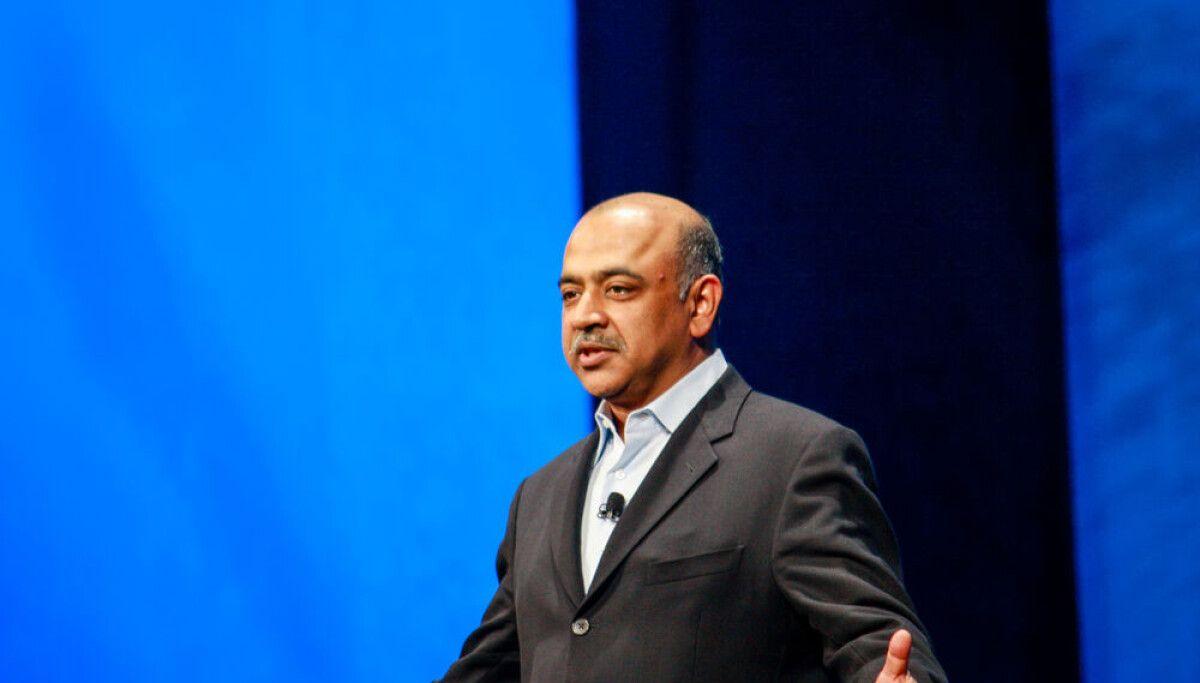
IBM stock experienced a devastating 25 percent drop after CEO Arvind Krishna issued a rare preliminary earnings warning, revealing that customers diverted their mainframe budgets to stockpile servers, storage, and memory ahead of anticipated price increases driven by the AI infrastructure boom
1
. The decline marks IBM's worst single-day performance since Black Monday in 1987, wiping out months of gains and erasing billions in market value2
. IBM shares closed at $217, a dramatic fall from the $350 price target some analysts had set just weeks earlier.
Source: ET
The preliminary Q2 revenue came in at approximately $17 billion, up just 1 percent year over year but nearly $1 billion below the $18 billion analysts had expected
3
. Arvind Krishna took the unusual step of publishing a letter to shareholders explaining the shortfall, admitting that "we did not anticipate the magnitude of the capex reprioritization" as clients scrambled to secure supply-constrained infrastructure in the final weeks of June4
. The candid admission highlights execution issues at a company that has struggled to position itself effectively within the AI spending shift reshaping corporate technology budgets.The most significant damage occurred in IBM's Infrastructure division, where revenue fell 7 percent compared to expectations of only a 3 percent decline
4
. This drop is particularly striking given that IBM had described the launch of its z17 mainframe in 2025 as the strongest second-quarter mainframe generation launch in company history1
. The z17 mainframe, designed to process financial transactions and mission-critical computing workloads, saw numerous large deals fail to close on expected timelines as customers prioritized securing data center infrastructure instead.
Source: SiliconANGLE
Software revenue rose just 5 percent, well below Wall Street's expectation of 10 percent growth
4
. The mainframe sales shortfall directly impacted software performance because fewer mainframe deals meant weaker sales of transaction-processing software that typically accompanies them1
. Red Hat, IBM's 2019 hybrid cloud and AI acquisition, managed 11 percent growth but still fell short of forecasts3
. Gross profit margin declined to just under 58 percent, down about one percentage point from the previous year, while pre-tax margin slipped to just over 14 percent3
.The capex shift IBM experienced reflects a fundamental transformation in enterprise IT spending priorities. "In the last few weeks of June, we saw clients shift their quarterly capex spend toward servers, storage, and memory purchases to secure supply-constrained infrastructure ahead of expected price increases," Krishna wrote
1
. This AI hardware panic demonstrates how companies are racing to lock in infrastructure before tariff-related price increases and supply constraints worsen3
. Baird managing director Ted Mortonson told Axios this represents "a major miss that will rattle many" in the software industry4
.Krishna also cited "rapidly evolving, industry-wide cybersecurity concerns" that distracted clients during the quarter, though he provided no further details
1
. The combination of AI-driven infrastructure demand and security pressures created conditions that, as Krishna acknowledged, "require our teams to execute perfectly, and this quarter we faltered"5
. His admission that IBM "did not adapt and move quickly enough" represents a stark acknowledgment of execution issues at a company that spent over $8.3 billion on R&D last year2
.Related Stories
Despite the broader disappointment, IBM reported one bright spot: cumulative AI bookings have now surpassed $12 billion, suggesting sustained enterprise demand for AI consulting and infrastructure
3
. The company has invested heavily in AI partnerships, including a recent collaboration with OpenAI on enterprise cybersecurity, and Krishna has positioned AI as the growth engine that will eventually reshape IBM's revenue mix3
. Red Hat continued as a notable growth engine, though watsonx, IBM's longstanding AI play, has largely been overshadowed by the rise of major AI labs2
.
Source: Axios
However, the preliminary Q2 revenue results raise critical questions about whether AI momentum can offset weakness in IBM's legacy businesses quickly enough. The infrastructure revenue decline and consulting stagnation—which remained essentially flat—are familiar problems for a company attempting to rebrand as a hybrid cloud and AI enterprise
3
. Adjusted earnings per share came in at nearly $3, also below the consensus of roughly $33
. Goldman Sachs flagged "company-specific execution issues" in their post-results analysis, while HSBC downgraded IBM from hold to reduce2
.The profit warning and subsequent IBM shares plunge signal that the AI economy is claiming victims even among established technology providers. Companies are implementing AI usage caps and shifting toward lower-cost models to preserve budgets, according to UBS analyst Taylor McGinnis, putting additional pressure on traditional software vendors
4
. For investors who believed IBM was finally turning a corner after the stock rallied 30 percent in May alone, the preliminary numbers serve as a reminder that the transition from legacy enterprise computing to an AI-driven business remains uneven3
.IBM is exploring new revenue sources to fill the gaps, including quantum computing. The company recently announced plans to partner with the U.S. Department of Commerce to build Anderon, matching $1 billion in federal funding to construct a quantum wafer foundry
4
. Krishna stated IBM is "on track to deliver the first large-scale fault-tolerant quantum computer by 2029"4
. Whether these initiatives can compensate for the current challenges remains uncertain. IBM plans to release full quarterly results on July 22, which will provide more detail on the extent of the damage and the company's path forward3
. For now, the message is clear: even companies that have spent decades at the center of enterprise technology must adapt rapidly or risk being left behind as customers prioritize servers and storage over traditional computing platforms.Summarized by
Navi
[1]
[3]
22 Apr 2026•Business and Economy

24 Jul 2025•Business and Economy

24 Oct 2024•Business and Economy

1
Technology

2
Business and Economy

3
Technology