7 Sources
[1]
Pritzker signs landmark AI regulation bill that aims to mitigate risks
Gov. JB Pritzker signed artificial intelligence legislation modeled after similar bills in California and New York on Monday, furthering a push for a state-driven national framework in lieu of federal regulations. "Congress and the president ought to be passing similar legislation, but they've so far been unwilling, because many are captive to special interests that profit from the industry having no regulation," Pritzker said before signing the bill. "We can work together to establish thoughtful guardrails in ways that benefit both industry and the public, or we can allow a handful of actors to evade accountability and push the costs and detriment onto ordinary people. Illinois has chosen our path." Senate Bill 315, also known as the Artificial Intelligence Safety Measures Act, increases transparency and accountability requirements for the largest artificial intelligence models -- those that generate more than $500 million in annual revenue and are trained using massive computing power. The bill mirrors California's SB-53 and New York's Responsible AI Safety and Education Act, which were each signed in late 2025. It establishes new reporting standards for the possibility that the AI model could be used for large-scale harms, such as by providing users assistance in creating a chemical, biological or nuclear weapon or committing cyber-attacks. Senate sponsor Sen. Mary Edly-Allen, D-Libertyville, said there is an urgency for states to protect against those potential harms. "We are not willing to wait for Congress to act," Edly-Allen said. "There's an old saying: Give a man a fish, he eats for a day. Teach him to fish, he eats for a lifetime. Teach AI to fish, though, and it might just empty the whole river trying to figure out how." Though the three states only account for roughly 20% of the national populus, lawmakers estimate that they represent roughly 40% of the U.S. AI market, effectively creating a de facto national standard. New guardrails The new law requires model developers to publish an AI framework outlining how the developer identifies and assesses "catastrophic risk," defined as the likelihood that incidents that could cause death or serious injury to more than 50 people or more than $1 million in property damage. Developers will also be required to report any incidents that could cause harm to the state within 72 hours of identifying the incident, or 24 hours if it poses an imminent risk for death or serious physical injury. The bill's House sponsor, Rep. Daniel Didech, D-Buffalo Grove, said the harms the bill will regulate are not theoretical. "We have already seen the first AI-inspired mass shooting. We have already seen AI systems utilized to attack a municipal water and drainage utility," Didech said. He also alluded to the example of Anthropic's Mythos model, which the company said was too powerful a cyberweapon to release to the public. Anthropic supported Illinois' bill and had representatives present at the signing on Monday. "Every transformative technology in our history, from automobiles to electricity to air travel, has delivered enormous benefits while carrying real risks, and in every case the government responded not by banning the technology and not by taking a hands-off approach, but by building safeguards, so everyday people can trust that these technologies are safe," Didech said. Illinois' version, similar in most ways to the standards set in New York and California, adds a first-in-the-nation requirement for mandatory annual third-party audits; New York's version only required a single independent audit at the time when developers became large enough to qualify under the law. During debate in the General Assembly, the third-party audit provision was a point of contention for some industry stakeholders, including TechNet, a coalition of tech executives across the industry. "We remain concerned that Illinois would effectively be requiring private actors to make highly subjective determinations requiring AI safety compliance without established national standards, certifications, or clear regulatory guardrails," TechNet representative Ninia Linero said in committee May 20. OpenAI and Anthropic both supported the bill on its path through the Illinois General Assembly, and it passed with broad bipartisan support in both chambers; only five Republican senators voted against it, and it passed unanimously in the House. Though the large developers pushed for a federal framework rather than what they were concerned would be an inconsistent patchwork of state regulations, Caitlin Niedermeyer of OpenAI's Global Affairs told the Senate's AI and Social Media committee in April that OpenAI was open to a coordinated state-driven approach. "While we have been very clear that the federal government remains well-positioned to lead on frontier safety because it has the resources, expertise and institutions, we also strongly actually see a position for both Illinois but also California and New York to really lead in advancing aligned frameworks, which we believe can absolutely help create a de facto national direction of travel," Niedermeyer told the committee. What's on the AI horizon? Companies that violate it will be subject to civil penalties brought by the attorney general's office of up to $1 million for the first offense and up to $3 million for subsequent violations. But lawmakers and advocates say they expect to continue working on the topic of AI in the future. For example, Didech identified medical care and education as likely frontiers needing further evaluation of AI's public safety risks. Scott Wisor, policy director for Secure AI, was one of the advocates helping to shape Illinois' bill. Having more external evaluation of the risks the models pose, and make judgments on when they're ready for release, would be the next step for further transparency and accountability, he said. "Right now, the evaluation in this bill is, are you complying with your safety framework? Because suppose you had a safety framework, just like, 'We're going to do A, B, C, and D,' you do that, the evaluator confirms it, and yet it's still a risky thing to have out in the world," Wisor said. "So, this is a huge step forward, but I think there's more we can do," Wisor said. Illinois's law will take effect on Jan. 1, 2028. ___ This story was originally published by Capitol News Illinois and distributed through a partnership with The Associated Press.
[2]
Illinois Drops the Hammer on AI Companies
On Monday, Illinois Governor JB Pritzker signed the Artificial Intelligence Safety Measures Act into law, giving the Midwest state arguably the strictest set of regulations yet designed to protect its citizenry from the risks posed by the growing power of frontier AI companies. According to a press release from the Governor's office, the AI Safety Measures Act creates a framework that will require the "developers of the largest advanced AI systems" (read: OpenAI, Anthropic, Google, etc.) to provide public disclosures as to their safety practices, report any significant safety incidents, and remain in line with a set of compliance processes. It also creates a channel for whistleblowers working inside AI labs to safely and securely relay any safety concerns they might have without fear of repercussions. A lot of the law is in line with what states like California and New York have passed already, but Illinois is claiming a "first-in-the-nation" distinction for one major part of its efforts: It is the only state that will require AI systems to undergo regular, independent third-party safety audits. That requirement will apply to any AI company reporting more than $500 million in revenue. Those requirements are set to go into effect on January 1, 2028, now that the bill has been signed into law. While Illinois's new law has been praised by some AI-critical organizations and activists, it also has the backing of the companies it is meant to regulate. OpenAI and Anthropic both endorsed the bill as it moved through the legislature. The two companies had previously turned Illinois into a battleground for AI regulation, with OpenAI pushing a separate bill that would have shielded AI companies from lawsuits over large-scale harms attributed to their systems. Anthropic opposed that measure, which now appears to have stalled out entirely. But there was no opposition to the AI Safety Measures Act, likely due to just how close it is to laws passed in California and New York. The lack of any meaningful federal framework for AI safety has led companies like OpenAI to start lobbying at the state level with the goal of creating a makeshift set of regulations that are similar enough to make compliance easier. The company has had its hand in the mix in California and New York, and can now count Illinois as another victory in its attempt to stitch together the piecemeal quilt of regulatory requirements.
[3]
Pritzker to sign Illinois bill aimed at artificial intelligence accountability
Illinois Gov. JB Pritzker on Monday will sign legislation aimed at holding artificial intelligence companies accountable. Senate Bill 315 passed unanimously in the Illinois state Senate and House of Representatives in May. The bill was modeled after 2025 laws in New York and California, in an effort to further a national standard lawmakers say is lacking at the federal level. The bill would require developers to create and publish a transparency framework explaining how the company applies industry standards, measures model capabilities and chance of catastrophic risk, and identifies and responds to safety incidents. Developers would also be required to employ third-party auditors to ensure compliance with the framework, a provision that is still a point of contention for some industry stakeholders, including TechNet, a coalition of tech executives across the industry. SB315 is targeted towards the most capable models developed by the largest companies through its thresholds -- $500 million in revenue and a massive computing measurement. OpenAI and Anthropic both supported the bill throughout its process, and it passed the state House 110-0. In a 52-5 vote, state senators went on to approve the bill. Senate sponsor Sen. Mary Edly-Allen (D-Libertyville) compared the technology to the "wild, wild West," and said lawmakers can't take the same approach they did with social media, an approach that was minimal until recently. Pritzker is set to sign the bill at 10 a.m. Monday. Capitol News Illinois contributed to this report. Capitol News Illinois is a nonprofit, nonpartisan news service that distributes state government coverage to hundreds of news outlets statewide. It is funded primarily by the Illinois Press Foundation and the Robert R. McCormick Foundation.
[4]
Pritzker Signs Landmark AI Regulation Bill That Aims to Mitigate Risks
Gov. JB Pritzker signed artificial intelligence legislation modeled after similar bills in California and New York on Monday, furthering a push for a state-driven national framework in lieu of federal regulations. "Congress and the president ought to be passing similar legislation, but they've so far been unwilling, because many are captive to special interests that profit from the industry having no regulation," Pritzker said before signing the bill. "We can work together to establish thoughtful guardrails in ways that benefit both industry and the public, or we can allow a handful of actors to evade accountability and push the costs and detriment onto ordinary people. Illinois has chosen our path." Senate Bill 315, also known as the Artificial Intelligence Safety Measures Act, increases transparency and accountability requirements for the largest artificial intelligence models -- those that generate more than $500 million in annual revenue and are trained using massive computing power. The bill mirrors California's SB-53 and New York's Responsible AI Safety and Education Act, which were each signed in late 2025. It establishes new reporting standards for the possibility that the AI model could be used for large-scale harms, such as by providing users assistance in creating a chemical, biological or nuclear weapon or committing cyber-attacks. Senate sponsor Sen. Mary Edly-Allen, D-Libertyville, said there is an urgency for states to protect against those potential harms. "We are not willing to wait for Congress to act," Edly-Allen said. "There's an old saying: Give a man a fish, he eats for a day. Teach him to fish, he eats for a lifetime. Teach AI to fish, though, and it might just empty the whole river trying to figure out how." Though the three states only account for roughly 20% of the national populus, lawmakers estimate that they represent roughly 40% of the U.S. AI market, effectively creating a de facto national standard. New guardrails The new law requires model developers to publish an AI framework outlining how the developer identifies and assesses "catastrophic risk," defined as the likelihood that incidents that could cause death or serious injury to more than 50 people or more than $1 million in property damage. Developers will also be required to report any incidents that could cause harm to the state within 72 hours of identifying the incident, or 24 hours if it poses an imminent risk for death or serious physical injury. The bill's House sponsor, Rep. Daniel Didech, D-Buffalo Grove, said the harms the bill will regulate are not theoretical. "We have already seen the first AI-inspired mass shooting. We have already seen AI systems utilized to attack a municipal water and drainage utility," Didech said. He also alluded to the example of Anthropic's Mythos model, which the company said was too powerful a cyberweapon to release to the public. Anthropic supported Illinois' bill and had representatives present at the signing on Monday. "Every transformative technology in our history, from automobiles to electricity to air travel, has delivered enormous benefits while carrying real risks, and in every case the government responded not by banning the technology and not by taking a hands-off approach, but by building safeguards, so everyday people can trust that these technologies are safe," Didech said. Illinois' version, similar in most ways to the standards set in New York and California, adds a first-in-the-nation requirement for mandatory annual third-party audits; New York's version only required a single independent audit at the time when developers became large enough to qualify under the law. During debate in the General Assembly, the third-party audit provision was a point of contention for some industry stakeholders, including TechNet, a coalition of tech executives across the industry. "We remain concerned that Illinois would effectively be requiring private actors to make highly subjective determinations requiring AI safety compliance without established national standards, certifications, or clear regulatory guardrails," TechNet representative Ninia Linero said in committee May 20. OpenAI and Anthropic both supported the bill on its path through the Illinois General Assembly, and it passed with broad bipartisan support in both chambers; only five Republican senators voted against it, and it passed unanimously in the House. Though the large developers pushed for a federal framework rather than what they were concerned would be an inconsistent patchwork of state regulations, Caitlin Niedermeyer of OpenAI's Global Affairs told the Senate's AI and Social Media committee in April that OpenAI was open to a coordinated state-driven approach. "While we have been very clear that the federal government remains well-positioned to lead on frontier safety because it has the resources, expertise and institutions, we also strongly actually see a position for both Illinois but also California and New York to really lead in advancing aligned frameworks, which we believe can absolutely help create a de facto national direction of travel," Niedermeyer told the committee. What's on the AI horizon? Companies that violate it will be subject to civil penalties brought by the attorney general's office of up to $1 million for the first offense and up to $3 million for subsequent violations. But lawmakers and advocates say they expect to continue working on the topic of AI in the future. For example, Didech identified medical care and education as likely frontiers needing further evaluation of AI's public safety risks. Scott Wisor, policy director for Secure AI, was one of the advocates helping to shape Illinois' bill. Having more external evaluation of the risks the models pose, and make judgments on when they're ready for release, would be the next step for further transparency and accountability, he said. "Right now, the evaluation in this bill is, are you complying with your safety framework? Because suppose you had a safety framework, just like, 'We're going to do A, B, C, and D,' you do that, the evaluator confirms it, and yet it's still a risky thing to have out in the world," Wisor said. "So, this is a huge step forward, but I think there's more we can do," Wisor said. Illinois's law will take effect on Jan. 1, 2028. ___ This story was originally published by Capitol News Illinois and distributed through a partnership with The Associated Press.
[5]
Illinois becomes first state to require third-party audit of AI models
Illinois Gov. JB Pritzker (D) signed a bill on Monday, making the state the country's first to mandate the largest artificial intelligence (AI) labs to obtain third-party audits of their safety plans. Pritzker signed the Artificial Intelligence Safety Measures Act, or S.B. 315, in a ceremony Monday, stating people "want protection from the risks of AI." The bill mirrors similar legislation in California and New York but goes a step further by mandating frontier labs with more than $500 million in revenue to submit third-party audits of their safety plans every year. The third-party evaluations are intended to get oversight of these AI firms "by qualified experts without financial conflicts of interest," Pritzker added. Like California and New York, the bill also requires large frontier developers to create, publish and annually update an AI framework with assessments on catastrophic risks, cybersecurity and more. The bill passed the state legislature earlier this year with bipartisan support and received endorsements from ChatGPT-maker OpenAI and Anthropic, which created the landmark Claude model. "As AI systems become more powerful and the federal government is unwilling to step in, states have a responsibility to protect our people from the dangers of AI while still harnessing the unique potential of the technology," Pritzker said in a press release Monday. Washington has stalled on getting most AI-related legislation across the finish line amid partisan and intraparty debates. Most AI labs support a national safety framework for AI that would eliminate the patchwork of state regulations, but with inaction in Congress, firms like OpenAI and Anthropic are turning to state laws in the meantime. A bipartisan proposed framework on AI, including some preemption of state laws, was floated in the House last month, but pushback still remains. Cesar Fernandez, head of U.S. state and local government relations at Anthropic, said Illinois's pairing of AI transparency requirements and external verification is "an important step toward the accountability this technology demands."
[6]
JB Pritzker Says 'Companies and the Government Have a Responsibility' as Illinois Unveils AI Safety Law
Gov. JB Pritzker (D-Ill) said that the state is taking a proactive approach to AI oversight by requiring major developers to meet new safety and transparency standards while criticizing federal leaders for failing to enact similar regulations. Illinois AI Safety Law On Tuesday, Pritzker highlighted Illinois' new AI safety legislation in a post on X, saying the state is acting before the technology reaches a dangerous tipping point. "As AI becomes more powerful and influential, companies and the government have a responsibility to anticipate, manage, and transparently communicate the risks," Pritzker wrote. He added, "Illinois is proactively embedding safety and accountability at the frontier, not at its tipping point." In a video accompanying the post, Pritzker said the law requires large AI companies to develop risk mitigation frameworks and undergo "mandatory annual independent third-party audits," calling it "a first for any state AI legislation." He added that developers must report critical safety incidents within 72 hours, or within 24 hours if an incident poses "an imminent risk of death or serious physical harm." The legislation also requires companies to publicly disclose the risks posed by their AI systems and the steps they are taking to reduce those risks. Pritzker said the measure includes whistleblower protections and confidential reporting channels for employees raising AI safety concerns. He also argued the legislation received overwhelming bipartisan support in the Illinois General Assembly. Pritzker Quantum Push Last month, Pritzker said the state invested $500 million in the Illinois Quantum and Microelectronics Park to establish Illinois as a leader in quantum computing, with PsiQuantum building a utility-scale fault-tolerant quantum computer at the site. AI Safety Debate Intensifies Earlier, Former White House AI policy adviser Sriram Krishnan said the Trump administration would avoid creating a centralized AI licensing agency, warning it could slow innovation with unnecessary regulatory hurdles. Disclaimer: This content was partially produced with the help of AI tools and was reviewed and published by Benzinga editors. Photo courtesy: Shutterstock Market News and Data brought to you by Benzinga APIs To add Benzinga News as your preferred source on Google, click here.
[7]
Illinois Governor Signs AI Safety Law Requiring Yearly LLM Audits | PYMNTS.com
On Monday (July 6), Gov. JB Pritzker signed a law that forces the largest AI companies to prove their most powerful systems are safe before those systems reach the public. The state isn't waiting for Washington to act. It's building its own set of guardrails, and it's betting that other states will follow. According to the Associated Press (AP), the new law is called the Artificial Intelligence Safety Measures Act, also known as Senate Bill 315. The statute raises transparency and accountability standards for the largest AI models, specifically those that pull in more than $500 million in annual revenue and run on enormous computing power. The AP reported that Illinois modeled its bill after laws already signed in California and New York in late 2025. Together, these three states hold only about 20% of the country's population, but lawmakers estimate they cover close to 40% of the U.S. AI market. That gives them the muscle to set a national standard without any help from Congress. The law targets what it calls catastrophic risk. Think of it like fire codes for a skyscraper. Nobody expects the building to burn, but the rules exist because the damage would be severe if it did. Under the new Illinois law, that means any incident that could kill or seriously injure more than 50 people, or cause more than $1 million in property damage. Companies must publish a framework explaining how they spot and manage these dangers. They also have to report harmful incidents to the state within 72 hours, or within 24 hours if the threat is immediate. Supporters argued the risks are already real, not hypothetical. Rep. Daniel Didech, the bill's House sponsor, made that case directly. The AP quoted Didech as saying: "We have already seen the first AI-inspired mass shooting. We have already seen AI systems utilized to attack a municipal water and drainage utility." He compared AI to earlier breakthroughs like cars, electricity and air travel. Each one delivered huge benefits while carrying serious dangers, and in each case the government responded by building safety measures rather than banning the technology or ignoring it. Illinois added one requirement that goes farther than its neighbors. The state now mandates yearly third-party audits, the first such requirement in the nation, according to the AP. New York, by contrast, only requires a single independent audit once a developer grew large enough to fall under the law. That Illinois audit provision sparked pushback during debate. TechNet, a coalition of technology executives, warned that the state would be asking private companies to make highly subjective safety calls without clear national standards to guide them. Even so, the bill drew wide bipartisan support. It passed the House unanimously and lost only five Republican votes in the State Senate. Both OpenAI and Anthropic backed the measure as it moved through the legislature, even though large developers had pushed for a single federal framework instead of a patchwork of state rules. So, what comes next? Companies that break the law face civil penalties of up to $1 million for a first offense and up to $3 million for later ones, enforced by the attorney general's office. Lawmakers say they aren't finished. According to the AP, Didech pointed to medical care and education as areas that will likely need their own rules down the road. Advocates who helped shape the bill want future versions to include outside experts who can judge whether a model is truly ready for release, not just whether a company followed its own safety plan. The Illinois law takes effect on Jan. 1, 2028. That gives companies time to prepare, and it gives other states time to decide whether to copy the blueprint.
Share
Copy Link
Illinois Governor JB Pritzker signed the Artificial Intelligence Safety Measures Act into law, establishing the nation's first requirement for annual third-party audits of AI systems. The legislation targets companies generating over $500 million in revenue and follows similar laws in California and New York, creating a state-driven push for AI regulation amid federal inaction.
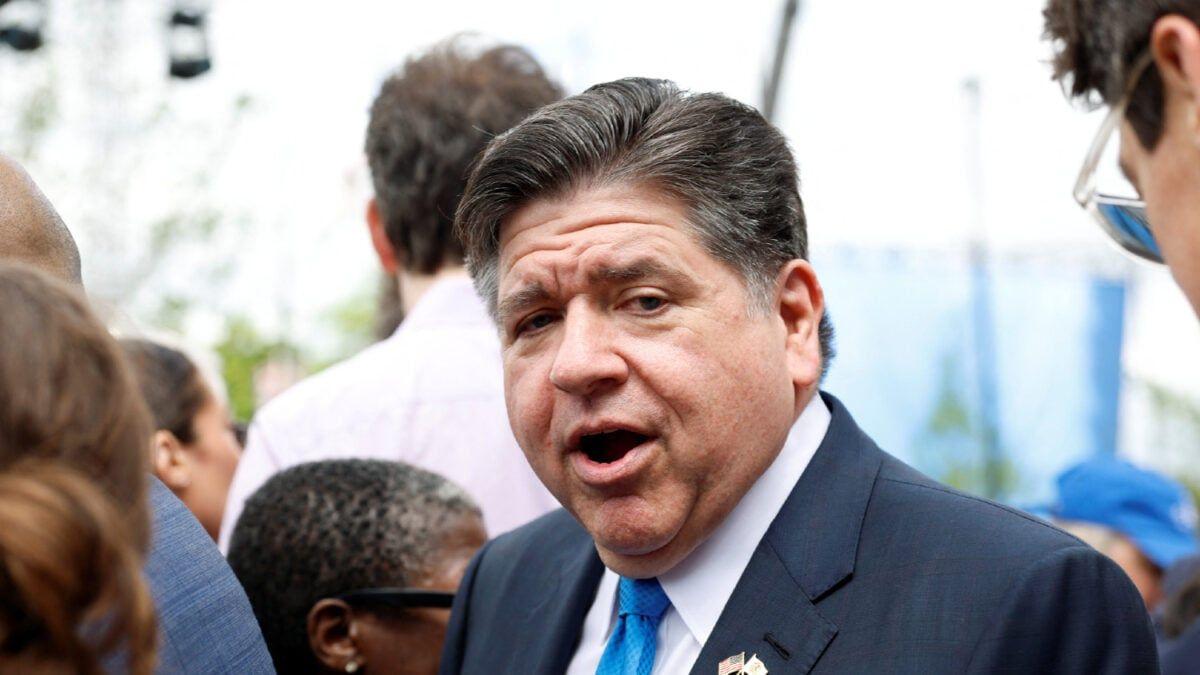
Illinois Governor JB Pritzker signed the Artificial Intelligence Safety Measures Act on Monday, positioning the state at the forefront of AI regulation in the United States
1
. The landmark legislation, also known as SB 315, introduces transparency and accountability requirements for the largest AI models—those generating more than $500 million in annual revenue and trained using massive computing power3
. "Congress and the president ought to be passing similar legislation, but they've so far been unwilling, because many are captive to special interests that profit from the industry having no regulation," Pritzker stated before signing the bill4
.
Source: Gizmodo
What distinguishes Illinois from California and New York is its groundbreaking mandate for annual third-party audits
5
. While New York's version only required a single independent audit when developers became large enough to qualify under the law, Illinois demands ongoing annual evaluations by qualified experts without financial conflicts of interest1
. This provision sparked debate during the General Assembly, with TechNet, a coalition of tech executives, expressing concerns that Illinois would "effectively be requiring private actors to make highly subjective determinations requiring AI safety compliance without established national standards, certifications, or clear regulatory guardrails"4
. The requirements are set to take effect on January 1, 20282
.The new law requires model developers to publish AI frameworks outlining how they identify and assess catastrophic risk, defined as incidents that could cause death or serious injury to more than 50 people or more than $1 million in property damage
1
. Developers must report any incidents that could cause harm to the state within 72 hours of identification, or 24 hours if it poses an imminent risk for death or serious physical injury4
. The legislation establishes new reporting standards for the possibility that AI models could be used for large-scale harms, such as providing users assistance in creating chemical, biological or nuclear weapons or committing cyber-attacks1
.Related Stories
Senate sponsor Sen. Mary Edly-Allen emphasized the urgency: "We are not willing to wait for Congress to act"
3
. Though Illinois, California, and New York only account for roughly 20% of the national population, lawmakers estimate they represent roughly 40% of the U.S. AI market, effectively creating a de facto national standard1
. The bill passed with broad bipartisan support—only five Republican senators voted against it, and it passed unanimously in the House4
.Both OpenAI and Anthropic supported the Illinois AI bill throughout its legislative process
2
. Cesar Fernandez, head of U.S. state and local government relations at Anthropic, called Illinois's pairing of AI transparency requirements and external verification "an important step toward the accountability this technology demands"5
. Anthropic representatives were present at the signing ceremony, and the company had previously referenced its Mythos model as an example of a cyberweapon too powerful to release publicly1
. The legislation also creates a channel for whistleblowers working inside frontier AI labs to safely relay safety concerns without fear of repercussions2
. With federal inaction persisting and Washington stalled on AI-related legislation amid partisan debates, most AI labs now support a national AI safety regulation framework that would eliminate the patchwork of state regulations, but firms like OpenAI and Anthropic are turning to state laws in the meantime5
.Summarized by
Navi
[2]
28 May 2026•Policy and Regulation

06 May 2026•Policy and Regulation

10 Apr 2026•Policy and Regulation

1
Technology

2
Policy and Regulation

3
Technology