5 Sources
[1]
Trump loses more control over AI regulation as Illinois passes landmark law
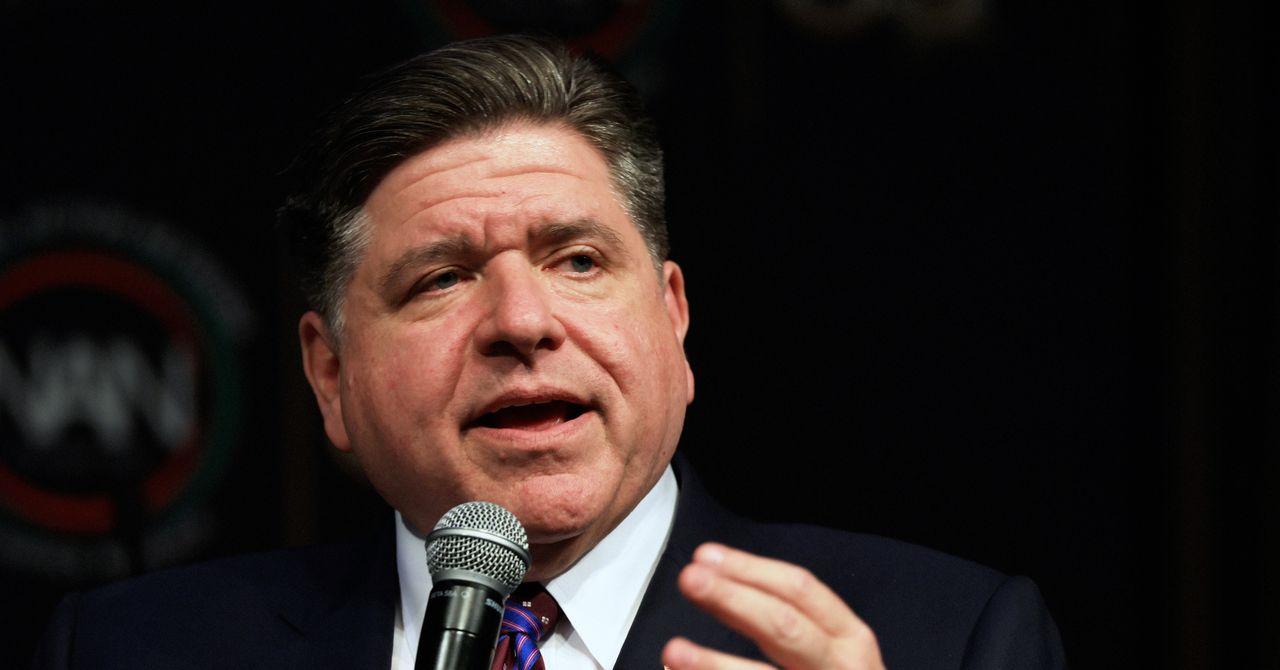
A few days after President Donald Trump abruptly canceled a plan that would have given the federal government power to vet frontier AI models over fears that it might hobble innovation, Illinois lawmakers passed the nation's strongest AI safety law. On Wednesday, the Illinois legislature passed SB 315. If Illinois Governor J.B. Pritzker signs the bill into law, the largest AI firms would be required to submit public safety plans and annual reports summarizing the results of independent, third-party safety testing of their frontier models. They would also have to report any critical safety incidents to the state within 72 hours -- or within 24 hours if there's potentially "an imminent risk of death or serious physical harm." And their employees will have a clear avenue for reporting emerging safety risks that companies may be tempted to downplay, with protections provided by the state's whistleblower laws. On X, Pritzker confirmed his intent to sign, proclaiming that "Illinois is leading the nation in holding Big Tech accountable." "I look forward to signing SB 315 and working with the legislature so that AI, when used, is used responsibly," Pritzker said. Leading AI firms supported safety law Both OpenAI and Anthropic, whose models would be vetted by the state, supported SB 315. OpenAI's chief of global affairs Chris Lehane told Wired that the AI firm is pushing to pass similar laws in other states in what seems like a move to avoid having to comply with a patchwork of starkly different state laws. Anthropic's head of state and local government relations, Cesar Fernandez, told NBC News that the law's requirements mirror safety testing protocols that leading AI firms are already voluntarily doing. However, he described the landmark law as important for establishing a "baseline that every leading AI developer is expected to meet." Reading between the lines, the companies' support suggests that the big AI firms may benefit from requirements that they can easily meet but might pose a greater challenge to smaller AI firms. Scott Wisor, a policy director at a nonprofit called Secure AI Project, which supported the bill, told Wired that without the law, "we're in a situation where the AI companies grade their own homework." Who would test frontier models? To force companies to be more transparent about rapid developments, Illinois would likely rely on "the Big Four accounting and auditing firms -- Deloitte, EY, KPMG, and PwC -- to audit their safety practices," Wisor said. The required independent audits will likely frustrate Trump, who has tried and failed to stop states from implementing AI safety laws as Congress stalls on passing any legislation. For Trump, the priority has been to promote AI industry interests, but he began considering expanding federal government safety testing after Anthropic's Mythos was released and the AI firm limited access due to safety concerns. Whether or not governments at any level are actually prepared to take on the task of protecting society from the most catastrophic AI risks remains a major concern for critics who wonder how and when governments will intervene. After inside sources started leaking the details of Trump's AI safety testing plans, critics warned that even the federal government may lack the necessary expertise to audit frontier AI models. And it seems the same criticism extends to independent auditors that Illinois may rely on but industry insiders suggest some AI firms may not entirely trust. Adam Kovacevich is CEO of Chamber of Progress, a trade group that opposed SB 315 and counts Google and Apple among its members. He told Wired that Illinois' requirements "would force companies to expose sensitive systems to untested auditors in a regulatory regime that's all liability and no standards." Illinois had "no choice" but to intervene Democratic Rep. Daniel Didech, who sponsored the bill in the Illinois House, told NBC News that the "legislation is designed to put up some guardrails and make sure we have some safeguards in place to protect against some of the worst catastrophic risks." Didech made it clear in that interview, however, that he never would have sponsored the bill if the federal government hadn't delayed implementing meaningful protections. "The states shouldn't be doing this," Didech said. "The best way to regulate these types of catastrophic risks would be a federal approach." But "the reality is that Congress has not taken up this issue yet, and the technology is developing at such a rapid pace that states have had no choice but to step in." Once Pritzker puts the law on the books, AI firms will be subject to its provisions starting January 1, 2027. While the legislation stipulates that there is no private right of action, any violations could expose firms to civil penalties. Steve Wimmer, a senior policy and technical advisor for the Transparency Coalition, worked with Illinois lawmakers on the language of the law. His nonprofit group lobbies to influence generative AI policies and advocates for AI technologies to be "developed and used in ways which prioritize safety, transparency, and the public good," the website says. In a post on the Transparency Coalition site, Wimmer said his group considers the law to be "one of the most important pieces of legislation in 2026." Pushing back on claims that such laws will hamper innovation, Democratic Illinois Sen. Mary Edly-Allen, another co-sponsor, said her goal was to put "minimal guardrails in place" to ensure AI can be a "powerful tool for good." By passing the law, Edly-Allen suggested that Illinois was creating a "roadmap for responsible innovation to prevent catastrophic risks" rather than an obstacle impeding AI's explosive growth. "Senate Bill 315 is not about stopping innovation but balancing the great promise of AI with its potential harms," she said. Didech agreed with Edly-Allen, telling Wired that the Illinois law could become a "testing ground" for AI governance that could show the federal government how to manage risks as public distrust in AI continues to grow. "Laws like this create a world where it's more likely for the federal government to pass something," Didech said.
[2]
Illinois Lawmakers Just Passed America's Strongest AI Safety Bill
The Illinois House of Representatives passed a bill on Wednesday requiring frontier AI labs like OpenAI, Anthropic, and Google DeepMind to have their safety practices audited by a third-party. If signed into law, AI safety experts tell WIRED it would be the nation's leading check on the power of major AI companies. The bill, SB 315, now heads to governor JB Pritzker's desk. In a post on social media Wednesday, Pritzker said he plans to sign the bill, citing a need to hold Big Tech accountable. Since Congress has yet to pass any meaningful AI safety legislation, state lawmakers have happily stepped up in recent years to promote bills that show their constituents they're keeping Silicon Valley in check. As AI tools become increasingly popular, and the companies behind them race towards massive IPOs, polls show that American voters are looking for more AI regulation. As a result, safety advocates and tech companies have zeroed in on state legislatures as the primary battleground to hash out how these laws should look. OpenAI's chief of global affairs, Chris Lehane, told WIRED last week that the company's AI policy is now oriented around passing a series of similar state laws. California and New York currently have the strongest AI safety laws, requiring tech companies to provide information about model guardrails and publish reports on safety incidents as they occur. Illinois' bill goes a step further, requiring independent auditors to verify that an AI lab is adhering to its own safety standards. Previously, no independent body was required to keep an AI lab accountable to its own safety claims. "We're in a situation where the AI companies grade their own homework," says Scott Wisor, policy director at Secure AI Project, a nonprofit that supported SB 315. "Should SB 315 become law, Illinois would require an independent auditor to check whether the AI labs in fact adhere to their safety commitments." Wisor says it's broadly expected that, under SB 315, AI labs could use the Big Four accounting and auditing firms -- Deloitte, EY, KPMG, and PwC -- to audit their safety practices. He also says it's possible that AI labs could tap members of the AI Evaluator Forum -- a coalition of smaller research organizations including METR, Transluce, and AVERI -- to assess adherence to safety standards. Illinois state representative Daniel Didech, a sponsor of SB 315, tells WIRED that state legislatures are playing an important role by shaping America's AI policy and acting as a testing ground for any federal laws that might come in the future. "Laws like this create a world where it's more likely for the federal government to pass something," Didech says. Illinois has emerged as a major arena in the ongoing fight over state AI laws. OpenAI previously supported a bill in Illinois that would let AI labs dodge liability if their models caused catastrophic harm. However, Lehane has since said the company's blanket support for the bill was an oversight, and it never supported the liability shield in the bill. More recently, OpenAI endorsed SB 315. "The Illinois General Assembly has shown real bipartisan leadership in advancing SB 315 and developing a thoughtful framework for frontier AI safety. As AI systems become more capable, clear expectations around safety, transparency, incident reporting, and accountability matter," says Lehane in a statement to WIRED.
[3]
Illinois lawmakers pass landmark artificial intelligence accountability bill
By Jenna SchweikertandUIS Public Affairs Reporting (PAR), Capitol News Illinois Following in the footsteps of New York and California, Illinois state lawmakers passed a bill Wednesday that seeks to increase transparency and accountability among the largest and most capable artificial intelligence models. Senate Bill 315 passed unanimously in the House with Wednesday and now heads to the governor for consideration. Legislators modeled the bill after 2025 laws in New York and California, hoping to further a national standard they say is lacking at the federal level. "This legislation enacts critical protections against the most catastrophic risks that advanced AI systems pose to public safety," House sponsor Rep. Daniel Didech, D-Buffalo Grove, said. "Artificial intelligence is among the most significant technological developments of modern time. It has the potential to drastically improve the quality of life of people throughout the world, but only if deployed and developed responsibly." SB315 is targeted towards the most capable models developed by the largest companies through its thresholds -- $500 million in revenue and a massive computing measurement. OpenAI and Anthropic both supported the bill throughout its process and it passed the House 110-0. "As these models grow more powerful, this kind of enforceable accountability matters more than ever," Cesar Fernandez, Anthropic's head of U.S., state and local government relations said in a statement Wednesday. "Illinois lawmakers have set a new standard, and we hope other states and the federal government build on their dedication to AI safety." Senate sponsor Sen. Mary Edly-Allen, D-Libertyville, compared the technology to the "wild, wild West," and said lawmakers can't take the same approach they did with social media, an approach that was minimal until recently. "This is not about stopping innovation, but rather about balancing the great promise of AI with its potential harms," Edly-Allen said while introducing the bill in committee on May 13. In a 52-5 vote, state senators approved the bill last week. The bill would require developers to create and publish a transparency framework explaining how the company applies industry standards, measures model capabilities and chance of catastrophic risk, and identifies and responds to safety incidents. Developers would also be required to employ third-party auditors to ensure compliance with the framework, a provision that is still a point of contention for some industry stakeholders, including TechNet, a coalition of tech executives across the industry. "We remain concerned that Illinois would effectively be requiring private actors to make highly subjective determinations requiring AI safety compliance without established national standards, certifications, or clear regulatory guardrails," TechNet representative Ninia Linero said in committee May 20. Advocates like Secure AI, a nonprofit seeking meaningful AI regulations, supported the third-party requirement. Didech said he had conversations with House legal staff and the AI working group of lawmakers conducted research to see if there are companies that can effectively conduct those audits. "Given ... the fact that there is already a developing robust ecosystem of these small boutique firms, and also the large international accounting firms that have the capabilities to perform these audits, we were comfortable keeping it in the bill," Didech said. Later amendments also addressed concerns from Senate Republicans, Secure AI, Anthropic and the Illinois Emergency Management Agency by clarifying third party qualifications, what the audit should include and protocols for protecting proprietary information. Lawmakers also extended the effective date from 2027 to 2028 and added an amendment saying the bill doesn't create a pathway for private citizens to sue. The Illinois attorney general would have exclusive authority to enforce civil penalties up to $3 million per violation. Amendments also require large frontier developers to file disclosure statements with primary contacts and places of business and to pay proportional fees to cover the expense of administering the act. The bill now heads to Gov. JB Pritzker, who said he looks forward to signing it in a post he made on social media Wednesday evening. Capitol News Illinois is a nonprofit, nonpartisan news service that distributes state government coverage to hundreds of news outlets statewide. It is funded primarily by the Illinois Press Foundation and the Robert R. McCormick Foundation.
[4]
Illinois Legislature passes historic AI bill that would require third-party safety audits
Illinois' House of Representatives passed a landmark bill Wednesday that would set a new standard for regulating America's leading AI companies if signed by Gov. JB Pritzker. The bill mirrors existing provisions in legislation from California and New York requiring frontier AI companies to create, publish and annually update a plan to address severe or catastrophic risks from their AI models. It also mandates annual independent third-party audits of these AI companies on safety issues, which is not included in any existing AI legislation in the U.S. "Artificial intelligence technology is among the most significant innovations, in my opinion, in the history of humanity," said Rep. Daniel Didech, the sponsor of the bill in the Illinois House. "It'll make people healthier, it'll improve quality of life, it'll increase productivity. But the flip side of that is these tools are so powerful that there's also some potential risk," he told NBC News several minutes before the bill came to a vote Wednesday afternoon. The bill, Illinois SB315, passed the House 110-0. The state Senate passed it on Friday. The Legislature now has 30 days to send it to Pritzker for his consideration. "This piece of legislation is designed to put up some guardrails and make sure we have some safeguards in place to protect against some of the worst catastrophic risks," Didech said. Beyond requiring independent third-party audits and public safety plans, the measure creates whistleblower protections and reporting processes for the AI companies' employees. OpenAI and Anthropic, two of America's largest AI companies, have publicly supported the bill, while a trade organization representing other AI companies has opposed it. In a statement, OpenAI's vice president of global policy, Ann O'Leary, said that as "AI systems become more powerful, clear rules around safety, transparency, incident reporting, and accountability are increasingly important." The bill stipulates that companies would be liable for civil penalties if they violate the new law. The bill, if signed, would take effect on Jan. 1, 2027.
[5]
JB Pritzker Says 'Illinois Is Leading The Nation In Holding Big Tech Accountable' As AI Oversight Push In
Gov. JB Pritzker (D-Ill) said he is advancing legislation to regulate artificial intelligence, arguing that the state must take a leading role in holding major technology companies accountable as AI systems become more deeply embedded in daily life. Illinois Moves To Tighten AI Oversight Under SB 315 On Wednesday, Pritzker posted on X that Illinois is positioning itself at the forefront of AI oversight and that new safeguards are needed as the technology expands. He referenced Senate Bill 315, saying he looks forward to signing it into law once it reaches his desk. "Illinois is leading the nation in holding Big Tech accountable," Pritzker wrote. He added, "As AI systems impact people's lives, we need safeguards in place." He continued, "I look forward to signing SB 315 and working with the legislature so that AI, when used, is used responsibly." Illinois And California Move To Tighten AI Safety Rules U.S. states moved to strengthen AI regulation, with Illinois and California introducing and passing measures focused on safety, transparency and accountability for major AI developers. Earlier, OpenAI backed Illinois SB 3444, which limited liability for AI-related "critical harms" unless developers acted intentionally or recklessly, while requiring safety and transparency disclosures. The bill targeted powerful AI systems trained on large-scale computing resources and defined catastrophic risks such as mass casualties, major financial losses, or weapons development. The law was framed as a balance between innovation and public safety and could influence future federal standards. California legislation also pushed stricter AI safety testing requirements, despite industry debate over regulatory burdens. Disclaimer: This content was partially produced with the help of AI tools and was reviewed and published by Benzinga editors. Photo courtesy: Golden Dayz / Shutterstock Market News and Data brought to you by Benzinga APIs To add Benzinga News as your preferred source on Google, click here.
Share
Copy Link
Illinois lawmakers unanimously passed SB 315, requiring major AI firms like OpenAI and Anthropic to submit to third-party safety audits and report critical incidents within 72 hours. Governor JB Pritzker confirmed he will sign the landmark legislation, positioning Illinois at the forefront of AI oversight as federal regulation stalls. The law takes effect January 1, 2027.
Illinois lawmakers unanimously passed SB 315 on Wednesday, establishing the nation's most comprehensive AI safety bill that requires frontier AI developers to undergo independent third-party safety audits
1
2
. The Illinois AI law passed 110-0 in the House after clearing the Senate 52-5, demonstrating rare bipartisan consensus on AI regulation3
4
. Governor JB Pritzker confirmed on social media that he intends to sign the landmark legislation, declaring that "Illinois is leading the nation in holding Big Tech accountable"5
.
Source: Wired
The Illinois AI law goes beyond existing state-level AI regulation in California and New York by mandating annual third-party safety audits of AI companies, a requirement not included in any other U.S. legislation
4
. Under SB 315, the largest AI firms must submit public safety plans and annual reports summarizing results from independent testing of their frontier models1
. Scott Wisor, policy director at Secure AI Project, explained that "we're in a situation where the AI companies grade their own homework," and the new law addresses this by requiring independent verification2
.Illinois is expected to rely on the Big Four accounting and auditing firms—Deloitte, EY, KPMG, and PwC—to audit safety practices, though AI labs could also tap members of the AI Evaluator Forum, including organizations like METR, Transluce, and AVERI
2
. The AI safety bill targets companies meeting specific thresholds: $500 million in revenue and massive computing measurements3
.
Source: Ars Technica
SB 315 establishes robust AI accountability measures that require developers to create and publish transparency frameworks explaining how they apply industry standards, measure model capabilities, assess catastrophic risks, and respond to critical safety incidents
3
. Companies must report any critical safety incidents to the state within 72 hours, or within 24 hours if there's potentially "an imminent risk of death or serious physical harm"1
.The legislation also creates whistleblower protections for employees who report emerging safety risks that companies may be tempted to downplay, with protections provided by the state's whistleblower laws
1
4
. The Illinois attorney general would have exclusive authority to enforce civil penalties up to $3 million per violation, though the bill stipulates there is no private right of action1
3
.Both OpenAI and Anthropic, whose models would be vetted under the new requirements, publicly supported SB 315
1
4
. OpenAI's chief of global affairs Chris Lehane told reporters the AI firm is pushing to pass similar laws in other states, seemingly to avoid compliance with a patchwork of starkly different state laws1
2
.Cesar Fernandez, Anthropic's head of state and local government relations, described the law's requirements as mirroring safety testing protocols that leading AI firms already voluntarily conduct, but emphasized the landmark law establishes "a baseline that every leading AI developer is expected to meet"
1
. OpenAI's vice president of global policy Ann O'Leary stated that "as AI systems become more powerful, clear rules around safety, transparency, incident reporting, and accountability are increasingly important"4
.
Source: CBS
Related Stories
Democratic Rep. Daniel Didech, who sponsored the AI safety bill in the Illinois House, made clear he never would have introduced the legislation if the federal government hadn't delayed implementing meaningful protections
1
. "The states shouldn't be doing this," Didech explained. "The best way to regulate these types of catastrophic risks would be a federal approach." But "the reality is that Congress has not taken up this issue yet, and the technology is developing at such a rapid pace that states have had no choice but to step in"1
.The passage of SB 315 comes days after President Donald Trump abruptly canceled a plan that would have given the federal government power to vet frontier AI models over fears it might hobble innovation
1
. Didech told reporters that state legislatures are playing an important role by shaping America's AI policy and acting as a testing ground for any federal laws that might emerge in the future2
.While major AI developers supported the legislation, some industry groups raised concerns about the third-party auditing requirement. Adam Kovacevich, CEO of Chamber of Progress—a trade group counting Google and Apple among its members that opposed SB 315—warned the law "would force companies to expose sensitive systems to untested auditors in a regulatory regime that's all liability and no standards"
1
. TechNet representative Ninia Linero expressed concern that Illinois would "effectively be requiring private actors to make highly subjective determinations requiring AI safety compliance without established national standards, certifications, or clear regulatory guardrails"3
.Once JB Pritzker signs the law, AI firms will be subject to its provisions starting January 1, 2027
1
4
. Later amendments addressed concerns by clarifying third-party qualifications, audit requirements, and protocols for protecting proprietary information3
. The law also requires large frontier developers to file disclosure statements and pay proportional fees to cover administrative expenses3
.Summarized by
Navi
06 May 2026•Policy and Regulation

10 Apr 2026•Policy and Regulation

29 Aug 2024

1
Business and Economy

2
Technology

3
Policy and Regulation